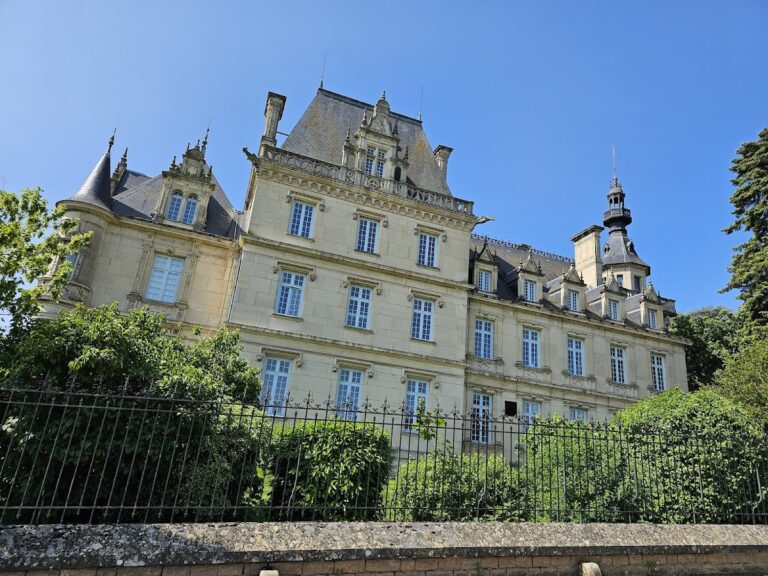
Château de Gilly-lès-Cîteaux: A Former Cistercian Priory and Château in France


Site at a Glance
- Rating
- 4.4
- Popularity
- Medium
- Country
- France
- Primary era
- Early Modern
- Eras represented
- Medieval, Early Modern
- Civilizations
- Duchy of Burgundy, French
- Site type
- Domestic
- Remains
- Castle
On this page9 sections
History
Château de Gilly-lès-Cîteaux is a former Benedictine priory and later château in France, with principal surviving elements from the fourteenth and seventeenth centuries in the Cistercian tradition. Its history links the site to Saint-Germain-des-Prés in Paris, the Abbey of Cîteaux, the religious conflicts of the sixteenth century, and the transformation of ecclesiastical property after the French Revolution.
Early foundations and Burgundian connections
During the Roman period, Gilly stood on the route to Germania, a major road running through Lugdunum, Mâcon, Chalon-sur-Saône, Langres, Metz, Trier, and Cologne. The territory later formed part of the former Kingdom of Burgundy and the Duchy of Burgundy.
In the sixth century, the Gallo-Roman notable Eleuther of Autun owned the territory. His heir, Germain of Paris, donated his Burgundian inheritance to Saint-Germain-des-Prés and established the priory of Gilly, becoming its patron saint. Germain had become abbot of Saint-Symphorien of Autun in 530, bishop of Paris in 555, and founder of Saint-Germain-des-Prés Abbey in 558. The foundation belongs to the medieval expansion of Christianity, when religious communities extended their institutions and influence across former Roman territories.
Transfer to Cîteaux and fortification
In 1299, the priory and its domain were sold to the nearby Abbey of Cîteaux. Founded in the eleventh century, Cîteaux was the founding abbey of the Cistercian Order, a Catholic monastic order known for establishing and managing monasteries, agricultural estates, water systems, and associated economic lands. Gilly subsequently became connected with the abbots of Cîteaux.
During the Hundred Years’ War, fought between 1337 and 1453, the priory was converted into a fortress to protect the monks and the possessions of Cîteaux. The fortified complex was completely pillaged and destroyed between 1591 and 1595 during the French Wars of Religion, a series of conflicts between Catholics and Protestants in France. The destruction was ordered by Charles-Emmanuel of Savoy-Nemours, a member of the Savoy dynasty and duke of Nemours.
Rebuilding and revolutionary confiscation
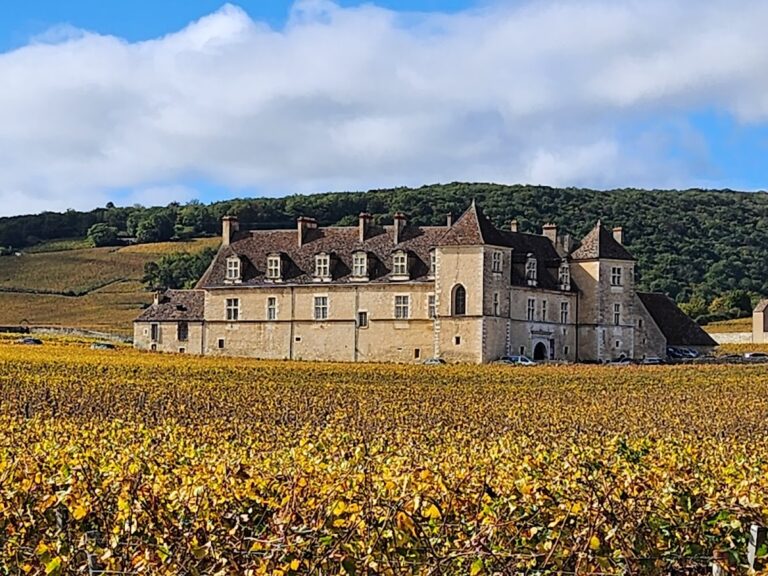
In the seventeenth century, the abbots Nicolas III Boucherat and his successor Pierre Nivelle rebuilt a prestigious residence over the remains of the earlier priory. The new residence was associated with the nearby Château du Clos de Vougeot. The moats and drawbridge belonging to the former fortified enclosure were also restored, preserving elements of the site’s defensive phase within its later form.
The French Revolution brought a major change in ownership. The church’s ecclesiastical goods and the château’s domain were confiscated and declared national property on 14 May 1790. The château, its 100-hectare estate, the Bretigny farm, and the Clos-Vougeot vineyard enclosure were purchased by Focard, a Parisian timber merchant, on 17 January 1791. The property then passed through numerous successive owners. The former Saint-Germain abbey church became the communal church of Gilly.
Protection, restoration, and present use
In 1977, the Côte-d’Or departmental council converted the château into a theatre and cultural center and initiated its listing as a Historic Monument. The site was listed in May 1978. In 1987, René and Simone Traversac acquired it, extensively restored the complex, and converted it into a Burgundian hotel and restaurant. Alice and Jérôme Tourbier, directors of the Les Sources hotel collection, acquired Château de Gilly in October 2022. The château now belongs to the Les Sources group and functions as a hotel and restaurant.
Remains
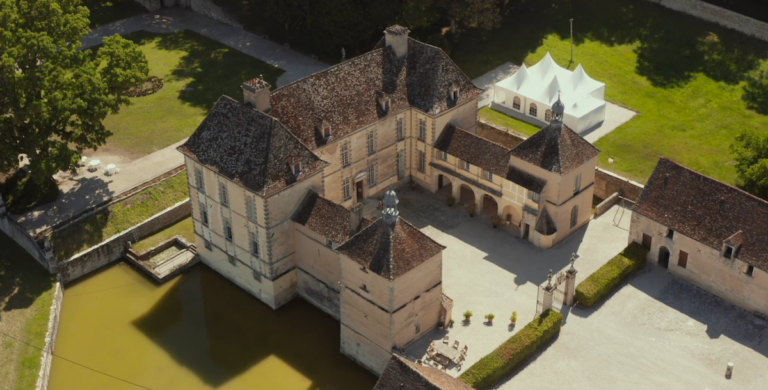
The surviving complex combines the former priory church, the seventeenth-century residence, elements of a fortified enclosure, and landscaped grounds. Its architecture is described as Cistercian, while the principal physical remains belong to the fourteenth and seventeenth centuries. The later residence stands over the earlier priory, and the restored moats and drawbridge preserve the outline of its former defensive character.
Church and religious features
The former Saint-Germain abbey church was built in the fourteenth century in the Cistercian style. Inside, a Virgin and Child image depicts the Virgin trampling evil. The church also contains baptismal fonts decorated with a triquetra, a three-lobed interlaced symbol, and Borromean rings, three linked rings whose arrangement has been used as a symbol of the Christian Trinity.
Residence and fortified enclosure
The seventeenth-century residence was constructed over the earlier priory remains and incorporates the restored moats and drawbridge of the former fortified enclosure. These features connect the present château to the fortress created during the Hundred Years’ War, while the residence reflects the rebuilding undertaken by the abbots of Cîteaux after the destruction of the late sixteenth century.
Park, garden, and water system
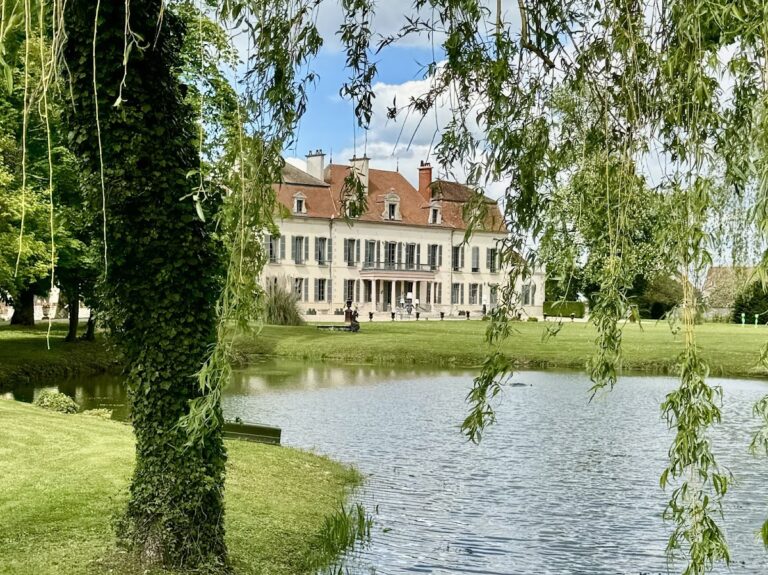
The grounds include a 15-hectare park and a French formal garden, a geometrically ordered landscape shaped by planned axes, symmetry, and controlled planting. The Vouge River passes through the park and continues through the grounds of Cîteaux Abbey before flowing into the Saône. At the monastic complex, the river was organized for irrigation and aquaculture. The former priory cellar now houses the restaurant Le Clos Prieur, while the late twentieth-century restoration adapted the wider complex for hotel and restaurant use.
Nearby sites