Gallerande Castle: A French Noble Residence
Site at a Glance
- Popularity
- Medium
- Country
- France
- Primary era
- Medieval
- Eras represented
- Medieval, Early Modern
- Civilizations
- French
- Site type
- Domestic
- Remains
- Castle
On this page11 sections
History
Early lords and the Clermont-Gallerande family
Gallerande Castle stands at Pringé, in the commune of Luché-Pringé, France. Its construction date is uncertain, but the original fortress included a modest dwelling. Garin de Galaranda was its first known lord in 1173; Hugo de Galaranda succeeded him before 1180, and Hamelin de Galaranda held the lordship in 1239.
Around 1210, an heiress of the early lords married Robin II, lord of nearby Clermont, establishing the Clermont-Gallerande family. Its members held the castle for nearly six centuries, until the French Revolution, the political upheaval that began in 1789 and ended the French monarchy. In the early 13th century, Robin III founded a chaplaincy at nearby Notre-Dame de Pringé to provide religious services and a burial place for family members. Around 1380, his grandson Jean II enlarged the family’s holdings through marriage to the heiress of Mervé.
War and rebuilding
During the Hundred Years’ War, a series of conflicts between England and France conventionally dated from 1337 to 1453, English forces attacked the castle repeatedly. After its lord withdrew to his estate at Montrevault in Anjou, he left Guillaume Grugelin in charge. Grugelin surrendered the castle without a fight in 1421, shortly after the Battle of Baugé. In July 1426, French troops led by Arthur de Richemont, Constable of France, retook it. English troops sheltering in the keep then set fire to the castle as they departed.
In the second third of the 15th century, Louis II, the twelfth lord of Clermont-Gallerande and a chamberlain to René of Anjou, rebuilt the castle. The work turned it away from the defensive character of a feudal fortress and toward the comfort and appearance of Renaissance residences. After Louis II died in 1477, his descendants held important roles in the army and royal administration.
Marquisate and later ownership
In 1576, King Henri III made Gallerande a marquisate, a territory governed by a marquis, for its lord Georges I. It comprised the lordships of Clermont, Gallerande, Mareil, Luché, and Pringé, along with the farms of Plessis-Allouin and Plessis-Marchais, held as fiefs, or lands subject to feudal obligations. During the 16th-century Wars of Religion between Catholics and Protestants in France, members of the Catholic League occupied the castle.
The de Sarcé family acquired the property in 1822. Anne de la Planche de Ruillé, its last heiress, died in 1985 and left it to the Sovereign Order of Malta, a Catholic religious and chivalric order. The property was later sold to an unnamed American owner. Before that sale, the Louvre acquired Georges de La Tour’s 17th-century painting Saint-Thomas à la Pique, which had been kept at the castle, for 32 million francs. The château remains privately owned and serves as a residence.
Remains
Castle complex
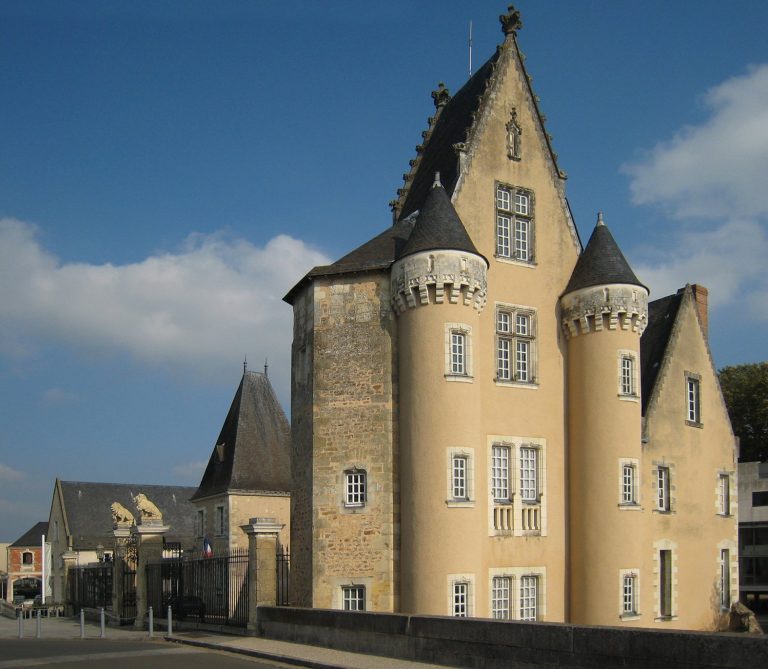
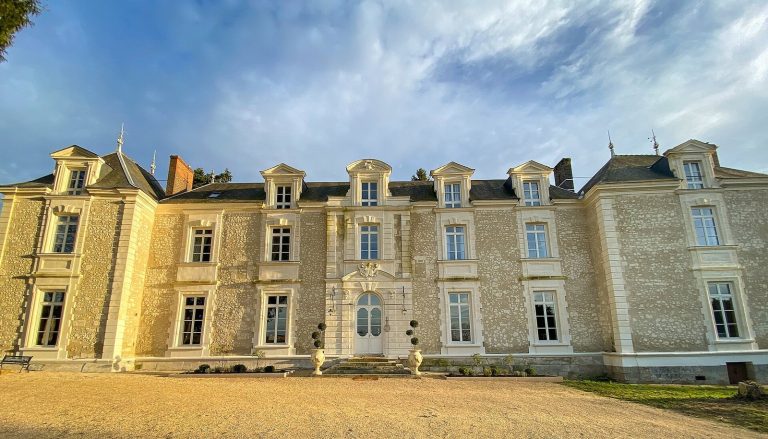
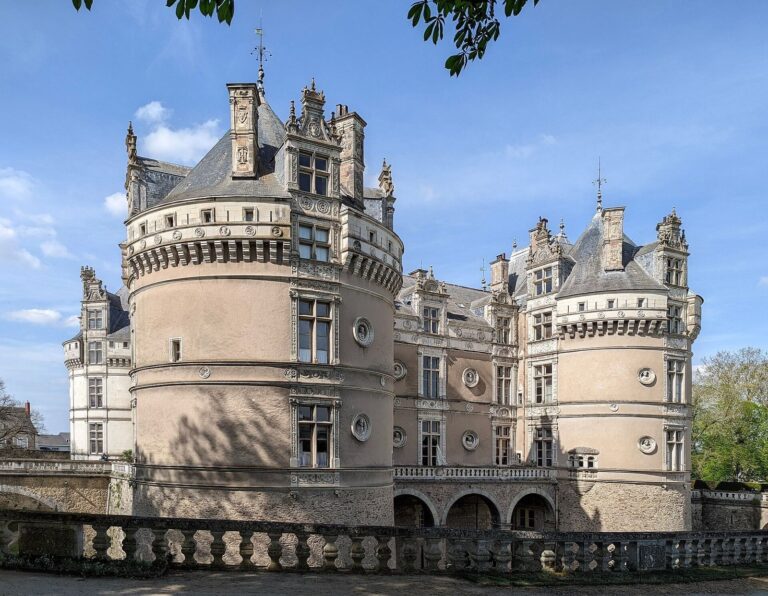
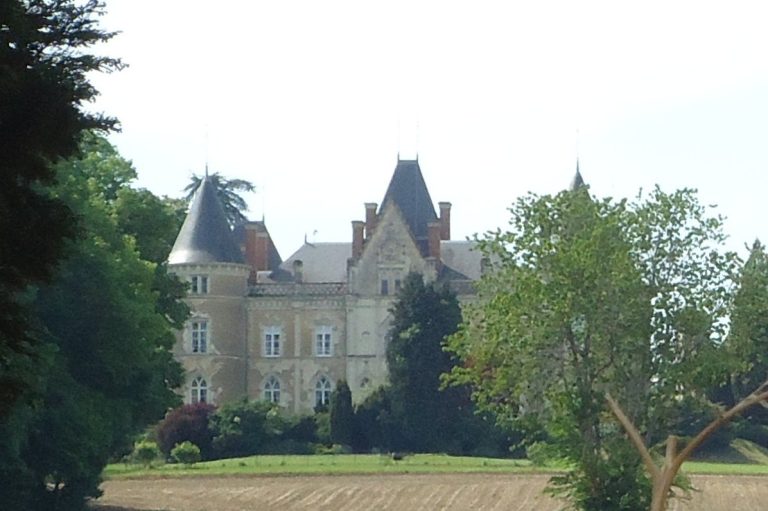
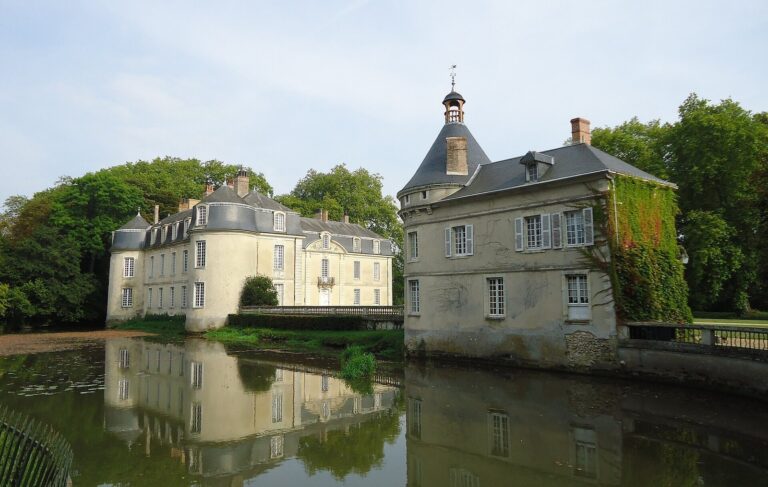
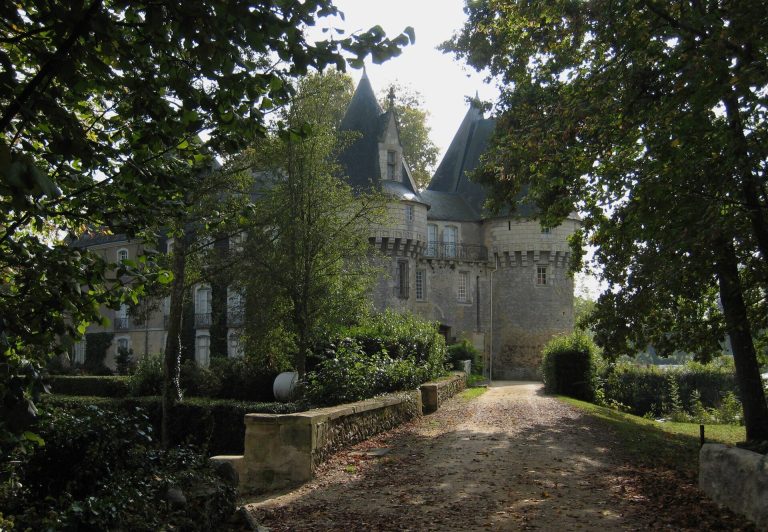
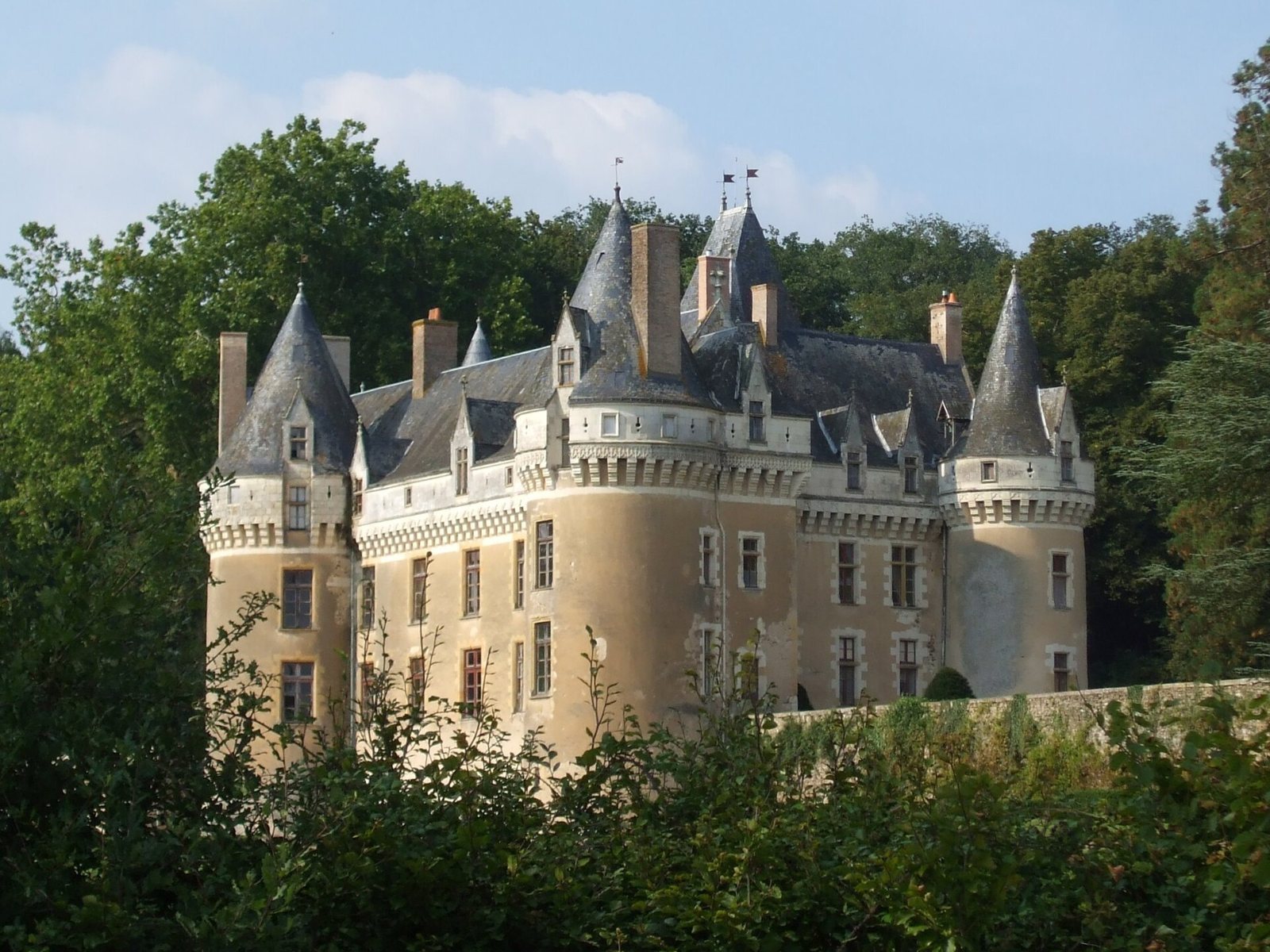
The castle stands near the village in a wooded park at the foot of a hill descending toward the Loir River. Its layout centers on a principal building with a wing set back toward the rear, and the complex includes four cylindrical towers and two quadrangular towers.
Principal building
The principal building and its rear-set wing form the core of the complex. The six towers, cylindrical and quadrangular in form, are part of the castle’s overall arrangement. No construction materials are specified for these structures.
Chapel of Douet
The castle chapel of Douet was built in 1275, destroyed in 1360, and rebuilt in 1647. It is distinct from the family burial chapel established at the nearby church of Notre-Dame de Pringé.
Park and estate
The grounds include features on both sides of a road that passes by the château. Flowerbeds lie behind a long canal separating them from the road, while parts of the estate extend across it.
Outbuildings
Across the road are two former 18th-century outbuildings that housed troops serving the Marquis of Gallerande.
Dovecote
A dovecote on the estate has triangular openings.
}