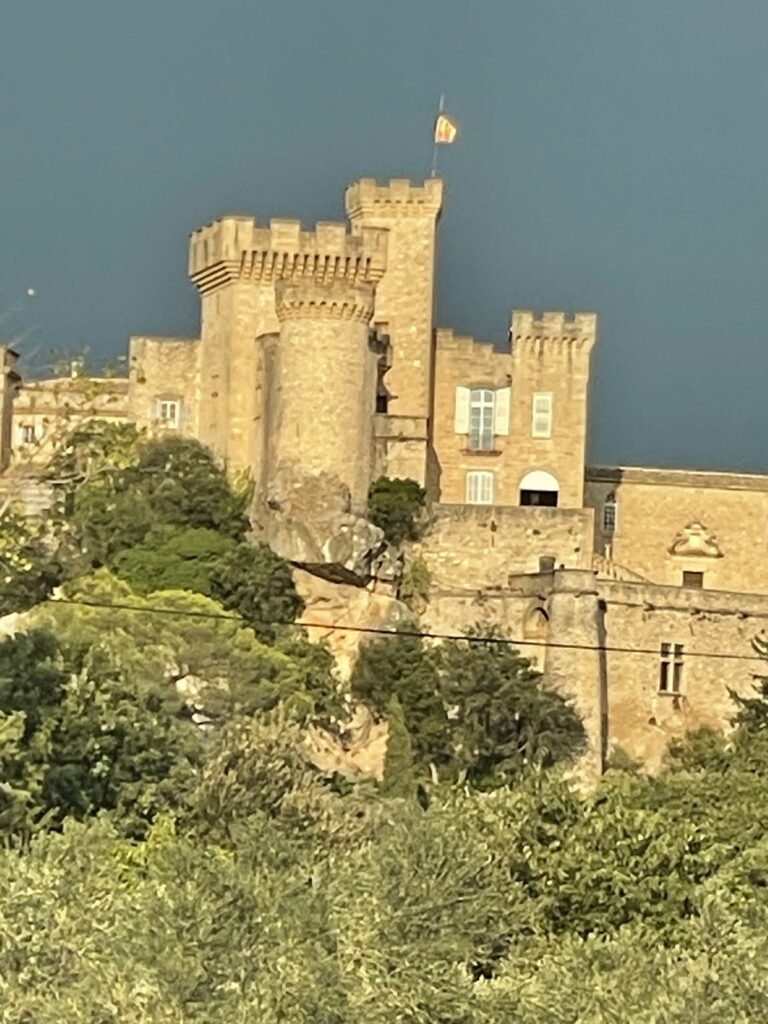
Château de Fos-sur-Mer: A Medieval Fortified Complex in France


Site at a Glance
- Rating
- 4.4
- Popularity
- Low
- Country
- France
- Primary era
- Medieval
- Eras represented
- Medieval
- Civilizations
- County of Provence, Holy Roman Empire
- Site type
- Military
- Remains
- Castle
On this page8 sections
History
Château de Fos-sur-Mer, also known as Château de l’Hauture, is a medieval fortified complex in Fos-sur-Mer, France. Built by the medieval communities and lords of Provence, its construction began in the early tenth century and continued in stages through the thirteenth century. The fortress combined military defense with control of maritime activity and developed into the focus of a Provençal village below the hill.
Foundation and Strategic Role
The stronghold was probably established to defend against Moorish invasions and to watch the movement of ships and goods along the coast. The first surviving historical mention of the castrum of l’Hauture, a fortified settlement or stronghold, dates to 923 and refers to its chapel as well. From its elevated position, the fortress controlled access toward the salt works of Fos on one side and the fishing installations of the Étang de Berre on the other.
After the fortress was established, a Provençal village gradually formed beneath it. The site’s position continued to give it a role in observing maritime traffic, including the large merchant ships that now use the Grand Port Maritime de Marseille on routes between northern Europe and the Mediterranean.
Thirteenth-Century Expansion and Seigneurial Rule
The complex was enlarged and modernized during the thirteenth century. From that period until the French Revolution, the Porcelet family, a medieval Provençal noble family, held the fief of Fos. Their coat of arms remains the emblem of the commune, preserving a visible link between the medieval lordship and the modern town.
Archaeological Investigation and Protection
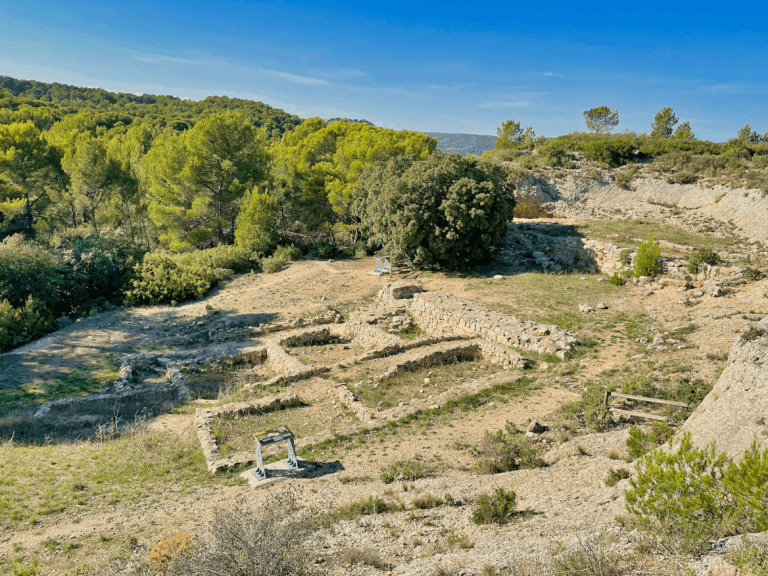
Successive excavations have revealed evidence of the community that occupied the fortified site, including about one hundred graves, seventy silos, and a dwelling partly formed in natural rock. The church and keep were placed on the French historic-monument register in 1964. The complex is now publicly owned.
Remains
Fortifications and Summit Layout
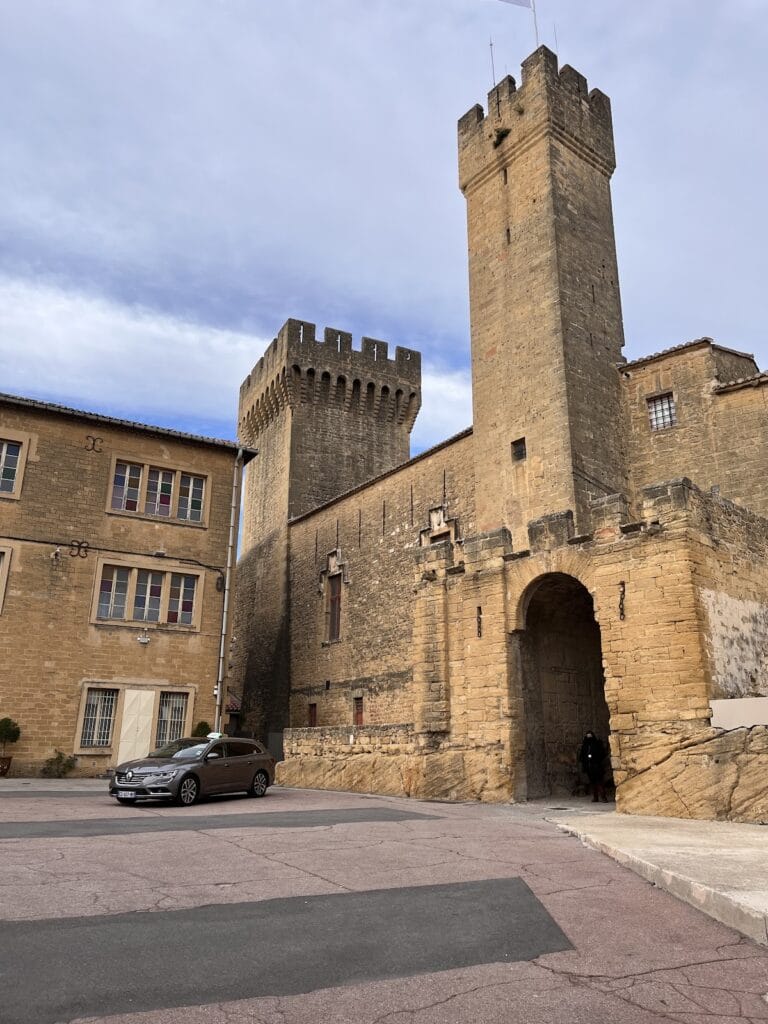
Partially ruined, the castle occupies the summit of a hill above the village and the Gulf of Fos. Its original arrangement remains recognizable in the surviving buildings and ruins. The plan follows a Provençal three-part organization of keep, chapel, and enclosure, a layout also found in medieval fortified settlements of the Luberon. The military remains include the principal fortified tower, a wall-walk running along the top of a defensive wall, a monumental defensive gateway, and enclosing ramparts.
The fortifications use dressed stone, straight walls, and square towers, techniques inherited from Roman construction. Together, these elements display the character of Provençal Romanesque military architecture and preserve the relationship between the summit buildings and the surrounding defenses.
Saint-Sauveur Church
The Saint-Sauveur church stands on a rocky spur within the fortified complex. Its bell tower was struck by lightning, and the church remains in use for baptisms and weddings. The site also includes a former entrance to the church and a cemetery connected with the summit settlement.
Archaeological Features
Archaeological remains include approximately one hundred graves and seventy silos. A troglodytic dwelling, meaning a habitation partly excavated into or formed by natural rock, was occupied from the late twelfth century to the early fifteenth century. These features add evidence of domestic, storage, and funerary activity within the medieval settlement.