Castle of Emperi: A Medieval Fortress in Salon-de-Provence

Site at a Glance
- Rating
- 4.4
- Popularity
- Medium
- Country
- France
- Primary era
- Medieval
- External website
- Open
- Eras represented
- Medieval, Early Modern
- Civilizations
- French, Holy Roman Empire
- Site type
- Military
- Remains
- Castle
On this page12 sections
History
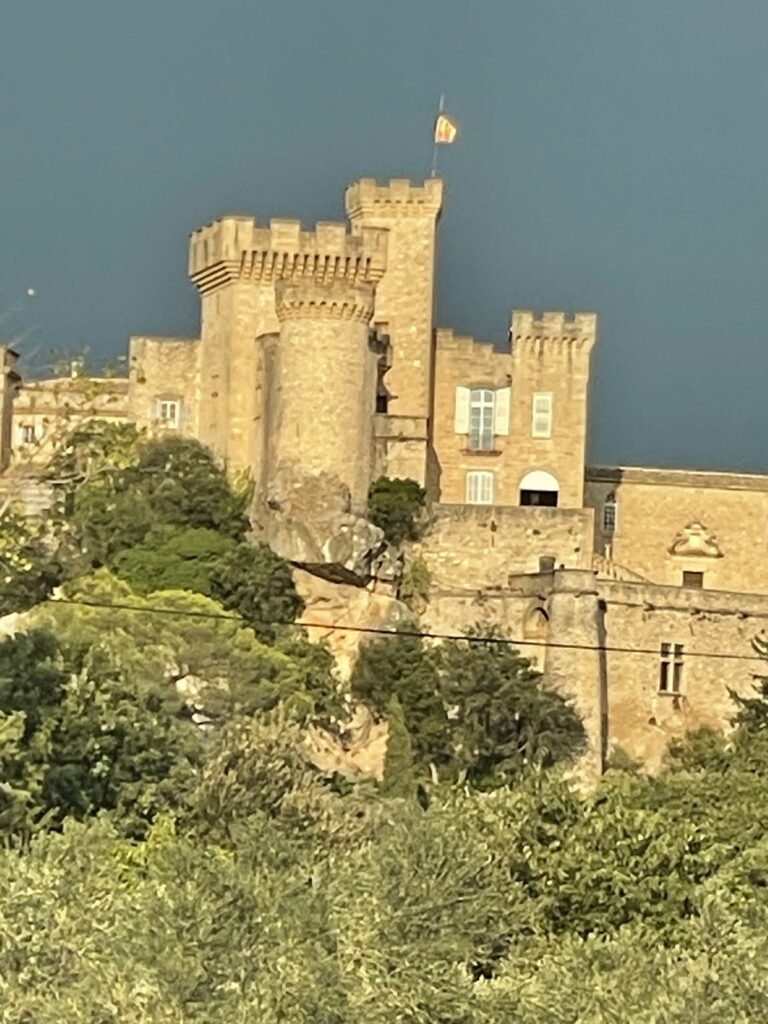
Castle of Emperi is a medieval fortress in Salon-de-Provence, France, built on the Puech rock above the Crau plain. Construction began in the ninth century and was completed by the thirteenth century. The stronghold served as a residence for the archbishops of Arles, senior church leaders in Provence, and for rulers associated with the Holy Roman Empire, a medieval polity whose territories included lands east of the Rhône. Its name comes from the Provençal word for “Empire,” referring to the empire’s territory at that time.
From Provençal stronghold to royal possession
The castle’s position on the Puech rock gave it a commanding place above the surrounding plain. Its religious and imperial associations continued through the medieval period, when the archbishops of Arles used it as a residence. In 1481, Provence was incorporated into the Kingdom of France, and the castle came under the authority of the French kings.
During the fifteenth and sixteenth centuries, the new royal connection brought renovations and embellishments. Francis I and his court stayed at the castle, as did Louis XIV. Castle of Emperi is also linked to a tradition involving Catherine de’ Medici and Nostradamus, the sixteenth-century French physician, astrologer, and author Michel de Nostredame. According to the tradition, Catherine came to consult him, and he predicted the accession of her three sons and her nephew, the future King Henri IV.
Revolutionary and modern transformations
After the French Revolution, the fortress was converted for use as jails and barracks. An earthquake in 1909 caused limited damage, and the Historic Monuments authorities restored the buildings in 1926. The restored complex subsequently housed the Museum of Old Salon and later became home to the Museum of Military Art and History, the Museum of Salon and the Crau, and the Garden of Simples of Nostradamus.
Castle of Emperi was classified as a French historic monument in 1956 and is owned by the commune of Salon-de-Provence. Its cultural role has continued through the Brunon Court, a named courtyard that accommodates artistic and cultural associations, including the municipal conservatory, Salon Culture, and the Friends of the Museum of Salon and the Crau. The castle also hosts a summer chamber-music festival and has provided the setting for historical reenactments connected with the time of Nostradamus, including the events formerly known as the Nostradamiques and later as La Reconstit’, alongside the Renaissance Festivals.
Remains
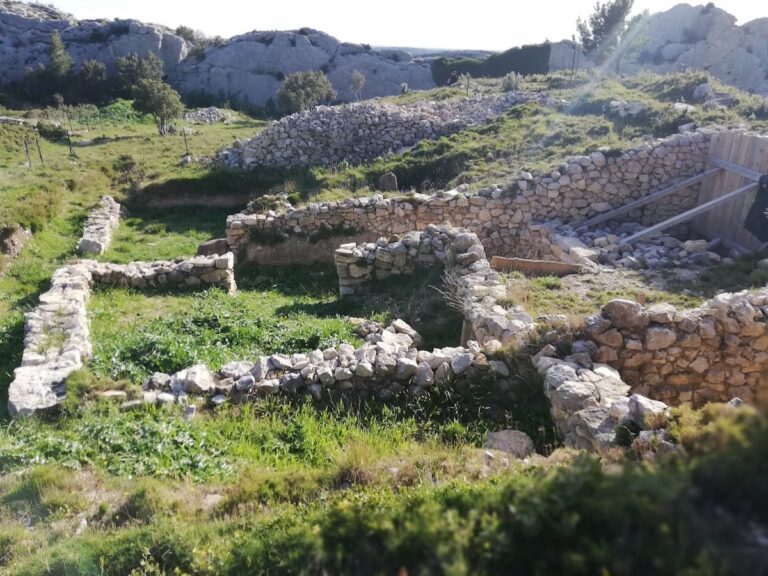
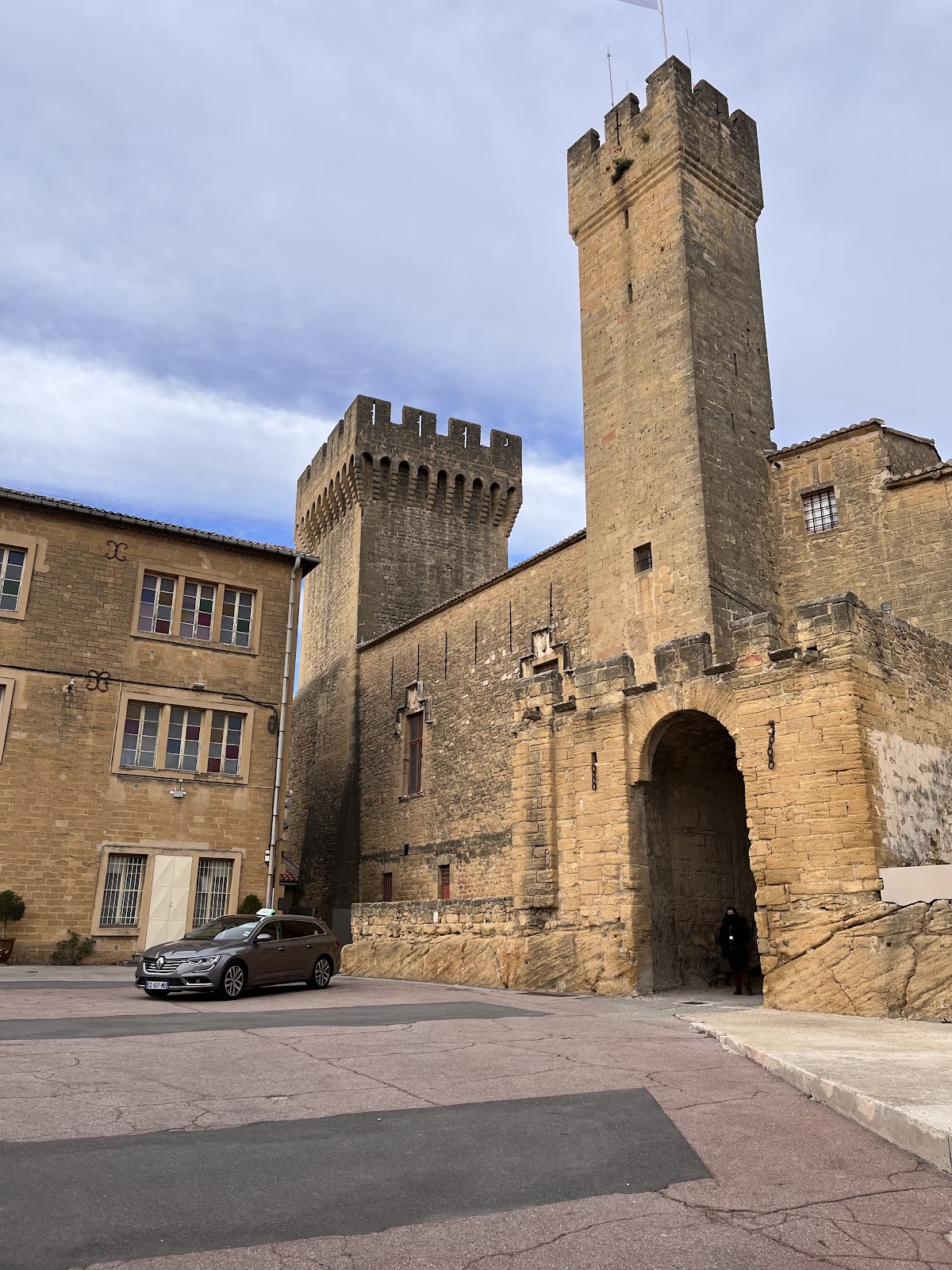
Castle of Emperi occupies the Puech rock, which rises above the extensive Crau plain. Ramparts follow the rock, while an entrance gateway leads into the interior rooms. The surviving fortress includes a keep, rooms with fireplaces, and areas decorated with trompe-l’oeil, a painting technique that creates the illusion of three-dimensional forms. The Place des Centuries lies before the castle and leads toward the Church of Saint-Michel. An esplanade within the castle provides a view toward the old town.
Garden and historic interiors
Garden of Simples
The Garden of Simples contains common medicinal plants from the Provençal hills. These plants are associated with recipes attributed to Nostradamus, including preparations for cosmetics, dyes, and preserves. The garden therefore connects the castle’s physical setting with traditions surrounding the physician’s work.
Military collections
Army formations and equipment
The Museum of Military Art and History presents faithful representations of French army corps from the pre-Revolutionary royal army, the Napoleonic Wars, and the First World War. The Napoleonic Wars were the European conflicts fought during Napoleon Bonaparte’s rise and rule, while the First Empire was his imperial regime from 1804 to 1814 and briefly in 1815. Mannequins, uniforms, weapons, medals, and military equipment trace changes in French military dress and organization. The collections derive from the Raoul and Jean Brunon collection, which was sold to the French state in 1967.
Napoleonic and later objects
The displays include a copy of Napoleon I’s bed from Saint Helena and gloves worn by him during the Egyptian Campaign. They also contain the full-dress and undress uniforms of Marshal Louis Nicolas Davout, Duke of Auerstaedt and Prince of Eckmühl; the marshal’s baton and portfolio of Jean-Baptiste Bessières, Duke of Istria; and a regulation-pattern bicorne belonging to General Baron Jean-Marie Ritay.
Other objects include the shako, epaulettes, bicorne, and sabre of Baron Rouillard de Beauval; the uniform of General Count Philippe Antoine d’Ornano, colonel-major of the Empress’s Dragoons; and the dolman of General Baron Claude Testot-Ferry, colonel-major of the 1st Regiment of the Imperial Guard Scouts. The collection also includes Louis XV’s cartridge box, an infantry corporal’s uniform from the grenadiers of the Imperial Prince, and Abdel Kader’s sabre.
Uniform displays
Uniform displays include a cantinière’s uniform from the Imperial Guard grenadiers dating to around 1860, a mounted chasseur’s uniform from the First Empire, and a National Guard grenadier officer’s uniform from 1790. Other examples include First Empire hussar uniforms, an officer’s uniform from the 5th Hussars of the First Empire, an Imperial Guard non-commissioned officer’s uniform from 1810, and a colonel’s full-dress uniform dating to around 1860.
Additional displays represent a sapper of the 23rd Régiment d’infanterie légère, legionnaires from 1863, and French carabiniers during the Russian Campaign.
Local history collections
Museum of Salon and the Crau
The Museum of Salon and the Crau presents the history of the surrounding area from antiquity to the twentieth century. Its subjects include archaeology, soapmaking, agriculture, and religious art, placing the fortress within the longer history of Salon and the Crau region.