Folleville Castle: A Medieval Fortress and Noble Residence in France
Site at a Glance
- Popularity
- Medium
- Country
- France
- Primary era
- Medieval
- Eras represented
- Medieval
- Civilizations
- French
- Site type
- Military
- Remains
- Castle
On this page8 sections
History
Folleville Castle is a ruined fortress in France whose present form is assigned to the 15th and 16th centuries and may date to rebuilding around 1478. Contested during the Hundred Years’ War, the long conflict between the English and French crowns, it later became a residence visited by several French kings.
Early fortress and the Hundred Years’ War
A predecessor, probably a four-sided keep, may have stood at Folleville in the 11th century. The castle itself is known by the 14th century, when it was destroyed during the Jacquerie, a major peasant uprising in northern France in 1358. It was rebuilt in the 14th and 15th centuries as fighting between the English and French continued.
In 1440, the English commander John Talbot captured the fortress with field artillery, which broke through its defensive walls. The Burgundians later bought it and partly dismantled it to prevent English raiders from using it as a refuge. The castle was rebuilt after peace returned. Its present form may date to about 1478, the year Raoul de Lannoy married Jeanne II de Poix. Repairs followed the earlier destruction, and another wing was added.
The Lannoy family and royal visits
Louis XI stayed at Folleville in 1477. He gave Raoul de Lannoy a gold chain in recognition of his bravery at the siege of Quesnoy, telling him that he wished to restrain Raoul’s ardor so he would not lose a man he hoped to call on again. Charles VIII visited in 1492 and made Raoul a bailiff of Amiens, a royal official with administrative and judicial duties. In 1507, Louis XII appointed him governor of Genoa.
François I stayed at the castle in 1544, when it was the residence of Louis de Lannoy. There he issued a royal ordinance announcing the conclusions of the Peace of Crépy-en-Laonnois, a treaty with Holy Roman Emperor Charles V that temporarily ended hostilities between them. In 1548, the sister of Henry II stayed at Folleville for the baptism of Louis de Lannoy’s son.
In 1572, Louis’s daughter Marie de Lannoy married Antoine de Silly, Count of La Rochepot. She inherited Folleville and later passed it to their daughter Marguerite. During the Wars of Religion, forces of the Catholic League, a French Catholic political and military faction, seized the castle in 1589. They were driven out a few months later. Henry IV also won a battle against Spanish forces, though the result was not decisive.
The Gondi family and later owners
Marguerite’s marriage in 1604 brought the castle and lordship to Philippe-Emmanuel de Gondi, commander of the French royal galleys. He lived there with his family. The priest Vincent de Paul tutored the Gondi children and served as their mother’s spiritual director. One of the children later became Cardinal de Retz, a senior Catholic church official and French political figure.
After Marguerite’s death in 1625, Philippe-Emmanuel joined the Oratorians, a Catholic congregation of priests, and left Folleville to his son Pierre. Pierre sold the lordship in 1634 to Charles de Séricourt. After Charles’s death, his widow, Charlotte de Trion, passed it to their grandson Charles Timoléon de Séricourt. He was succeeded by his son Charles Timoléon II, then by his daughter Marie-Michelle de Séricourt (1713–1778), the second wife of Augustin-Joseph de Mailly d’Haucourt, a Marshal of France, one of the country’s highest military dignities.
Demolition and preservation
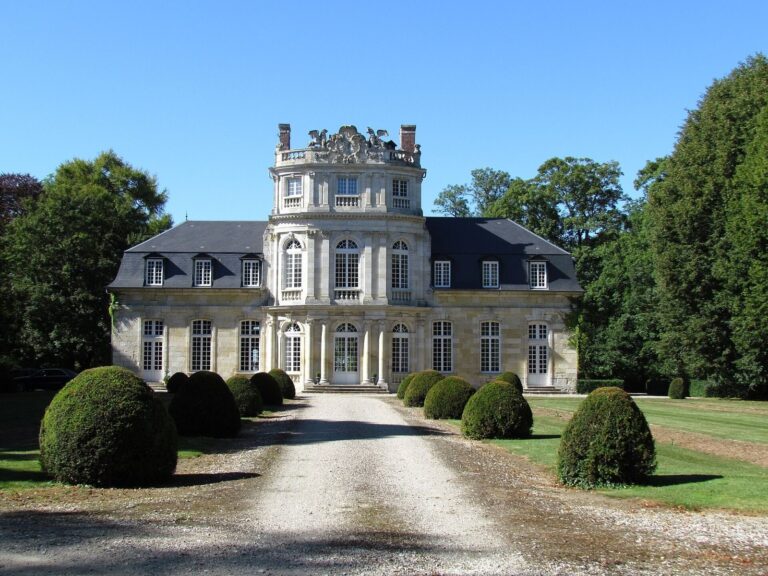
The castle remained inhabited until Mailly ordered its demolition from 1777. Its stones were reused in rebuilding Mailly-Raineval Castle, which he named after himself. The ruins later passed through religious congregations and private ownership. In 1990, the Ailly-sur-Noye intercommunal syndicate acquired them, and the Val de Noye Community of Communes later became the owner. The association Le Site de Folleville carries out restoration and presents the site. The ruins, archaeological grounds, and guard pavilion were listed as a historic monument in 1992.
Remains
Plan and defensive setting
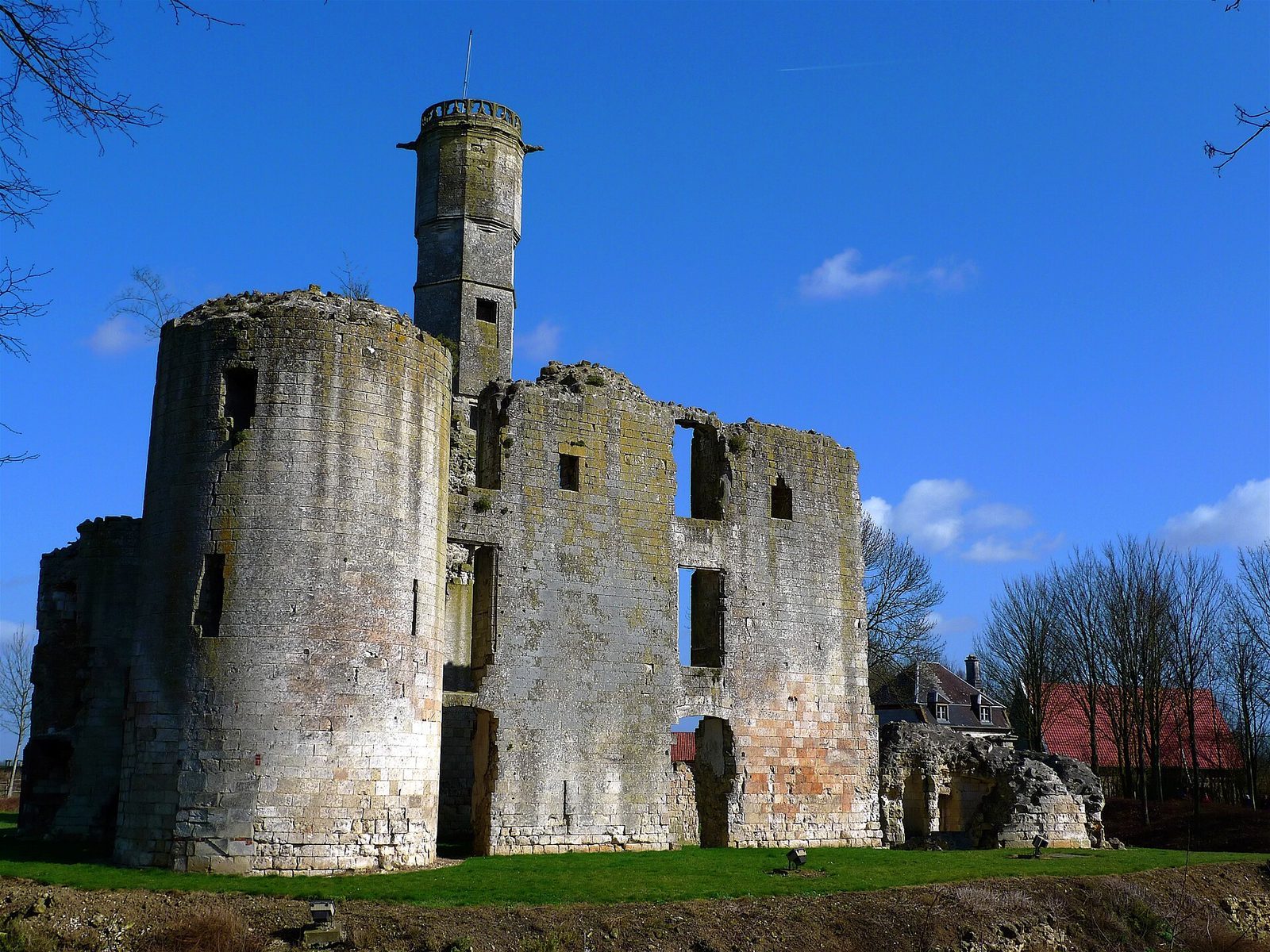
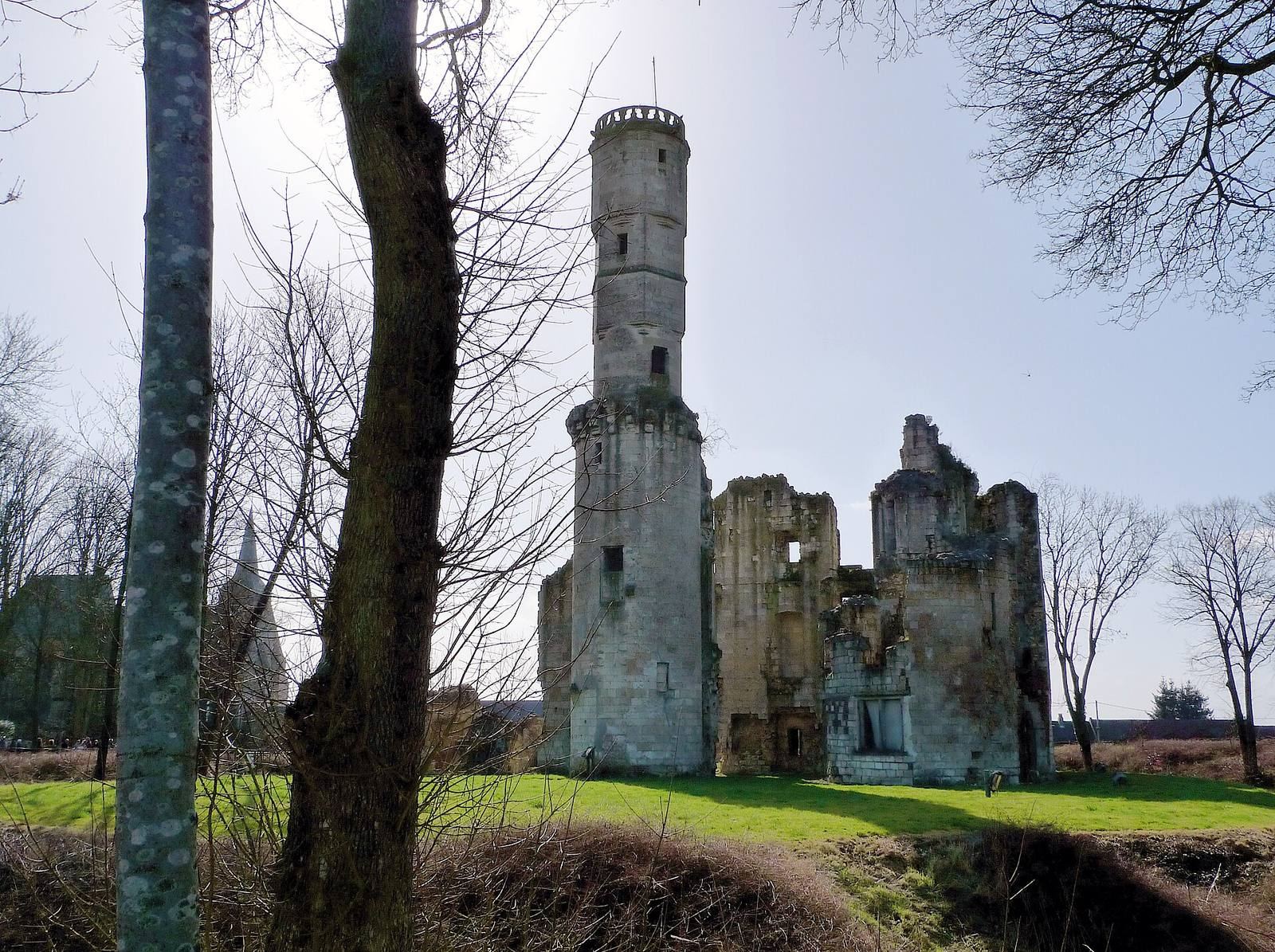
The ruins occupy a raised mound above the Noye valley and surrounding countryside. The castle had a four-sided plan, with round towers at the corners dating from the early 15th century. Dry ditches encircled the mound. The visible remains include sections of the walls and ditches, along with a block of buildings commanding the entrance.
Residential and entrance features
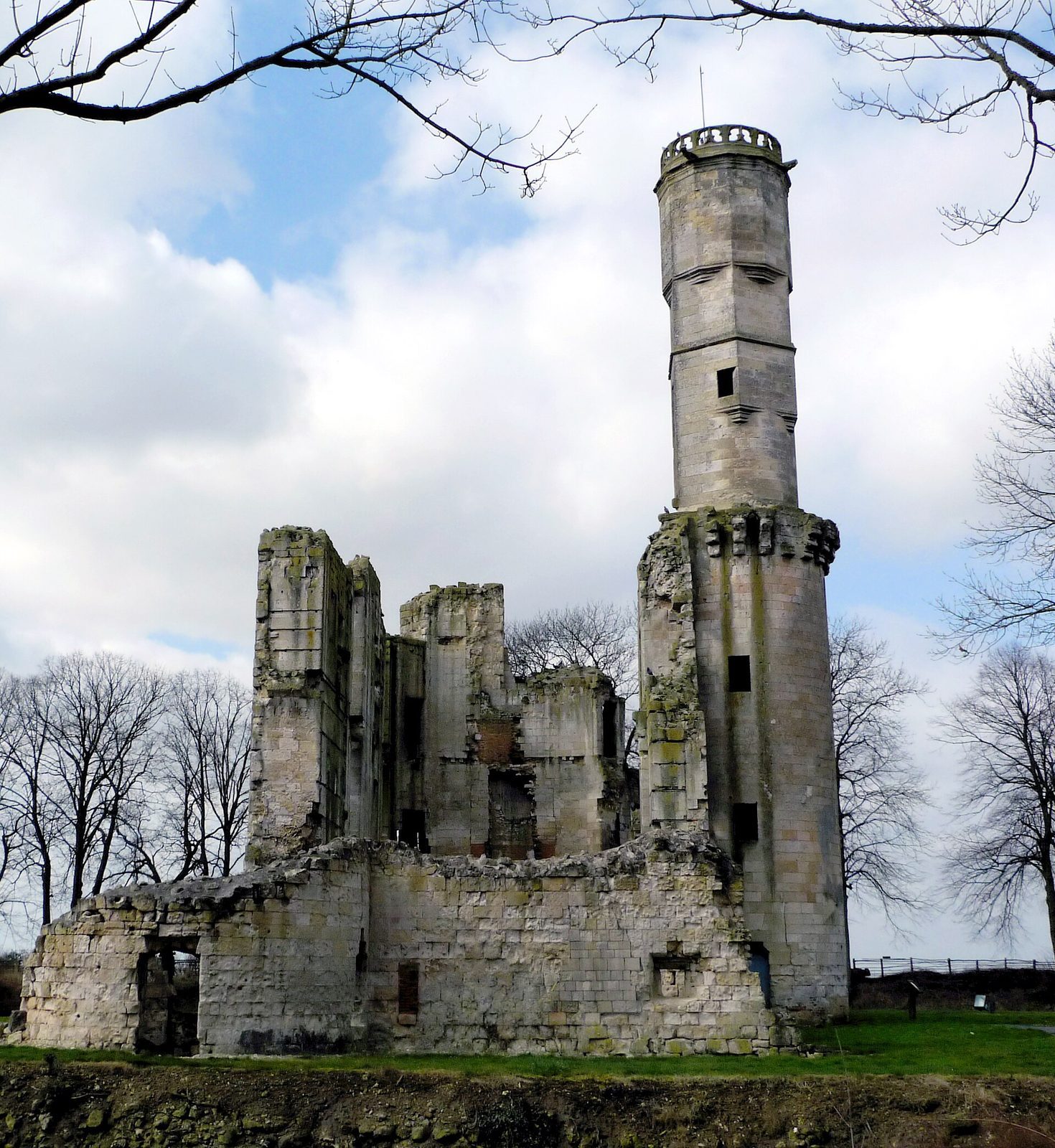
The main residential block was rectangular, with a round tower at each corner. A watchtower midway along its north side, 25 metres high, is the principal surviving feature; parts of the walls and two towers also remain. The block had a roof with two sloping sides and a tall gable at each end. Two wings once flanked the courtyard: the eastern wing gave access to it, while the western wing was built in the early 18th century. Both have disappeared. A stone bridge with three arches crossed the ditches and was still visible in the early 19th century. The grounds also contain archaeological remains and a guard pavilion.