Château de Bonport: Seat of the Lordship of Bonport in France


Site at a Glance
- Rating
- 4.8
- Popularity
- Low
- Country
- France
- Primary era
- Early Modern
- External website
- Open
- Eras represented
- Early Modern
- Civilizations
- Duchy of Savoy
- Site type
- Domestic
- Remains
- Castle
On this page7 sections
History
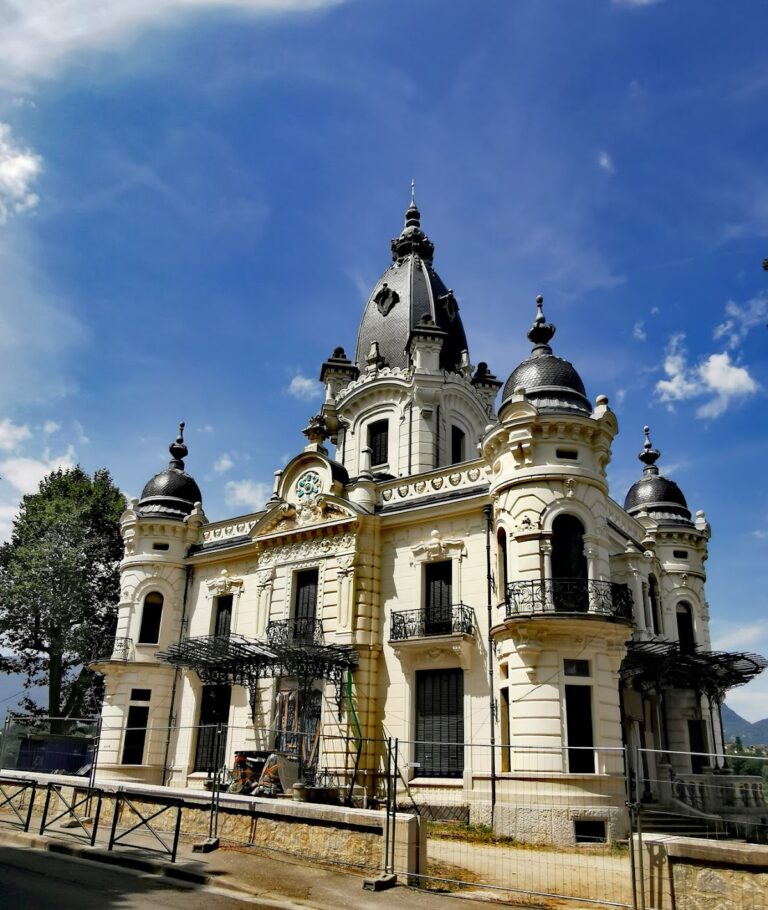
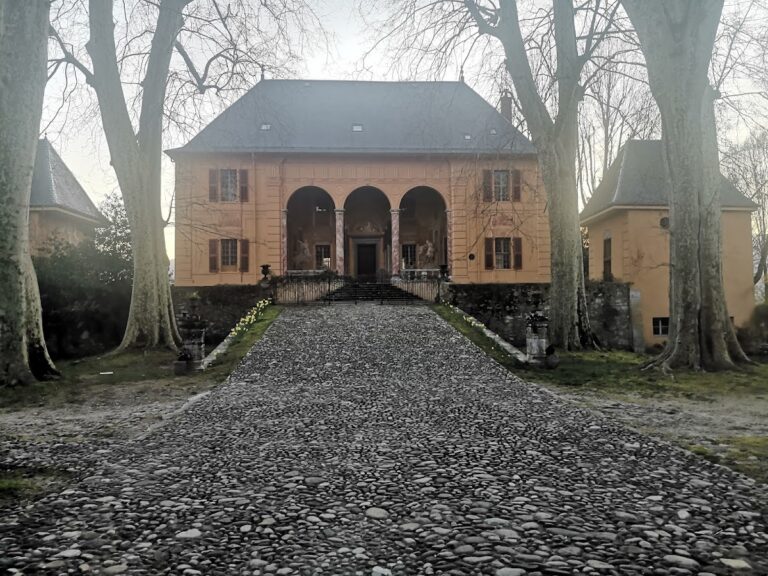
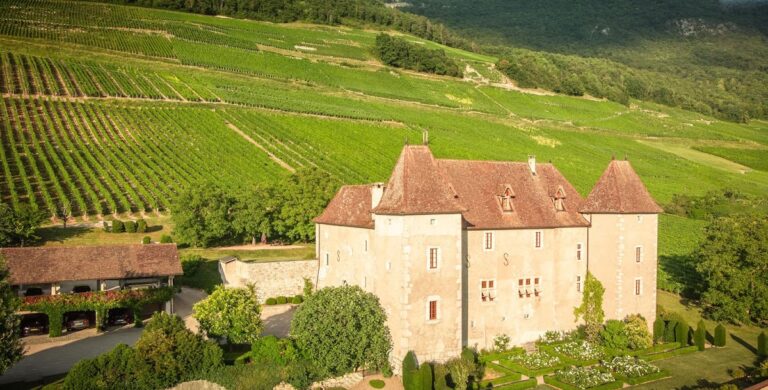
Château de Bonport, also known as Château de Tresserve, is a historic château in France at Tresserve. Built shortly after 1584 at the end of the sixteenth century, it became the seat of the lordship of Bonport, also called Grande Vigne, whose history is closely connected with the ruling House of Savoy and the administration of its territorial estates.
From Grande Vigne to Bonport
The estate is recorded in 1344 as the property of Humbert de Seyssel. On 16 November 1575, Grande Vigne became dependent on Bourget after Emmanuel-Philibert of Savoy transferred rights over it to his cousin Renée of Savoy, the wife of Jacques Paillard d’Urfé, Marquise de Bâgé. In 1584, Charles-Emmanuel I of Savoy exchanged Grande Vigne for the County of Rivole, granted Renée jurisdiction over the estate, and raised it to the rank of a county.
The château was built soon afterwards. In 1588, Renée of Savoy’s children sold Grande Vigne to Charles Veillet, First President of the Senate of Savoy, a high administrative and judicial institution of the duchy. Veillet sold it in 1590 to Jean-François Berliet, Archbishop of Tarentaise. In 1603, Berliet transferred the property to Louis Bonnier, a lawyer responsible for property and legal matters. That same year, the Duke of Savoy raised the lands of Grande Vigne to the lordship of Bonport.
The estate under later owners
In 1674, the estate belonged to François Capré, Lord of Megève and President of the Chamber of Accounts of Savoy, another major administrative and judicial institution. On 19 February 1686, he formally acknowledged his holding to Victor-Amédée II of Savoy. The Capré de Megève family retained the estate until 1734, and sold it in 1760 to Louis-François Berthier de Crempigny de Saint-Vincent.
A man named Mayen of Chambéry acquired the property in 1806. In August 1812, the château received Pauline Borghese, an imperial-era European aristocrat and sister of Napoleon Bonaparte, and Talma, a prominent French stage actor. Later owners included Baron Chollet du Bourget in 1872, Countess Hélène de Tollu, and the British Lord Joseph Charlton-Parr in 1901. The Gauthier family subsequently held the property, before the former estate was subdivided.
Fire, restoration, and new use
The château itself was sold in 1968 to Joseph Alexandre Claret-Tournier, a hotelier from Courchevel. The Tournier family later transferred its operation to private investors. The building was converted first into the Bassamba dance hall, then into the Le 502 nightclub, followed by two night venues, L’Étoile in the basement and Le Château on the ground floor.
Other sections of the former estate became the La Colline du Poète subdivision, while the lakeshore was transformed into the Lido beach. On 19 July 2008 at 2:50 a.m., a major fire devastated the château. The roof, the top-floor floor, and the floor of the building’s left-hand tower collapsed.
On 20 December 2012, the damaged château was sold at auction for EUR 275,000 to three hotelier-restaurateurs from Viviers-du-Lac. In 2013, Nicolas Claret-Tournier, a Courchevel hotelier who had spent his childhood there, bought it back and arranged its restoration to match the former building. Structural work was complete by 2020, after which interior finishing began. Commercial activity under the name Château de Tresserve began in 2021, and the property operates as a reception venue and bed-and-breakfast establishment. Its listed current owner is SCI Club du Château.
Remains
Château de Bonport stands in Savoie at the foot of the Tresserve hill, near the present-day Route Nationale 201. The road replaced the former Avenue des Peupliers route linking Tresserve with Aix-les-Bains. The château occupies a ground area of 400 square metres and has four levels arranged on a cruciform plan, with two turrets attached to the west face in the internal angles formed by the cross-shaped layout.
The château building
The entrance door bears the motto of the Capré de Megève family, Non indigna cœlo. The two west-side turrets are integrated into the building’s cross-shaped plan. The 2008 fire severely damaged the roof and caused the collapse of the top-floor floor and the floor of the left-hand tower. The château was later restored to correspond to its former appearance.
Chapel and lakeside port
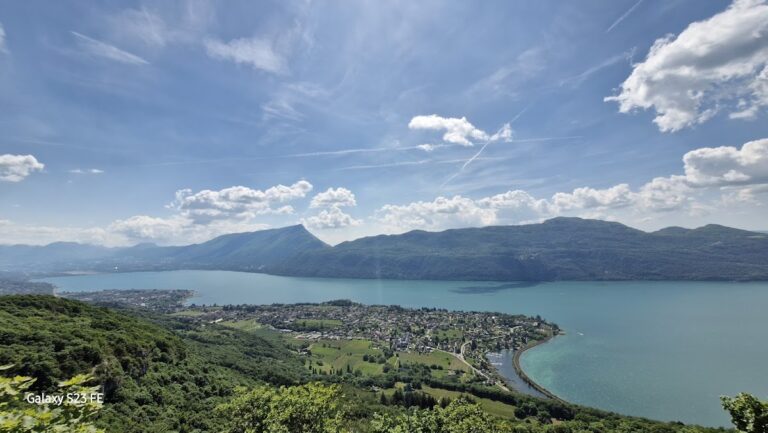
A chapel dedicated to the Virgin formed part of the estate and is mentioned in 1729. The property also possessed a private port on the eastern shore of Lake Bourget. It consisted of a breakwater and disappeared around 1885 after construction of the railway between Aix-les-Bains, at Choudy, and Saint-Jean-de-Maurienne. A road had also been built in the area around 1860. The former port site is now occupied by the Lido beach.
Nearby sites