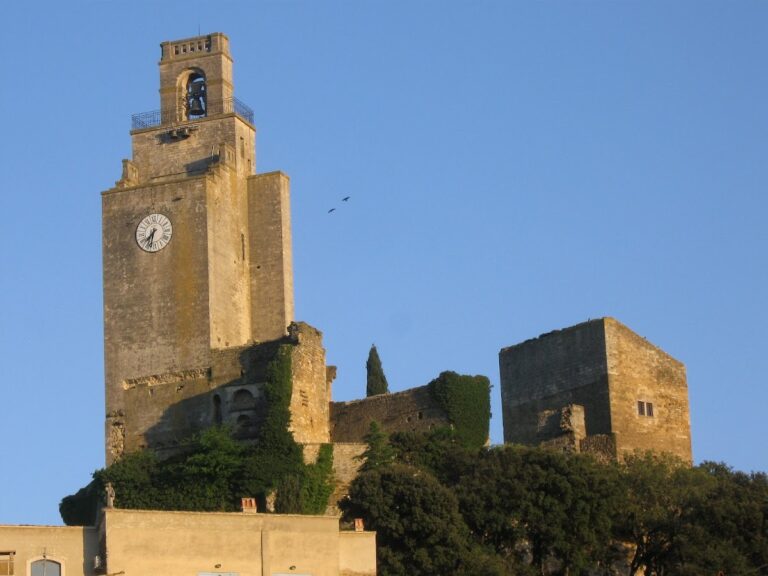
Château de Barry: A Medieval Fort in Bollène, France


Site at a Glance
- Rating
- 4.6
- Popularity
- Very Low
- Country
- France
- Primary era
- Medieval
- Eras represented
- Medieval
- Civilizations
- County of Provence
- Site type
- Military
- Remains
- Castle
On this page6 sections
History
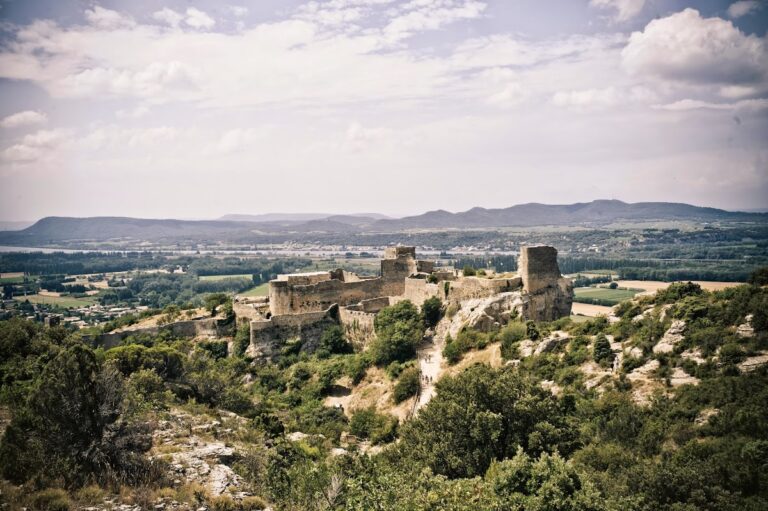
Château de Barry is a medieval stone fort in France, approximately two kilometres north of Bollène, probably built around 1200. Its history is tied to the Barry family and to powerful noble houses that shared authority over the site.
Origins and shared lordship
A family named Barry appears in records from the eleventh century. By the end of the twelfth century, the château was held as a co-seigneurship, a lordship shared by several lords. The most influential co-lords were the Adhémars of Montélimar. The Baux family, princes of Orange, also held a share through its branch of the lords of Suze.
Transfer to Bollène’s religious authorities
In December 1228, Giraud Adhémar, lord of Monteil, sold his share in the co-seigneurship and its associated rights to the prior of Bollène for 3,000 Viennese sols. The prior depended on the Abbey of Île Barbe. On the same day, Giraud received the château back as a fief-oblat, a feudal arrangement in which property was transferred to a religious institution and returned to its former holder under defined obligations.
Giraud Adhémar rendered homage, the formal recognition of a superior authority, to Abbot Guillaume II de Jarez, who promised to defend him. Giraud was required to aid the abbot if he faced attack or needed assistance in matters of justice or war. If he failed to respond when summoned, he had to surrender the fort with all its weapons.
The Albigensian Crusade and later homage
Louis Fillet considered the 1228 transaction to have been prompted by the Albigensian Crusade, a thirteenth-century military campaign against Cathar communities and their political supporters in southern France. After Louis VIII took the cross against the Cathars in 1226, his campaign moved down the Rhône Valley and brought about the capitulation of Avignon on 9 September.
The Treaty of Paris of 1229 transferred the Marquisate of Provence from Raymond VII of Toulouse to the Holy See, the central governing authority of the Roman Catholic Church. Granget wrote that, as part of the agreement between Louis IX and the Holy See, Château de Barry was intended for dismantling along with other castles regarded as refuges for the Albigensians. The château nevertheless survived. In 1251, the Adhémar family rendered homage for it to Alphonse of Poitiers, and in 1274 the lords of Baux rendered homage for their share to the pope.
Decline and destruction
By 1386, Barry had lost much of its former importance and was mentioned only as a hamlet of Bollène. That year, Raimond des Baux sold his share for 100 gold florins to the Cardinal of Saluces, the prior of Bollène. The château was probably destroyed at the end of the fourteenth century, when the armed bands of Raimond de Turenne devastated the surrounding region.
The surviving fort remains have been listed as a historic monument since 28 June 1927, preserving the site as evidence of its medieval history.
Remains
Château de Barry survives as the remains of a medieval fort constructed in stone. The site lies approximately two kilometres north of Bollène in the Vaucluse. The surviving fabric represents the medieval stronghold associated with the Barry family, the Adhémars, and the Baux lords, while its fragmentary condition reflects the destruction of the château at the end of the fourteenth century.
Nearby sites