Uzel Castle: A Historic Estate in Pelousey, France
Site at a Glance
- Rating
- 4.7
- Popularity
- Very Low
- Country
- France
- Primary era
- Early Modern
- External website
- Open
- Eras represented
- Early Modern, Modern
- Civilizations
- French
- Site type
- Domestic
- Remains
- Castle
On this page14 sections
History
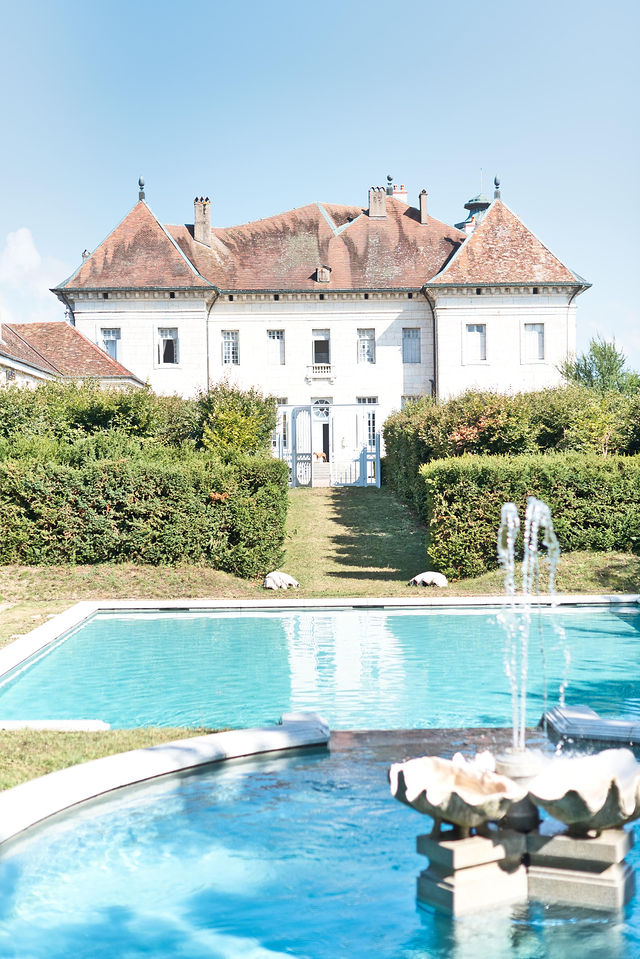
Uzel Castle is a historic estate in Pelousey, France, whose origins are placed in the seventeenth or eighteenth century. Built for the Bietrix family, it later became a residence, a religious institution, a school, and a center for agricultural and supported-employment activities. Its early history is partly uncertain because documents concerning the property were destroyed during the French Revolution.
The Bietrix and Dunod de Charnage Families
The Bietrix family was the castle’s first known owner. The property is first documented in 1776, when Claude-Edme Lamy de Laperrière took possession of it. He had married Claude Alexandrine Bietrix in 1755. She was the daughter of Jean-Baptiste Joseph Bietrix, a magistrate who served as mayor of Besançon in 1728.
Marital difficulties led Claude Alexandrine Bietrix to have the property sealed between 1778 and 1780. She then decided to sell it to Jean Stanislas Dunod de Charnage and his wife, Marie-Emillienne Mourey. The Dunod de Charnage family occupied the castle for about fifty years. On 25 August 1813, Paul Richard Gabriel Dunod de Charnage married Marie Gabrielle Lamy de Laperrière, the granddaughter of Claude-Edme Lamy.
From Private Residence to Religious Institution
Dominique du Pouey later acquired Uzel Castle. A retired general, he died there on 11 September 1873. In April 1881, the General Council of the Doubs purchased the property for 50,000 francs. After completing work on the estate, the council sold it to the Sisters of Wisdom for 125,000 francs. This Catholic congregation undertook educational and charitable work, including the care and instruction of deaf people.
The Sisters of Wisdom transferred to the castle an institution for deaf people that had been founded in Besançon in 1877. The property therefore entered a new phase in which its buildings served an organized educational and charitable purpose rather than a private household.
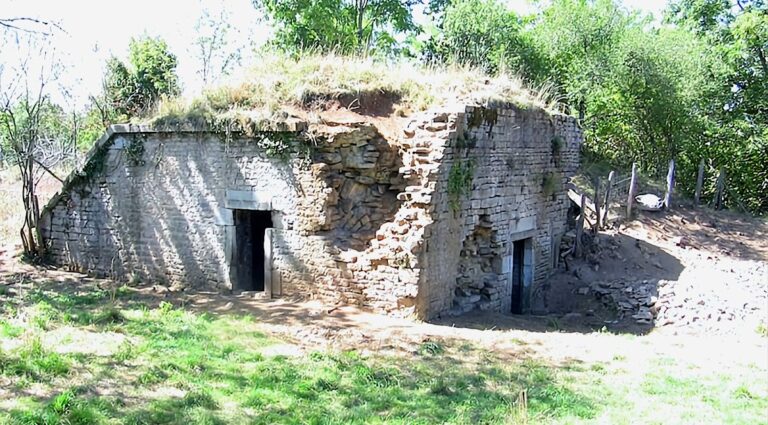
A Lourdes grotto was created on the property in 1919 to commemorate the parish’s preservation during the war. Modeled on the grotto associated with the Marian apparitions at Lourdes, it became a place for prayer and pilgrimage. The grotto was blessed on 9 October 1921 during the first pilgrimage. When the castle was later offered for sale, the grotto was bequeathed to the municipality of Pelousey in 1982.
The Apostolic School and the Company of Mary
On 13 February 1934, Uzel Castle was sold to the Company of Mary, also known as the Montfortians, for 250,000 francs payable over ten years. The furnishings were sold separately for 30,000 francs. The congregation, founded in the tradition of Louis de Montfort and devoted especially to religious education and missionary work, transferred the Apostolic School of Liège to the estate.
The school began its first academic year at Uzel in October 1938. During the 1970s, enrollment declined sharply, and Catholic teachers were replaced by lay teachers. Teaching ended altogether in 1982, after which the castle was put up for sale.
Supported Employment and Later Use
In 1983, the Besançon branch of Adapei purchased the property and established an ESAT there. Adapei supports people with intellectual disabilities and their families, while an ESAT is a French supported-employment institution that combines vocational work with assistance for people with disabilities.
The later operation included quail breeding, snail farming, laying-hen breeding, poultry breeding and slaughter, and the processing of farm products. In 1990, the institution abandoned quail breeding, snail farming, laying-hen breeding, and farm-product processing, concentrating instead on catering for collective institutions and on poultry breeding and slaughter. The kitchen was enlarged in 1996 and moved entirely to Besançon in 2003. La ferme d’Uzel is now the surviving structure of this later on-site operation.
Remains
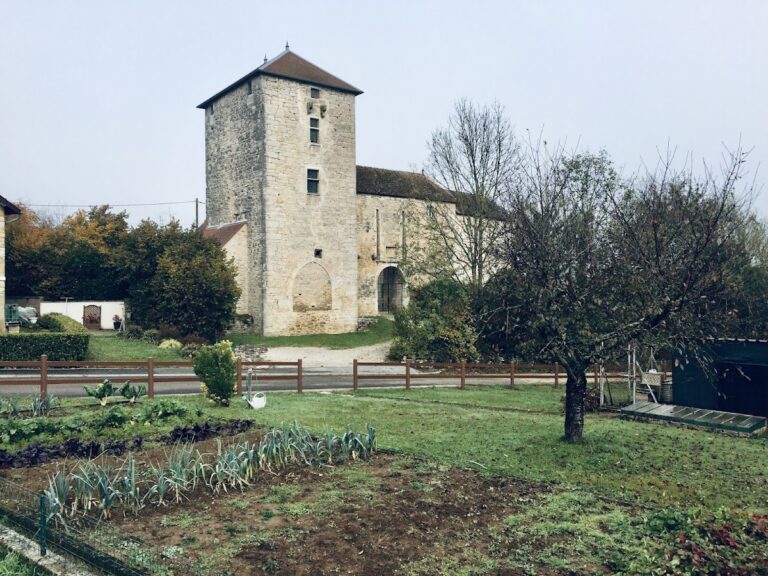
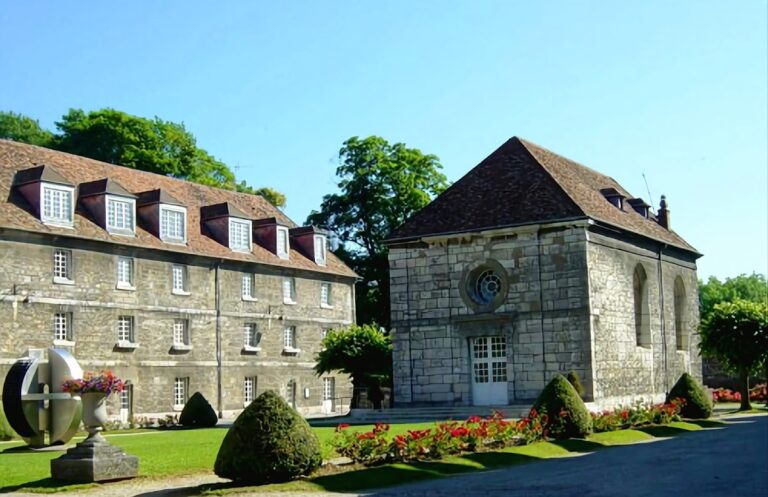
Uzel Castle consists of the principal residence together with agricultural, educational, religious, and service buildings added or adapted during its successive institutional uses. The surviving arrangement reflects the property’s transformation from a family estate into a complex serving religious education, charitable care, farming, food production, and supported employment.
Educational and Religious Buildings
Dormitory Building
A building used for dormitories was enlarged in the early 1950s by the addition of one storey. Its alteration belongs to the period when the estate housed the Apostolic School and accommodated its educational community.
Chapel
A chapel designed by the architect Rainer Senn began construction in January 1961. Marcel-Marie Dubois, archbishop of Besançon, blessed its foundation stone on 3 June 1962. The chapel forms part of the religious and educational facilities developed at the castle during the twentieth century.
Lourdes Grotto
The Lourdes grotto was created on the property in 1919 and blessed in 1921. Its devotional purpose was connected with the parish’s preservation during the war and with the first pilgrimage held there on 9 October 1921. The municipality of Pelousey received the grotto when it was bequeathed in 1982.
Agricultural and Food-Processing Facilities
Farm Buildings
A brooder house and a laying-hen facility were installed in 1938. A farm was created in 1948 and enlarged after land was purchased from a man named Bové on 1 January 1949. These facilities formed part of the agricultural development associated with the castle’s institutional use.
Production and Kitchen Facilities
The estate’s agricultural and food-processing installations supported quail breeding, snail farming, laying-hen breeding, poultry breeding and slaughter, and the processing of farm products. The kitchen was enlarged in 1996 before being relocated entirely to Besançon in 2003, reflecting the concentration of the operation away from the castle.
La ferme d’Uzel
La ferme d’Uzel remains at Uzel Castle as the surviving on-site structure of the later ESAT operation. It represents the final phase of the estate’s development as a place combining agricultural activity, food production, and supported employment.
Nearby sites