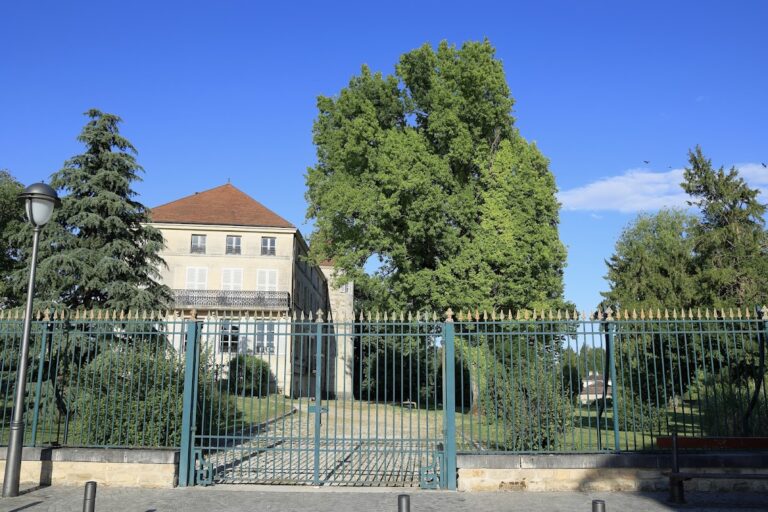
Château d’En-Haut de Joinville: Fortified Seat of the Lords of Joinville


Site at a Glance
- Rating
- 4.8
- Popularity
- Very Low
- Country
- France
- Primary era
- Medieval
- Eras represented
- Medieval
- Civilizations
- County of Champagne
- Site type
- Military
- Remains
- Castle
On this page6 sections
History
Château d’En-Haut de Joinville is a medieval fortified castle in France, founded during the first half of the eleventh century by Étienne de Vaux, the first known lord of Joinville. It became the seat of the lordship of Joinville, a territorial domain governed by a lord within the feudal system, and its rulers held their position as vassals in a hierarchy of obligations to a superior lord.
Foundation and medieval development
The chronicle of Alberic of Trois-Fontaines records that Étienne de Vaux began the first castle at Joinville. His successors expanded the complex, added to its embellishment, and strengthened its fortifications. The castle occupied a hill above the western side of Joinville, giving the lordship a fortified seat beside the Marne River and near important roads.
Around the middle of the twelfth century, Geoffroy III de Joinville established the Collegiate Church of Saint-Laurent near the castle. A collegiate church was served by a college of clergy rather than by monks. Saint-Laurent first served as the castle chapel and later became the burial church of the ruling lords, linking the religious foundation closely to the medieval lordship.
Revolutionary sale and demolition
The castle buildings were sold on 27 April 1791 by Philippe Égalité, the revolutionary title of Louis Philippe Joseph, Duke of Orléans and then lord of Joinville. The sale required the purchaser to demolish the buildings, and the demolition followed shortly afterward.
The former castle has remained part of the historical memory of Joinville through several representations. It appeared in a seventeenth-century view of the town and castle, while later drawings attempted to reconstruct its possible appearance in 1747 and 1780. A nineteenth-century naive painting of the site is held in a private collection.
Remains
Hilltop setting and fortification walls
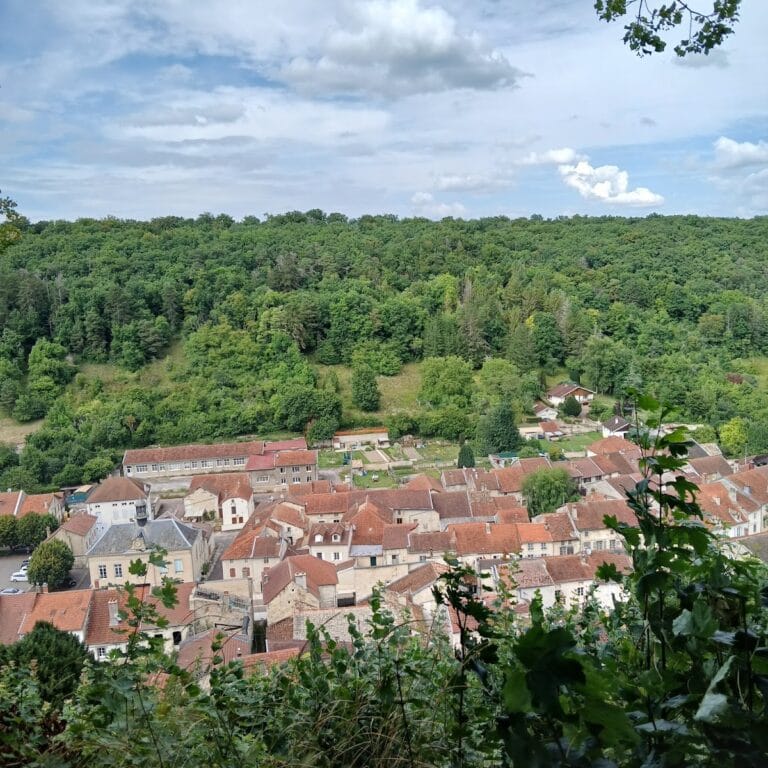
The castle was built along the edge of a hill overlooking the western side of Joinville and the Marne River. Its position also placed it beside the former roads from Saint-Dizier to Vignory and from Joinville to Vaucouleurs. The surviving fabric consists of remnants of the former fortification walls along the hill’s edge. Current maps call the hill Haute Motte, while the cadastral locality is named Le Bastion.
Collegiate Church of Saint-Laurent
The Collegiate Church of Saint-Laurent stood near the castle and formed part of its medieval setting. Founded by Geoffroy III de Joinville around the middle of the twelfth century, it functioned first as the lords’ chapel and later as their burial church, reflecting the religious and commemorative role attached to the castle complex.