Seillon Charterhouse: A Carthusian Monastery in France
Site at a Glance
- Rating
- 5
- Popularity
- Very Low
- Country
- France
- Primary era
- Early Modern
- External website
- Open
- Eras represented
- Medieval, Early Modern
- Civilizations
- French
- Site type
- Religious
- Remains
- Monastery
On this page9 sections
History
Seillon Charterhouse, also known as the Chartreuse de Seillon, was a Catholic monastery for men near Péronnas in France. It belonged to the Carthusian Order, a contemplative Catholic order combining solitary enclosure with limited communal observance, and its foundation is conventionally dated to around 1168 in the medieval period. Dedicated to Notre-Dame, the monastery held extensive possessions in the forest of Seillon and exercised judicial authority within its boundaries.
Origins and Carthusian Foundation
The monastery’s beginnings were debated by historians in the sixteenth and seventeenth centuries. One tradition attributed its foundation to Humbert de Baugé, archbishop of Lyon, in 1148, while another credited Humbert de Coligny with building it around 1131. A further tradition described an earlier religious settlement in the forest of Seillon, near Saint-Pierre de Brou. Otho of Ambronay was said to have established a small chapel and cell there, after which Martin of Ambronay attracted other religious. Their superior, Clément, joined the Carthusian Order with the remaining community in 1187.
Another account placed the monastery’s establishment in the second half of the twelfth century, when the Carthusians received a Benedictine priory dependent on Joug-Dieu Abbey. A Benedictine priory was a smaller religious house governed by a prior and normally dependent on a larger abbey. The community’s possession of the forest of Seillon led to continuing disputes with the nearby town of Bourg.
Patronage and Jurisdiction
In 1180, Ulric and Gui de Bâgé granted the monastery full judicial authority over the people and property within its boundaries. Amédée V, Count of Savoy, confirmed this concession on 4 March 1307. The lords of Bâgé and Coligny and the counts of Mâcon were among its early benefactors. Bernard de la Baume and his brothers made gifts in 1190, while other benefactors included Renaud de Forez, archbishop of Lyon, in 1226; Ponce, lord of Cuiseaux, in 1230; Guillaume de Chabeu, lord of Saint-Trivier, and his wife Béatrix, in 1243; Foulque de Rochefort in 1261; and Barthélemy du Saix in 1265.
Before leaving for the Fourth Crusade in 1202, Hugues de Coligny gave the Carthusians all his possessions at Sélignac for the construction of another charterhouse. The Fourth Crusade was the expedition launched in 1202 that was diverted to Constantinople rather than reaching the Holy Land.
Decline, Reconstruction, and Suppression
A plague affected the monastery between 1482 and 1524 and contributed to a decline in discipline. Hostilities between France and Savoy at the end of the sixteenth century then ruined an attempted restoration. Following the Treaty of Lyon in 1601, which brought peace between the two powers, the monastery was rebuilt during the first half of the seventeenth century.
The community was led by priors including Humbert de Baugé around 1153, Boson in 1187, Ponce de Villars, bishop of Mâcon, Étienne from 1209 to 1211, Raynaud in 1220, Gabriel Magnati, who died while serving as prior in 1652, and Xavier de Pons, the last prior.
On 13 February 1790, the Constituent Assembly abolished monastic vows and suppressed religious congregations. The monks chose to continue in communal life, but the community was legally dispersed in October 1792. The charterhouse was almost entirely demolished in 1794.
Later Use and Cultural Memory
An orphanage was established at the former monastery in 1859, and the site became the mother house of the Franciscan Sisters of Seillon. The former charterhouse also appears in Alexandre Dumas’s novel The Companions of Jehu, where it serves as a meeting place for the “Companions of Jehu.” The garden of the former charterhouse is included in the General Inventory of Cultural Heritage.
Remains
Surviving Structures and Garden
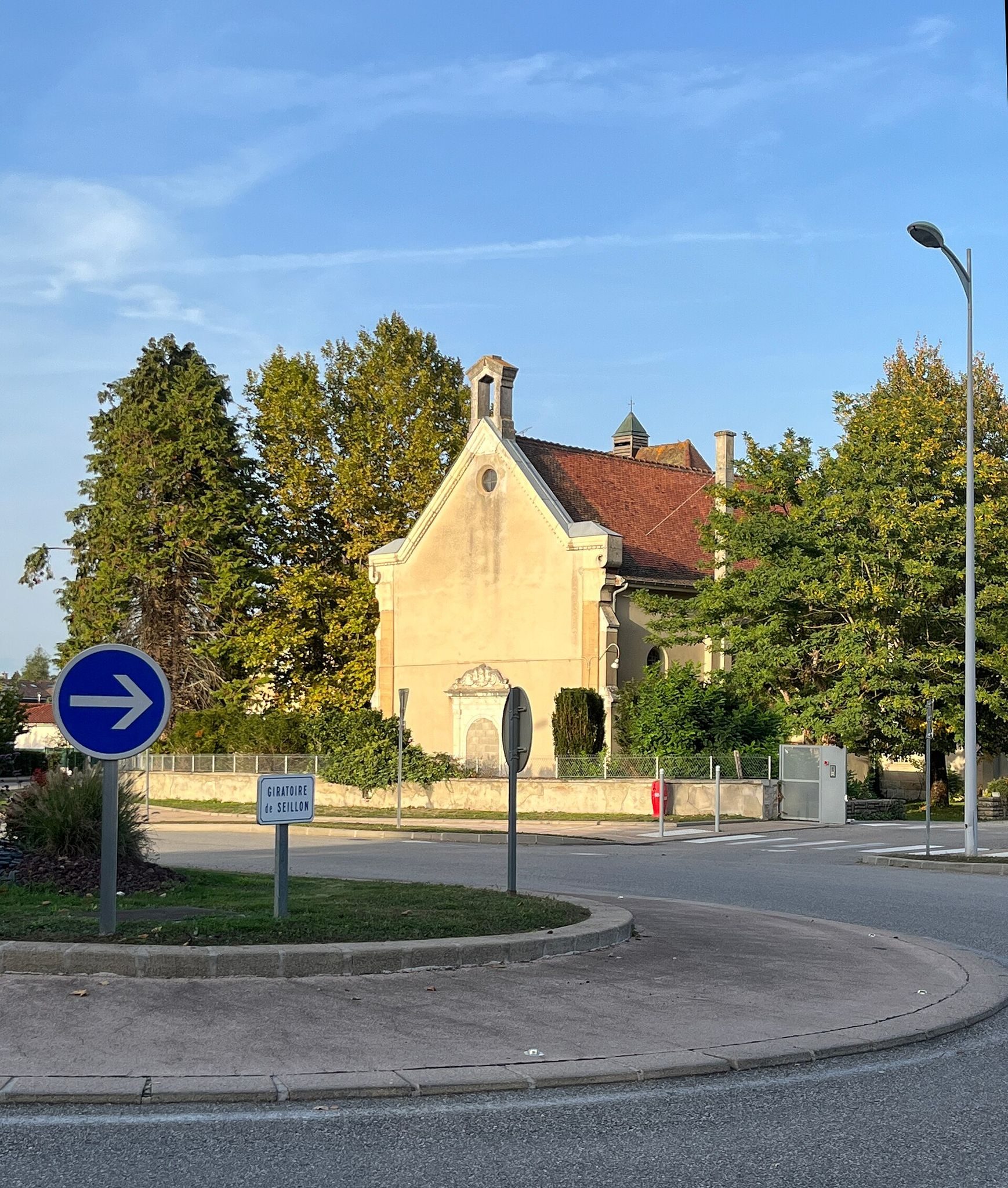
The former charterhouse at Péronnas was almost completely razed in 1794. Its surviving physical evidence is therefore limited to the identified remains of the entrance building and the garden associated with the former monastery.
Entrance-Building Gable
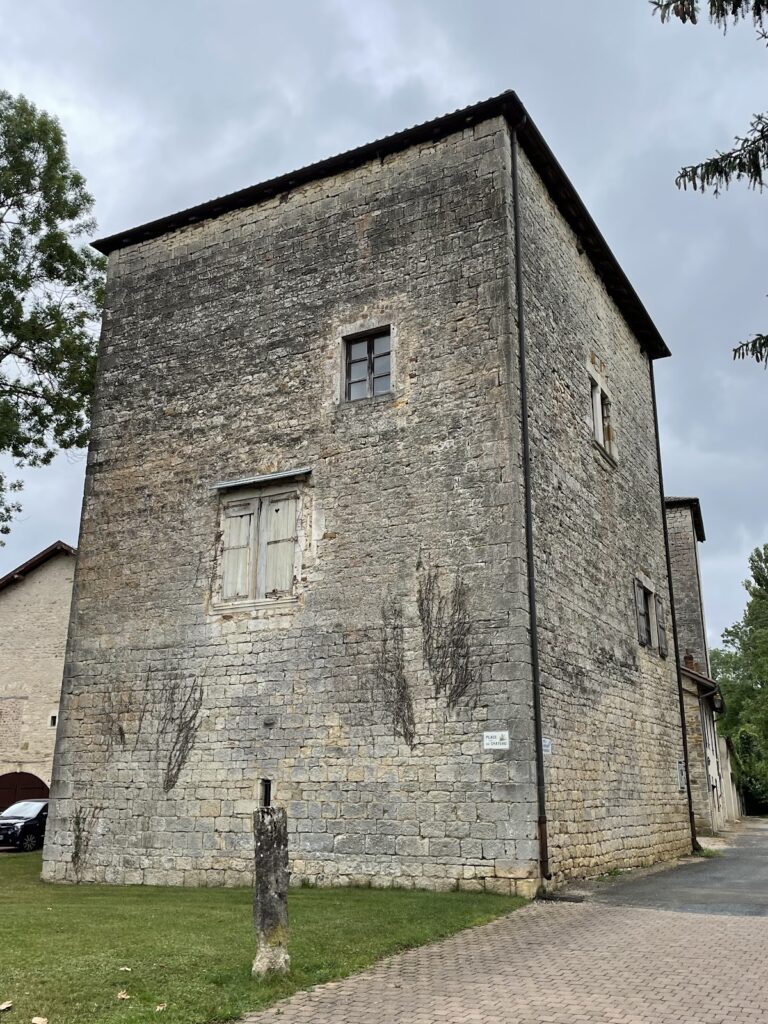
The gable of the façade of the entrance building is the only surviving part identified from the monastery. It preserves a fragment of the building that once formed part of the charterhouse’s entrance complex.
Former Monastery Garden
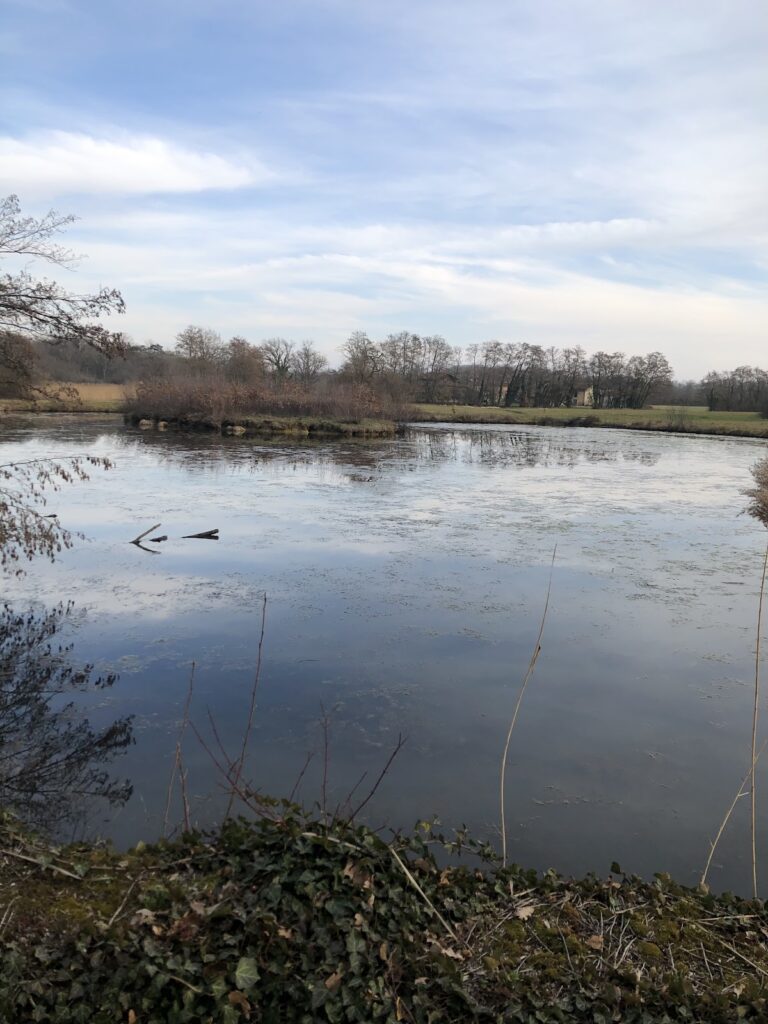
The site also retains the garden of the former charterhouse. Its inclusion in the General Inventory of Cultural Heritage recognizes the garden as part of the surviving historical setting of Seillon.
The monastery’s heraldic emblem consisted of an azure shield bearing a gold Latin cross intertwined with a capital S and flanked above by two gold stars.