Chapel of Our Lady of the Crag: A Medieval Marian Shrine in Knaresborough
Site at a Glance
- Popularity
- Medium
- Country
- United Kingdom
- Primary era
- Medieval
- Eras represented
- Medieval, Early Modern
- Civilizations
- English
- Site type
- Religious
- Remains
- Chapel
On this page7 sections
History
The Chapel of Our Lady of the Crag is a medieval rock-cut chapel in Knaresborough, United Kingdom, probably built in 1408 or 1409. Its place on a pilgrimage route to Knaresborough Priory, which has since been demolished, gave it a devotional role.
Foundation and medieval setting
A charter issued under Henry IV records that John Mason received uncultivated land below the quarry and permission to excavate beneath it for a chapel. John and those holding rights through him could keep the property for their lifetimes in return for annual rent. The chapel may have been built by John, also known as John the Mason.
A foundation legend tells how a rockfall threatened John’s son while they worked in the quarry. After John prayed to the Virgin Mary, the stones supposedly changed course and the boy survived. The story says that John vowed to build a chapel in gratitude.
Religious change and later care
Dedicated to St Mary, the chapel served as an oratory, a small place set aside for prayer, and a Marian shrine dedicated to Mary, the mother of Jesus. Pilgrims visited it in the sixteenth and seventeenth centuries. Its use as a place of worship ended after Henry VIII’s Reformation, the religious and institutional transformation of the English church during his reign.
A 1907 Ordnance Survey map incorrectly labeled the chapel as St Robert’s Chapel. It is separate from the Holy Cross Chapel and cave associated with Robert of Knaresborough, a medieval hermit, farther down the River Nidd. By 1916 the chapel belonged to Ampleforth Abbey, a Catholic Benedictine community, and had been reconsecrated for Catholic worship. Three carved heads were removed from its right-hand wall at that time. A statue associated with the chapel and dated to 1919 now stands in the grounds of St Mary’s Catholic Church.
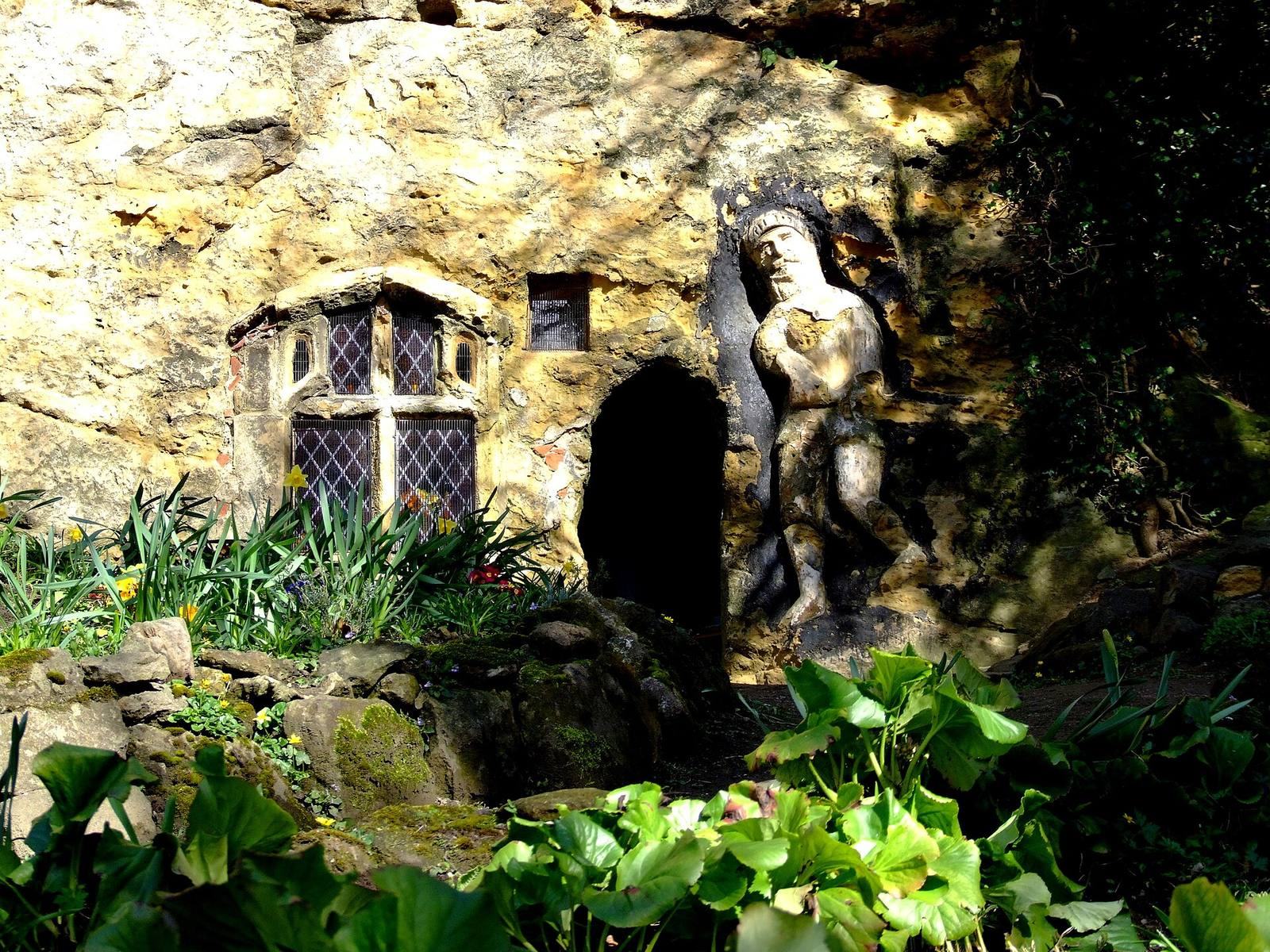
The Chapel of Our Lady of the Crag Trust has cared for the site since 2017. In 2019 vandals broke the window glass, which was not medieval. The windows were later conserved and the carved knight at the entrance restored. The chapel is Grade I listed, the highest category of listed-building protection in England.
Remains
The rock-cut chapel
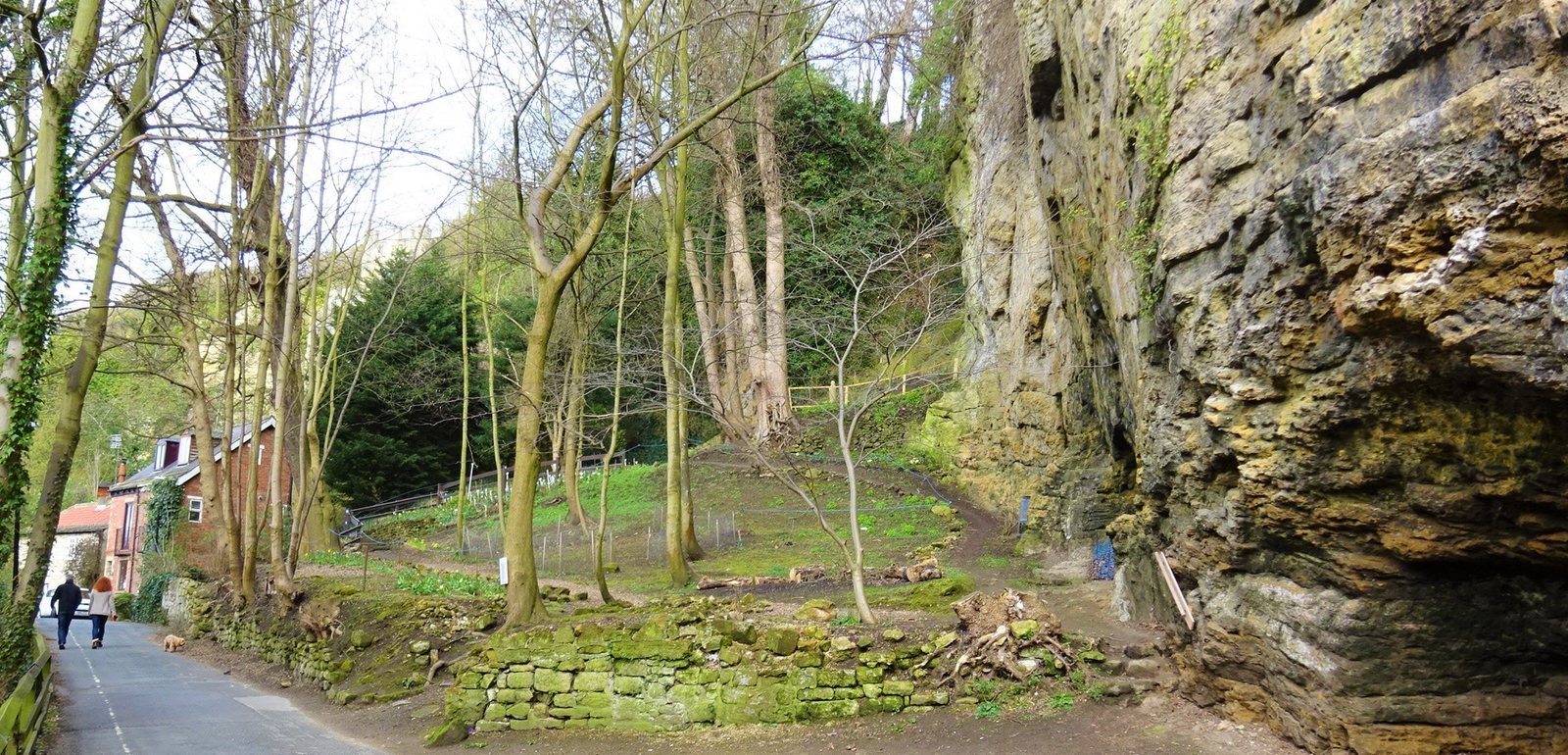
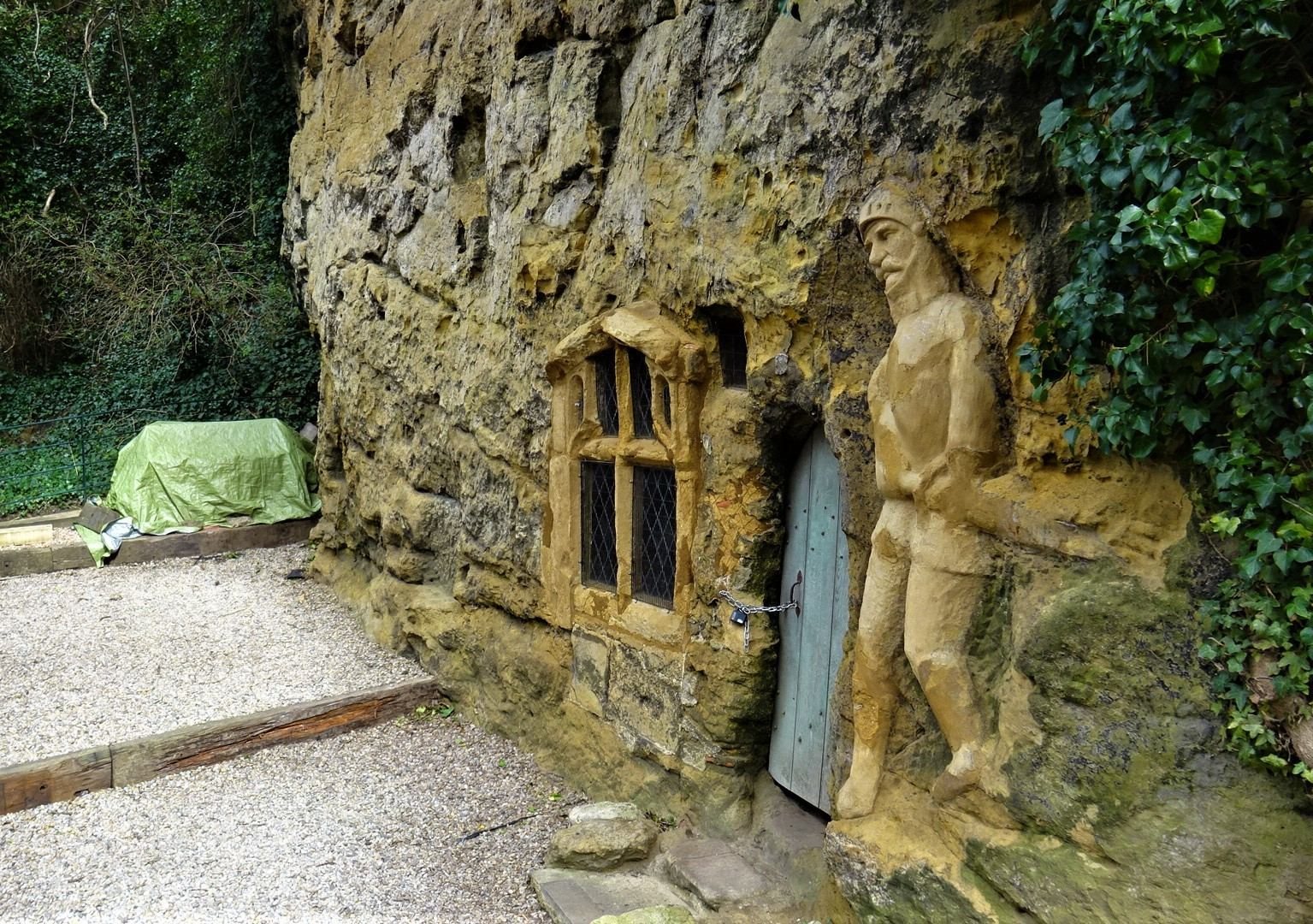
Cut into a sandstone cliff beside Nidd Gorge, the chapel occupies an old quarry and measures 12 feet long, 8 feet wide, and 7 feet high. Its interior includes a carved altar with a canopy and niche, gargoyles, and a vaulted ceiling with roof bosses, projecting carved features in the vault. The ceiling has been compared with that of Wallace’s Cave in Auchinleck, Ayrshire. Pillars have capitals, their upper sections, decorated with foliage. Other features include a Celtic head and a piscina, a basin with a drain used in church ritual. The medieval window frames hold glass that is not medieval. A sculpted Madonna and Child was placed in the shrine in 2000.
Entrance and approach
A large carved knight stands outside the entrance. It may be as old as the chapel, although Historic England dates it to between 1695 and 1739. The English poet William Wordsworth mentioned the figure in 1814. Its head is separate from its body and may have been recarved during the Victorian period. A narrow path from Abbey Road reaches the chapel by steps cut into the sandstone; the steps survive but are heavily worn. A 1907 map also shows a path connecting the chapel with the nearby House in the Rock.
Quarry and cliff dwellings
The quarry supplied stone for work at Knaresborough Castle, the parish church, and other places. Rough dwellings also occupied the crag over the centuries. Postholes cut into the sandstone mark where these structures stood. The basic lean-to dwellings had been cleared by the end of the Victorian era.