Cave of the Beasts: A Prehistoric Rock-Art Shelter in Egypt
Site at a Glance
- Rating
- 4.3
- Popularity
- Very Low
- Country
- Egypt
- Primary era
- Stone Age
- Eras represented
- Stone Age
- Civilizations
- Unclassified
- Site type
- Civic
- Remains
- Rock Art
On this page9 sections
History
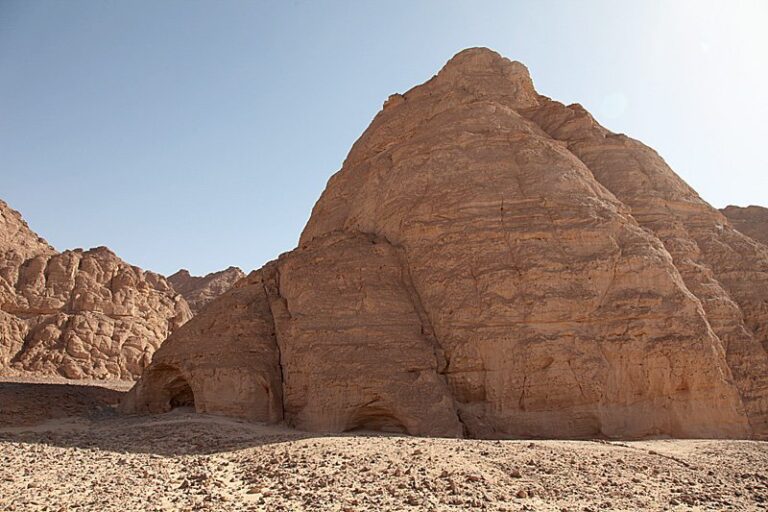
The Cave of the Beasts is a natural rock shelter in Wadi Sura in southwestern Egypt, with paintings made more than 7,000 years ago at the beginning of the Neolithic, a prehistoric period associated with the development of farming and settled communities. At that time, the Sahara was wetter, and a lake from the Holocene, the geological epoch following the last major ice age, lay below the shelter.
Around 6,000 years ago, near the end of the Holocene’s relatively warm climatic optimum, rainfall ceased and the region became arid. As the Sahara turned to desert, people left the area.
Rediscovery and interpretation
Archaeologists Massimo and Jacopo Foggini and Ahmed Mestikawi discovered the shelter in 2002. It is also known as Foggini-Mestikawi Cave and Foggini Cave, names associated with its discoverers. In 2010, researchers from the University of Cologne carried out a detailed study and adopted the name Wadi Sura II to distinguish it from the Cave of Swimmers, or Wadi Sura I, about 10 km to the east. Extended study of the shelter began in 2012.
The depictions of everyday activities have been considered unusual among rock-art sites. Some archaeologists have proposed that later religious use helped preserve the paintings. Other interpretations suggest that the figures may have served as prototypes for deities in ancient Egyptian religion, though their symbolism remains undeciphered.
Remains
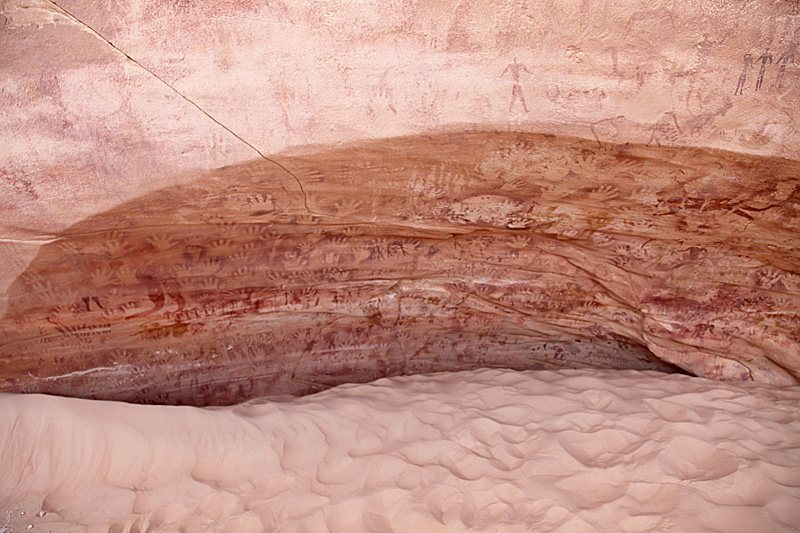
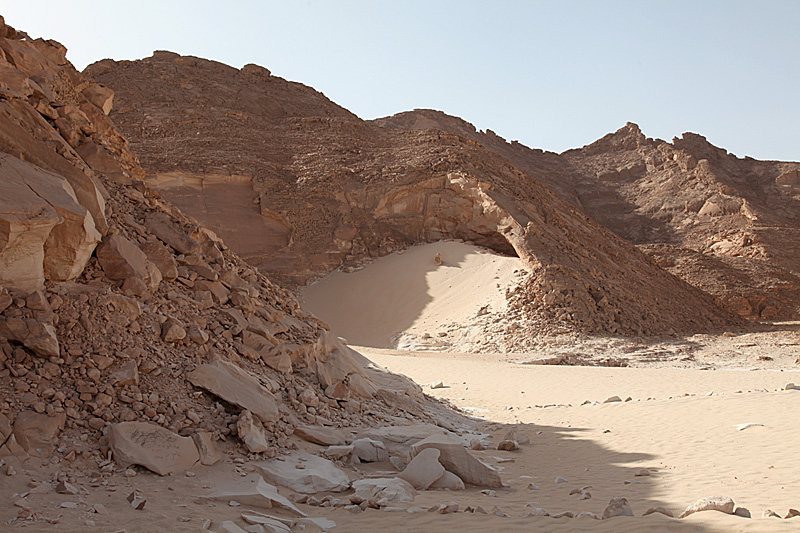
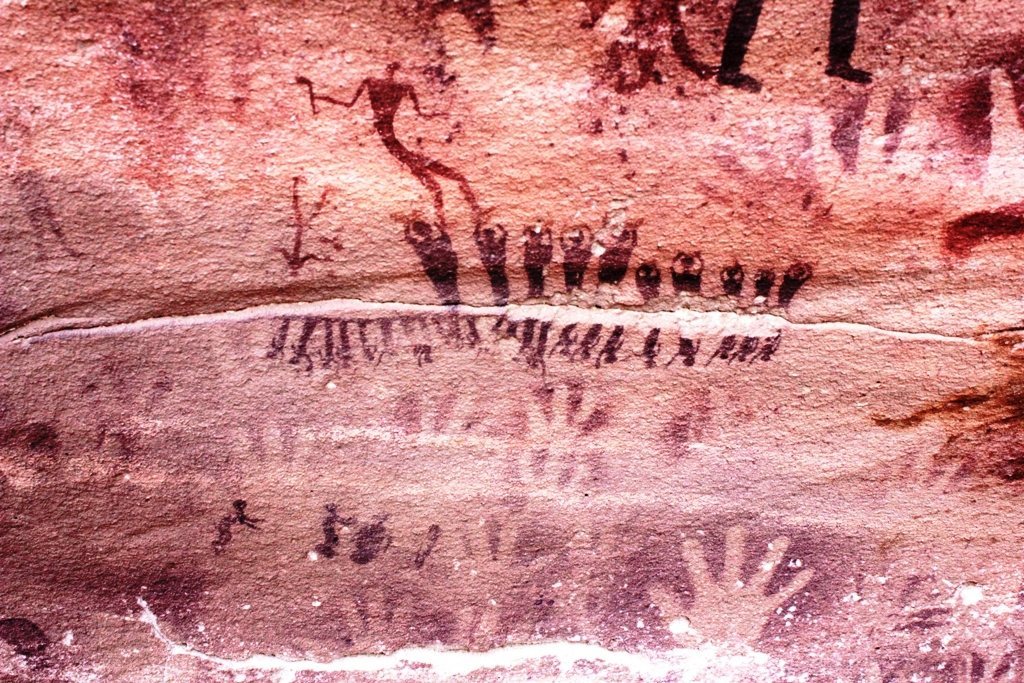
The natural shelter stands at the southwestern foot of the Gilf Kebir Mountains, near the Libyan and Sudanese borders. It is about 17 m wide and nearly 7 m high. Its painted panel is approximately 17 m long and 3 m high, with more than 5,000 figures in red, yellow, white, and black. The paintings are well preserved, and some overlap. The surrounding region is now uninhabited and among the Sahara’s most arid areas.
Painted and engraved imagery
Stencils and painted layers
Hundreds of hand and foot images were made as negative stencils, formed by applying pigment around a hand or foot so its shape remained unpainted. The hand stencils make up the oldest layer; small white figures and larger yellow figures were added later. Of roughly 900 hand stencils, a 2016 study identified 13 that differ markedly from human hands in size, proportions, and shape. The study judged that they were more likely made using a monitor lizard’s hand as a stencil.
People and daily activities
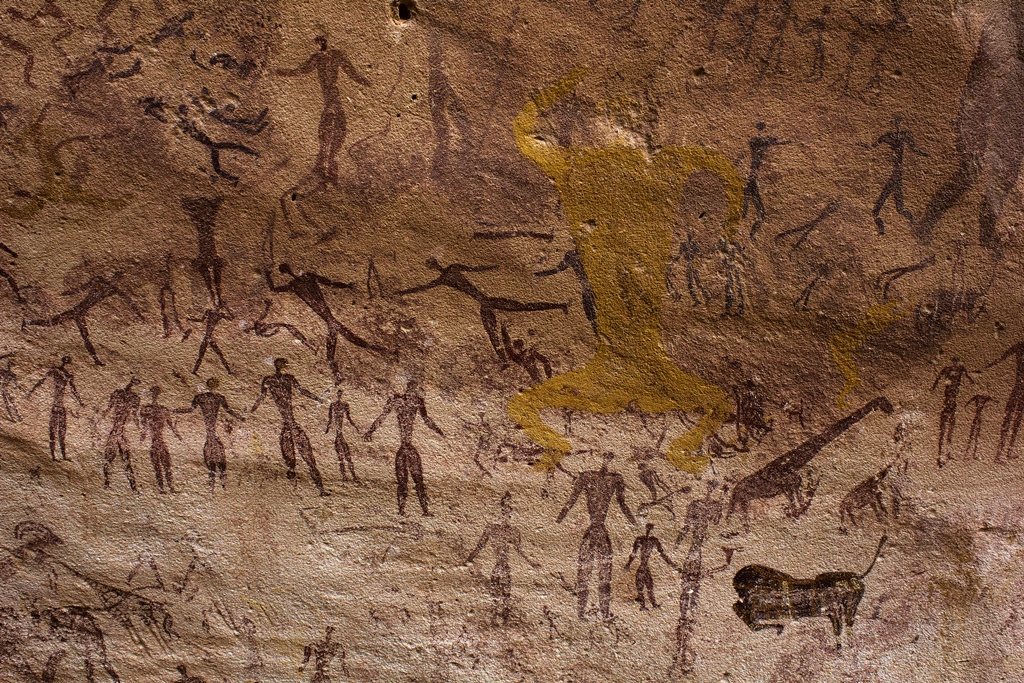
Painted people are shown dancing, floating, swimming, hunting, cooking, and carrying out other domestic activities. At the lower left of the panel, a natural fissure divides two groups. Figures above it hold slings over their heads, while members of the smaller group below raise one hand and look to the left. Some human scenes appear unrelated to the beasts.
Beasts
Many headless mythical beasts appear among the human figures. They have long tails and bull-like bodies, often with only three legs, sometimes shaped like human limbs. Some seem to swallow or spit out people, and some are shown with what resembles a golden net. Many of these beasts were deliberately damaged in prehistoric times.
Animals, boats, and other subjects
The paintings also include boats, some depicted as up to 30 m long, as well as kites, wild plants, and unidentified creatures. Recognizable animals include elephants, ostriches, antelopes, gazelles, and giraffes.
Rock carvings
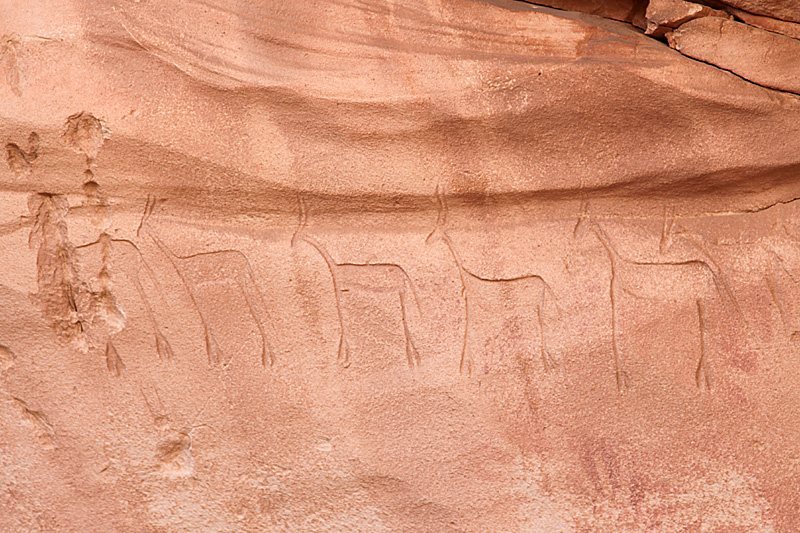
Shallow relief carvings run along the upper part of the shelter. Gazelles are among the figures carved into the rock.