Castle of Monforte (Chaves): A Medieval Portuguese Fortress
Site at a Glance
- Rating
- 4.2
- Popularity
- Low
- Country
- Portugal
- Primary era
- Medieval
- Eras represented
- Medieval, Early Modern
- Civilizations
- Portuguese
- Site type
- Military
- Remains
- Castle
On this page13 sections
History
Castle of Monforte (Chaves) is a medieval Portuguese fortress in Chaves, Portugal, built and expanded on a site first occupied in prehistoric times. The castle took shape during the organization of Portugal’s northern frontier, with its medieval construction completed in 1312 and its defenses later adapted for artillery.
Prehistoric and Roman occupation
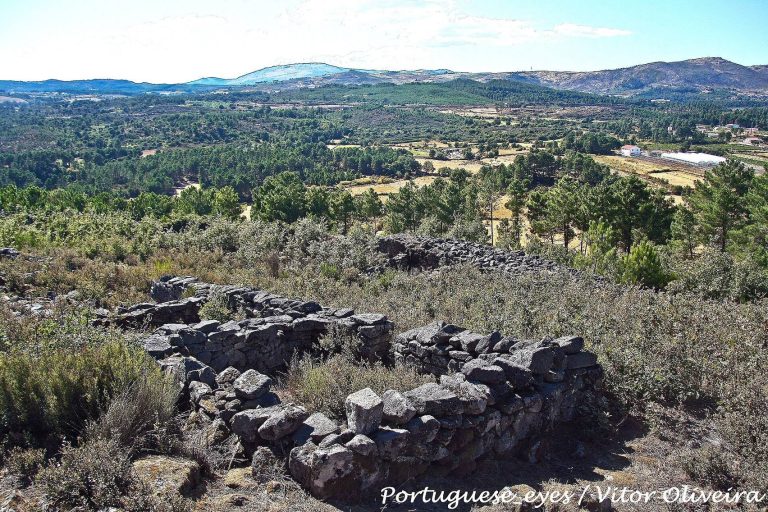
Archaeological evidence indicates that the hill was first used as a prehistoric fortified settlement, or castro, a defended community usually placed on elevated ground. The location was occupied again during the Roman conquest of the Iberian Peninsula, partly because it lay near the road connecting Astorga and Braga. Two Roman altars attest to this phase, including one dedicated to the god Larouco.
Medieval foundation and growth
Monforte de Rio Livre became part of Portuguese territory during the formation of Portugal. The earliest medieval reference to its castle dates from the twelfth century and identifies a noble tenens, a holder or governor of a castle or territorial jurisdiction.
In 1267, the judicial district of Rio Livre was established. Afonso III granted the settlement a charter in 1273, made it the administrative center of the territory, and created a two-day fair. These measures strengthened the northern frontier, and renovation of the fortified complex probably began during this period. Work continued under Afonso III’s son and successor, Denis I, and was completed in 1312. The settlement then possessed a strong keep, walls reinforced by three towers, a local military governor known as an alcaide, and an expanding urban enclosure. Afonso IV later granted the settlement another charter.
Late medieval settlement and defenses
During the Portuguese crisis of 1383–1385, a dynastic conflict over the Portuguese throne, the town and castle initially supported Beatriz before accepting John I during his campaign in northern Portugal. In 1420, at the request of the local alcaide, Álvaro Gonçalves de Ataíde, John I established a legal refuge for fifty fugitives, excluding traitors and treacherous persons. The measure was intended to encourage settlement and reinforce the town’s defenses.
The barbican, an outer defensive work protecting an entrance or wall, and the surrounding moat are believed to date from this period. Duarte de Armas, a Portuguese military surveyor and illustrator, recorded them in the Book of Fortresses around 1509. At that time, only ten or twelve households remained in the town, while many other houses stood abandoned or in ruins. Manuel I later granted the settlement a new charter.
Early modern military use
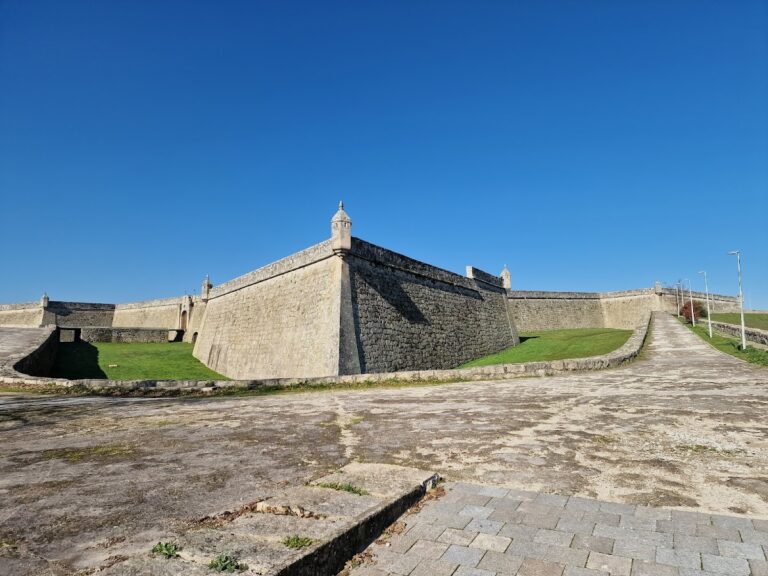
During the Portuguese Restoration War, the War Council of John IV ordered the modernization of Monforte’s defenses so they could withstand artillery fire. A half-bastion and other defensive works were constructed east of the medieval keep. The domains of Monforte de Rio Livre were administered by the House of the Infantado, established by Infante Francisco, son of Peter II and brother of John V.
An eighteenth-century plan shows the fortification in a ruined state, when the town had approximately 381 inhabitants. At the beginning of the nineteenth century, the castle received four artillery pieces as part of a national program to improve fortifications.
Abandonment and preservation
The municipality of Monforte de Rio Livre was abolished on 6 November 1853, after which the castle and settlement were abandoned. The castle had housed the principal institutions of the municipality, which existed from 1273 to 1853.
A decree published on 5 January 1950 declared the castle a National Monument. Public authorities later carried out consolidation and restoration works, followed by an improvement campaign in the 1990s that included a small archaeological investigation. A medieval-fair reenactment is held around the castle each summer, with period costumes, games, and objects.
Remains
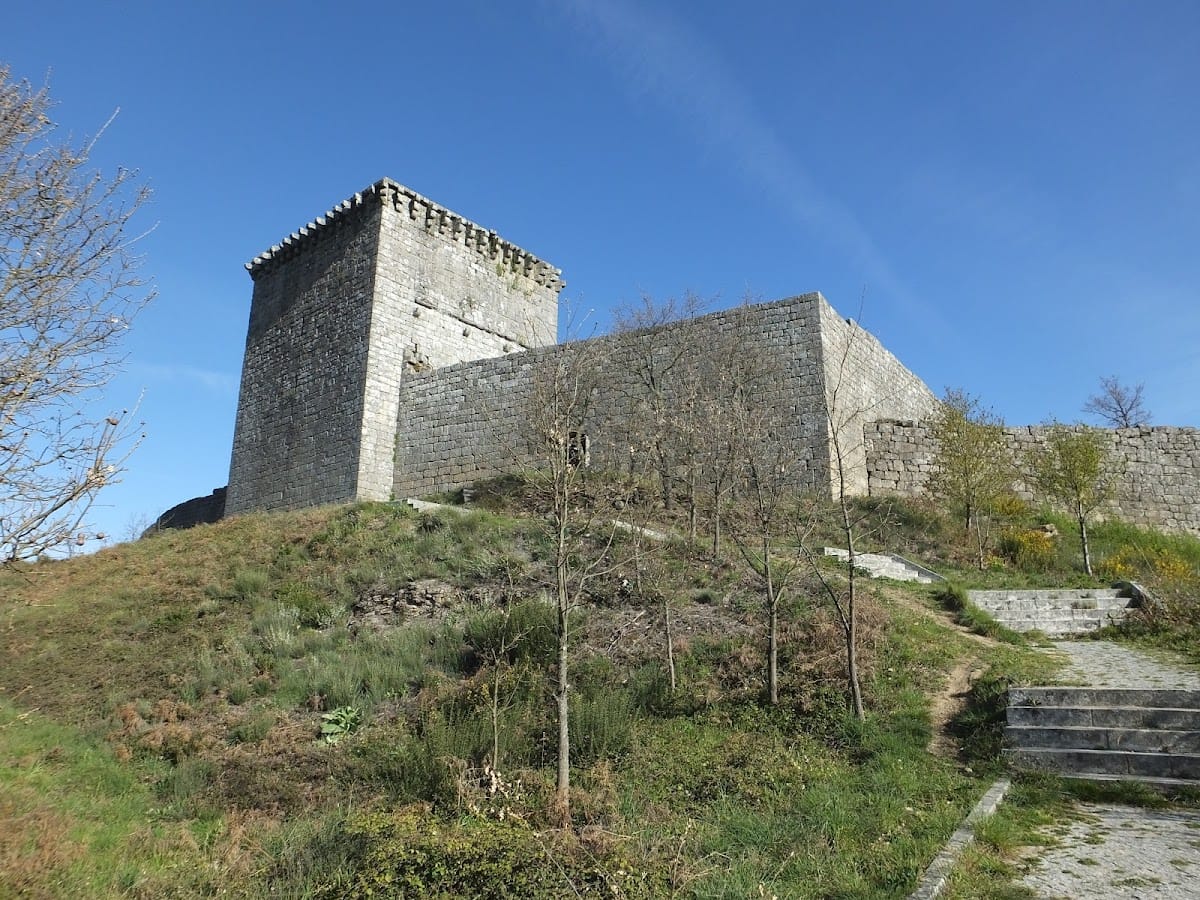
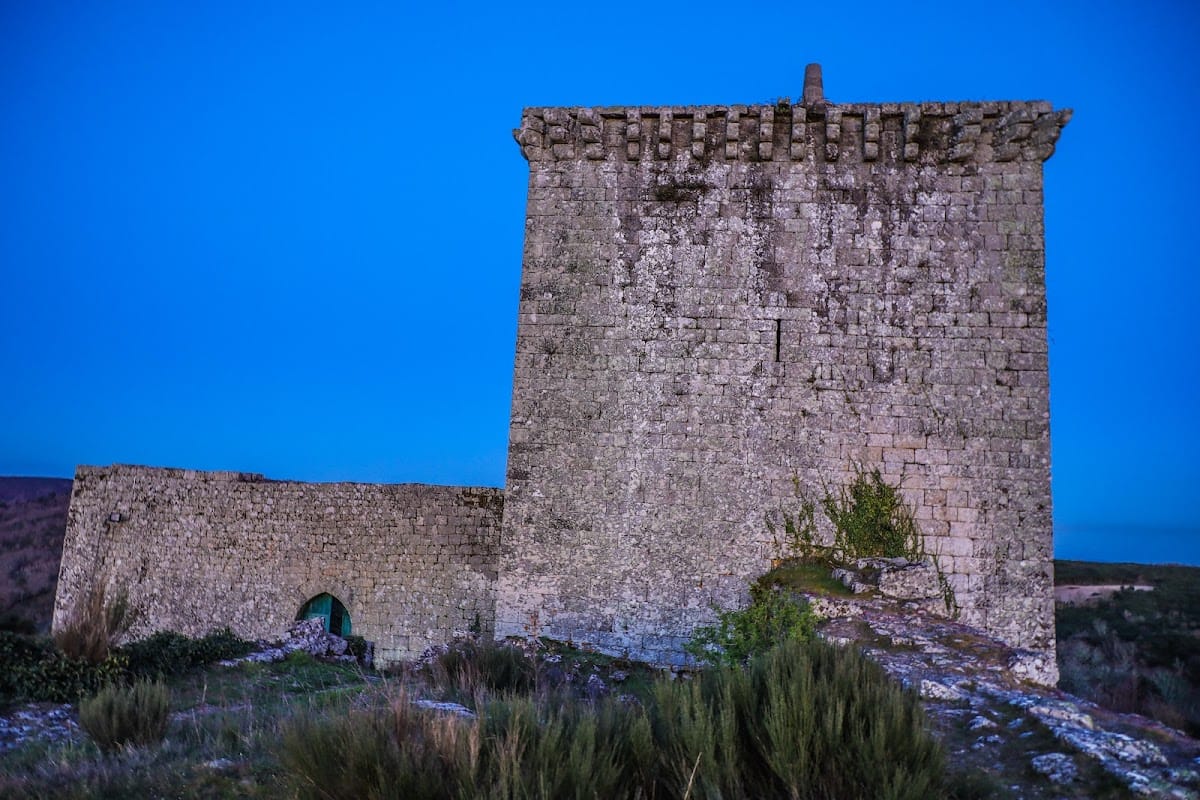
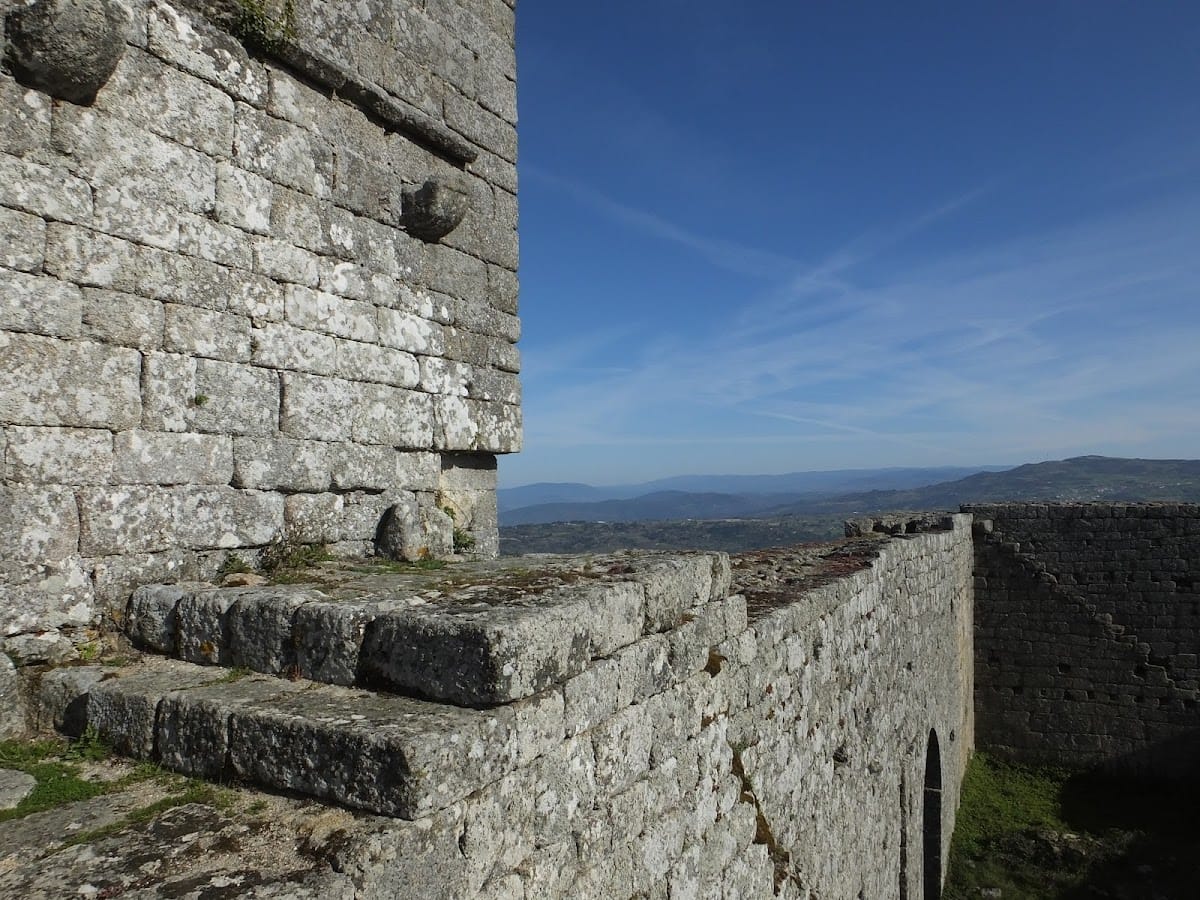
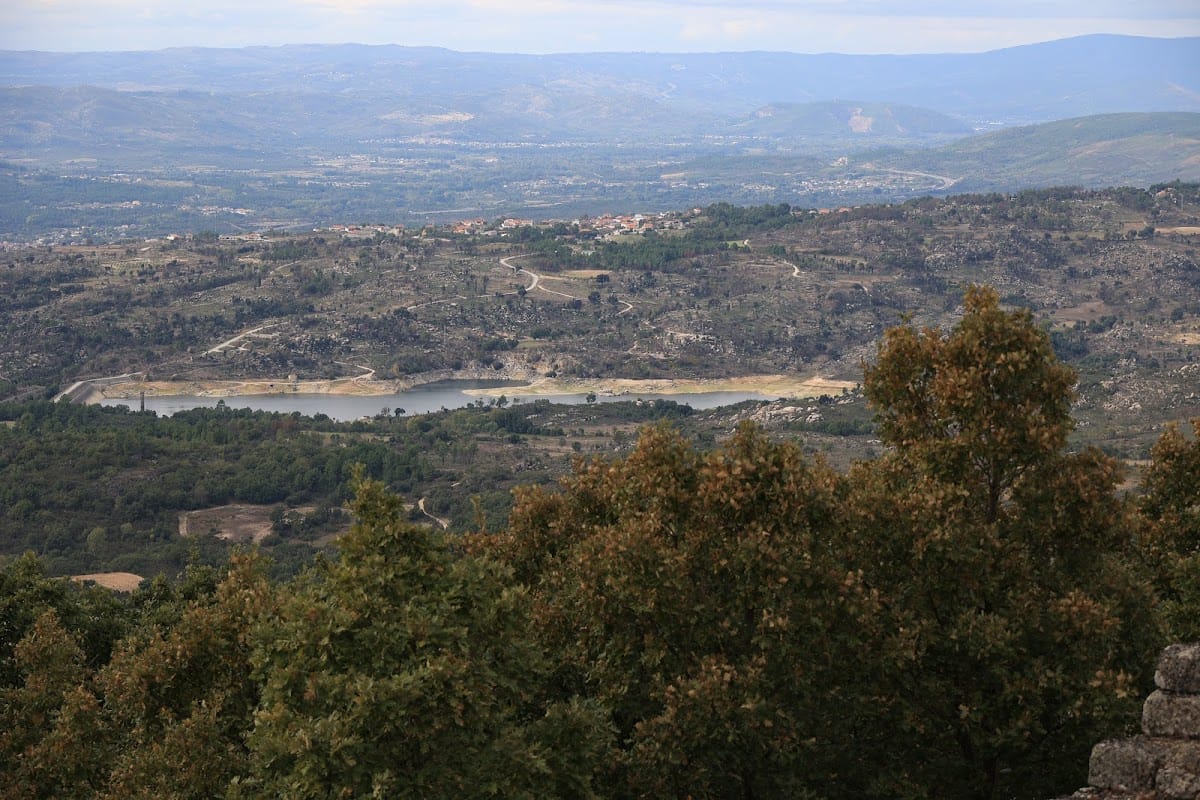
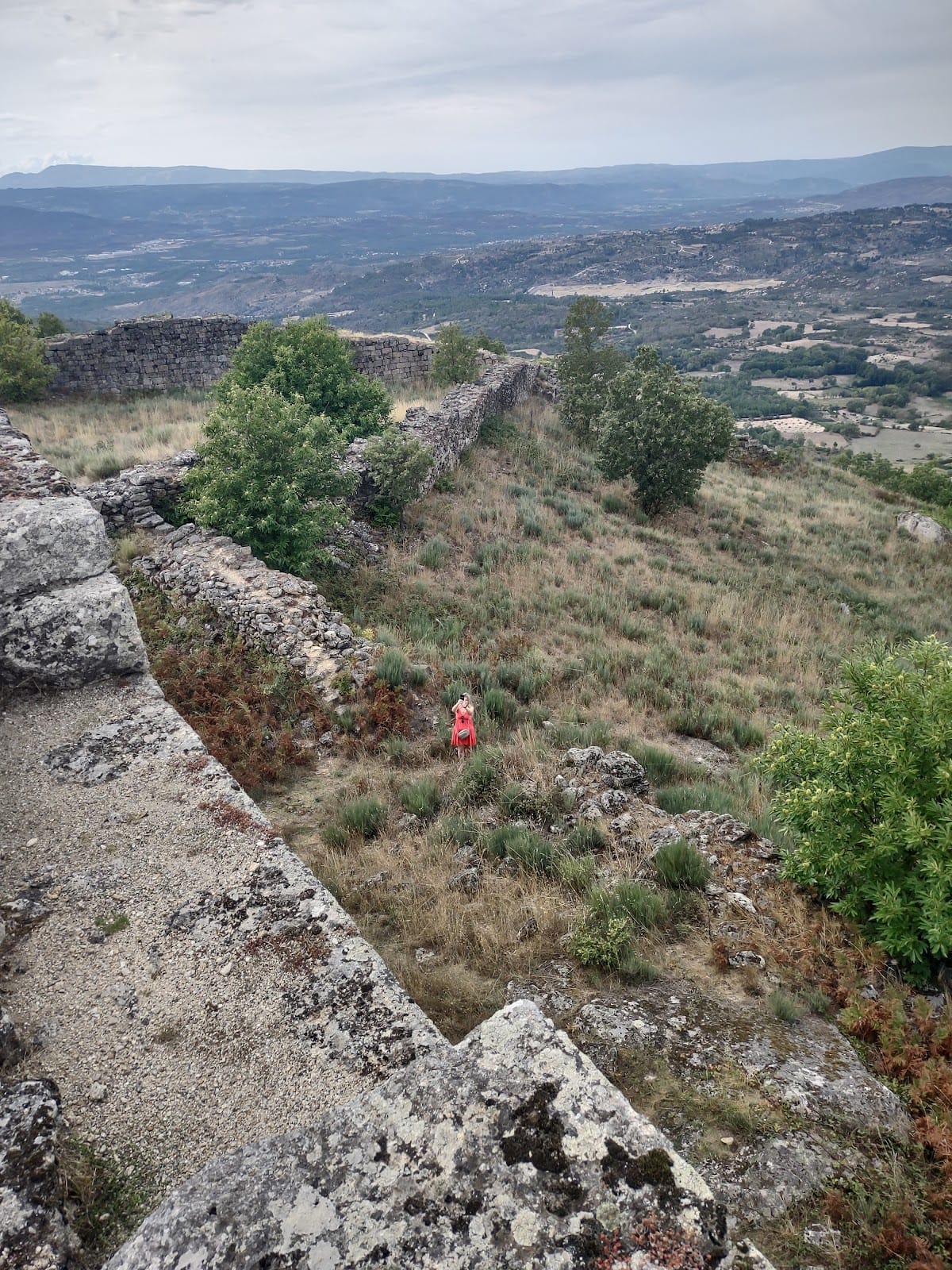
The surviving fortress occupies a cliff in the Brunheiro mountain range, above the settlement of Águas Frias and the Águas Livres watercourse. Granite walls, built from stone abundant in the region, enclose a courtyard reached through two gates. A wall-walk follows the tops of the walls, while the keep and later eastern defenses reveal the successive military functions of the site.
Medieval castle enclosure
Gates and walls
The west side is entered through the Porta da Vila, the wider gateway, which has a pointed arch and connected the castle with the medieval town. A narrower southern entrance, the Porta da Traição, has a round arch. The wall-walk provides movement along the wall tops, and a doorway from it leads directly into the keep.
Keep
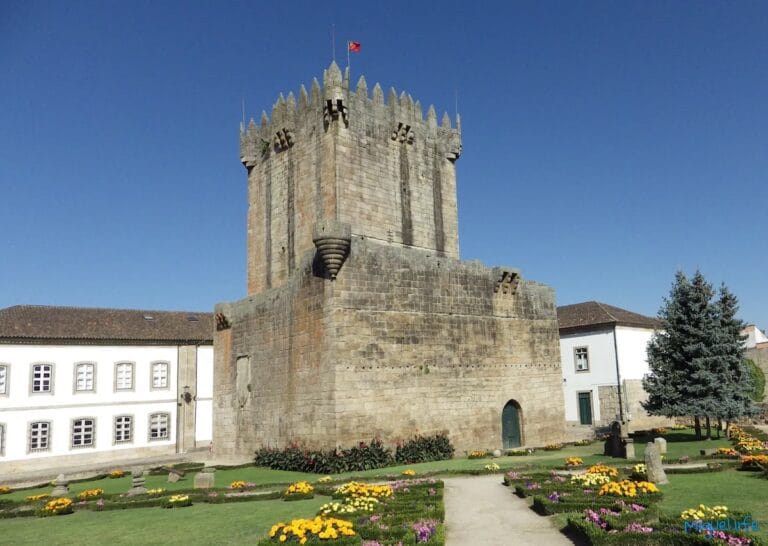
The quadrangular keep is crowned by a row of tripartite corbels. Its interior is arranged over three floors, lit by narrow openings cut through the walls. Entry is at the level of the middle floor through a high doorway with a round arch. The lowest floor contains a cistern covered by a vaulted roof.
Town enclosure and later defenses
Porta do Galeão
The former enclosure of the medieval town was entered through three gates. The surviving Porta do Galeão preserves part of that relationship between the settlement and its fortification.
Eastern artillery defenses
East of the medieval keep stands the half-bastion and a group of associated defensive structures added during the seventeenth-century adaptation of the castle to artillery. These works belong to the later military layer of the complex and extend the defensive system beyond the medieval enclosure.