Castle of Enciso: A Medieval Fortress in La Rioja, Spain
Site at a Glance
- Rating
- 4.7
- Popularity
- Very Low
- Country
- Spain
- Primary era
- Medieval
- Eras represented
- Medieval
- Civilizations
- Umayyad
- Site type
- Military
- Remains
- Castle
On this page10 sections
History
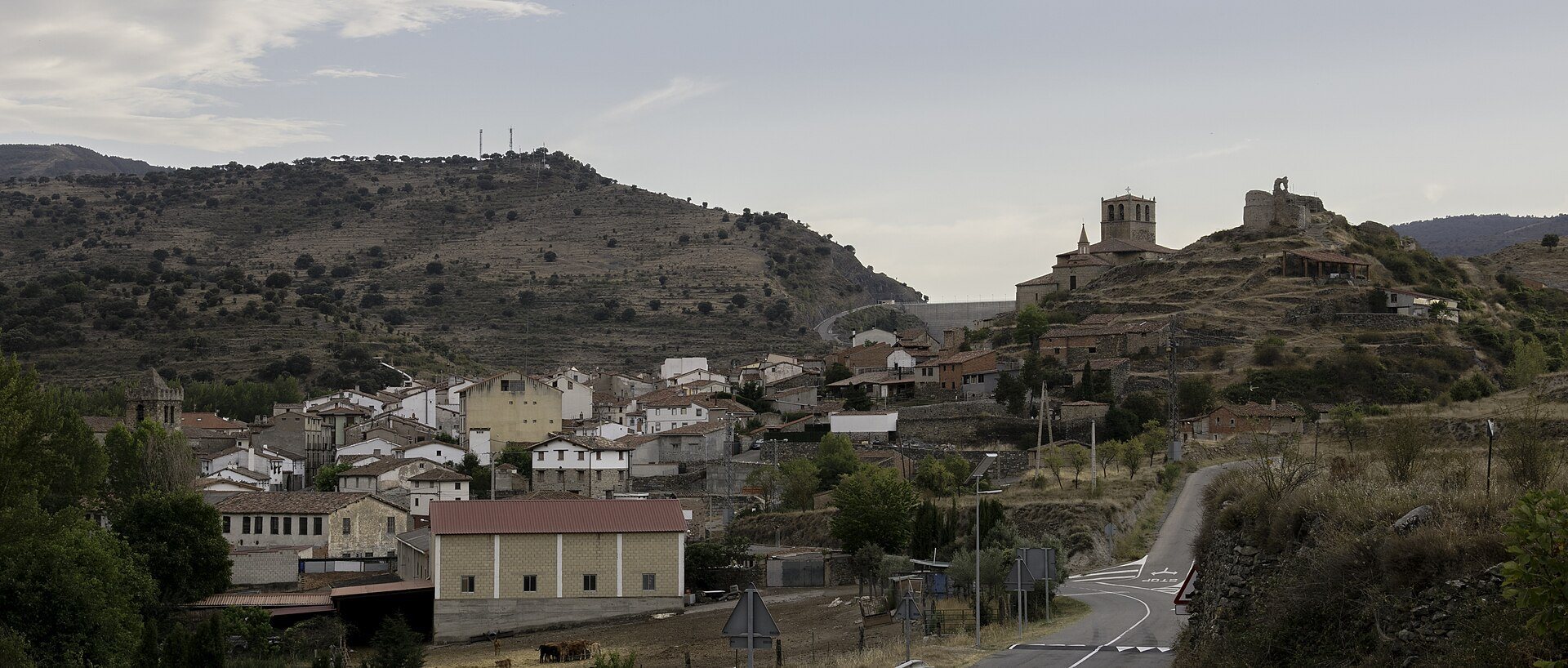
Castle of Enciso is a ruined fortress above Enciso in La Rioja, Spain, believed to have been constructed around the tenth century by Muslim families using Muslim building techniques. It was one of the oldest fortresses in La Rioja and occupied a frontier position in the Cidacos valley, where Christian control had not yet become firmly established.
Muslim frontier fortress
One interpretation attributes the castle to Christian settlers, but the prevailing view connects its construction or expansion with the Banu Qasi, a prominent Muslim family of local converts or descendants of converts to Islam who controlled territory in the Ebro region during the early medieval period. The family strengthened fortifications within its lands, and Enciso formed part of this contested frontier landscape.
Musa ibn Musa is said to have defended himself at Enciso against incursions by forces sent by Abd al-Rahman II, as well as against attacks by the kings of Navarre. These events place the fortress within the political and military struggles that shaped the valley during the early medieval period.
Royal possession and noble lordships
After Christian forces conquered the area, Fortún Iñíguez was the castle’s tenant in 1109. At that time Enciso was a royal possession, meaning that it was held directly by the kings of Castile. As the settlement gradually lost the defensive importance it had previously possessed, Alfonso VIII sold the castle to the lords of Cameros on 9 October 1184.
Diego Ximénez and Guiomar were recorded as owners after the sale, and in 1224 the castle and town were held by Álvaro Díaz, another member of the same family. In 1284, Álvaro Díaz’s nephew, Simón Ruiz, sold all the villages and castles between Yanguas and Préjano to the Order of Calatrava for 8,000 Alfonsine maravedís. This medieval military order held land and fortified sites in Christian Iberia. Four years later, it transferred the castle to Vela Ladrón de Guevara in exchange for estates at Écija.
The Medinaceli period and later decline
Enciso later passed through marriage into the Medinaceli family. Juana de Sarmiento, then lady of Enciso, married Luis de la Cerda, Count of Medinaceli. In her will of 27 January 1435, she assigned Enciso and other properties to the couple’s eldest son, Gastón. The castle consequently passed from the lordship of Cameros, a territory controlled by a noble family, to the Medinaceli family.
During the fifteenth century, the Medinaceli family temporarily had to return the properties to the lords of Cameros, although Medinaceli control of the castle was strengthened by the end of the century. In the early sixteenth century, the family commissioned Pero de Cubillas to prepare a reform project because the fortress had apparently deteriorated badly and stood in a ruinous condition. Whether the proposed work was completed remains uncertain.
Enciso still belonged to the Medinaceli family in 1641. By the nineteenth century, three of the five gates that had belonged to the wall surrounding the town were still preserved. During the twentieth century, the castle suffered further neglect, and some of its remains may have been reused as building material in houses within Enciso. The surviving ruins are now owned by the municipality and protected under Spain’s Law 16/1985 on Historical Heritage.
Remains
Hilltop layout
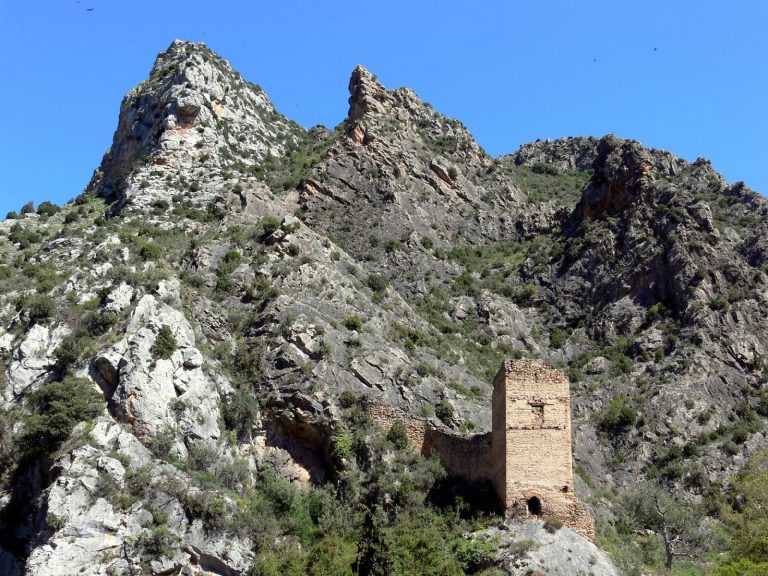
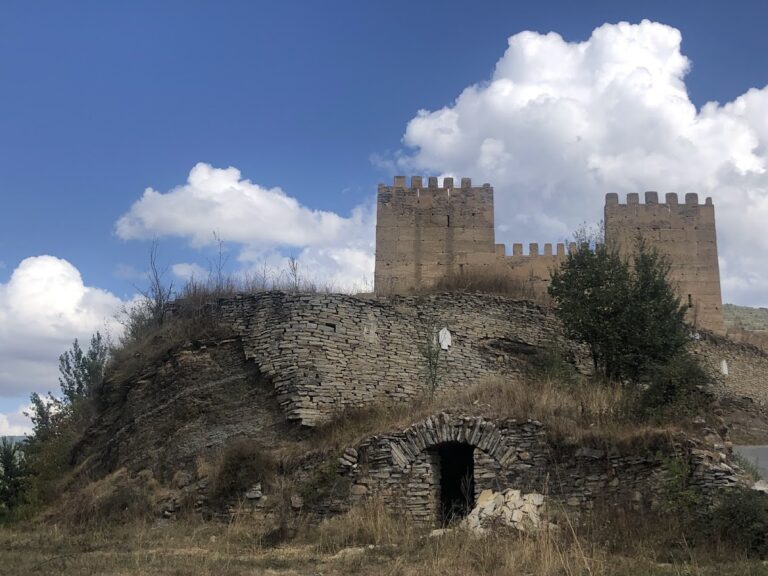
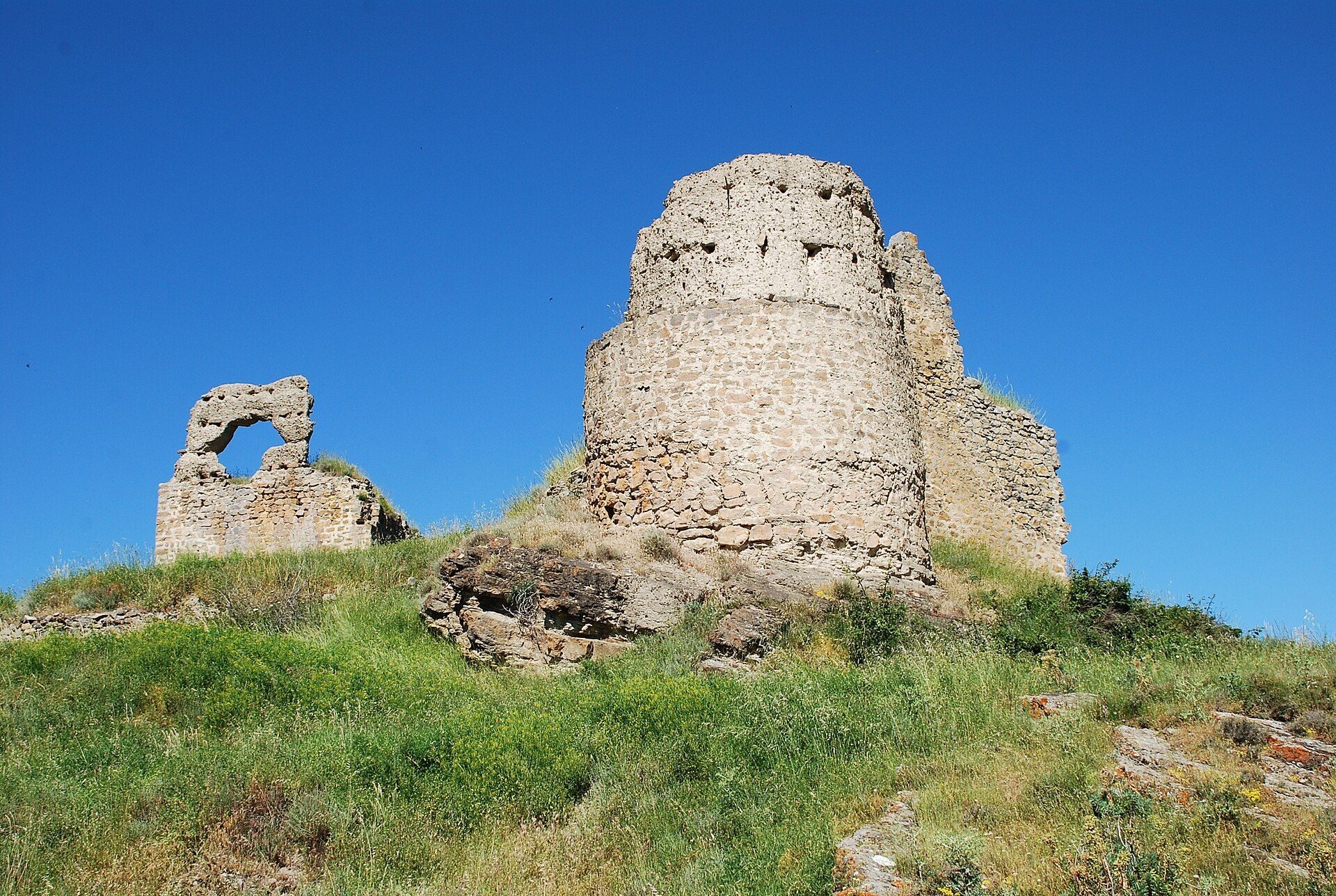
The ruined castle occupies the hill above Enciso, where its oval plan follows the shape of the ground. The fortress was arranged in two enclosures. A higher central enclosure contained the keep and the oval tower, while a surrounding enclosure extended around it. On the northern side, a linear wall ended in a separate tower.
The retaining walls between the two enclosures survive as ruined masonry and terraces. Together, these fragments show the former division of the fortress and the way its defenses were adapted to the hill. Only three principal structures remain from the larger complex: the keep, the oval tower, and the tower at the end of the northern wall.
Surviving defensive structures
The keep
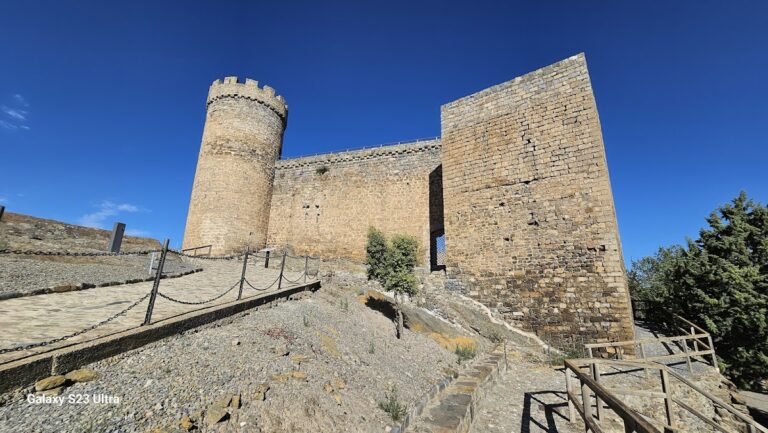
The keep, the principal fortified tower of a castle, has a square plan, massive proportions, and masonry construction. Its corners are aligned with the four cardinal points. Remains of wooden beams and marks in the walls that may have been beam sockets, recesses that received the ends of wooden beams, indicate that the building originally had three levels. Only the first level and the beginning of the second survive.
The lowest part may have served as the area used for homage, a formal expression of loyalty to the castle’s lord. It is now filled with rubble and earth, leaving the former arrangement of this level difficult to determine.
The oval tower
The oval tower stands in the same enclosure as the keep and takes its name from its ultrasemicircular plan, a curved outline extending beyond a semicircle. It was built mainly with stone formwork. Numerous holes remain on both the exterior and interior faces of its wall, and these may have held wooden beams during its construction or use.
The tower’s former height would have allowed it to monitor approaches to Enciso from the east and south. Its surviving curved masonry preserves part of the defensive arrangement that once complemented the square keep.
The northern wall tower
The tower at the end of the northern wall was reinforced with pillars of rammed earth, compacted earth formed into a solid structural mass within a frame. Vertically arranged stones framed these supports. The tower survives as part of the northern defensive line, whose remaining wall fragments and terraces helped define the outer enclosure.
The remains represent only fragments of a fortress that was formerly more extensive. Even in this reduced condition, the surviving walls, terraces, towers, and construction traces preserve the outline of a hilltop stronghold that changed hands repeatedly as the political control and military value of the valley evolved.