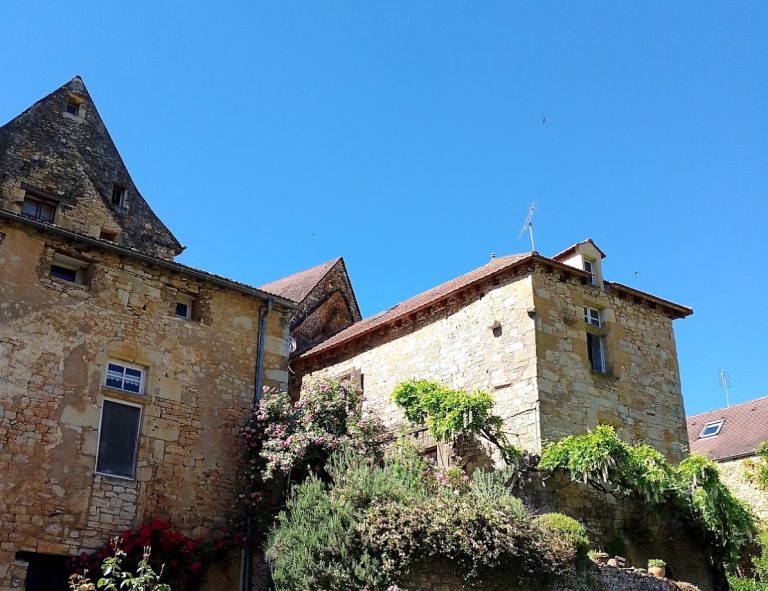
Castle of Castelnaud-la-Chapelle: A Medieval Fortress and Museum of Medieval Warfare


Site at a Glance
- Rating
- 4.6
- Popularity
- High
- Country
- France
- Primary era
- Medieval
- External website
- Open
- Eras represented
- Medieval, Early Modern
- Civilizations
- French
- Site type
- Military
- Remains
- Castle
On this page13 sections
History
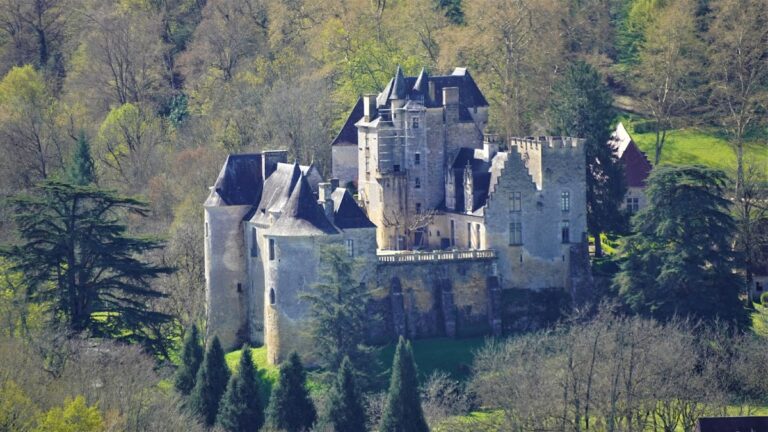
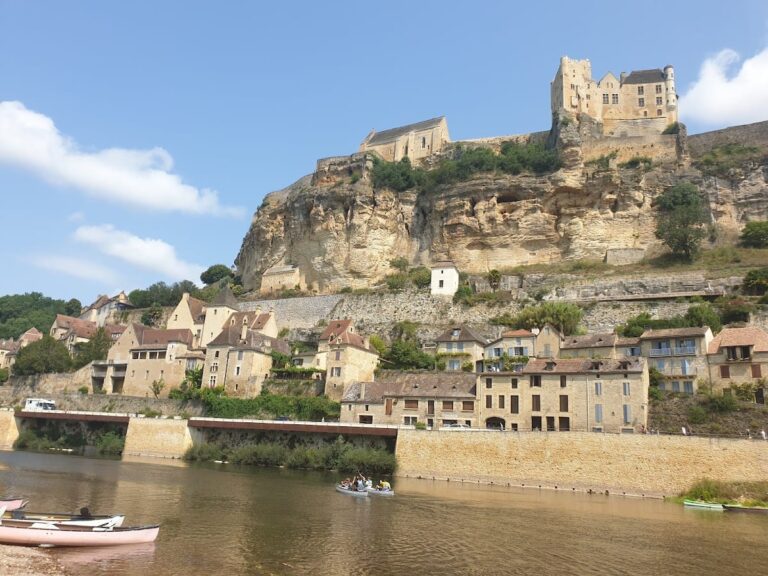
Castle of Castelnaud-la-Chapelle is a medieval fortress in France, built by feudal lords from the late twelfth century onward and developed between the thirteenth and seventeenth centuries. Rising above the meeting of the Dordogne and Céou valleys, it held an important defensive position opposite Beynac and later became the home of the Museum of Medieval Warfare.
Origins and the Albigensian Crusade
Castelnaud was probably constructed in the late twelfth century. It was held by Bernard de Casnac, a Cathar lord and vassal of the count of Toulouse. The Cathars belonged to a medieval Christian dualist movement condemned as heretical by the Catholic Church. Their political and religious influence in southern France led to the Albigensian Crusade, fought from 1208 to 1229 to suppress Catharism and its supporters.
Simon de Montfort, the leading military commander of the crusade, captured the fortress in 1214. Bernard de Casnac retook it, but the archbishop of Bordeaux burned the stronghold in 1215. A new castle was built in the mid-thirteenth century under Capetian authority. Following the Treaty of Paris in 1259, Castelnaud acknowledged the suzerainty, or superior lordship, of Henry III of England, who was also duke of Aquitaine.
The Caumont lordship and the Hundred Years’ War
In 1368, Magne de Castelnaud married Nompar de Caumont, bringing the Caumont family into possession of Castelnaud and Berbiguières. The family retained ownership until the French Revolution. The Caumonts supported the English during the Hundred Years’ War, the prolonged struggle between the English and French crowns conventionally dated from 1337 to 1453. As the conflict shifted across southwestern France, Castelnaud repeatedly changed allegiance.
After sixteen years of English occupation, forces commanded by Jean de Carbonnières, together with Jean de Veyrines of Saint-Alvère and Jean d’Aynac, retook the castle in March 1437. It returned to English control in March 1439. In 1442, Charles VII of France ordered a siege against the fortress, which was held by supporters of Henry VI of England. After three weeks, the garrison surrendered in exchange for 400 gold écus, and French forces definitively recovered Castelnaud on 7 October 1442.
Religious wars and abandonment
The Caumont family recovered the castle after the war. During the sixteenth-century Wars of Religion, the Huguenot captain Geoffroy de Vivans defended it for the Protestant Caumonts. Its bastion and artillery tower helped deter attacks during the intense conflicts in Périgord. A garrison of varying size remained at Castelnaud until the French Revolution.
After the owners fled, the castle was sold as national property in 1789 and used as a stone quarry. Quarrying also took place there in 1832. The artillery tower and the southern residential building lost their upper sections, while vegetation gradually overgrew the abandoned monument.
Restoration and museum use
Philippe Rossillon, a diplomat and mayor of Beynac-et-Cazenac, bought Castelnaud with his wife, Véronique Rossillon, in 1965. Restoration and rehabilitation continued from 1967 to 2012. In 1985, their son Kléber Rossillon succeeded his father, left Aérospatiale, opened the castle to the public, and established the Museum of Medieval Warfare. He also initiated full-scale reconstructions of siege machines.
The castle remains privately owned and functions as the Museum of Medieval Warfare. It was classified as a French historic monument in 1966. A further classification in 1980 included the castle and its fortified enclosure, while the entrance châtelet was listed separately that year.
Remains
Castle of Castelnaud-la-Chapelle occupies a rocky spur above the confluence of the Dordogne and Céou valleys. Its enclosing walls follow the shape of the spur, creating a fortified layout described as rational and effective. The surviving complex combines a thirteenth-century strong tower and enclosing walls with later medieval and early modern defenses, including a bastion and a circular artillery tower.
Fortifications and defensive works
Donjon and enclosing wall
The thirteenth-century donjon, the principal strong tower of a medieval castle, straddles the fortified enclosing wall, or enceinte. It protects the principal entrance and rises above the circular artillery tower built at the beginning of the sixteenth century. The donjon retains machicolations from the beginning of the fourteenth century, projecting openings through which defenders could attack people below.
The curtain wall, the wall connecting fortified structures, contains numerous arrow slits. It formed part of a defensive system that replaced an earlier, lower enclosure. Together, the wall, donjon, and later towers express the castle’s development from a medieval stronghold into a more heavily adapted artillery fortress.
Entrance defenses
The entrance to the high court was protected by a barbican, an outer defensive work guarding an entrance, as well as ditches, arrow slits, timber hoardings, and a murder hole. Hoardings were projecting wooden galleries used by defenders, while the murder hole was an opening above the entrance through which materials could be dropped or thrown onto attackers.
Artillery tower and bastion
Later defensive adaptations included a bastion and the circular artillery tower. The tower dates from the beginning of the sixteenth century and rises beneath the donjon. Its upper sections were lost after the castle’s abandonment and use as a stone quarry, leaving the surviving fortification connected to the broader history of early gunpowder defenses at Castelnaud.
Residential buildings and museum spaces
Seigneurial residence
The Museum of Medieval Warfare occupies rooms in the seigneurial residence and was inaugurated in 1985. Its fifteen rooms include an artillery room, passageways, arms rooms, model rooms, video rooms, terraces, an arms store, casemates, an armourer’s workshop, a kitchen, a furnished upper room in the donjon, and a hoardings gallery.
The museum collection contains approximately 300 weapons and related objects dating from the thirteenth to the seventeenth century. They come from France and elsewhere in Europe, particularly the German-speaking regions of Austria, Germany, and Switzerland. Swords, halberds, armour, crossbows, artillery pieces, furnishings, and a reconstructed bombard form part of the displays.
Siege engines and historic displays
Full-scale reconstructions include a trebuchet, bombard, mangonel, stone-thrower, bricole, and couillard, all medieval artillery or siege devices. Other displays include metal historical breastplates, a fifteenth-century-style reconstruction of painted decoration showing the Nine Worthies, a fifteenth-century armet, a twelve-barrel organ gun known as a ribaudequin, and a fourteenth-century image of Saint George defeating the dragon.