Castle Hill (Bila Tserkva): A Medieval Hillfort and Later Fortress
Site at a Glance
- Rating
- 4.6
- Popularity
- High
- Country
- Ukraine
- Primary era
- Medieval
- Eras represented
- Medieval, Early Modern, Modern
- Civilizations
- Kievan Rus, Russian
- Site type
- Military
- Remains
- Citadel
On this page14 sections
History
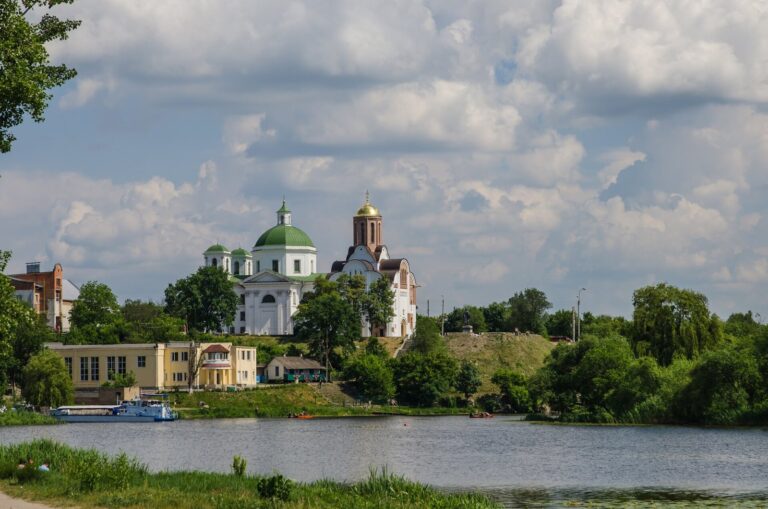
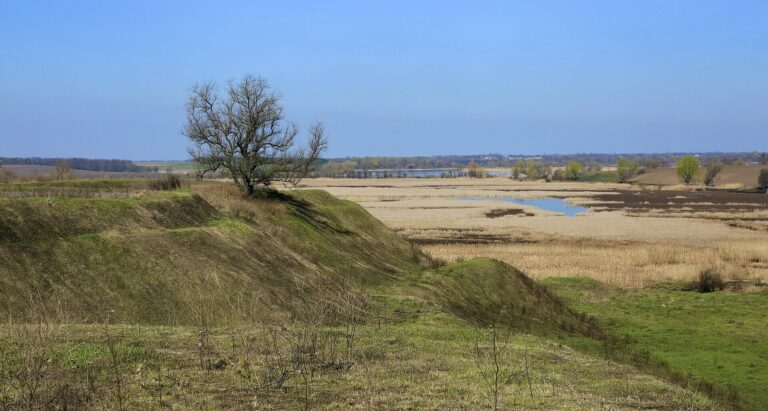
Castle Hill, in Bila Tserkva, Ukraine, is the site of Yuriev, a medieval hillfort and town on the left bank of the Ros River. Founded in 1032 by Yaroslav the Wise, grand prince of Kyivan Rus, the medieval East Slavic polity centered on Kyiv, Yuriev served as a southern frontier stronghold in the Poros defensive line, a chain of forts along the Ros River protecting the frontier.
Yuriev and the southern frontier
Yuriev took its name from Yaroslav’s Christian name, George-Yuri. The town first appears in a record from 1086. Its bishopric, the institution and territory governed by a bishop, is mentioned in 1089, alongside Bishop Marin. The see served a frontier population that included Turkic peoples, and its creation was connected with efforts to spread Christianity among groups allied with Kyiv. It continued until the 13th-century Mongol conquest of Rus lands.
In 1095, a Cuman attack forced the people of Yuriev and nearby Zasakiv to flee to Kyiv. They later established a fortified settlement and the Yuriev Monastery near the capital; the monastery lasted until the 17th century. Yuriev was rebuilt in 1103. During the 12th century, the town fought the Cumans, who suffered two major defeats beneath its walls.
The town was destroyed in 1240 during the Mongol invasion. Occupation on the hill then stopped until the mid-16th century, although the settlement around it remained inhabited through the 15th century. An episcopal church on the hill became popularly known as the White Church, a name that later gave Bila Tserkva its present name. After the destruction, the ruins were identified as St George’s Church. A popular explanation for the name White Church held that Saint George, also known as Yuri, was believed to wear white.
Castle and fortress
In the mid-16th century, Kyiv voivode Semen-Friedrich Pronsky built a castle on the hill. A voivode was a regional governor or military official. In 1649, another Kyiv voivode, Stefan Czarniecki, a Polish nobleman and military commander, substantially enlarged and strengthened the castle. A battle near Bila Tserkva took place on 24 September 1651.
From the second half of the 17th century through the 18th, Bila Tserkva’s fortress comprised upper and lower castles. Its position on major transit routes made it a focus of armed conflicts in Ukraine. After the Second Partition of the Polish-Lithuanian Commonwealth in 1793, the castle passed to the Russian Empire, and Empress Catherine II ordered the fortress demolished.
The Branicki estate and later changes
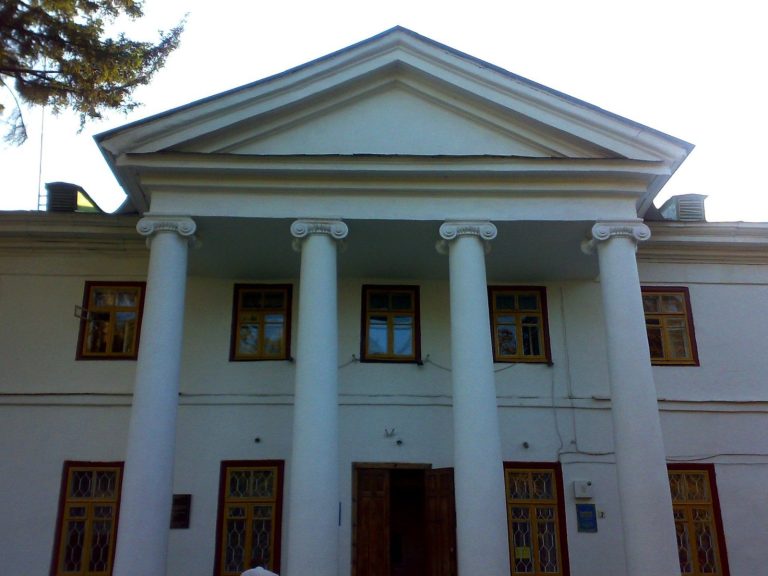
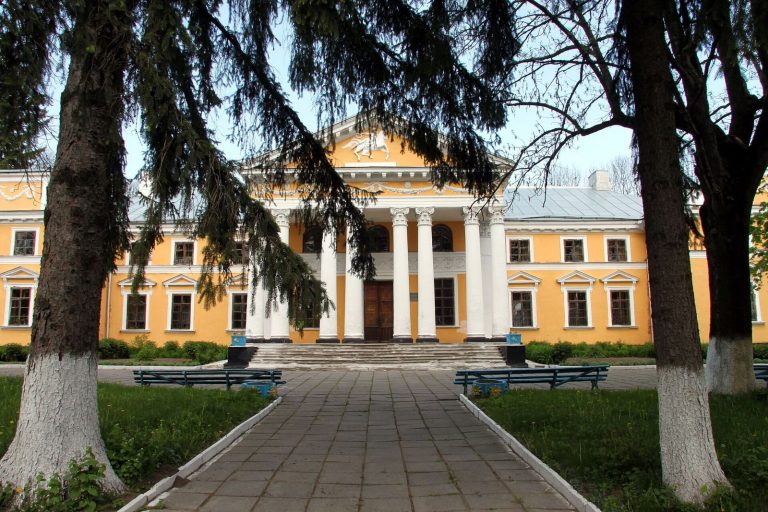
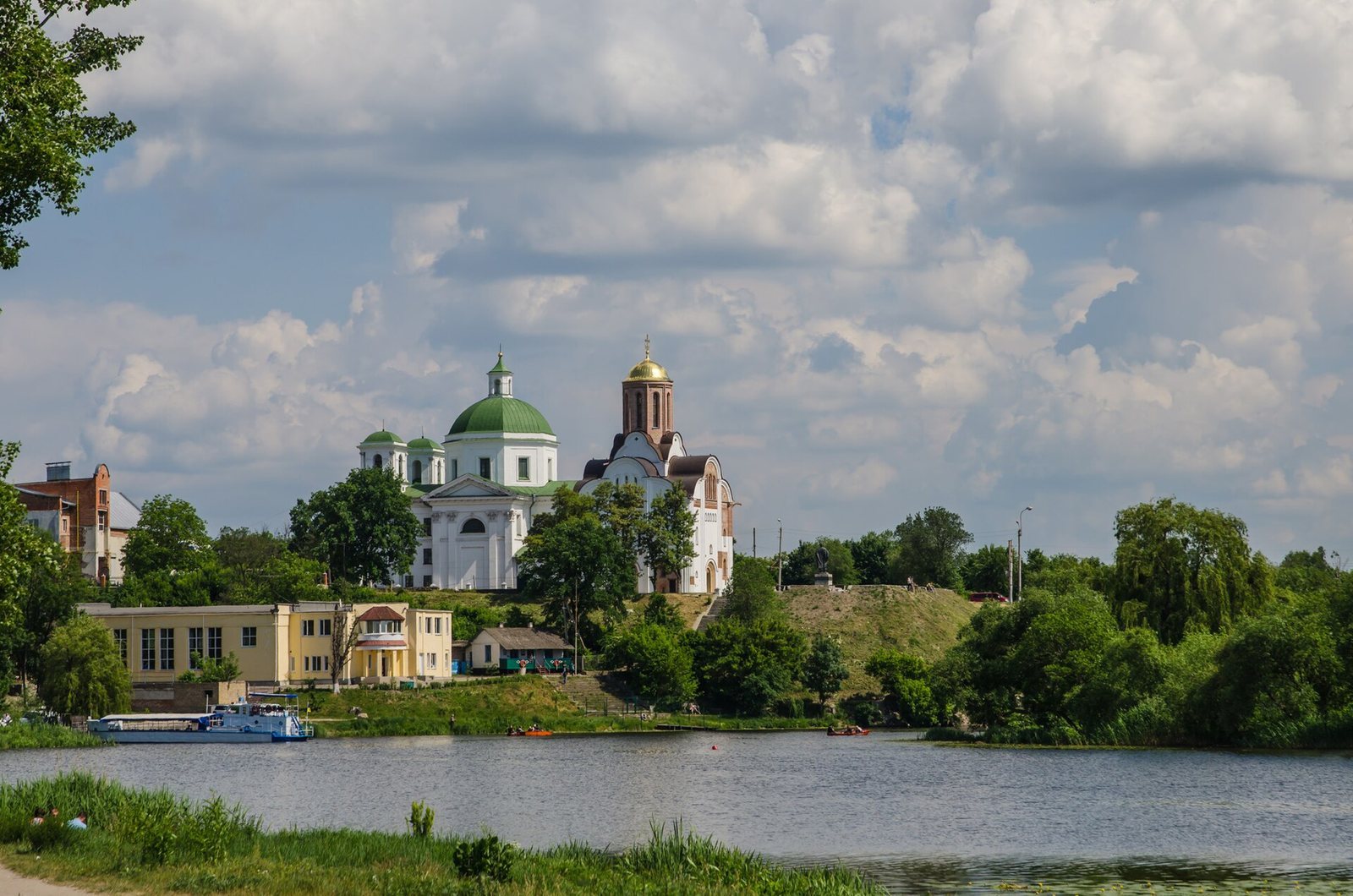
The Branicki family held Bila Tserkva as an estate from 1775 to 1917. The family built a winter palace on the hill and a Catholic church dedicated to St John the Baptist. During summer, the counts lived in a palace in Alexandria Park.
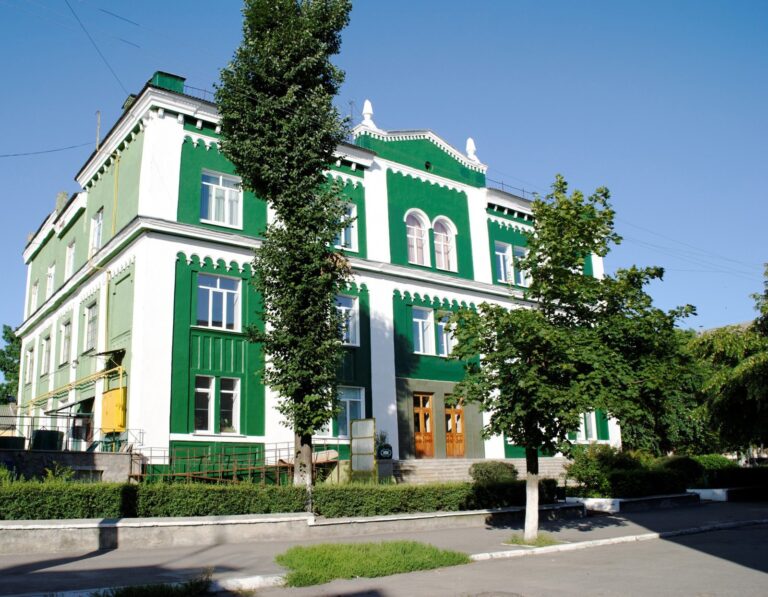
The winter palace served successively as the counts’ residence, a museum of Branicki arms, the estate headquarters, and local party offices. From 1930 to 1941 it housed the district committee of the Communist Party of Ukraine. It then served as a German military hospital from 1941 to 1944, a hospital for prisoners of war from 1944 to 1949, and the district executive committee from 1950 to 1969. The building received state protection in 1963 and now houses a music school and district archive.
After the Bolsheviks came to power, the Catholic church saw little use. It closed in 1930 and later suffered substantial damage, serving as a lecture hall in the 1950s and 1960s and then as a warehouse. A road was cut through the hill in 1960. Restoration of the church was completed in 1978. A plan to turn it into an art gallery gave way to its use for organ and chamber music; the first organ concert took place on 7 March 1990.
Archaeological investigations took place in 1978, 1980–83, 1998, and 2011–12. A German burial dating to the Second World War was found on the hill in the 1970s. In 2011, the city council approved a new Church of St George the Victorious as a revival of the historic church. Residents objected that the project could harm the archaeological site, that the original building could not be accurately recreated without adequate evidence, and that further investigation was needed.
Castle Hill received state protection in 1965 and is designated a nationally significant archaeological monument, with its listed archaeological period extending from the 9th to the 13th centuries. The winter palace and the Catholic church also have national architectural protection, granted in 1963 and 1979 respectively.
Remains
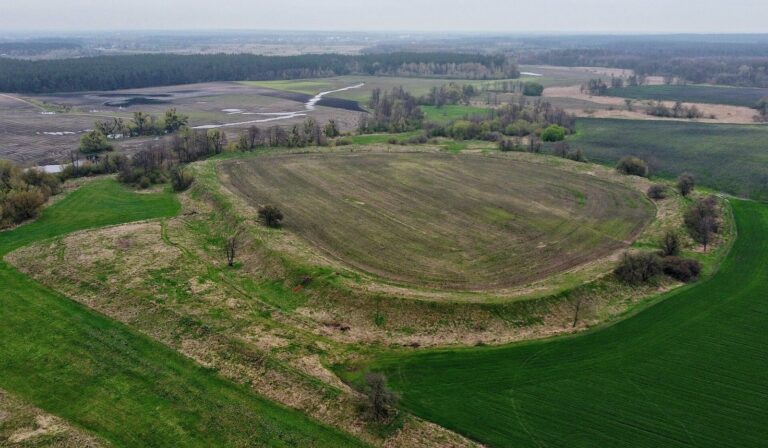
The site brings together remains of a medieval hillfort and settlement with later fortifications and buildings. Its fortified inner core, or citadel, covered about four hectares. A rampart line shown on 18th-century plans has been proposed as the boundary of the wider settlement, which may have covered as much as 90 hectares. The area of present-day Soborna Square, adjoining the hill to the north, was marshy, though residential buildings stood there before Yuriev’s destruction.
Medieval hillfort and settlement
Fortifications and settlement footprint
Excavations revealed timber-and-earth fortifications dating to the first half of the 11th century, as well as remains of numerous other structures. Separate layers of destruction have been associated with the Cuman attack and the Mongol invasion. The proposed settlement boundary follows a rampart shown on 18th-century plans, while the citadel occupied the hilltop.
Church and cemetery
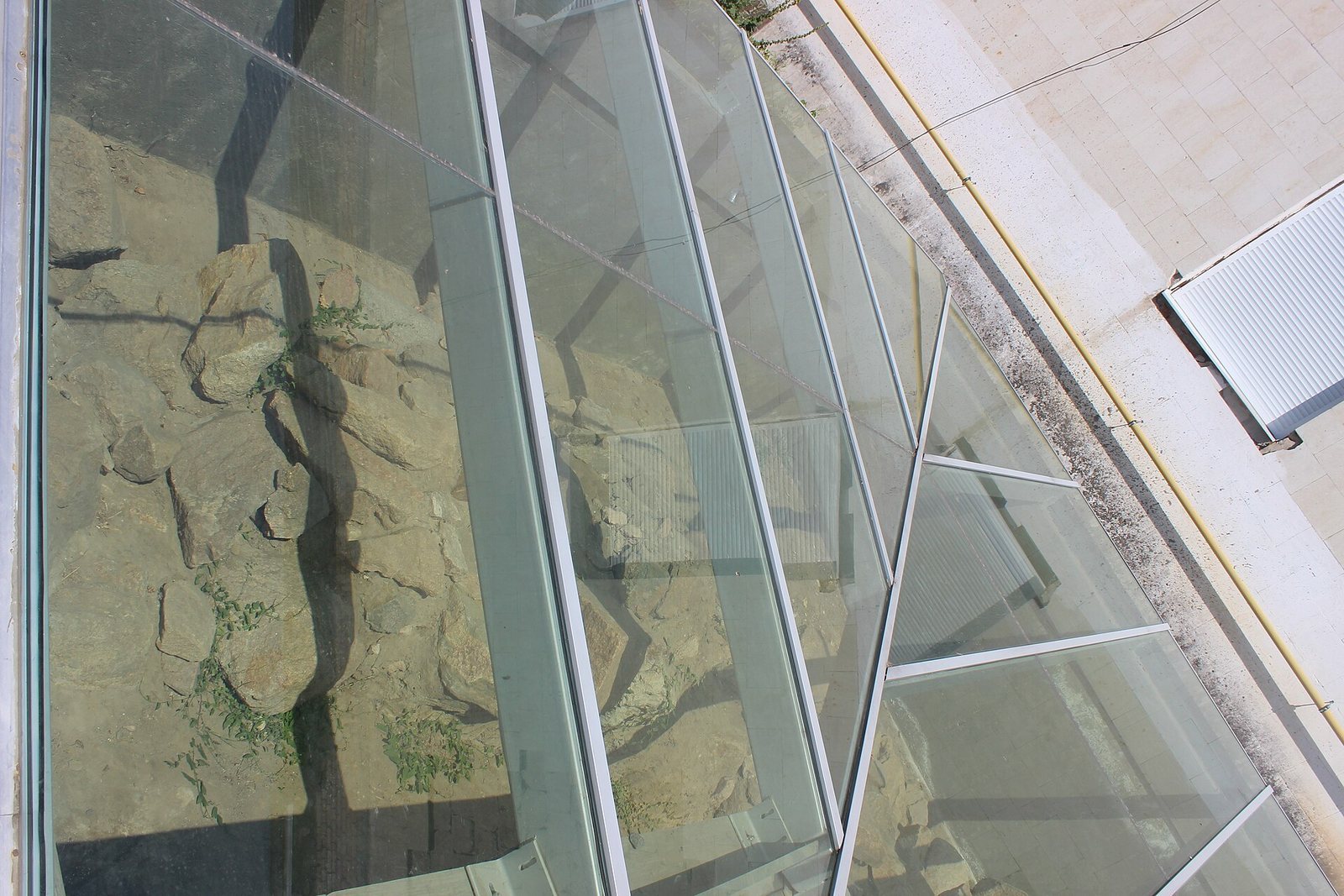
The foundations of a masonry church dating to the late 11th century survive on the hill. It had three apses, or rounded sanctuary ends. A Christian cemetery dating from the 11th to the 13th centuries and wooden sarcophagi are among the remains associated with the medieval site. The excavated church foundations have been arranged as a museum display.
Other excavated finds
Objects recovered from the hill include a piece of Byzantine silk embroidered with gold, cross-shaped reliquaries called enkolpions, and writing styluses. Finds from the archaeological work were transferred to the Bila Tserkva local history museum.
Later castle fortifications
The 16th-century castle was described as having four towers, an earthen rampart, a ditch, and oak posts. In the later fortress, the upper castle occupied the hill and had four bastions, projecting parts of the defenses. The lower castle stood on the site of today’s Castle Lanes. A defensive ditch surrounded each castle.
Buildings on the hill
Winter palace
The Branicki winter palace was built on Castle Hill in 1796. It remains one of the later buildings on the site.
Church of St John the Baptist
The Catholic church dedicated to St John the Baptist was built on the hill in 1816. Restoration was completed in 1978, and the building is used for organ and chamber music.
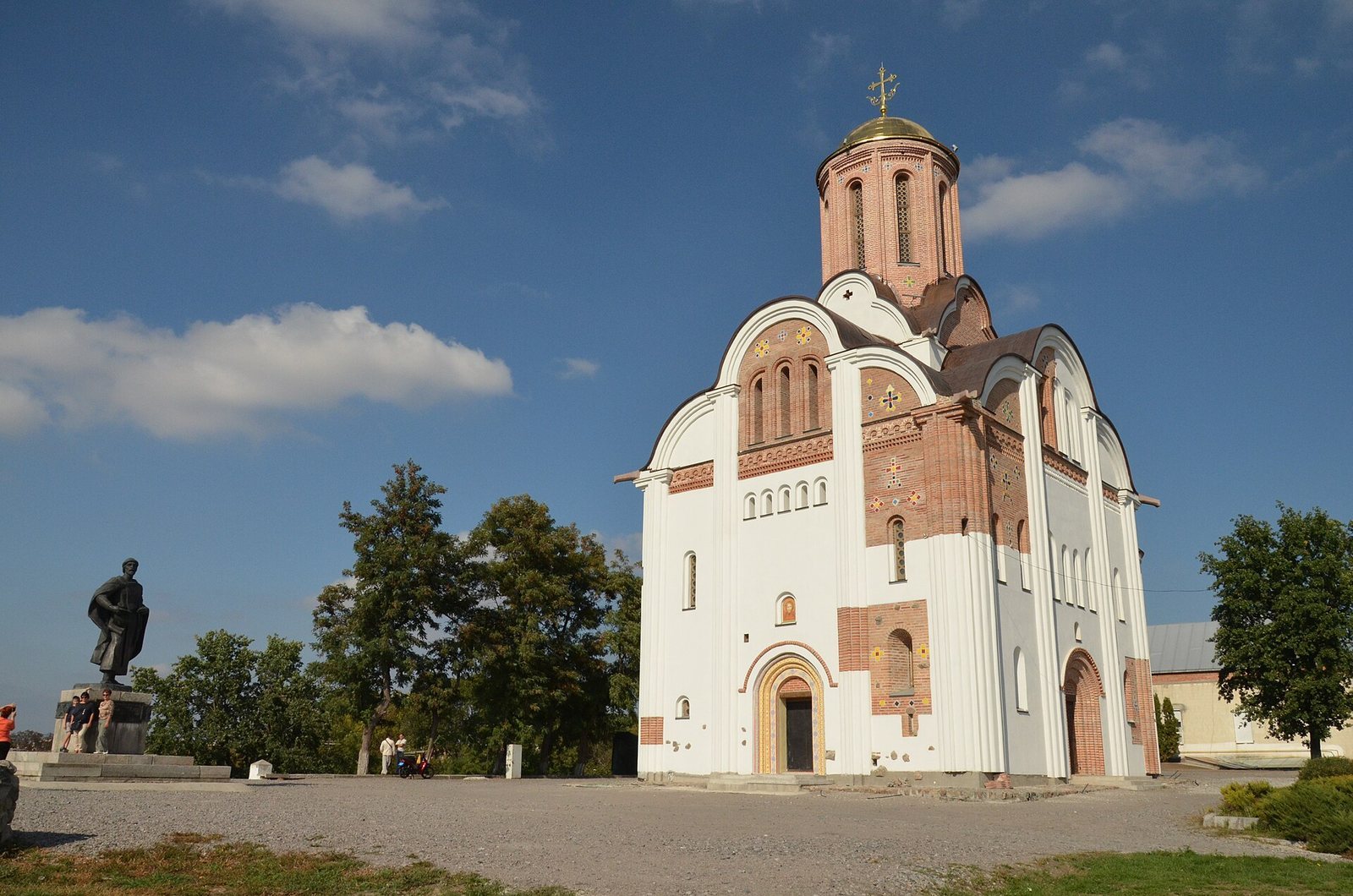
Church of St George the Victorious
The new Church of St George the Victorious was completed in 2013. Its exterior is painted white, with sections of brick left unplastered. The interior painting follows a Byzantine style associated with the decoration of religious buildings in the 12th century.
The site is in satisfactory condition.