Castillo-Palacio de Magalia: A Renaissance Castle-Palace in Spain




Site at a Glance
- Rating
- 4.4
- Popularity
- Low
- Country
- Spain
- Primary era
- Early Modern
- External website
- Open
- Eras represented
- Medieval, Early Modern
- Civilizations
- Crown of Castile, Spanish
- Site type
- Domestic
- Remains
- Castle
On this page6 sections
History
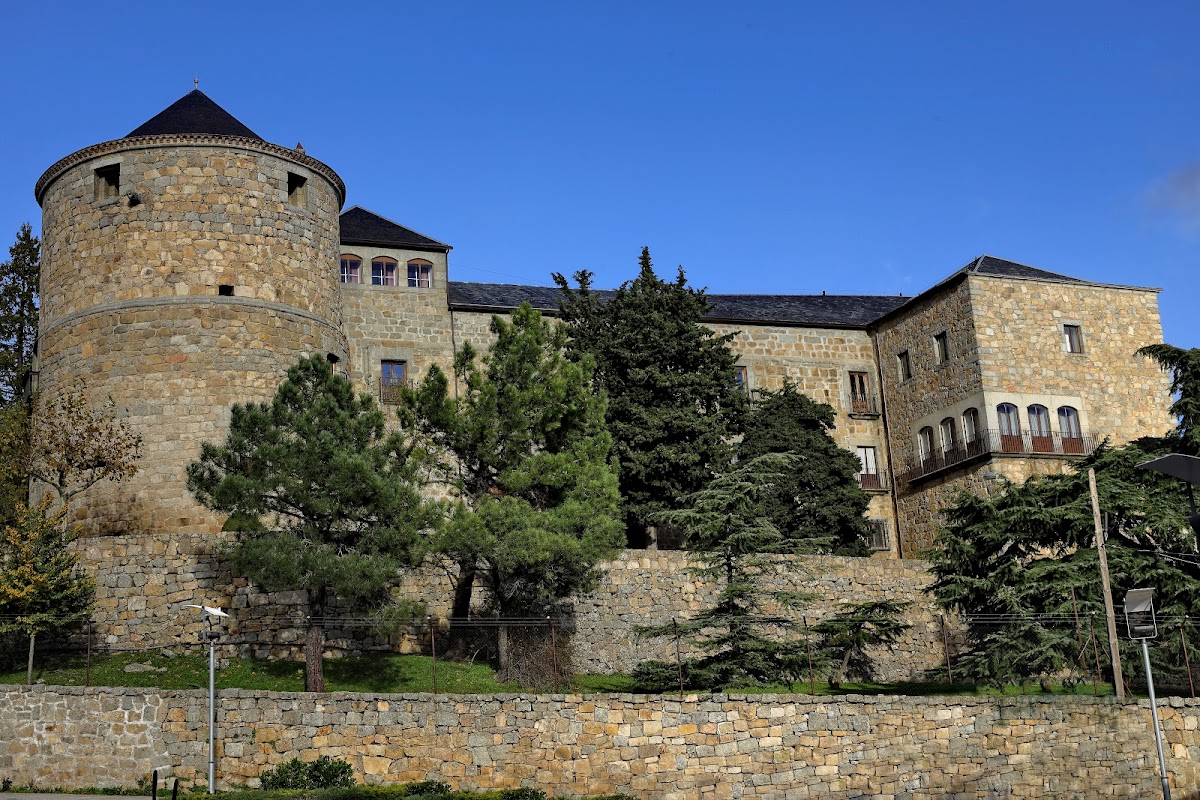
Castillo-Palacio de Magalia is a predominantly Renaissance castle-palace in Las Navas del Marqués, Spain, most of which was built during the first half of the sixteenth century. Its design combines the ordered forms of a Renaissance residence with defensive functions, while the complex also preserves elements from earlier and later periods.
Medieval foundations and Renaissance rebuilding
The base of the castle-palace’s circular tower dates to the eleventh century, providing a medieval foundation for the later complex. During the first half of the sixteenth century, the site was substantially developed in Renaissance form. Gothic-Mudejar galleries and medieval coats of arms preserve evidence of the building’s wider architectural chronology, while its castle-palace character reflects the combination of domestic and defensive purposes.
Protection and cultural use
Magalia was declared a Historic-Artistic Monument in 1931. It is now protected as an Asset of Cultural Interest in the monument category, part of Spain’s historical heritage. The designation identifies a property of historic or cultural value within Spain’s formal heritage-protection system.
The castle-palace is owned by the National Institute of Performing Arts and Music, known as INAEM, an agency of Spain’s Ministry of Culture. After decades of use for conventions and congresses, it closed between February 2023 and July 2025 for reforms that adapted it into an artistic-creation center. A new master plan assigns Magalia functions including artistic residencies, professional stays, cultural-mediation activities, initiatives by other INAEM units, and professional meetings of the Ministry of Culture.
Remains
The surviving complex is predominantly Renaissance in style and partly rests on natural bedrock, which remains visible in parts of the arcaded courtyard. This construction gives Magalia the character of a rocky castle. Its principal exterior features include a main facade with projecting balconies, Renaissance windows, and an entrance doorway formed by a semicircular arch.
Courtyard and architectural features
The arcaded courtyard is arranged on two levels. Its lower gallery contains 24 arches carried by Ionic columns, whose capitals use the scroll-shaped form associated with that classical order. The columns are decorated with the coats of arms of the Dávila and Córdoba houses. Above it, the upper gallery has an equal number of Doric columns, with their simpler capitals and heavier proportions, supporting an entablature, the horizontal architectural assembly carried above a row of columns.
The library tower contains two flat vaults, vaulted ceilings with little or no visible curvature. They are contemporary with the flat vaults of the Royal Monastery of El Escorial and are described together with them as unique in the world. Their construction was regarded as technically demanding because the structure had to carry loads without the pronounced arch profile of a conventional barrel or domed vault. Tradition holds that Philip II rejected reproducing the technique at El Escorial because he feared the vaults might collapse.
Interior spaces and artistic holdings
Inside, the castle-palace includes a stone entrance hall, two Renaissance windows, two doors with ogee arches, and a stone bench bearing a dedication by the first marquises. An ogee arch has an S-shaped curve that ends in a point. The complex also contains a chapel decorated with twentieth-century Cubist paintings by Francisco Farreras.
Magalia includes 38 bedrooms, three rehearsal rooms, a dance studio, a concert hall, a meeting room, and a library. Works deposited there from the Museo del Prado include Ramón Bayeu’s oil painting Ox Cart, José del Castillo’s series The Hunt, and Winter by Jacopo Amigoni. The castle’s own holdings include Playing Cards by Pancho Cossío, Rosario de Velasco’s series The Four Seasons, and an anonymous thirteenth-century copy of a painting by Veronese.
Other objects housed at the castle include a Roman funerary cippus, a small stone monument used in funerary contexts, a thirteenth-century bargueño, a portable Spanish writing cabinet with drawers and compartments, a Catalan Gothic-style chest, and several reliquaries. One reliquary bears the handwritten signature of Saint Teresa of Ávila, the sixteenth-century Carmelite nun, mystic, and religious reformer. Most of these objects are displayed in the Hall of Honor.