Castillo de la Villa, Martos: A Medieval Fortress of the Calatrava Frontier
Site at a Glance
- Rating
- 4.4
- Popularity
- Very Low
- Country
- Spain
- Primary era
- Medieval
- Eras represented
- Medieval
- Civilizations
- Crown of Castile, Crusader, Order of Calatrava, Umayyad
- Site type
- Military
- Remains
- Castle
On this page9 sections
History
Castillo de la Villa is an urban castle in Martos, Spain, commissioned under Muslim rule and constructed in the tenth century on the rocky hill of the ancient Iberian-Roman city of Tucci. Later known as the Fortaleza Baja, it formed one of the principal defenses of the Order of Calatrava against the Kingdom of Granada, the last major Muslim-ruled kingdom in medieval Iberia.
From Tucci to an Islamic fortress
The hill occupied the acropolis of Tucci, the elevated fortified or civic center of the ancient settlement associated with Martos. During the Islamic period, the site was converted into a hisn, a fortified settlement or castle within the medieval Islamic military system. Its position became part of a wider defensive landscape that later included Castillo de la Peña.
The Calatrava transformation
The castle was repeatedly altered, with its most substantial reform taking place during the Christian period under the Order of Calatrava. This medieval military-religious order controlled and defended territory along the Christian frontier of Iberia. The alcázar, a fortified palace or citadel, received a large keep, additional towers, and further walls. A reconstruction belongs to the fourteenth century.
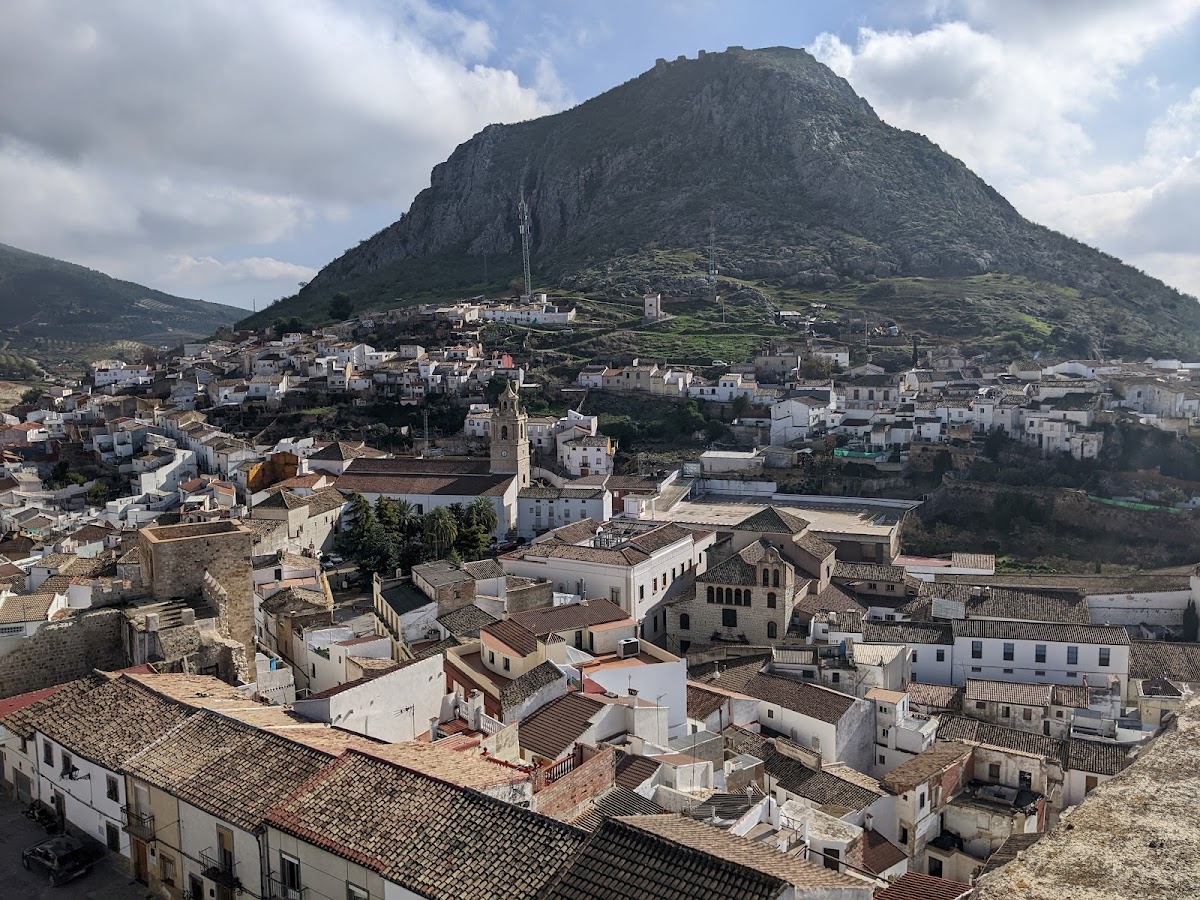
Castillo de la Villa and Castillo de la Peña were connected by walls, while the settlement of Martos lay between the two castles, their walls, and the Peña. A sanctuary dedicated to Santa María de la Villa was established within the fortress enclosure. The castle and Castillo de la Peña were declared Historic Monuments in 1985, and Castillo de la Villa also holds designation as an Asset of Cultural Interest.
Preservation and interpretation
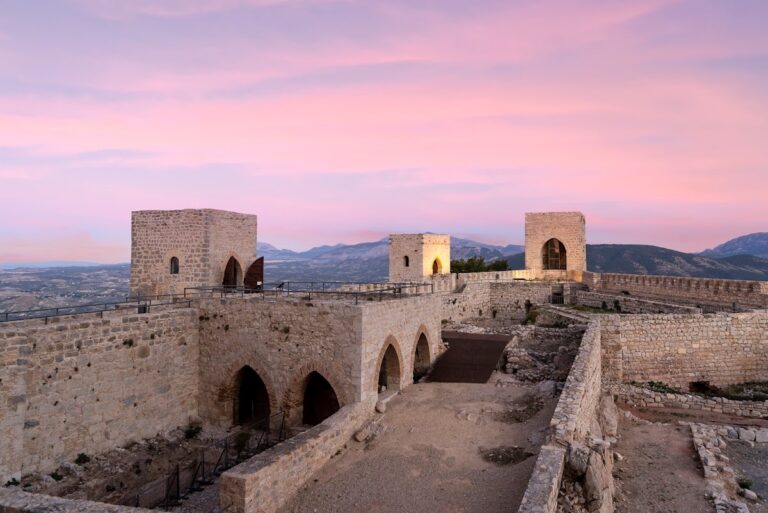
The surviving complex is partially preserved. The keep has been rehabilitated as the Cultural and Historical Interpretation Centre of Martos within the Castles and Battles Route. The Torre Almedina is undergoing restoration, while surviving wall fragments are being recovered and consolidated.
Remains
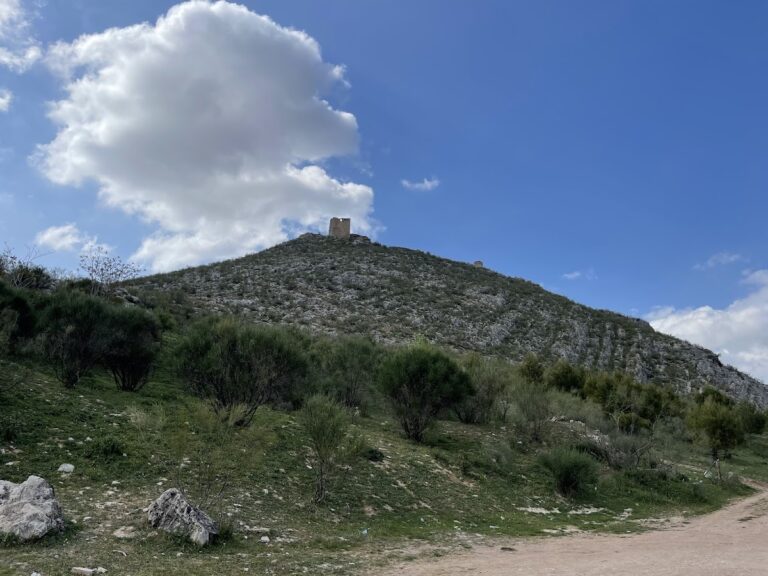
The fortress occupies a rocky hill within Martos at approximately 730 metres above sea level. A defensive wall enclosed the complex, and fragments of that enclosure survive in wall sections and several towers. Other identified elements include a barbican and the remaining stretches that linked the fortress with Castillo de la Peña. The Sanctuary of Santa María de la Villa stands inside the enclosure.
Principal towers
Torre del Homenaje
The Torre del Homenaje is the principal tower and stands on the highest part of the city. It has a square plan, three superimposed floors, and a basement. Its ground floor contained a cistern that collected rainwater from the roof terrace. The two other floors are covered by ashlar barrel vaults, while the upper floor has a vaída vault, a domed vault formed over a square space, combined here with a brick dome and pendentives. A staircase gives access through the intermediate floor, and the roof terrace remains accessible. The rehabilitated keep contains information panels and other interpretive resources.
Torre Almedina
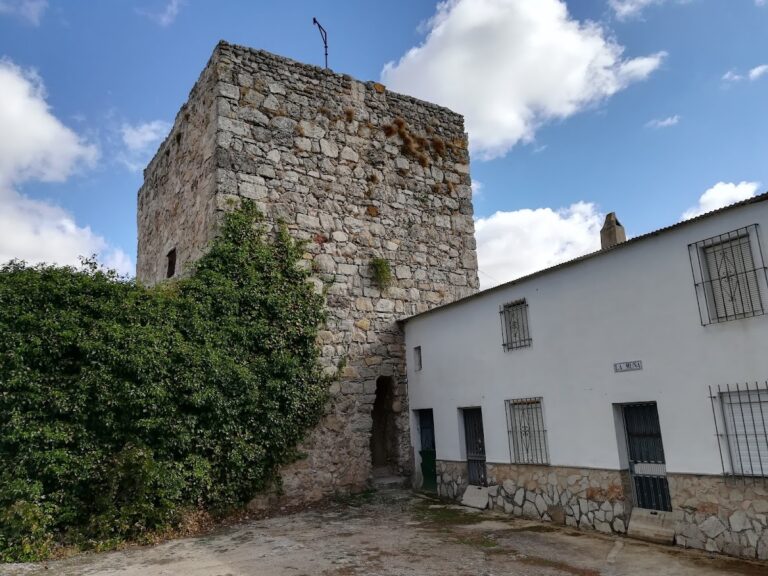
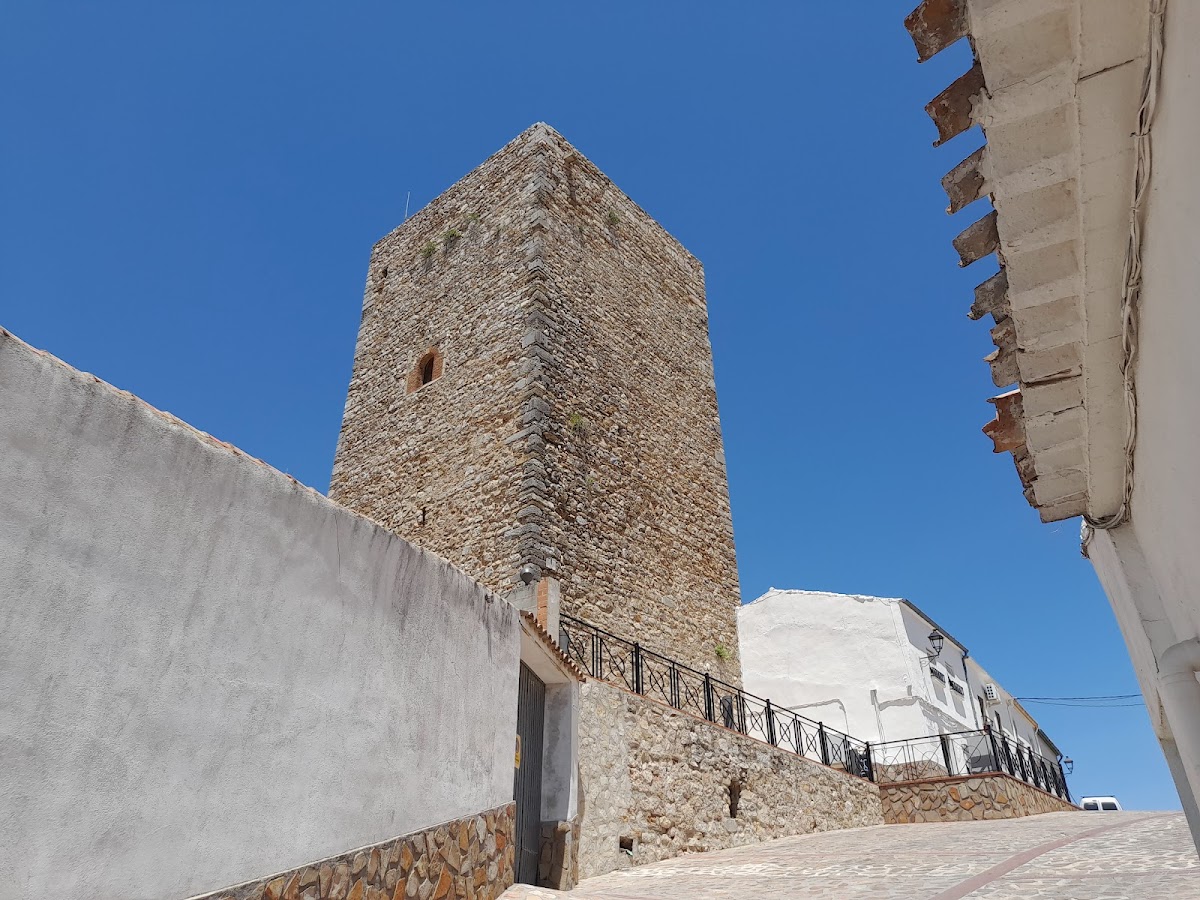
The Torre Almedina was built in the thirteenth century by Calatrava monks. It is a square, three-level tower constructed mainly from rubble masonry, with regular ashlar blocks reinforcing its corners. The tower rises approximately 25 metres above Calle Franquera and has a machicolation on its roof, a projecting defensive structure with openings through which defenders could attack below. Its entrance is from Calle Primero de Mayo. A wall once ran from its northwest corner toward the Torre del Homenaje, although only a very small part of that connection survives. The tower is undergoing restoration.
Torre-Campanario de Santa María de la Villa
The Torre-Campanario de Santa María de la Villa, or bell tower of Santa María de la Villa, was erected over a wall tower. It forms part of the surviving architectural elements within the fortress enclosure, alongside the sanctuary dedicated to Santa María de la Villa.
Nearby sites