Castell de Savassona: A Medieval Castle and Territorial Lordship in Catalonia
Site at a Glance
- Rating
- 3
- Popularity
- Very Low
- Country
- Spain
- Primary era
- Early Modern
- Eras represented
- Medieval, Early Modern, Modern
- Civilizations
- Spanish
- Site type
- Domestic
- Remains
- Castle
On this page6 sections
History
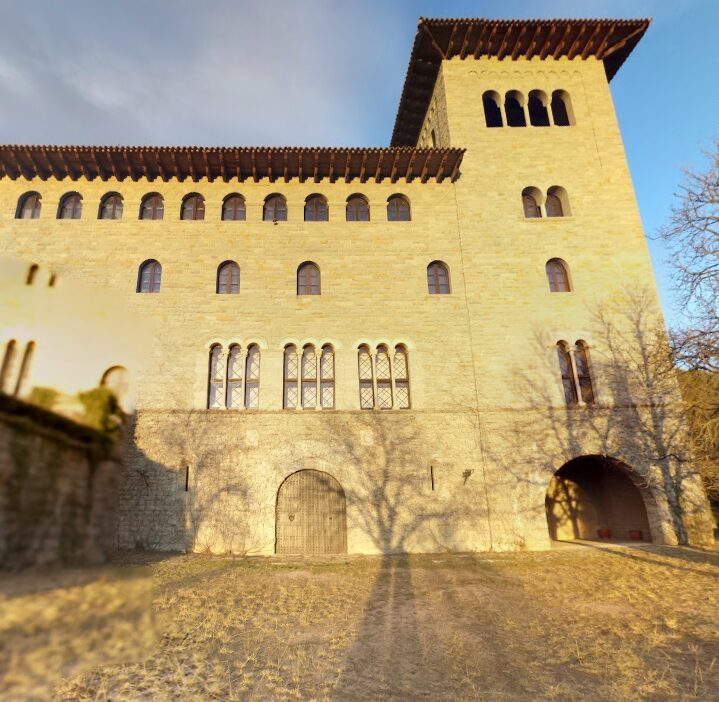
Castell de Savassona is a medieval castle in Spain, in the municipality of Tavèrnoles, Catalonia. Its principal residential structure dates from the seventeenth century and was enlarged in the nineteenth century, while the complex also preserves medieval defensive elements and the Romanesque Chapel of Saint Peter of Savassona, built in 1060. The castle formed the center of a territorial jurisdiction, a district whose holder exercised authority from the castle, first covering Tavèrnoles and later extending over Tavertet and part of Vilanova de Sau.
Medieval Lordship
The castle was first mentioned in 890 under the authority of the viscounts of Osona. A viscount was a high-ranking noble who governed a territory under a count or another superior ruler. The Savassona family, a lineage of knights, administered the castle and became lords of the Barony of Savassona, a territorial lordship held by a baronial family.
The Savassona family continued to hold the castle in the twelfth century. Since the direct line had no descendants, ownership later passed by sale to Ramon de Vilanova, lord of Brull. During the fourteenth century, jurisdiction over Savassona passed to Bernat de Cabrera, count of Osona.
Later Ownership and Alterations
A hearth tax record from 1553, a levy assessed by household, names the knight Antoni Vila as lord of the castle. The Barony of Savassona later passed from the Vila family to the Llupià family and then to the Ferrer family. The Ferrers lived in Vic and used Savassona as a summer residence.
The castle underwent renovation in the seventeenth and nineteenth centuries and was repaired again after damage sustained during the Napoleonic occupation. When Josep Francesc de Ferrer de Llupià Brossa, Baron of Savassona, died without descendants in 1826, the family properties were divided. Distant relatives from Andalusia inherited the baronial title and sold the castle in 1900 to Vicenç Cuyàs Piera. It later passed to Lluís Soldevila, who bequeathed it to his son Enric Soldevila, and subsequently to the Portell family. The castle remains inhabited.
Castell de Savassona is listed in Catalonia’s Register of Cultural Assets of National Interest. Spain designated it an Asset of Cultural Interest on 8 May 1949, under code RI-51-0005732.
Remains
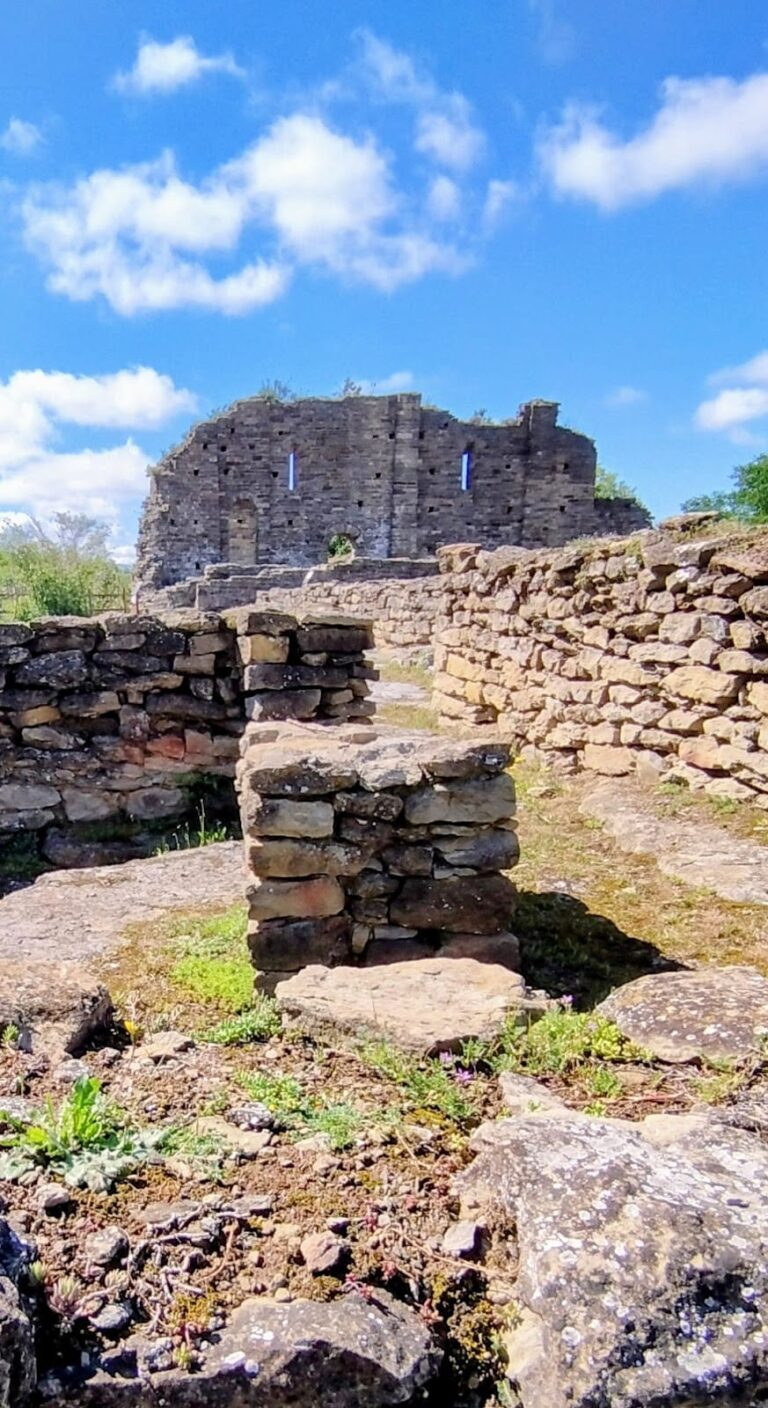
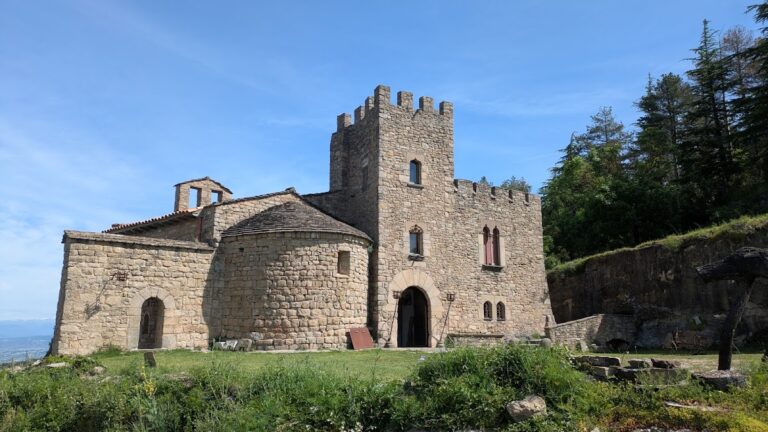
The complex stands on a hill at 611 metres above sea level. It consists of a large residential building and a chapel enclosed by a surrounding wall. The present main structure belongs chiefly to the seventeenth century and was enlarged and renovated during the nineteenth century, while earlier defensive features remain within the complex.
Residential and Defensive Structures
The principal building is a large residence whose seventeenth-century fabric reflects the castle’s transformation into a residential center. Nineteenth-century enlargement and renovation altered the complex while retaining medieval elements, including defensive walls and a triangular tower. The castle continues to serve as an inhabited building.
Chapel of Saint Peter
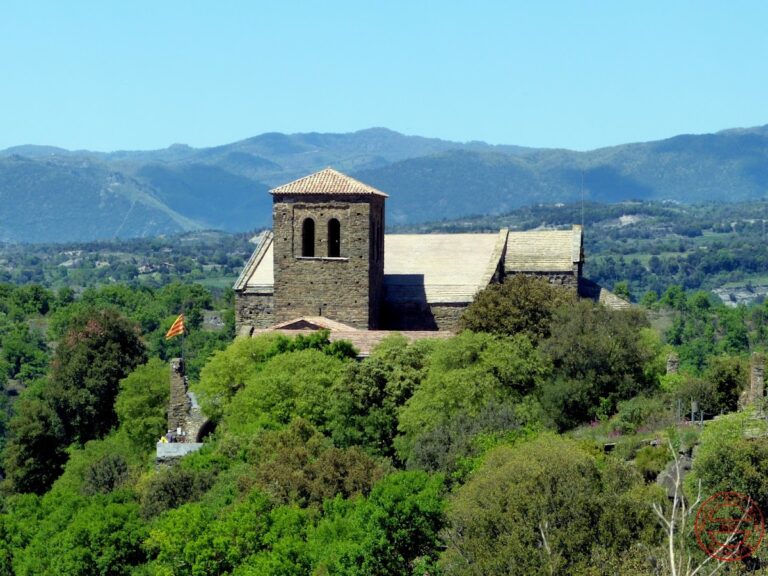
At the foot of the castle stands the Chapel of Saint Peter of Savassona, a small Romanesque church dating to 1060. Romanesque architecture is a medieval style known for massive masonry, thick walls, and rounded forms. The chapel forms part of the wider castle complex while remaining a distinct religious building from the residential and defensive structures above it.
Nearby sites