Caorle Cathedral: A Romanesque and Byzantine-Ravennate Cathedral in Italy


Site at a Glance
- Rating
- 4.7
- Popularity
- Medium
- Country
- Italy
- Primary era
- Medieval
- External website
- Open
- Eras represented
- Medieval
- Civilizations
- Byzantine, Venetian
- Site type
- Religious
- Remains
- Cathedral
On this page18 sections
History
Caorle Cathedral is a Christian cathedral in Caorle, Italy, dedicated to Saint Stephen the Protomartyr, the first martyr traditionally associated with Christianity. The present basilica was built around 1038 in a combination of Romanesque and Byzantine-Ravennate traditions, and served as the cathedral of the Diocese of Caorle until that diocese was suppressed in 1807.
Early Christian and Medieval Origins
The cathedral stands on the remains of an earlier Early Christian basilica. The establishment of the episcopal see is generally placed in the sixth century, although that interpretation remains debated. A letter sent by Pope Gregory the Great to the Ravenna exarch Mariniano in 598 has been cited in support of an early episcopal presence at Caorle.
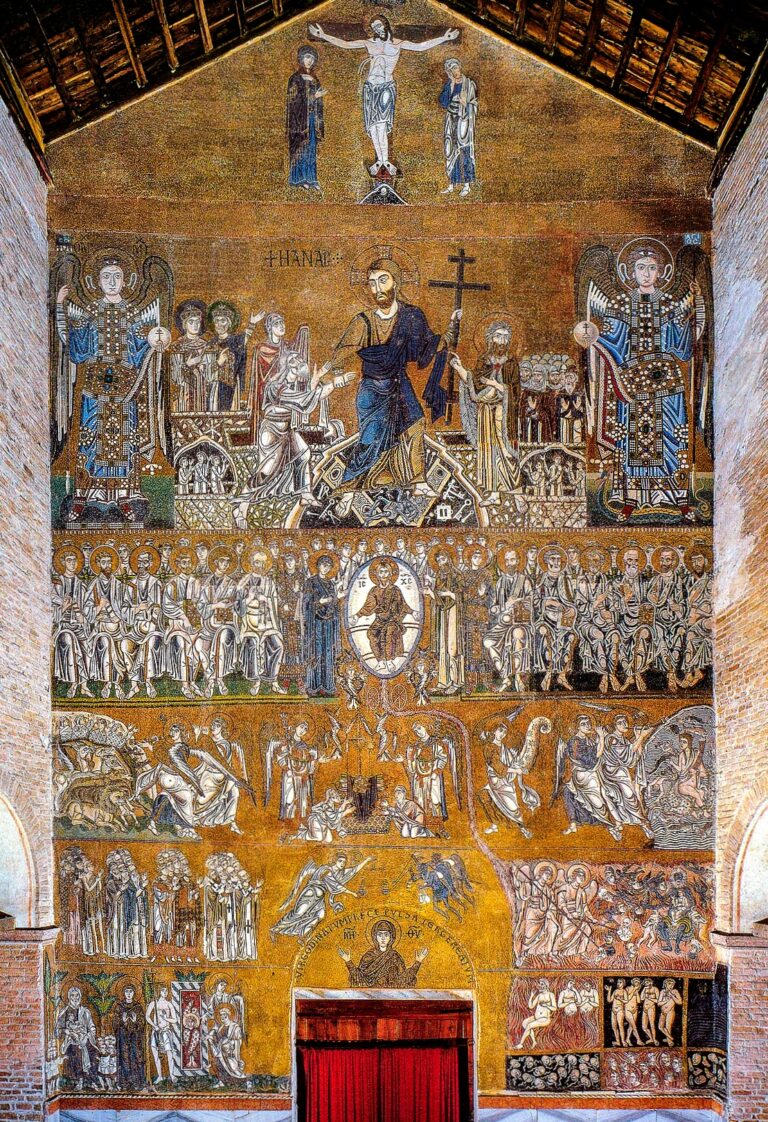
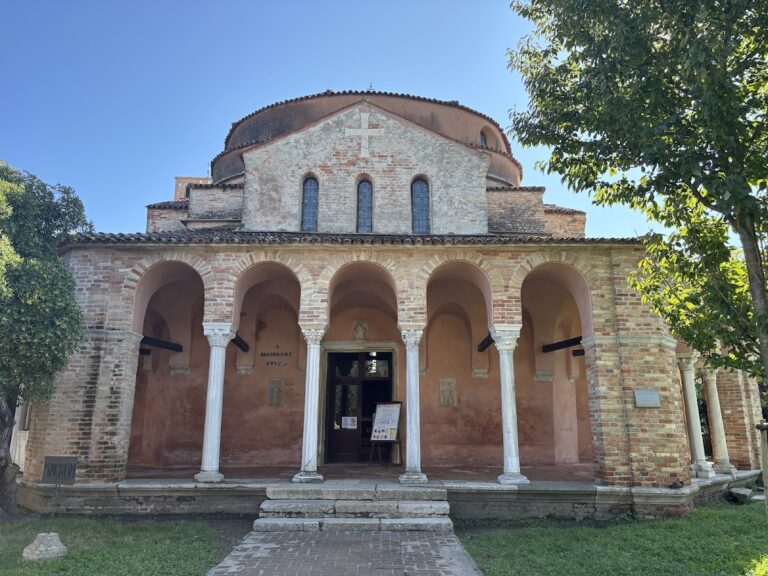
The basilica built around 1038 therefore replaced an earlier cathedral rather than creating the episcopal centre from the beginning. Its architecture brought together Romanesque forms and traditions associated with the Byzantine world and late antique Ravenna. The surviving remains have been compared with the Byzantine-Ravennate monuments of Torcello Cathedral and Saint Mark’s Basilica in Venice.
Caorle’s medieval history also includes a violent attack in 1387. The city was captured and burned by the archdeacon Simone de Gavardi, and graffiti in the central presbytery begins with the date 1387 in connection with this event. The campanile may have originated as a watchtower because of its position near the sea, perhaps occupying the site of one of the towers in the city’s defensive wall. Caorle was enclosed by walls and crossed by canals, which were later filled during the drainage and reclamation of the surrounding lagoons.
Episcopal Rule and Later Alterations
The bishops of Caorle left their mark through coats of arms, tombs, inscriptions, furnishings, and commissions within the cathedral. Under Bishop Egidio Falcetta, the roof was restored, with an inscription recording completion on 8 January 1563. Bishop Girolamo Righettino commissioned the baptismal font in 1587. In 1671, Bishop Pietro Martire Rusca established an altar dedicated to Saint Anthony of Padua and required one daily low Mass and two sung Masses each month.
The original date of consecration is unknown. After extensive restoration, Pietro Martire Rusca reconsecrated the cathedral on 30 August 1665. The parish continues to celebrate the dedication on that date, and twelve terracotta crosses commemorate the ceremony, which included musicians from Venice.
The church of Madonna delle Grazie once stood in front of the cathedral and was connected to its facade by an atrium. The church was demolished in the early nineteenth century because of its poor condition, and the atrium was also removed. Its central apse had entered the structure of the campanile, while a filled arch on the tower’s north side preserves evidence of the former connection. The baptismal font from Madonna delle Grazie was transferred to the cathedral, and a painting attributed to Tintoretto was given to the cathedral churchwarden Angelo Rossetti.
During the 1999 restoration of Piazza Vescovado, the perimeter of Madonna delle Grazie was exposed and marked with white stones. Its plan was considered similar to that of the cathedral, leading to the possibility that the former church served as a model for the reconstruction of the earlier Early Christian basilica.
Suppression of the Diocese and Modern Preservation
The Diocese of Caorle was suppressed in 1807, after which its territory was attached to the Patriarchate of Venice. The last bishop, Giuseppe Maria Peruzzi, was transferred to Chioggia on 11 January 1809. Caorle nevertheless remains a titular episcopal see, a title preserving the name of a former diocese for ecclesiastical purposes when it no longer functions as a resident diocese. The titular archbishop currently identified with the see is Juliusz Janusz, apostolic nuncio in Hungary.
Restoration work in the 1950s revealed the perimeter of the earlier basilica. Fragments from that building, including floral moldings, capitals, column shafts, altars, and tomb slabs, are preserved inside the cathedral and in the garden of the former episcopal palace, now the parish house. Other twentieth-century changes affected the side altars. The altar of the Assumption was dismantled in the 1970s and moved to the Sanctuary of Madonna dell’Angelo, while several other altars were sold in the 1920s to the Basilica of the Assumption at Monte Santo to help finance major repairs after First World War damage.
The former episcopal chapel now houses the parish liturgical museum, inaugurated on 13 September 1975 by Cardinal Albino Luciani, who later became Pope John Paul I. The cathedral’s modern preservation therefore includes both the building and a collection of objects connected with its former bishops, worship, and ecclesiastical history.
Music and Liturgical Continuity
The cathedral organ has undergone several relocations and technical changes. Its original gallery in the west wall was removed during the 1950 restoration. The instrument was later moved above the high altar, and the construction of a post-conciliar altar separated its pipework from the console. In 2015, the Zanin firm restored the organ, enlarging the pipework and increasing the console from two keyboards to three while retaining electronic transmission.
Remains
Basilica Layout and Exterior
Caorle Cathedral is a west-east, three-aisled basilica, with the entrance at the west. This orientation follows the Christian liturgical tradition in which clergy and worshippers faced east during worship. The plain west facade is predominantly Romanesque. Two substantial buttresses divide the side aisles from the central aisle, and three entrance doors have marble lintels. A large central rose window is accompanied by a smaller rose window above each side aisle.
Eight Istrian-stone corbels at the height of the central lintel once supported the external portico between the cathedral and Madonna delle Grazie. Five tombs belonging to noble Caorlean families, including the Gallo, Rossi, and Pacchiaffo families, lie beneath the main entrance. A sixth urn contains bones found during the 1999 restoration, probably from the former cemetery south of the square.
Entrance Reliefs
Two Byzantine bas-reliefs with Greek inscriptions flank the main entrance. A recent interpretation identifies the figures as Saint Agathonikos of Bithynia and Saint George. Other interpretations identify the second figure as Saint William of Toulouse or Saint Theodore of Amasea. One interpretation connects the arrival of the reliefs at Caorle with the Fourth Crusade in 1204.
Walls, Windows, and Apse
The upper outer wall of the right aisle carries interlaced blind arches, while four buttresses support the left aisle. The central apse projects beyond the outer wall in a cylindrical form. Six large double-ring arches decorate it, and three contain single-lancet windows, with the central opening larger than the two lateral ones. Seven narrow single-lancet windows pierce the central south wall, and two further windows are set in both the north wall of the left aisle and the south wall of the right aisle. Wrought-iron crosses on stone pointed elements crown the central gable and the point where the apse joins the nave.
The building measures 40.36 metres from the entrance to the central apse and 20.66 metres across. The central aisle reaches 13.66 metres from ground level to its top, while the side aisles measure 6.66 metres from the floor to their uppermost points.
Interior Structure and Presbytery
Two rows of supports divide the central aisle from the side aisles. Each row contains six marble columns alternating with six terracotta-brick piers. The columns have Corinthian or cubical capitals with chamfered corners, and the capitals and pier imposts retain traces of niello decoration. Each row supports ten round arches. These are double-ringed toward the central aisle and single-ringed toward the lateral aisles.
The twelve columns have been understood as an allusion to the twelve Apostles. Terracotta sections of the central apse wall create the visual impression of two additional piers, bringing the number of apparent piers to twelve as well. The roof is carried by timber trusses resting on projecting Istrian-stone corbels. Complete trusses cover the central aisle, while half-trusses cover the side aisles. A horizontal roof beam preserves the inscription recording the restoration completed on 8 January 1563.
Each aisle ends in a presbytery, the part of the church reserved for the altar and clergy, raised three steps above the church floor and terminating in an apse. Only the central apse projects beyond the outer wall; the lateral apses are contained within the masonry. The central apse rises three further steps above the side presbyteries, and the high altar stands one step higher again, making seven steps from the nave floor to the altar. Seventeenth-century stone balustrades separate the lateral presbyteries from the central one.
Central Apse and High Altar
An iconostasis, a screen separating the sanctuary from the nave, originally stood between the central presbytery and the congregation. Its marble components are preserved in the cathedral and parish museum. The central apse is introduced by a triumphal arch supported by Corinthian columns and contains three single-lancet windows. An orientalizing marble frieze divides the semi-dome from the drum.
The high altar was consecrated in 1975 by Cardinal Albino Luciani. Its bronze relief frontal depicts Saints Stephen, Margaret, and Gilbert, together with biblical scenes and Saints Pius X and John XXIII. A Greek cross decorated with precious stones appears on the rear. The fifteenth-century wooden crucifix that once stood above the iconostasis is now suspended from the roof beams by ropes, and two modern Byzantine-style votive lamps stand in the apse.
Pala d’Oro and Apse Decoration
At the rear of the apse, the gilded-silver Pala d’Oro consists of six repoussé and chased panels. The two outer panels date from the thirteenth century and show the Archangel Gabriel and the praying Virgin in the Annunciation. The four inner panels, generally dated to the fourteenth century, represent Daniel the Prophet, Christ Pantocrator, Saint Stephen, and Saint John the Baptist. The identifications of the figures remain uncertain except for the enthroned Christ, whose image represents Christ as ruler of creation.
Tradition considers the Pala d’Oro a gift from Catherine Cornaro, the fifteenth-century queen of Cyprus, after fishermen rescued her from a shipwreck near Caorle around 1489. The semi-dome once carried a large sixteenth-century fresco showing Christ Pantocrator, Saint Mark, other saints, and Cornaro’s rescue. Most of the painting was erased around 1600, leaving fragments that include part of the lion of Saint Mark.
Stone Vessel and Side Altars
A stone vessel in a niche beside the last pier of the left-hand row bears part of a Greek inscription translated as “aquarum.” An old tradition identifies it as one of the stone jars associated with Jesus at Cana. This attribution remains a tradition rather than an established historical identification.
The larger entrance chapel on the right is dedicated to Saint Andrew. Its eighteenth-century altar, also called the Altar of Mercy, contains statues of Saint Andrew, Saint John the Baptist, and Saint Dominic of Guzman. The frontal bears the emblem of the Confraternity of Mercy. The chapel also contains a wooden statue of Saint Anthony of Padua by the Venetian sculptor Guido Cadorin. The altar was formerly beneath the right lateral apse before being moved into the chapel.
The chapel of Saint Rocco on the left contains an eighteenth-century wooden statue transferred from the former oratory beside the episcopal palace. Saint Roch carries a pilgrim’s staff and points to the plague sore on his left leg; a dog carrying bread stands beside him. An intertwined “S” and “R” emblem appears on the figure’s right arm. The chapel niche and altar table came from the former high altar of the Sanctuary of Madonna dell’Angelo.
Paintings, Fonts, and Episcopal Memorials
Left Aisle and Lateral Apse
Near the chapel of Saint Rocco are two niches containing ninth-century stone friezes and twentieth-century statues of the Sacred Heart of Jesus and Madonna delle Grazie. Two circular patere, shallow decorative dishes or reliefs, are set between them. Dated to the eleventh or twelfth century, they show an eagle attacking a hare.
The left aisle contains a seventeenth-century painting of the Nativity of Mary, attributed by some scholars to Marin Donato of Palmanova. A badly damaged fourteenth-century fresco from the Giottesque school shows Saints Catherine of Alexandria, Nicholas of Myra, and Roch; it was uncovered in 2010. Other paintings include seventeenth-century Venetian-school works of Pentecost and Saint Anthony of Padua, the latter attributed to the Vicenza school of Magonza, and a 1793 image of the Madonna of Mount Carmel giving the scapular to Saint Simon Stock.
The left lateral apse contains a fourteenth-century fresco of the Virgin and Child with Saints Stephen and Lawrence. Members of the Confraternity of the Assumption kneel below them. Painted arches and coats of arms decorate the drum, including those of Bishop Giovanni Vincenzo de Filippi, Saint Mark, and Pope Sixtus V. Beneath the tabernacle is a first-century Roman sacrificial altar belonging to the Licovia family, identified by its inscription. The family is thought to have lived at Caorle when the town served as the port of Julia Concordia. A modern marble altar stands before it, with a plaque listing the cathedral’s parish archpriests after the suppression of the diocese.
Right Aisle and Baptismal Font
The right aisle contains the seventeenth-century panel known as the Trittico di San Rocco. Saint Vincent Ferrer occupies the centre, with Saint Margaret of Antioch on the left and Saint Roch on the right. Nearby is a Last Supper attributed to Gregorio Lazzarini and donated by Canon Stefano Boni. Above it stands the sixteenth-century marble sarcophagus of Bishop Daniele de Rubeis, with an inscription installed by his nephew Sebastiano de Rubeis, who later succeeded him as bishop of Caorle. Further works include a 1955 painting of Saint Rita by Marco Novati and a fourteenth-century fresco of Saint Lucy with scenes from her life.
The right lateral apse contains the marble baptismal font erected in 1587 under Bishop Girolamo Righettino. Its basin bears the arms of the bishop, Caorle, the Republic of Venice, and the parish priest Antonio da Torre. The cover, made in 1975, and a bronze relief of the Baptism of Jesus by Saint John the Baptist were created by Igino Legnaghi.
Campanile
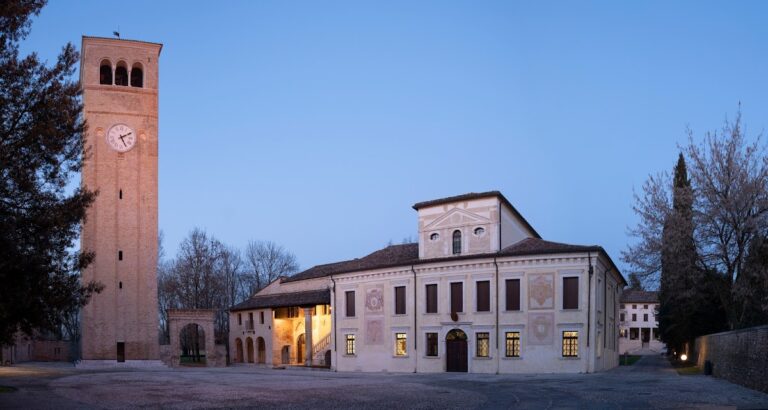
The detached campanile beside the cathedral dates from the eleventh century. Its cylindrical form and conical spire reflect Ravennate influence, while its alternating two-light windows, narrow single openings, and colonnettes have been described as Gothic. The tower is 42 metres high. Its cylindrical shaft rises 28 metres and is divided into seven levels, with an average radius of about 3.3 metres. Above it, a cylindrical drum 1.5 metres high and 2.8 metres in radius supports a conical spire 10 metres high. An iron cross about 2.5 metres high and a weather vane crown the spire.
The upper bell stage has four two-light windows and is separated from the shaft by a molding of inverted triangles. The level below has eight single-lancet openings. A central stage combines two-light windows with blind single-lancet openings to form a second prominent loggia. Lower levels repeat the arrangement with eight additional single-lancet openings and four lower two-light windows.
An old clock once occupied the tower’s second register and marked time for the town. It was removed during restorations at the beginning of the twentieth century. Reinforced-concrete floors now divide the internal levels, except on the second level, where a wooden floor survives. Wooden stairs connect the levels, and three bronze bells hang in the highest register. The campanile leans approximately 1.4 degrees toward the east-southeast, a deviation of about 32.5 centimetres.
Parish Liturgical Museum
The parish liturgical museum occupies the former episcopal chapel and consists of two rooms. Among its objects is a silver processional cross from 1534. One side shows Christ crucified, with God the Father above, Mary Magdalene below, and the Virgin and Saint John at the sides. The other side shows Saint Stephen with the four Evangelists.
The museum preserves six thirteenth- or fourteenth-century panels of Apostles attributed to the artist known as the Master of Caorle, who may have been close to Paolo Veneziano. The panels once formed part of the iconostasis. The collection also includes relics, silver and gilded-silver monstrances, vestments marked with bishops’ arms, silver liturgical text panels, and the reliquary known as the Precious Blood. Tradition associates that reliquary with earth said to have been trodden by Jesus while bleeding on the way to Calvary.
Relics traditionally identified as the skull of Saint Stephen, the right arm of Saint Margaret of Antioch, and bone fragments of Saint Gilbert of Sempringham are preserved with the museum’s liturgical objects. A second room contains personal belongings associated with Pope John XXIII, including a cassock, skullcap, slippers, a processional candle donated during a Marian observance, and a relic. Objects or vestments associated with Popes Pius XII, Paul VI, Pius X, and Benedict XIV are also displayed, together with a scale model of the cathedral made by a parishioner.
Nearby sites