Camp of Diocletian: Roman Legion Headquarters at Palmyra
Site at a Glance
- Popularity
- Medium
- Country
- Syria
- Primary era
- Classical
- Eras represented
- Classical, Medieval
- Civilizations
- Byzantine, Roman
- Site type
- Military
- Remains
- Camp
On this page10 sections
History
The Camp of Diocletian is a Roman military complex at ancient Palmyra in present-day Syria, built under Emperor Diocletian between AD 293 and 305. Its establishment marked Palmyra’s transformation after reconquest from a semi-independent trading center into a strategic Roman outpost.
Roman reconquest
Palmyra had been a Roman colony since AD 183. Amid the political turmoil of the third century, it broke from Rome and formed the short-lived Palmyrene Empire. Emperor Aurelian recaptured the city in 272, but after another rebellion Roman forces sacked it in 273. Rome then enclosed a substantially smaller area within new walls, and Palmyra lost its former standing as a semi-independent trading center.
The camp as a military headquarters
The camp became the headquarters of Legio I Illyricorum, a Roman legion stationed at Palmyra. The late-fourth-century Notitia Dignitatum, an administrative record of Roman offices and military deployments, lists the city as the legion’s base. The Latin term castra could mean a military camp, but it may also have referred more broadly to Palmyra as a fortified place.
An inscription from the Temple of the Standards names Diocletian and his co-emperors Constantius I and Galerius. A name erased after Diocletian’s is thought to have been that of Maximian. The erasure is associated with the damnatio memoriae imposed under Constantine I, a posthumous effort to remove a person’s public memory.
Excavation and modern history
A Polish archaeological team from the University of Warsaw, led by Kazimierz Michalowski, excavated the camp. ISIL occupied Palmyra from May 2015 to March 2016. Russian broadcaster RT claimed the camp was among the areas affected, while satellite imagery from late March 2016 showed no visible change in its condition. The camp forms part of the Site of Palmyra, inscribed on the UNESCO World Heritage List in 1980 and listed as endangered since 2013. It is also a national monument protected under National Antiquities Law 222, amended in 1999; its protection zone was approved in 2016.
Remains
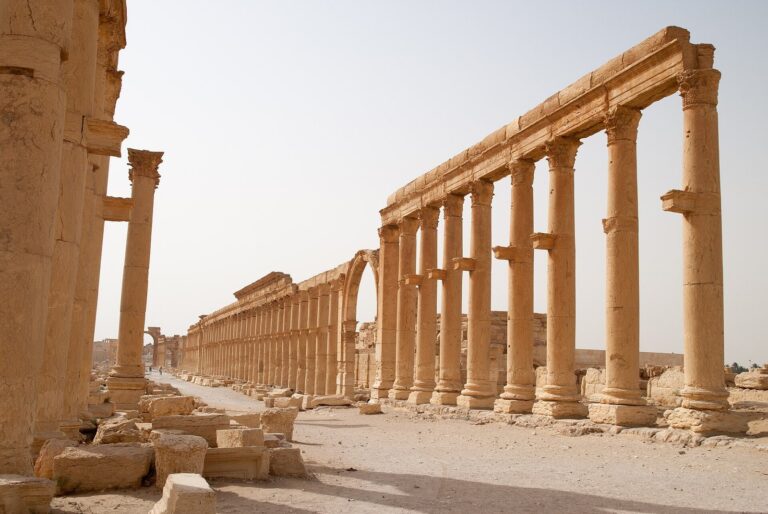
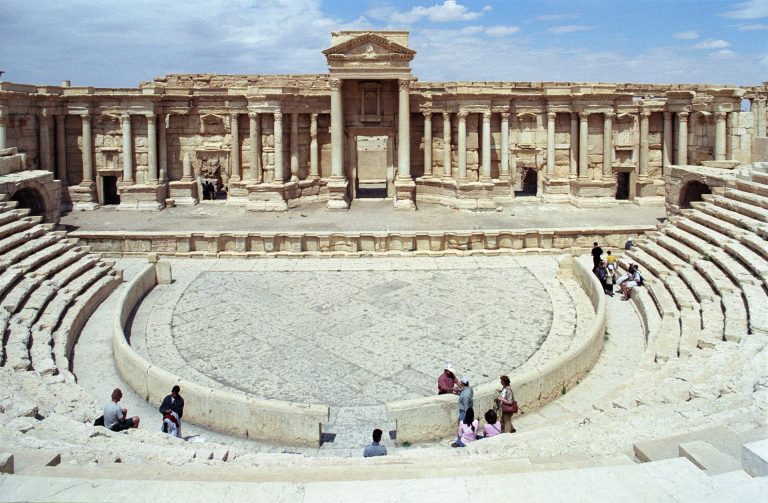
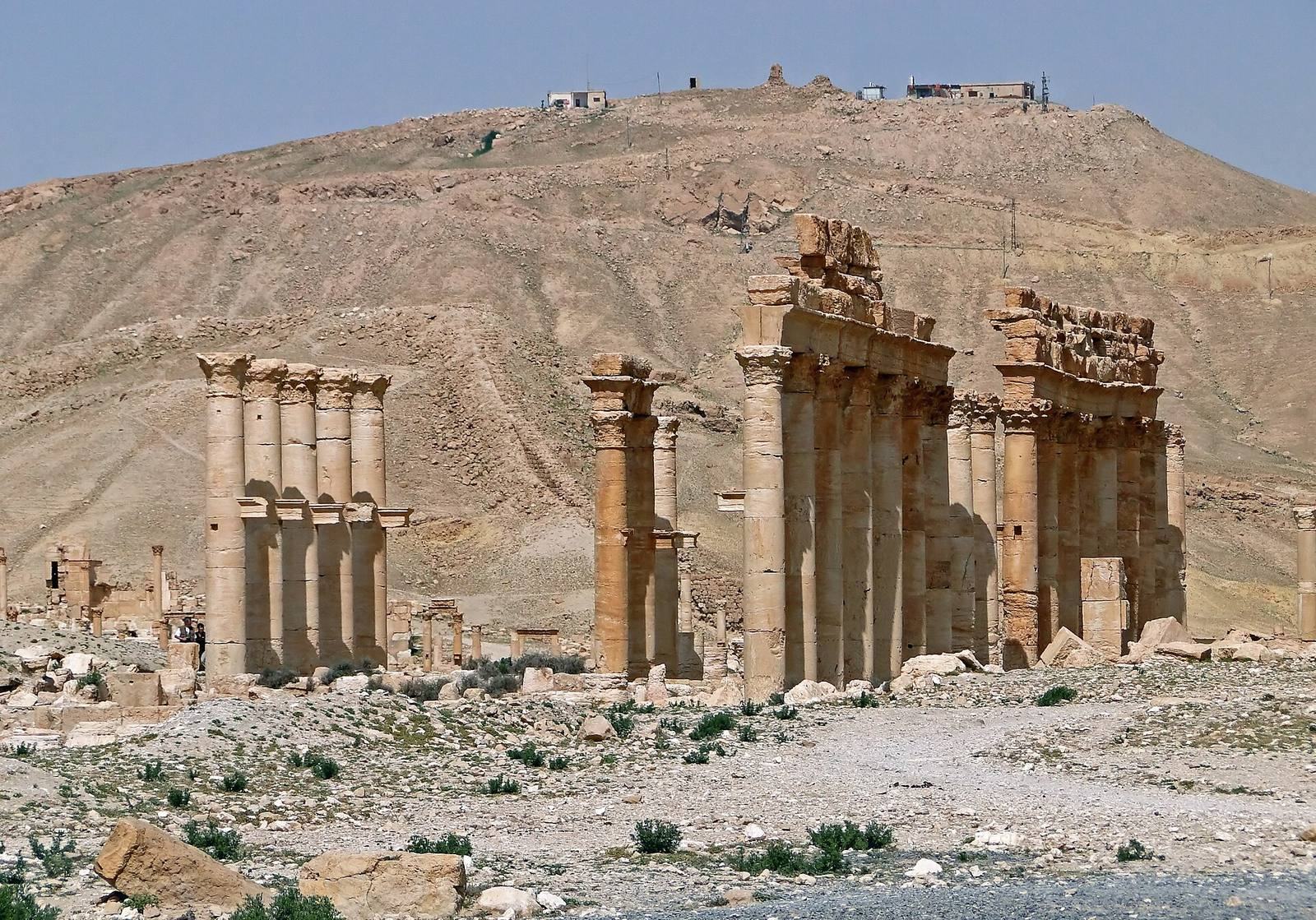
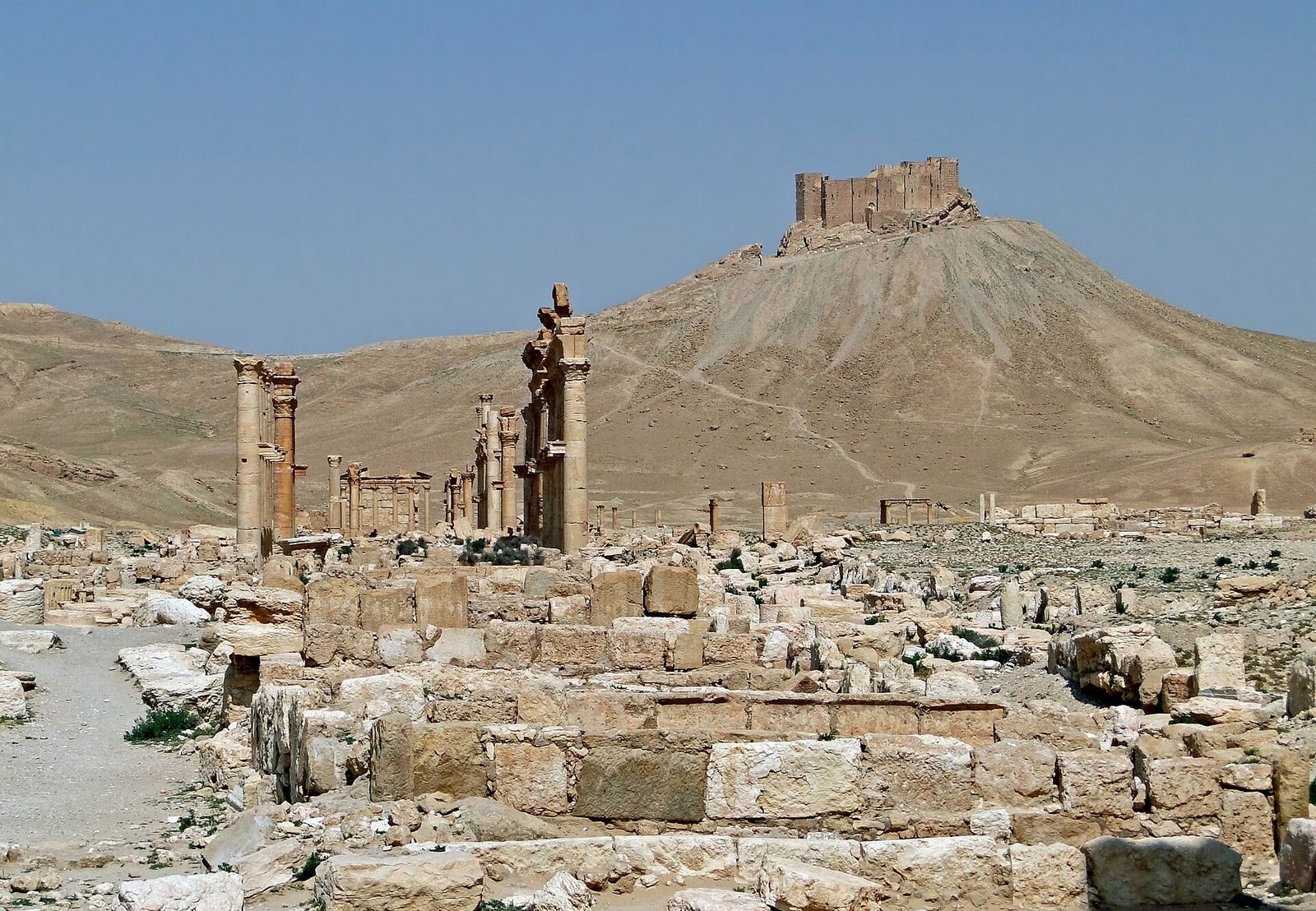
The complex covers about four hectares at Palmyra’s western end, on a hill separated from the city by a small wall. It lies at the opposite end of the Great Colonnade from the Temple of Bel. Its plan combines intersecting colonnaded streets with a headquarters area at the highest point of the hill.
Streets and entrance
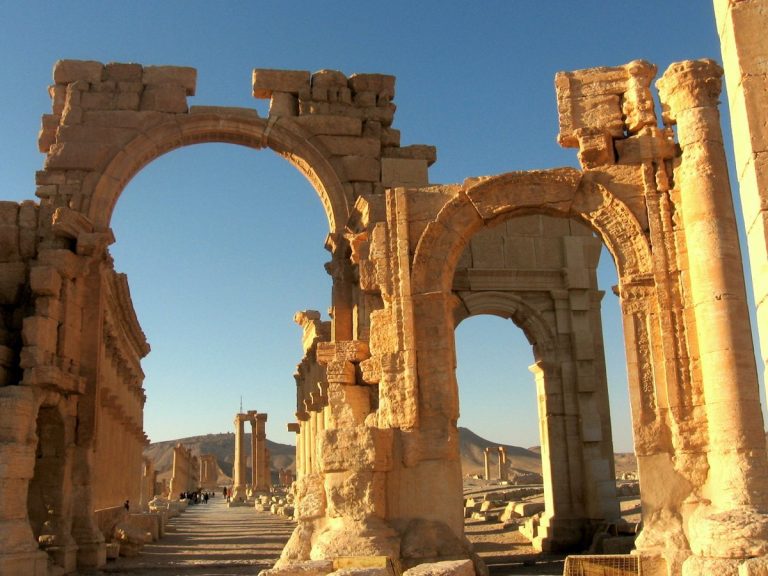
The Via Praetoria and Via Principalis crossed at right angles at a tetrapylon, a monumental structure with four passageways. The camp’s main gate, the Porta Praetoria, opened onto the Via Praetoria, which climbed toward the principia, the camp’s central military headquarters.
Headquarters and temples
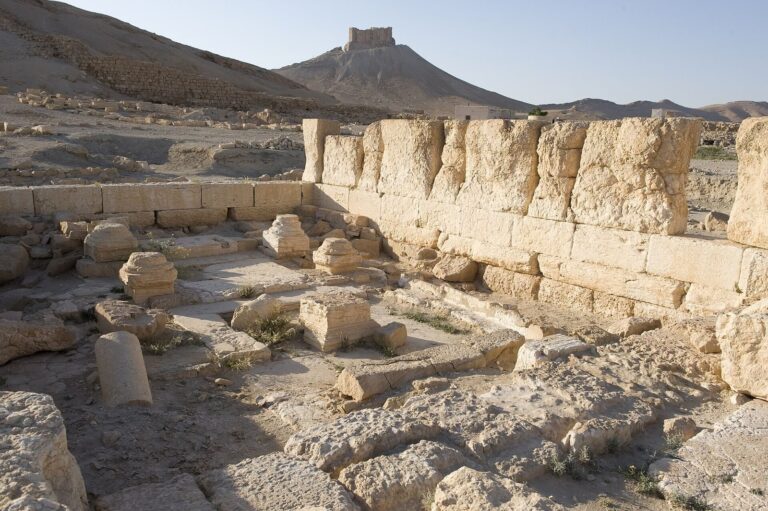
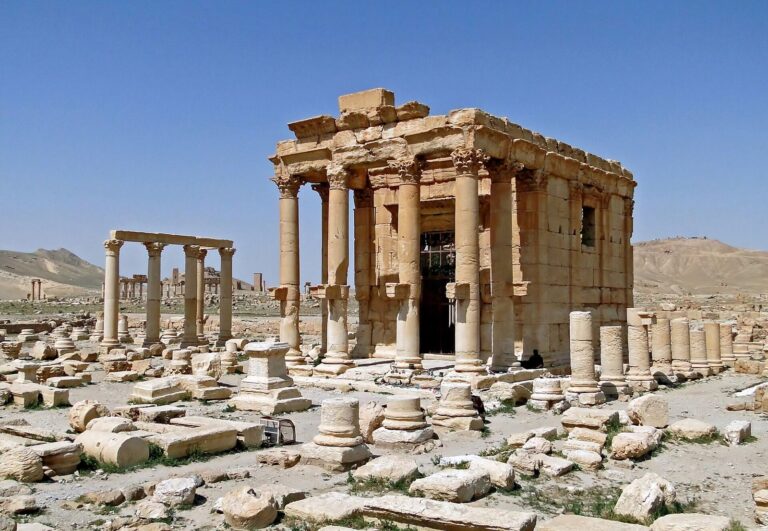
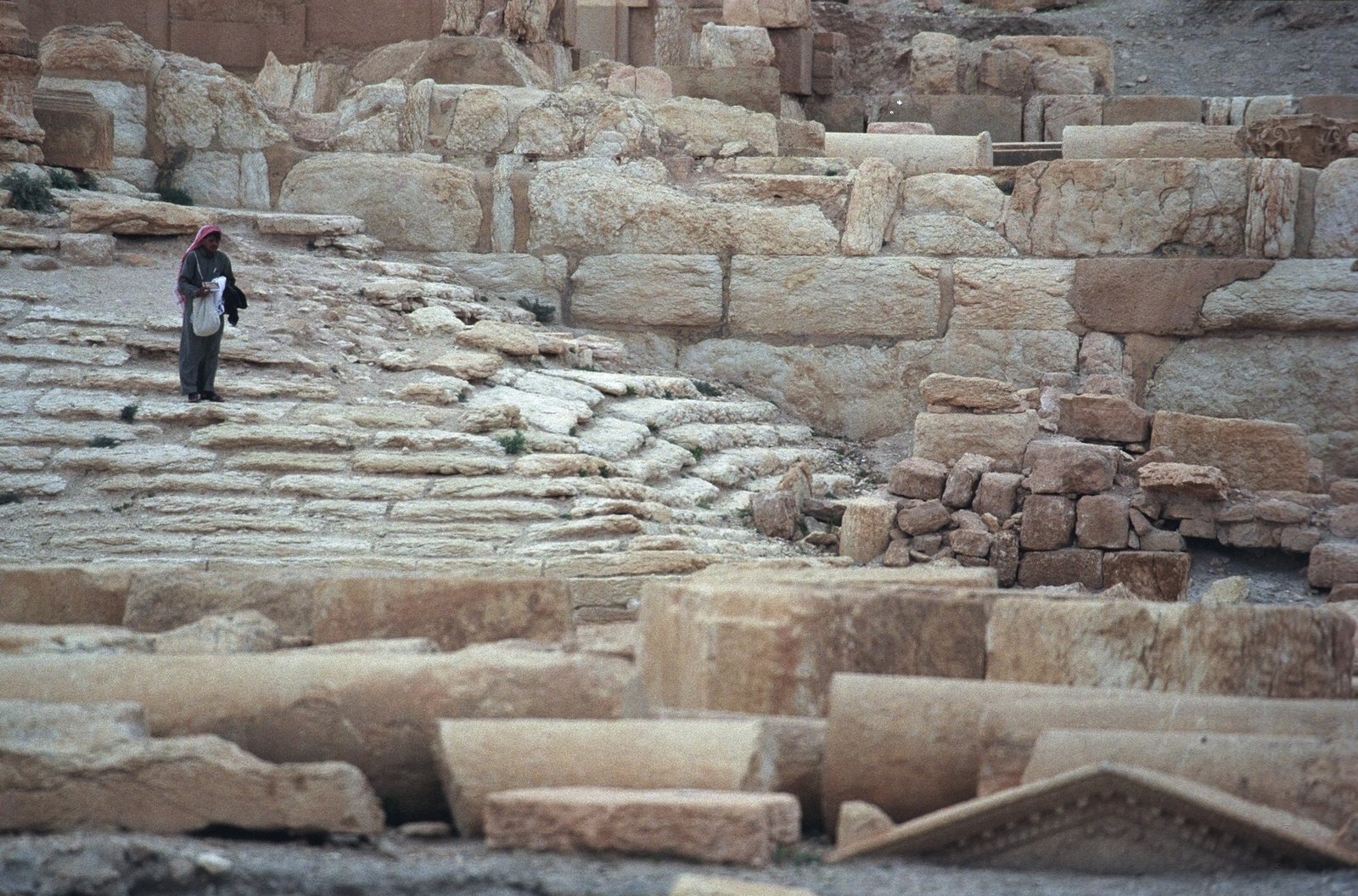
The principia stood at the complex’s highest point. Within it, the Temple of the Standards probably housed the legion’s standards. The area also included the pre-existing Temple of Allat, dedicated to a goddess worshipped in the ancient Near East.
Boundaries and subsidiary structures
A wall separated the military buildings from Palmyra’s civilian settlement, but it appears to have been symbolic rather than defensive, and movement between the areas was relatively unrestricted. Structures interpreted as possible barracks have been associated with the complex, along with features thought to be guard rooms, staircases, and side entrances.
Earlier and later remains
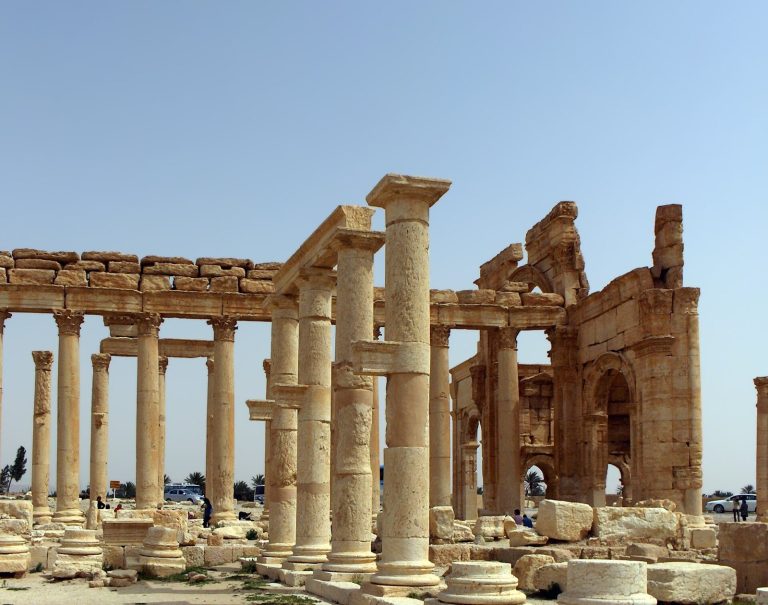
The colonnade along the Via Praetoria incorporated remains of earlier urban buildings and probably predated the camp by about a century. Excavations also revealed a pre-camp residential quarter and funerary artifacts dating to the first century AD. Byzantine-period additions and objects included a coin and a hoard of jewelry.
Architectural comparisons
The camp’s overall design has been compared with a contemporary military camp at Luxor and has similarities to the palace at Antioch and Diocletian’s Palace in Split. These parallels have been linked to the militarization of Roman architecture during the unsettled late third century.