Weißenburg Castle (Klettgau): A Medieval Hill Castle
Site at a Glance
- Rating
- 2
- Popularity
- Very Low
- Country
- Germany
- Primary era
- Medieval
- External website
- Open
- Eras represented
- Medieval
- Civilizations
- Holy Roman Empire
- Site type
- Military
- Remains
- Castle
On this page6 sections
History
Weißenburg Castle is a medieval hill castle near Weisweil, in the municipality of Klettgau, Germany. First recorded in 1023, it was one of the oldest castles in the Klettgau. Rheinau Abbey probably built it between 1023 and 1092.
First record and monastic origins
The 1023 record names the estate as Wizzinburc and places it in Count Radebot’s county. Emperor Henry II gave the estate to Rheinau Abbey, a Benedictine monastery. The lords of Weißenburg initially served as the abbey’s advocates, lay protectors who represented a monastery in secular affairs.
Weißenburg is distinct from the co-owned castle in the Steinatal known as Burg Roggenbach.
Noble lordship and imperial claims
During Diethelm of Krenkingen’s abbacy at Rheinau, from 1157 to 1161, the Krenkingens also became the abbey’s lay protectors. Around 1173, the counts of Lenzburg became lords of Weißenburg. On 9 February 1209, King Otto IV transferred lordship to the Krenkingens, a noble family linked to the Regensbergs.
In May 1241, at Faenza, which Frederick II had captured on 14 April, Diethelm of Krenkingen and his sons Werner and Diethelm confirmed that they were giving up and selling their advocacy rights to the emperor for 1,200 marks of silver. On 17 August, at a camp near Tivoli, Frederick confirmed a repurchase involving 34 settlements, including Weißenburg, then called Wizinburch, and Nova-Crenkingen. The charter also recalled imperial rights previously held by Frederick’s grandfather, Frederick I Barbarossa, and his father, Henry VI.
Disputes arose in 1243. The Krenkingens regained control amid the turmoil that followed the death of Conradin in 1268. The last Hohenstaufen heir, Conradin’s death also ended the dynasty’s direct male line. Weißenburg is also associated with the Hohenstaufen and Habsburg dynasties, the counts of Sulz, and the princes of Schwarzenberg.
Siege and destruction
In spring 1288, Habsburg prince Rudolf II besieged the castle for several weeks. His father, Rudolf of Habsburg, who became German king in 1273, came from Colmar to assist him. Together they destroyed the castle by undermining its walls. A reference from 1315 uses the form Wißenburg, probably as a designation of origin for the Krenkingens.
Remains
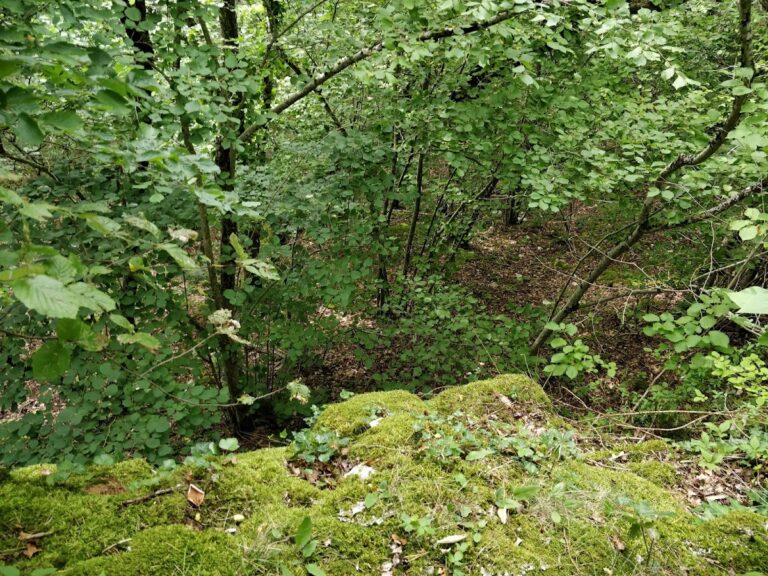
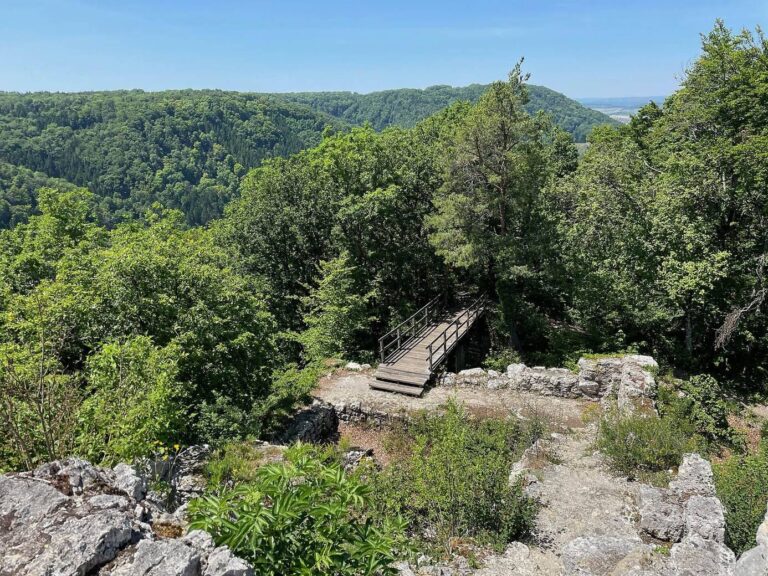
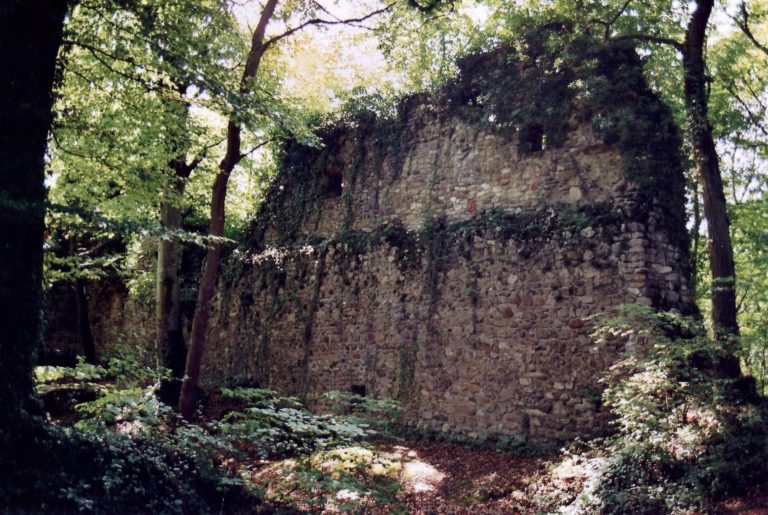
Hilltop setting and surviving walls
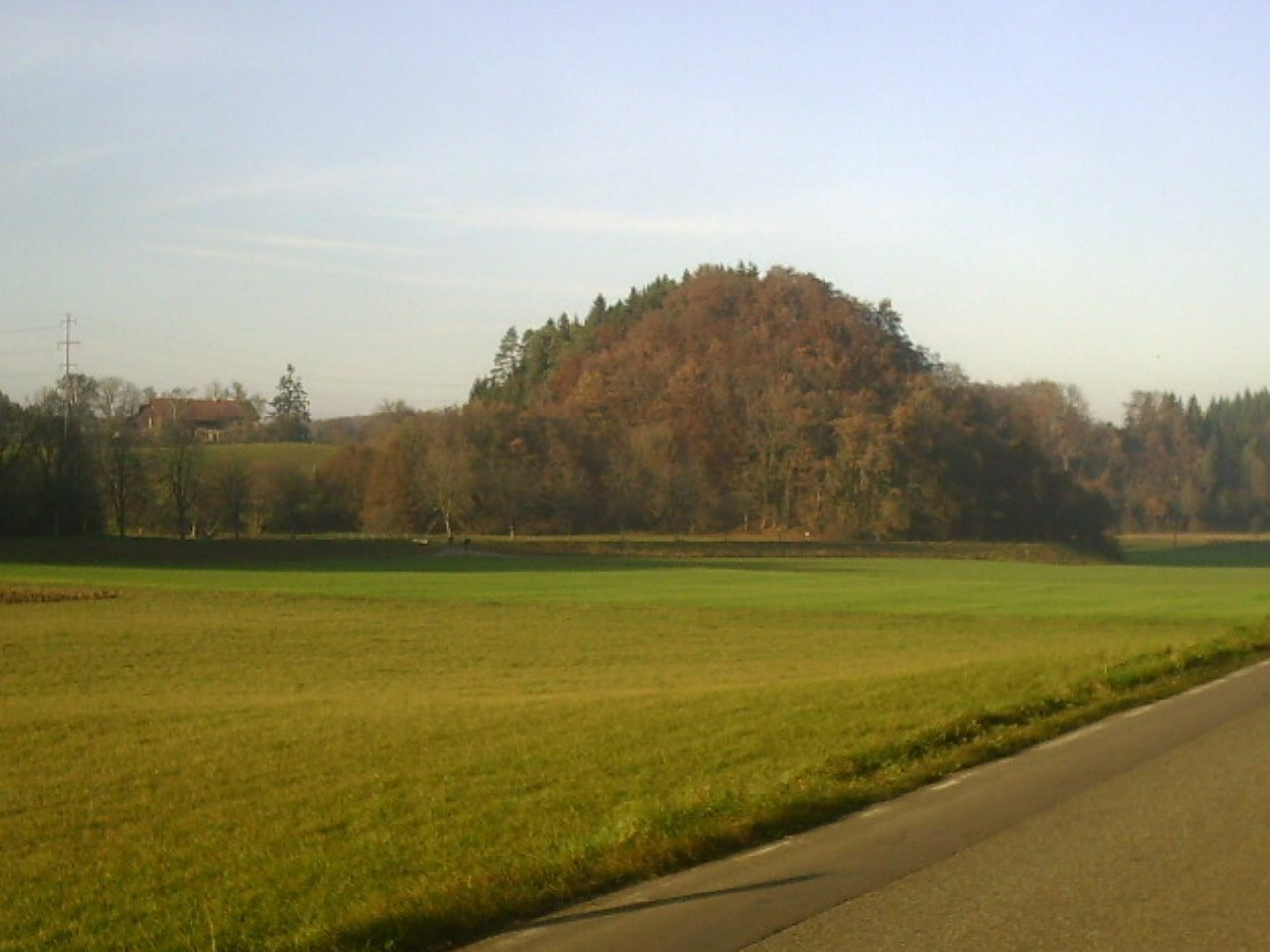
The castle stood on a small hill in a valley, and only a few sections of wall remain visible. The site’s natural defenses included the Seegraben stream, which still flows around the hill. In the past, the stream filled the valley and created marshy ground. The only effective approach was from the northwest, where Lunzihof, also called Burgstallhof, stands. The Seegraben flows into the Schwarzbach at Riedern am Sand.