Burg Randeck: Seat of the Lords of Randeck in Germany


Site at a Glance
- Rating
- 3.8
- Popularity
- Very Low
- Country
- Germany
- Primary era
- Medieval
- External website
- Open
- Eras represented
- Medieval
- Civilizations
- Holy Roman Empire
- Site type
- Military
- Remains
- Castle
On this page7 sections
History
Burg Randeck is a ruined hill castle in Germany, above Mannweiler-Cölln, probably built around 1200 by the medieval Lords of Randeck. The castle served as the family seat of this noble lineage and stood on the Schlossberg above the Alsenz River in what is now Rhineland-Palatinate.
The Lords of Randeck
Heinrich of Randeck, recorded in 1202 as Henricus de Randeke, is the first documented member of the family linked with the castle. He was probably a grandson of Ulrich of Wartenberg. His son, Gottfried I of Randeck, succeeded him in 1231. Gottfried’s grandsons Dietrich and George of Randeck appear in records from 1298 and 1311. Another member of the family, Eberhard of Randeck, died in 1372 after becoming cathedral dean and bishop-elect of Speyer.
Imperial fiefs and changing ownership
In 1518, Maximilian I, Holy Roman Emperor from 1493 to 1519, granted the castle as a fief to Johann Brenner of Lewenstein. A fief was land or property given by a superior lord in return for service and loyalty. Johann also served as the Electoral Palatinate burgrave and chief official of Alzey. The Electoral Palatinate was a territory of the Holy Roman Empire governed by a prince-elector, one of the rulers involved in choosing the emperor.
In 1649, Ferdinand III, Holy Roman Emperor from 1637 to 1657, granted Burg Randeck to Hans Ludwig of Lewenstein, a knight of the Teutonic Order, a medieval religious and military organization. After the Lewenstein family died out, ownership passed in 1668 to Nikolaus Georg Reigersberg, chancellor of Electoral Mainz, another territory governed by a prince-elector.
Destruction and later history
French forces stormed Burg Randeck and blew it up in 1690 during the War of the Palatine Succession, a European conflict fought from 1688 to 1697 and also known as the Nine Years’ War. A few buildings were later made habitable again, but the castle did not return to its former condition. By 1844 it was privately owned, had been demolished, and had supplied building materials for reuse elsewhere. The remaining ruins are now owned by the Cultural History Society of Mannweiler-Cölln.
Remains
Hilltop setting and defensive walls
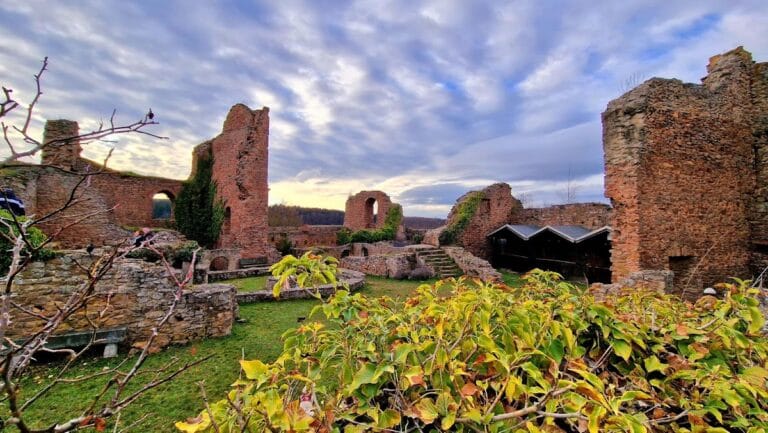
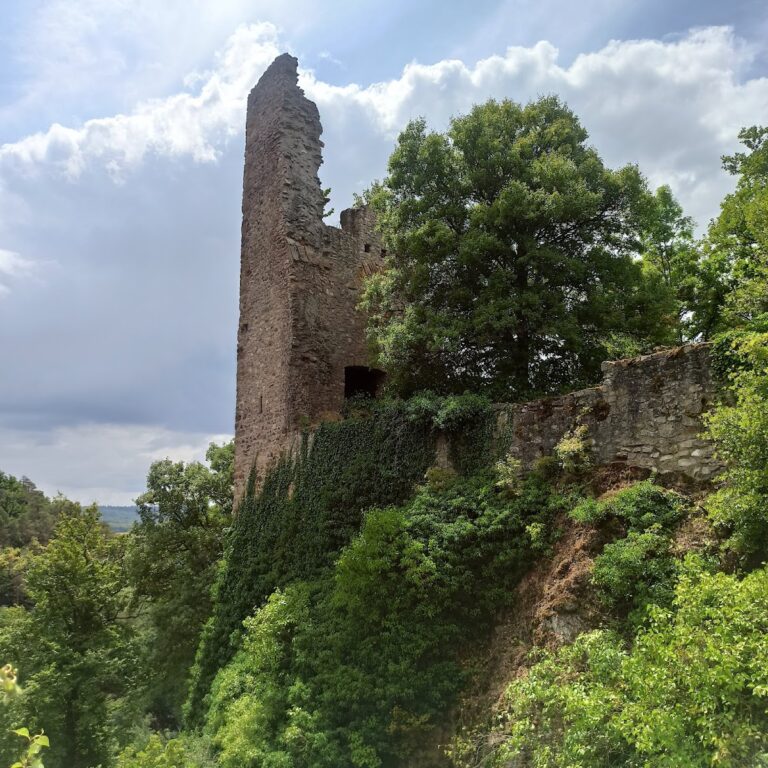
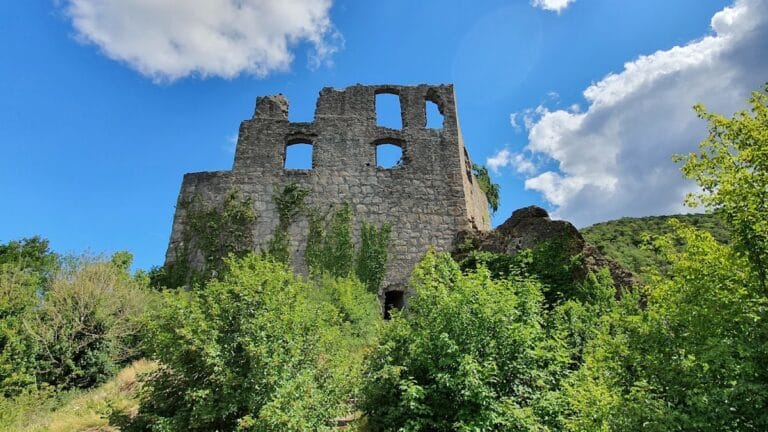
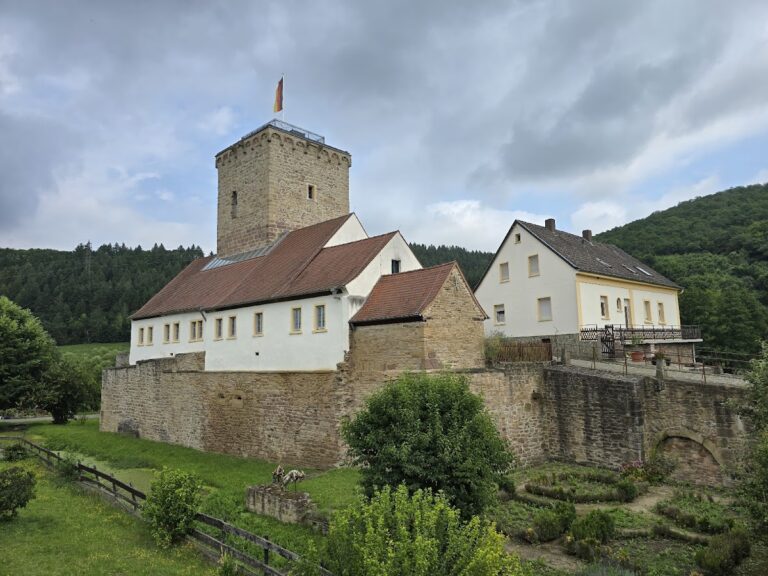
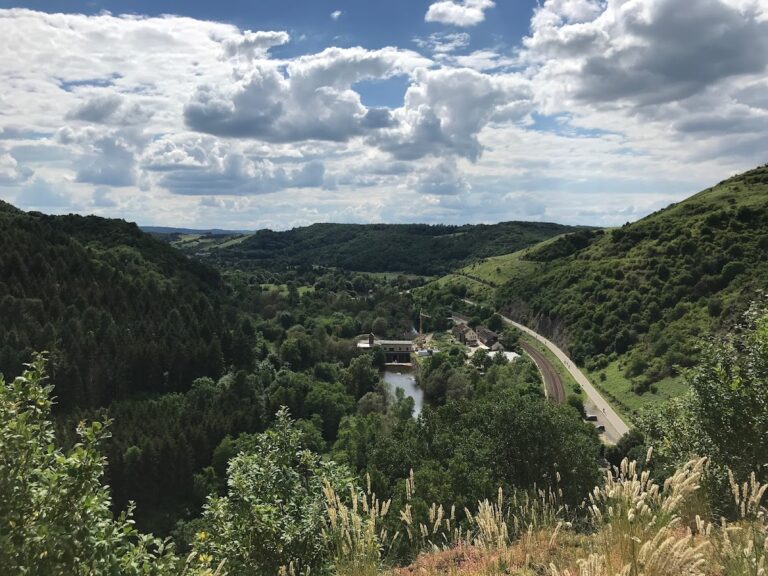
Burg Randeck occupies the Schlossberg at about 263 metres above sea level, roughly west of the wine-growing village of Mannweiler-Cölln and above the Alsenz River. The ruined hilltop complex survives chiefly as wall and foundation remains. Sections of the enclosing ring wall define parts of the former castle boundary, while a corner outwork and flanking towers represent additional elements of its defensive arrangement.
Principal tower
The foundations of the bergfried, the principal defensive tower of a medieval German castle, remain at the site. The tower survives only at foundation level, and the castle’s present condition is limited to these foundations and surviving sections of masonry.
Nearby sites