Megling Castle: A Medieval Hill Castle in Bavaria
Site at a Glance
- Popularity
- Medium
- Country
- Germany
- Primary era
- Medieval
- Eras represented
- Medieval, Early Modern
- Civilizations
- Duchy of Bavaria, Holy Roman Empire
- Site type
- Military
- Remains
- Castle
On this page4 sections
History
Megling Castle is a ruined hill castle on Stampflberg at Stampfl, in the market town of Gars am Inn, Bavaria, Germany. Count Kuno II of Megling built it in 1123 with a residential tower. The castle became the ancestral home of the Megling counts, who served as secular protectors of the Augustinian canon monasteries at Gars and Au am Inn. Augustinian canons were communities of clergy who followed the Rule of St Augustine. The counts continued this role until the early 13th century.
The Megling family maintained a retinue of 25 knights in the western Isengau, a historical region around the Isen River in southeastern Bavaria. Kinship and marriage connected the family with the counts of Frontenhausen-Lechsgemünd, Rott, Tegernbach, Eppan, Falkenstein-Weyarn, and Vohburg. The Megling line ended between 1205 and 1213 without male heirs. Local legend says robber knights stretched iron chains across the Inn to plunder passing ships.
Remains
The hilltop castle
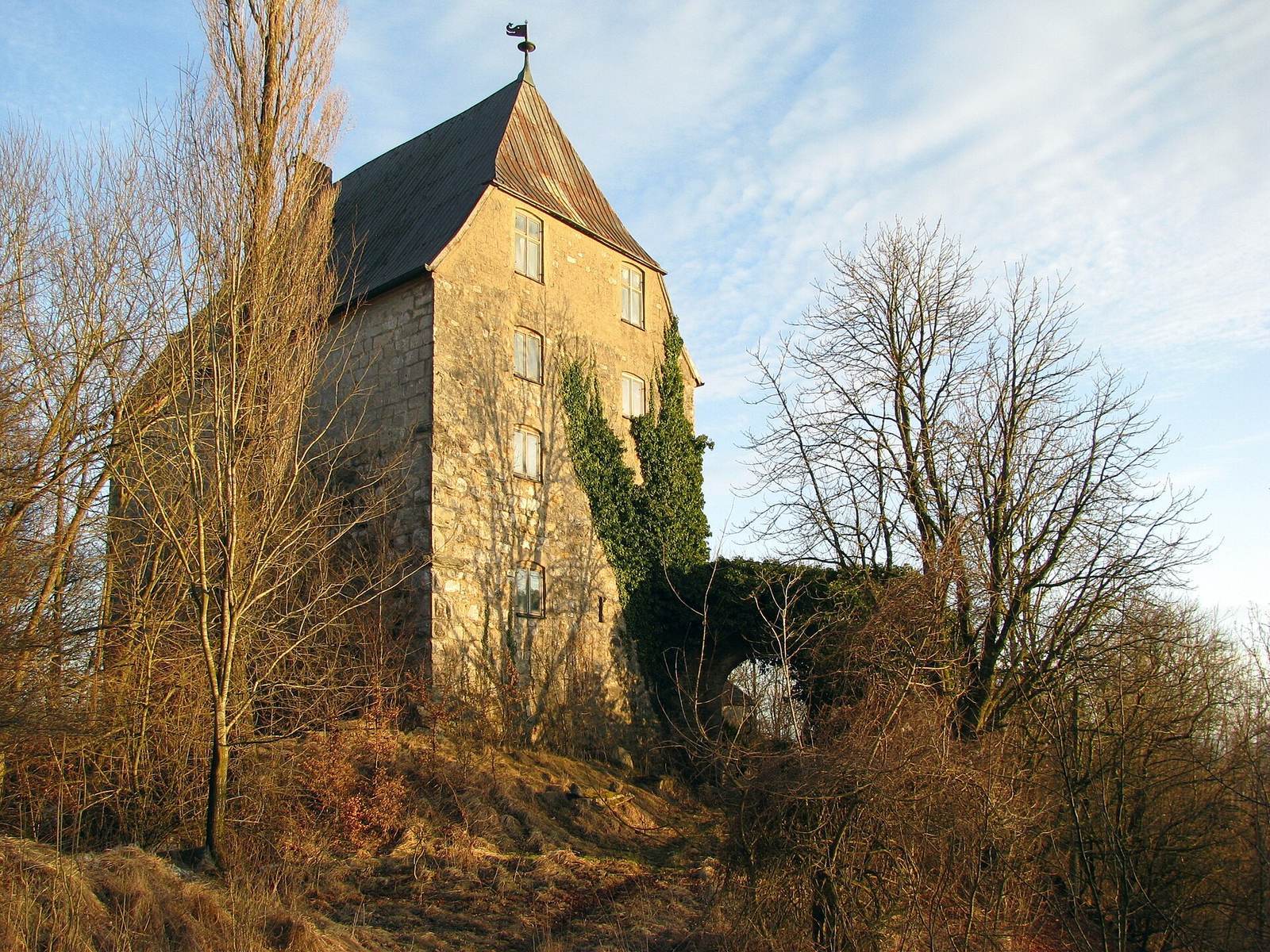
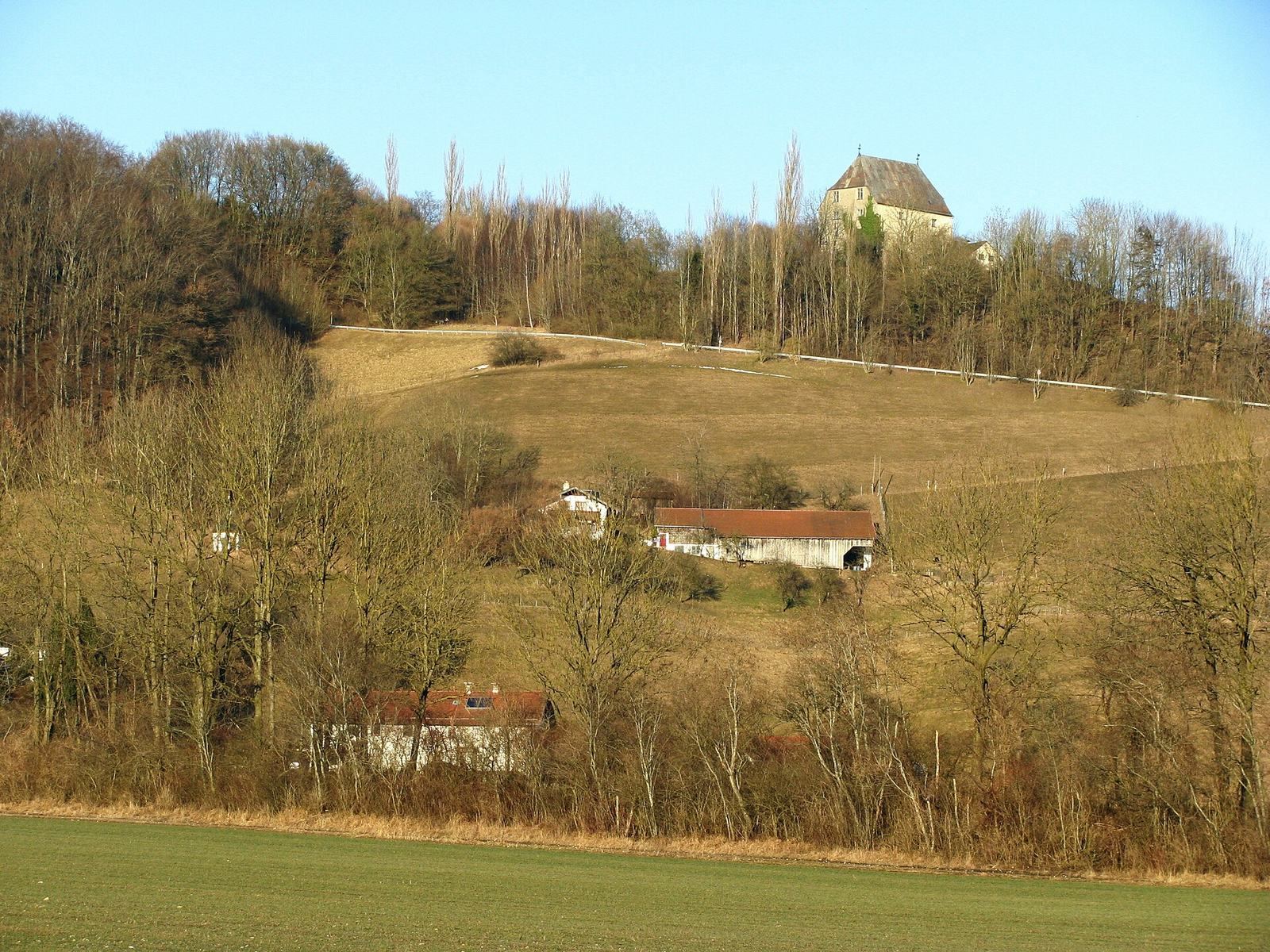
The castle occupies a spur of Stampflberg at about 540 metres above sea level, roughly 200 metres above the Inn. Steep slopes protect the site on three sides. Its surviving defensive tower is a box-shaped, three-storey building with a steep half-hipped roof, whose gable ends have short sloping sections. The tower and ruin are also called Schloss Stampfl and Stampflschlössl. Bossed ashlar masonry, made from stone blocks with projecting, roughly dressed faces, survives in the ruin.
Buried remains and local tradition
The castle site dates to the High and Late Middle Ages, successive phases of the European Middle Ages broadly spanning the 11th to 15th centuries. In the area of Schloss Mödling (Stampfl-Schloss), buried remains from the Late Medieval and Early Modern periods include traces of former ancillary buildings. Local tradition also tells of a secret passage descending toward the Inn, now buried.