Burg Frauenberg: A Staufer-Period Castle Ruin in Stuttgart
Site at a Glance
- Rating
- 3.8
- Popularity
- Very Low
- Country
- Germany
- Primary era
- Medieval
- Eras represented
- Medieval
- Civilizations
- Holy Roman Empire
- Site type
- Military
- Remains
- Castle
On this page7 sections
History
Burg Frauenberg is a hilltop castle ruin in Germany, in Feuerbach, now a district of Stuttgart. It was built in the early thirteenth century during the Romanesque Staufer period, the era associated with the medieval German ruling dynasty of the Staufers, approximately between 1220 and 1250. The castle stood above the village of Feuerbach and the valley route between Hohenneuffen and Asperg.
Foundation and Lordship
Mason’s marks on the castle’s dressed, projecting stonework indicate its construction during the Staufer period. Burg Frauenberg was first mentioned in writing on 1 July 1251, when Wolfram von Frauenberg was its first known lord. The lords of Frauenberg also held Feuerbach, Botnang, Zazenhausen, and properties in Ditzingen and elsewhere. From the castle’s position above the Feuerbach Valley, they controlled a busy trade route through the region.
A Co-Owned Castle
During the Late Middle Ages, ownership passed into the hands of female collateral lines and other noble families. The lords of Helmstatt and the Schenks of Winterstetten were among the families who held shares. Burg Frauenberg thus became a co-owned castle, a fortress jointly held by several families or branches of a noble lineage.
In 1390 or 1391, Wilhelm and Peter von Helmstatt, two robber knights living at the castle, attacked merchants from Cologne travelling through the Feuerbach Valley. They imprisoned the merchants in the tower dungeon and demanded ransom. After Count Eberhard II of Württemberg learned of the attack, he confiscated the castle. He later returned it as a fief to its inhabitants, giving him substantial influence over a fortress that had previously been more independent. His influence increased as individual co-owners sold their shares.
Württemberg Ownership and Decline
In 1481, Count Eberhard im Bart purchased the remaining shares in the castle, the village of Feuerbach, and the hamlet of Botnang from the heirs of the Frauenberg family. The selling co-owners included Conrad and Bernhard Schenk von Winterstetten, Martin and Eberhardt von Heusenstamm, and their uncle Eucharius von Venningen. Eucharius had inherited this portion through his connection to Adelheid von Frauenberg. His father or grandfather, Johann von Venningen, had served as a Palatine Vitztum, a senior administrative official of the Electoral Palatinate, in Neustadt an der Weinstraße. The purchase brought the entire lordship under Württemberg authority.
Afterward, the castle fell into decay and its stone was quarried for building work, particularly for Stuttgart’s city wall. By the beginning of the sixteenth century, no visible remains of the complex could be seen. The red-and-silver arms of the lords of Frauenberg nevertheless continued in local memory, forming the shield of Feuerbach’s municipal arms until 1933.
Rediscovery and Preservation
A development plan adopted by Stuttgart’s municipal council in the late 1960s threatened the archaeological remains, despite warnings from the state monument authority and the city archive. In 1971, a mechanical excavator uncovered Staufer-period dressed stonework. Properties were then exchanged through a clandestine operation so that at least the tower foundations could be preserved. The remains were secured in 1973 and enclosed.
Remains
Tower Foundations and Masonry
Burg Frauenberg was built as a hilltop castle with bossed ashlar masonry, formed from dressed stone blocks whose outer faces project from the wall while their edges are carefully fitted. The castle walls were approximately 3 to 3.8 metres thick. Its central tower rose about 20 metres and contained a small interior space that served as a prison around 1390, including during the confinement of the Cologne merchants.
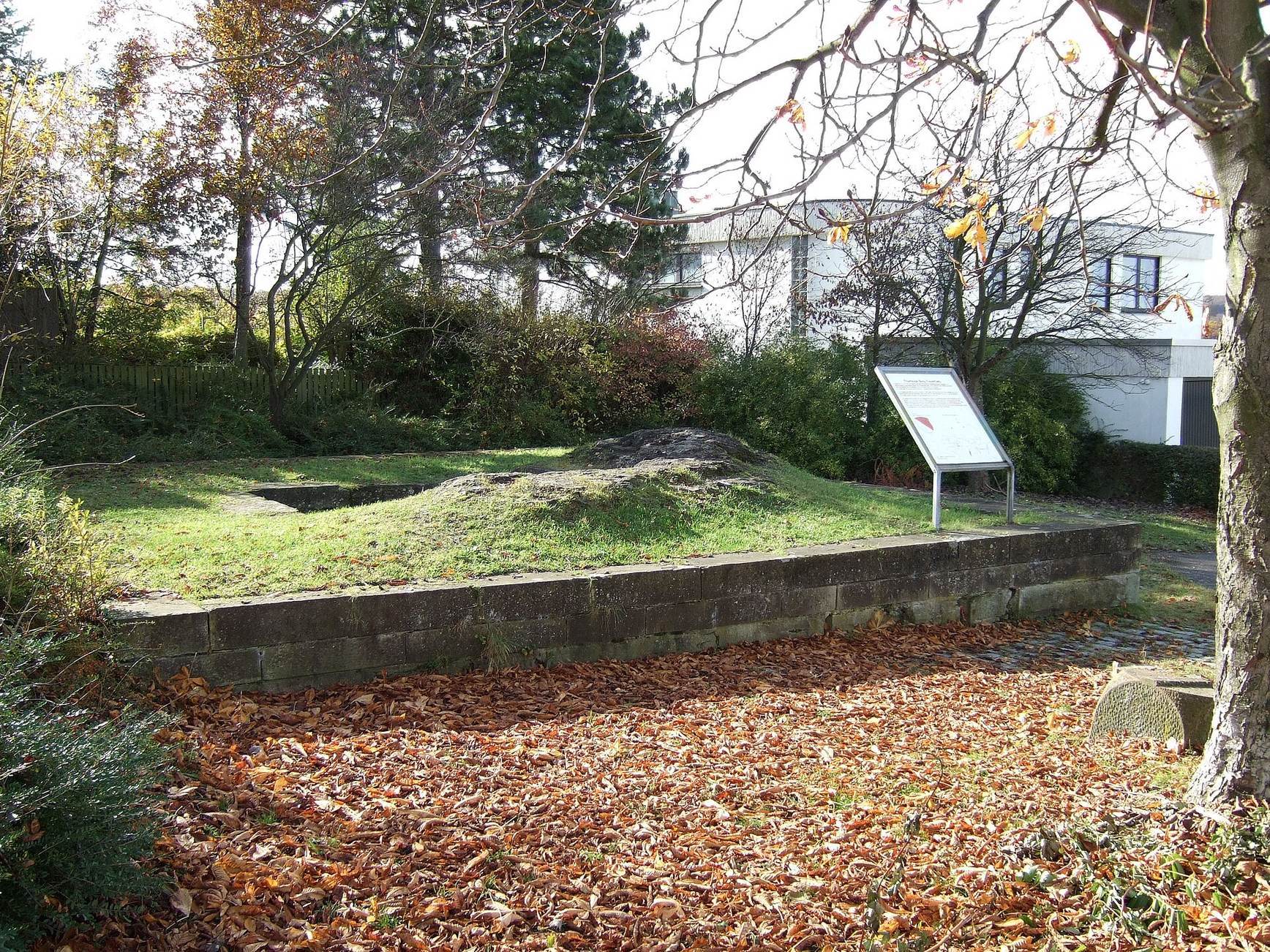
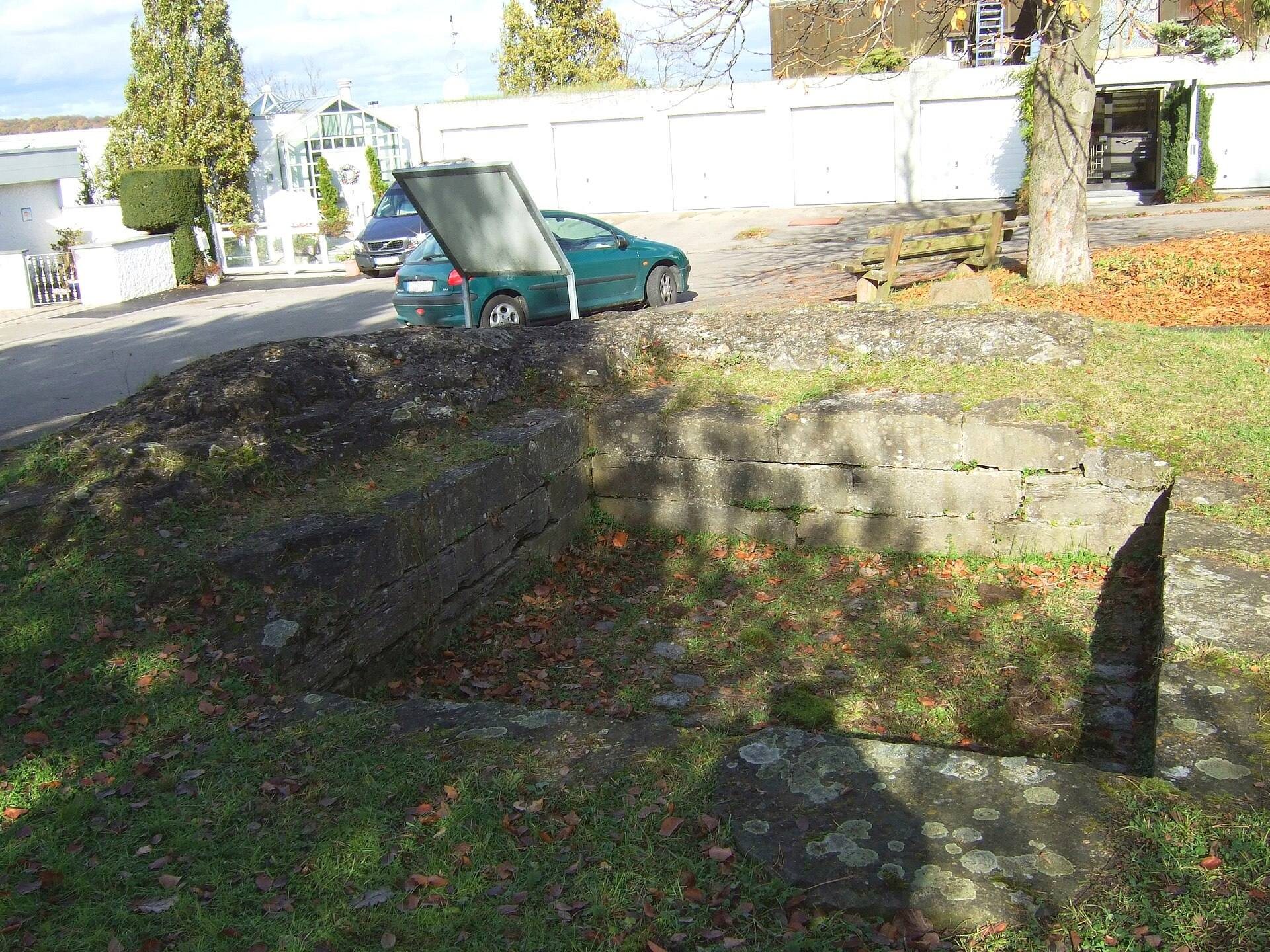
The surviving remains consist of the tower’s foundation walls. They lie at the turning circle of An der Burg street and are enclosed by the protective arrangement created after their discovery. The foundations preserve the position of the central tower on the rise above Feuerbach and the Feuerbach Valley, overlooking the trade route between Hohenneuffen and Asperg.