Bunge Church: A Medieval High Gothic Church in Sweden


Site at a Glance
- Rating
- 4.4
- Popularity
- Very Low
- Country
- Sweden
- Primary era
- Medieval
- External website
- Open
- Eras represented
- Medieval
- Civilizations
- Unclassified
- Site type
- Religious
- Remains
- Fortified Church
On this page13 sections
History
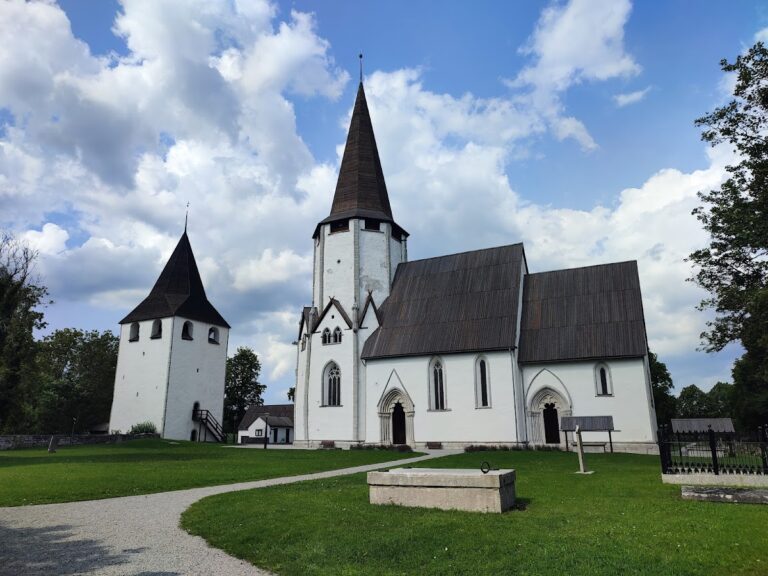
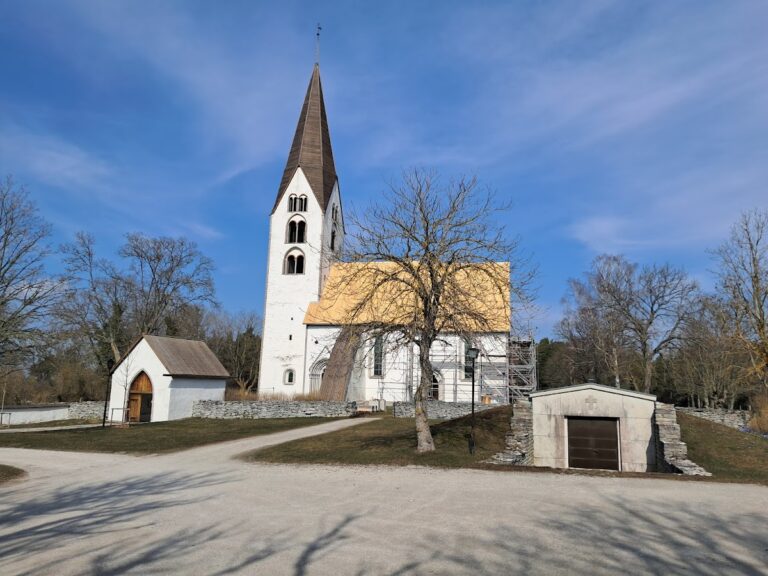
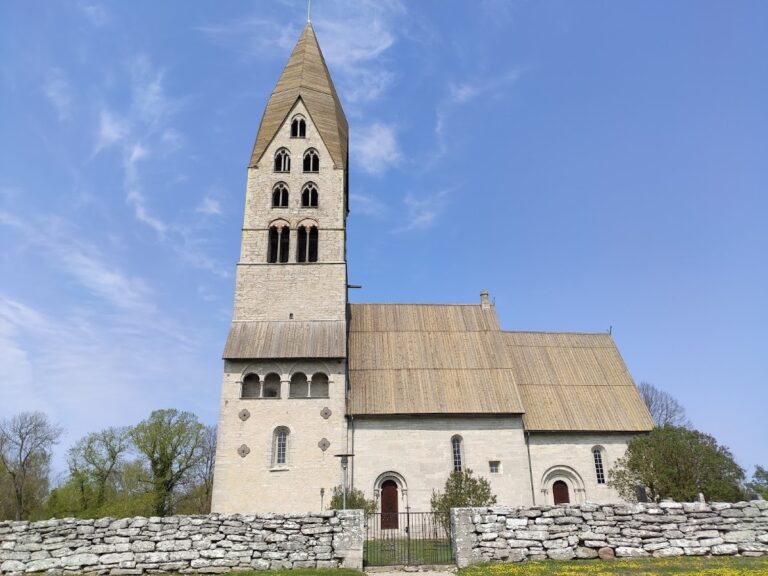
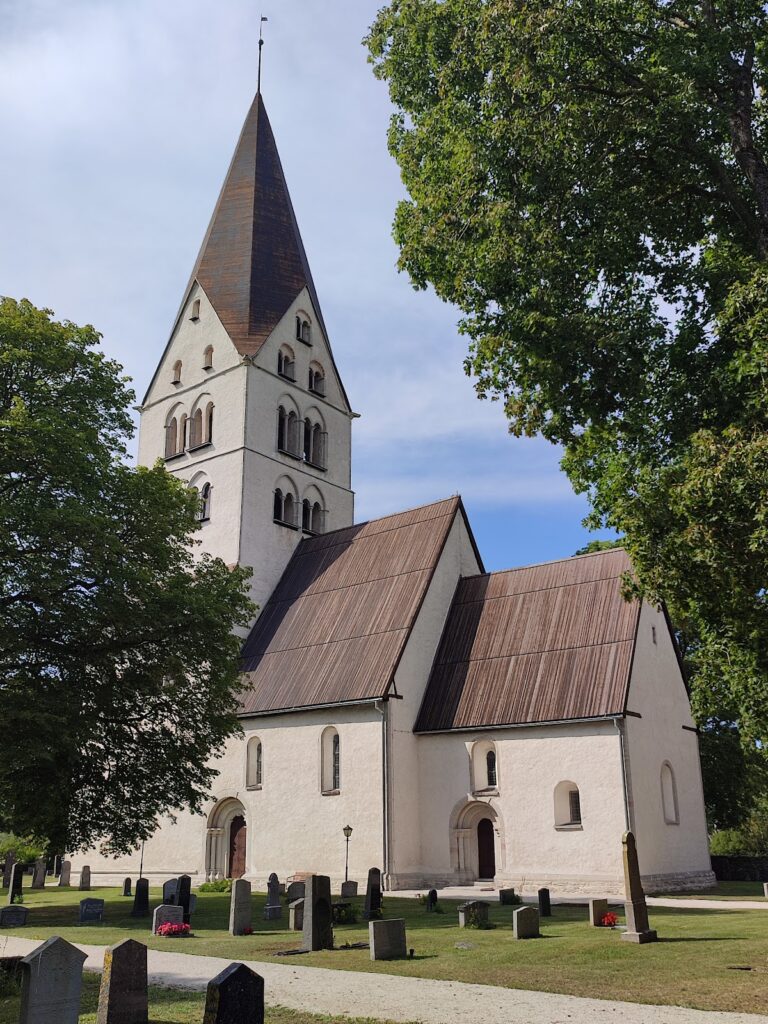
Bunge Church is a medieval church in Bunge, Sweden, on the island of Gotland. Its nave and choir were built in the fourteenth century in the High Gothic style, while its massive tower belongs to an earlier Romanesque church of the twelfth century. The church is one of the largest in northern Gotland and is comparable in size to Lärbro Church. It belongs to the Church of Sweden, Sweden’s national Lutheran church, and lies within the Diocese of Visby, the regional church jurisdiction covering Gotland.
The earlier church and medieval rebuilding
Archaeological excavations carried out in 1916 and 1971 established that the present building followed a twelfth-century Romanesque church. The substantial tower was part of that earlier structure. When the church was rebuilt and enlarged in the fourteenth century, the new nave and choir formed a largely unified High Gothic building around the older tower. High Gothic architecture is characterized by tall proportions, pointed arches, large windows, and ambitious structural design.
The church complex also had a defensive function during the Middle Ages. Its churchyard wall was once considerably higher than it is today and was designed to assist in defense. Loopholes remain in the wall, while the original tower door carries marks made by pikes and crossbow bolts. These features indicate that the complex could serve purposes beyond worship, although the precise circumstances of its military use are uncertain.
The Teutonic Order hypothesis
The murals and defensive wall may date from the period when Gotland belonged to the Teutonic Order, a medieval Catholic military-religious order that governed territories and operated fortified establishments around parts of the Baltic. This dating has led to the suggestion that the complex may briefly have been controlled by the Order and adapted into a small fortified residence associated with it. The interpretation remains uncertain rather than established fact.
A tradition holds that a major battle took place in front of the church. The fighting knights painted inside the building have likewise received different interpretations. They have been understood as Teutonic knights, as participants in the Battle of Visby in 1361, or as figures recalling the Christian martyrdom of the Theban Legion, a tradition concerning a Roman military unit said to have been executed after refusing to renounce Christianity.
Later restoration and the organ
During a restoration in the mid-nineteenth century, the roof was lowered, reducing the building’s formerly taller appearance. The church was restored again in 1971 according to plans by the architect Leif Olsson. Its organ was made in 1756 by Jonas Gren and Peter Strähle for the French Reformed Church in Stockholm. The Bunge congregation acquired it in 1870. Olof Ryden restored the instrument in Stockholm in 1952, and Mads Kjersgaard of Uppsala restored it in 1977, returning it to its original appearance.
Remains
Bunge Church combines a twelfth-century Romanesque tower with a spacious fourteenth-century High Gothic body. The nave is divided into two parts by two slender columns, and the choir ends at the east in a straight wall pierced by three slender windows. A single buttress supports the south side of the church, an unusual arrangement among the churches of Gotland. The building and its churchyard remain enclosed by a defensive wall with four medieval gates and surviving loopholes.
Church structure and sculptural details
Nave and choir
The nave and choir form the principal High Gothic portion of the church. The richly sculpted south portal is one of its notable external features. The north portal incorporates Romanesque details that may have been reused from the earlier twelfth-century church. Inside, the front nave column carries representations of Christ, Mary, John the Baptist, and a devil at its base. An unusually carved representation of the Mass appears on the right-hand vault corbel of the south wall. A vault corbel is a projecting support from which a vault or related structural element springs.
Tower and defensive enclosure
The massive tower preserves the fortress-like character of the earlier Romanesque church. Its original door retains marks made by pikes and crossbow bolts. The surrounding churchyard wall, with its four surviving medieval gates and loopholes, forms a second defensive element around the church. Together, the tower and enclosure show how the medieval complex incorporated structures suited to protection as well as religious use.
Murals and furnishings
Wall paintings
The interior walls are covered with murals painted by an unknown master, probably from Prussia or Bohemia. They date from the late fourteenth or early fifteenth century, approximately 1400. Their subjects include the Last Judgment, the Crucifixion, several apostles, legends of saints, and the Mass of Saint Gregory. This devotional scene depicts a Eucharistic miracle associated with Pope Gregory the Great. The north wall contains a conflict between knights. One old stained-glass window also survives in the church.
Font and alms box
The church contains a thirteenth-century baptismal font. A medieval stone alms box, probably made of limestone, bears the runic inscription “Lafrans made this stone.” The box may first have served as a pedestal for a crucifix. Its inscription is associated with the stonemason Lafrans Botvidarson. A runic inscription is writing formed with runic characters, an alphabet used in various Germanic-speaking societies before and alongside the Latin alphabet.
Munkhuset and the former parsonage
Parsonage ruins
The ruins of Munkhuset, the medieval parsonage, stand beside the church. The building was probably erected in the fourteenth century while the choir and nave were being constructed. It was tall and substantial, with richly decorated portals and window openings. The ruins remain beside the church, while carved architectural details from Munkhuset are preserved at the Bunge open-air museum, which forms part of the site area.