Bulverket: A Wooden Fortification in Lake Tingstäde
Site at a Glance
- Popularity
- Medium
- Country
- Sweden
- Primary era
- Medieval
- Eras represented
- Medieval
- Civilizations
- Unclassified
- Site type
- Military
- Remains
- Fort
On this page11 sections
History
Bulverket is the collapsed remains of a wooden fortification built in the 1130s in Lake Tingstäde on Gotland, Sweden. The name joins the Old Swedish words bul, meaning log, and verk, meaning a construction; it is related to the word “bulwark.” Tree-ring dating, which matches timber growth patterns against dated sequences, and radiocarbon analysis, which estimates the age of organic material, place the construction in the 1130s.
Construction and uncertain purpose
The fortification appears to have been built rapidly, perhaps in about a year, and may have required around 100 workers. Its scale suggests that people from much of northern Gotland took part. Estimates of its period of use range from a few years to about a century, with one placing it at roughly 50 years.
Bulverket’s purpose is unknown. It may have served as a refuge during conflicts near the end of the Viking Age, a period associated with Scandinavian seafaring, raiding, trade, and settlement. Other proposals describe a stronghold amid Baltic pirate raids and struggles between lesser kings, or a place to oppose the spread of Christianity and claims by royal or church authorities. Finds related to fishing and trade have also prompted the idea that it stored goods or supported exchange, although its scale has been considered excessive for an ordinary trading post. By 2015, none of these explanations had been confirmed.
The fortification’s design may have drawn on Slavic or Baltic building traditions. It has no known counterpart on Gotland or in western Scandinavia. Its construction coincided with social upheaval and conflict among Gotlandic chieftains, as well as pressure from representatives of Christianity. The island later came under the Diocese of Linköping, a church district administered by a bishop.
Local knowledge and archaeological study
People in the area probably knew of the submerged remains for centuries. A local saying about smoke “like when Lake Tingstäde burned” has been tentatively connected with the possibility that Bulverket caught fire. The first written mention came in 1868, when Oscar Montelius noted that naturalist and teacher Lindström had found poles in the lake in 1866.
Arvid Zetterling made a preliminary survey in 1915, and a substantial archaeological investigation began in 1921. He dredged underwater using homemade tools, drew the remains, and produced a plan at a scale of 1:50. He also used aerial photographs for archaeological work, probably becoming the first person in Sweden to do so. From 1932 to 1935, he rented accommodation at Furubjär Farm and established a small museum devoted to Bulverket.
Zetterling interpreted fire-damaged timber as evidence that much of the structure had burned. Later investigations, led by archaeologist Johan Rönnby between 1989 and 1994, used side-scan sonar, stratigraphic study, and 20 core samples. Their results indicated that Bulverket had not been used as a dwelling for long. Later interpretations allow that any fire may have been limited rather than destructive of the whole fortification; another possibility is that the structure became unstable, was abandoned, and eventually collapsed.
The dating of Bulverket’s timbers was revised after researchers found that a reference chronology used in some earlier estimates was nine years out. Outer-ring dates previously given as 1121, 1124, and 1129 were shifted later, supporting timber felling and construction in the 1130s.
Remains
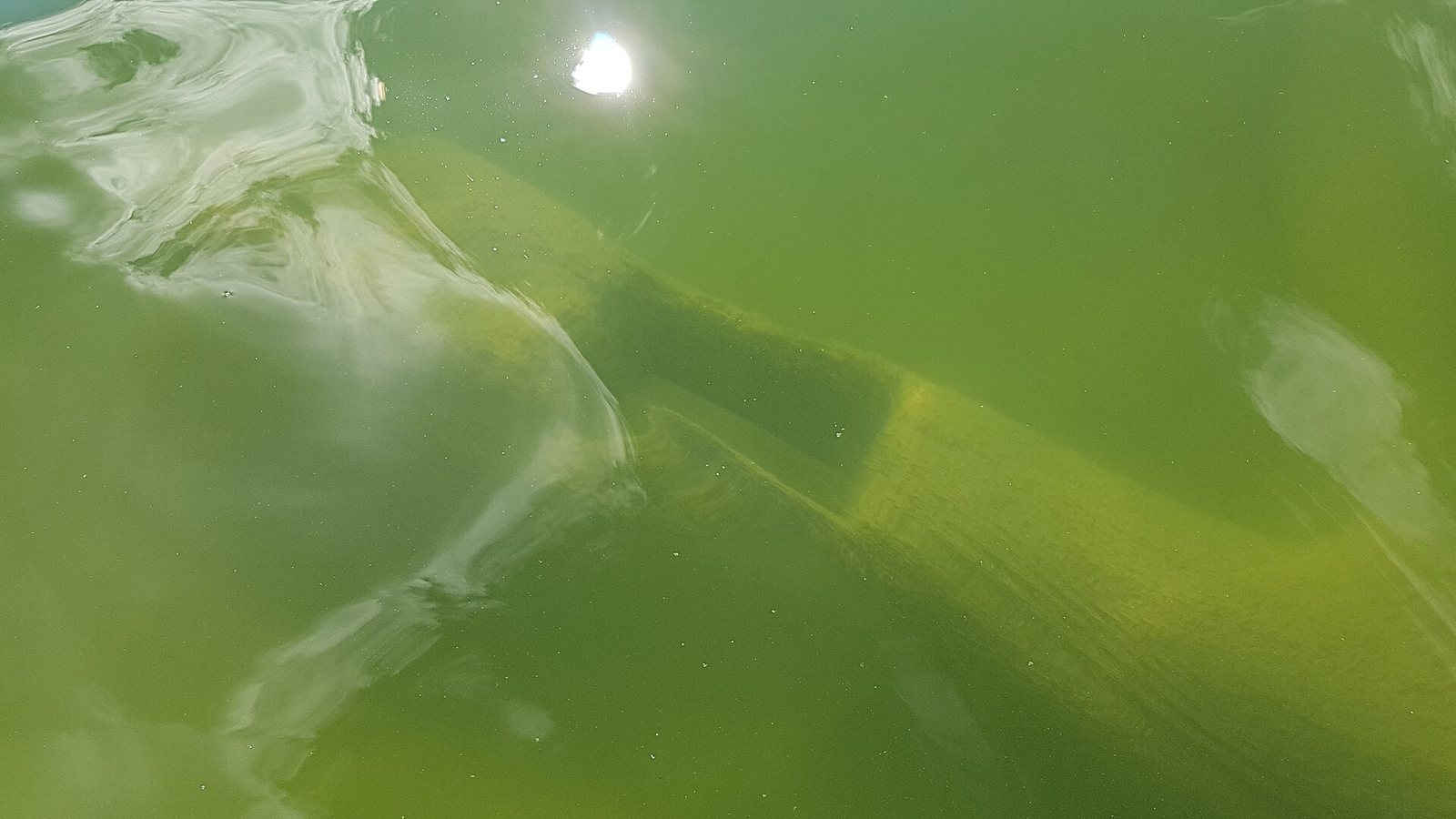
Bulverket’s submerged timbers extend across about 40,000 square metres, or four hectares, in Lake Tingstäde. The site is listed at an elevation of about 40 metres. The lake surface stood at approximately its present height when the fortification was built; sediment has since accumulated on the lakebed to a depth of about 0.5 to 1 metre, helping preserve the underwater remains.
Layout and timber construction
Central platform and landing area
Four piers on square log caissons, box-like structural units made from logs, formed a platform with sides about 170 metres long, aligned with the cardinal directions. Open water sheltered within the platform held landings for mooring boats and was estimated to accommodate about 200 vessels of an early Viking-Age type. The construction proceeded caisson by caisson. Some units were joined by cutting rectangular openings into upright logs and passing horizontal poles, about 20 by 10 centimetres, through them. The caissons stood about four metres high, with the platform floor roughly one metre above the water.
Defenses and buildings
Two concentric rings of timber piles enclosed the platform and its buildings. The outer defensive line stood as much as 50 metres from the platform in places, giving the whole structure a diameter of about 250 metres. Openings in the platform and timber barriers in its northwest part allowed boats to pass. Houses and storage sheds occupied the platform; the houses stood in four rows and measured about three metres by three metres. Builders used post-and-plank methods, log construction, and walls of upright timber stakes. The fortification required roughly 25,000 logs, mostly pine, equivalent to about 50 hectares of forest.
Recovered objects and boats
Dredged finds
Zetterling’s dredging recovered timber from the platform and houses, a log chest about one metre long, a trough measuring about 4.5 by 0.3 metres, and a ladder about five metres long. Other finds included bronze objects, floats, hazelnuts, and bones from cattle, sheep, pigs, and poultry.
The largest boat
Remains of three boats were found at Bulverket. Twenty-nine recovered pieces represent the largest, estimated to have measured about eight metres long and two metres wide, with a draught, or hull depth below the waterline, of about 0.8 metres. Built of pine using overlapping planks, it had a hull with pointed ends, a T-shaped keel, probably seven internal frames and six rows of planks fastened with wooden pegs. It likely carried a square sail on a mast and was steered with a side rudder. Its construction has been interpreted as showing Slavic boatbuilding influence, and it was probably used for fishing and everyday travel on the lake.
A radiocarbon test in 1975 placed this boat at around 1200, later than the fortification. Treatment with linseed oil and alum during conservation in the 1930s may have affected the result. In 1975, the boat pieces were transferred to Stockholm’s Maritime Museum for documentation.
Krampmacken
The recovered boat provided a basis for Krampmacken, a reconstruction built in 1979 and 1980. About eight metres long and two metres wide, it has six oars and a crew of eleven. Its hull follows the Bulverket boat, while its sail design draws on sails shown on Gotlandic picture stones. The name comes from a Gutnish word for the common Baltic shrimp, which the reconstructed boat was said to resemble. Krampmacken later served as a model for other reconstructed Viking ships.