Schoenberg Palace: Management Building of the Wąchock Metalworks
Site at a Glance
- Rating
- 4
- Popularity
- Very Low
- Country
- Poland
- Primary era
- Modern
- Eras represented
- Modern
- Civilizations
- Russian
- Site type
- Domestic
- Remains
- Elite Residence
History
Schoenberg Palace, the management building of the Wąchock metalworks, is in Wąchock, Poland. It was built in the late nineteenth century as a neoclassical residence, a style drawing on ancient Greek and Roman forms. The metalworks began in 1833 as an investment by Bank Polski, the Polish state bank that supported investment in the country during the nineteenth century. After the works were established, their water system and factory buildings were remodeled.
A flood in 1868 left the complex in ruins, and flooding on 23 October caused further deterioration. On that date, Piotr Hatt acquired the works. He sold them in 1888 to German entrepreneur Robert Neuman, who established a factory producing mill rollers, improved the mill, and built a brick residence.
Neuman’s son-in-law, Mikołaj Schoenberg, later took charge of the residence. After his death, his sons ran the factory. One son, Robert, became the local commune head, the administrative leader of the commune, after German forces occupied Wąchock.
Near the end of the Second World War, the Schoenberg family left Wąchock, and the metalworks passed into state ownership. The palace was subsequently used as a militia post, commune office, preschool, health center, and local community club.
Remains
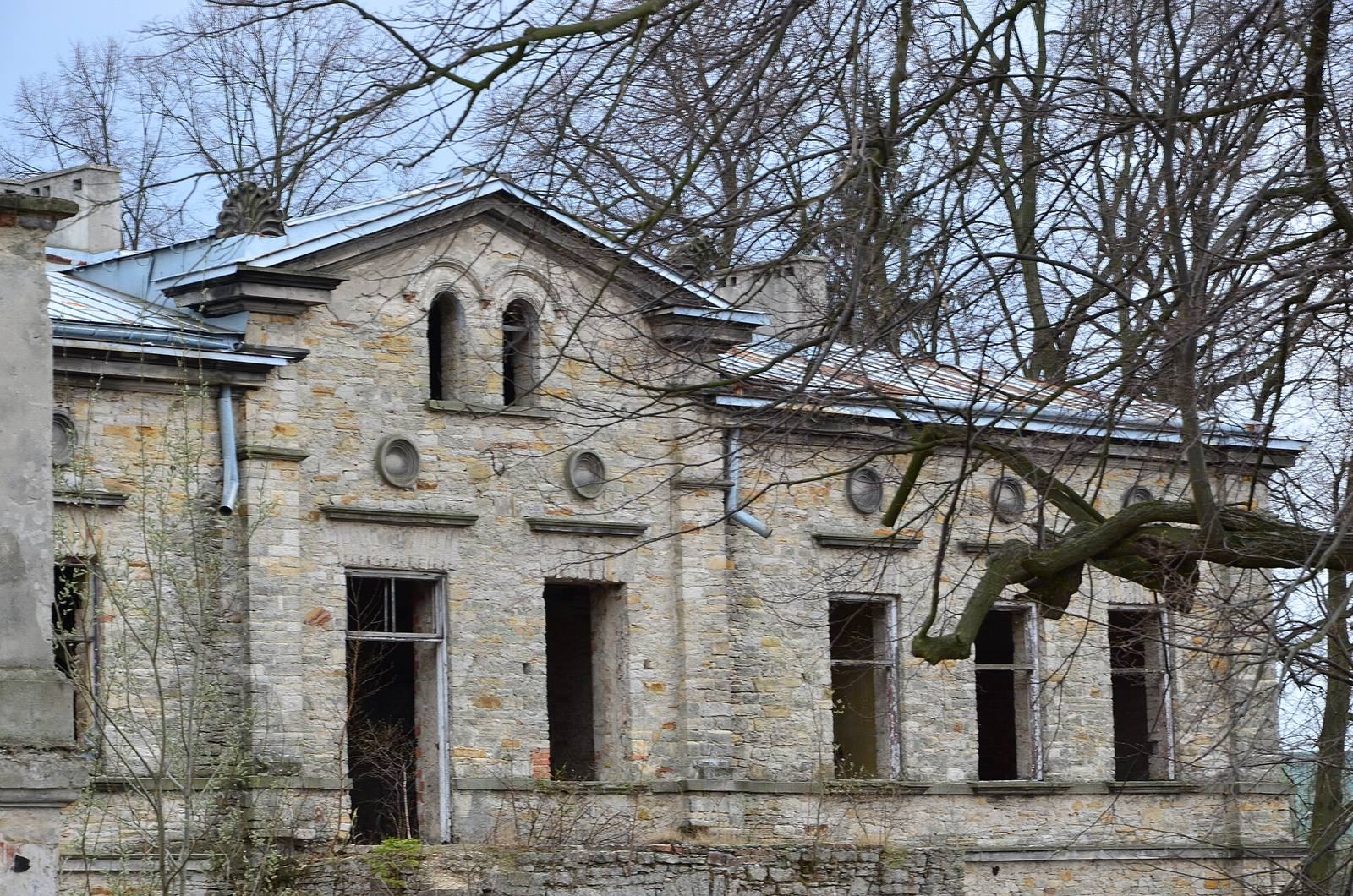
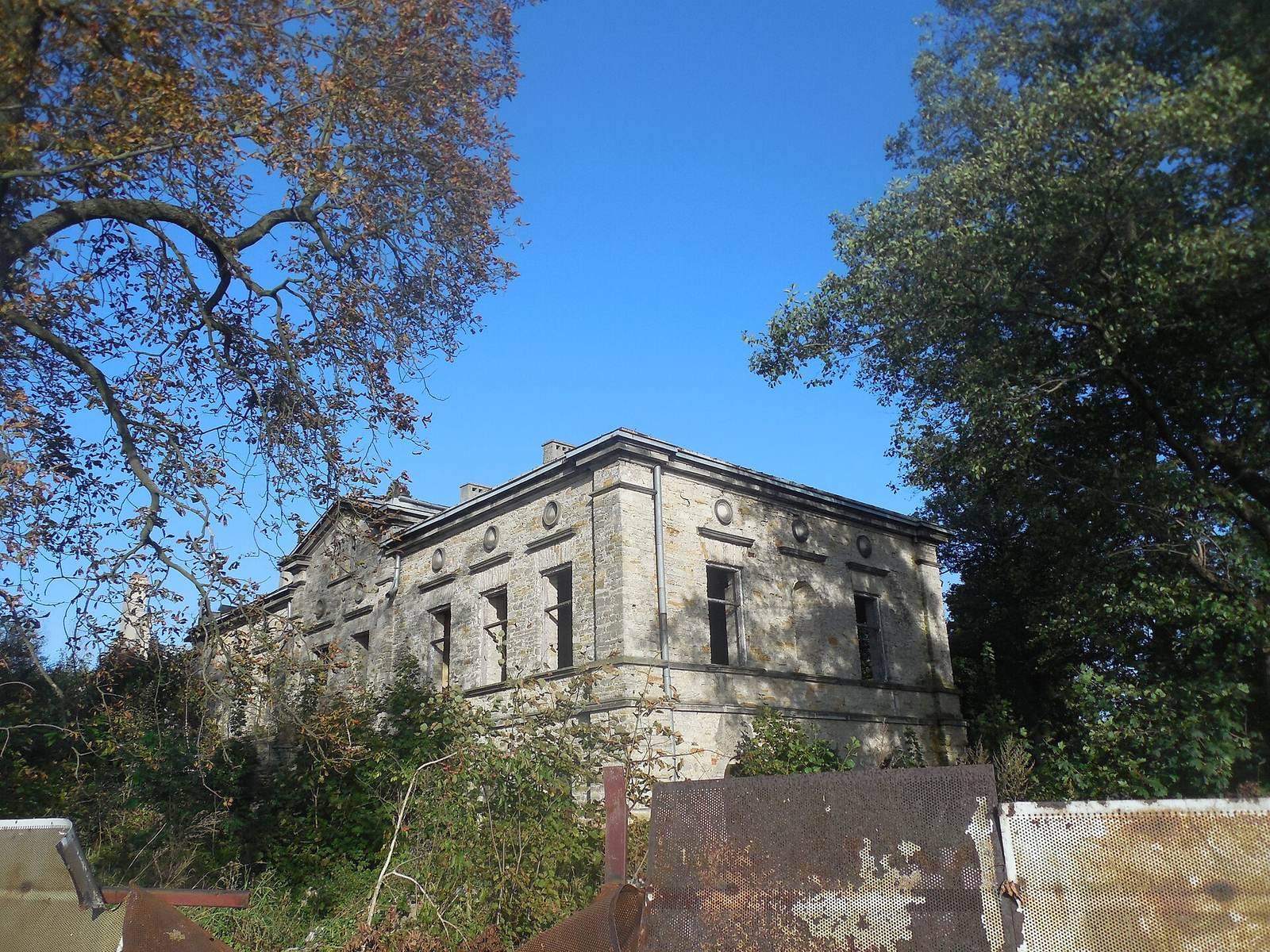
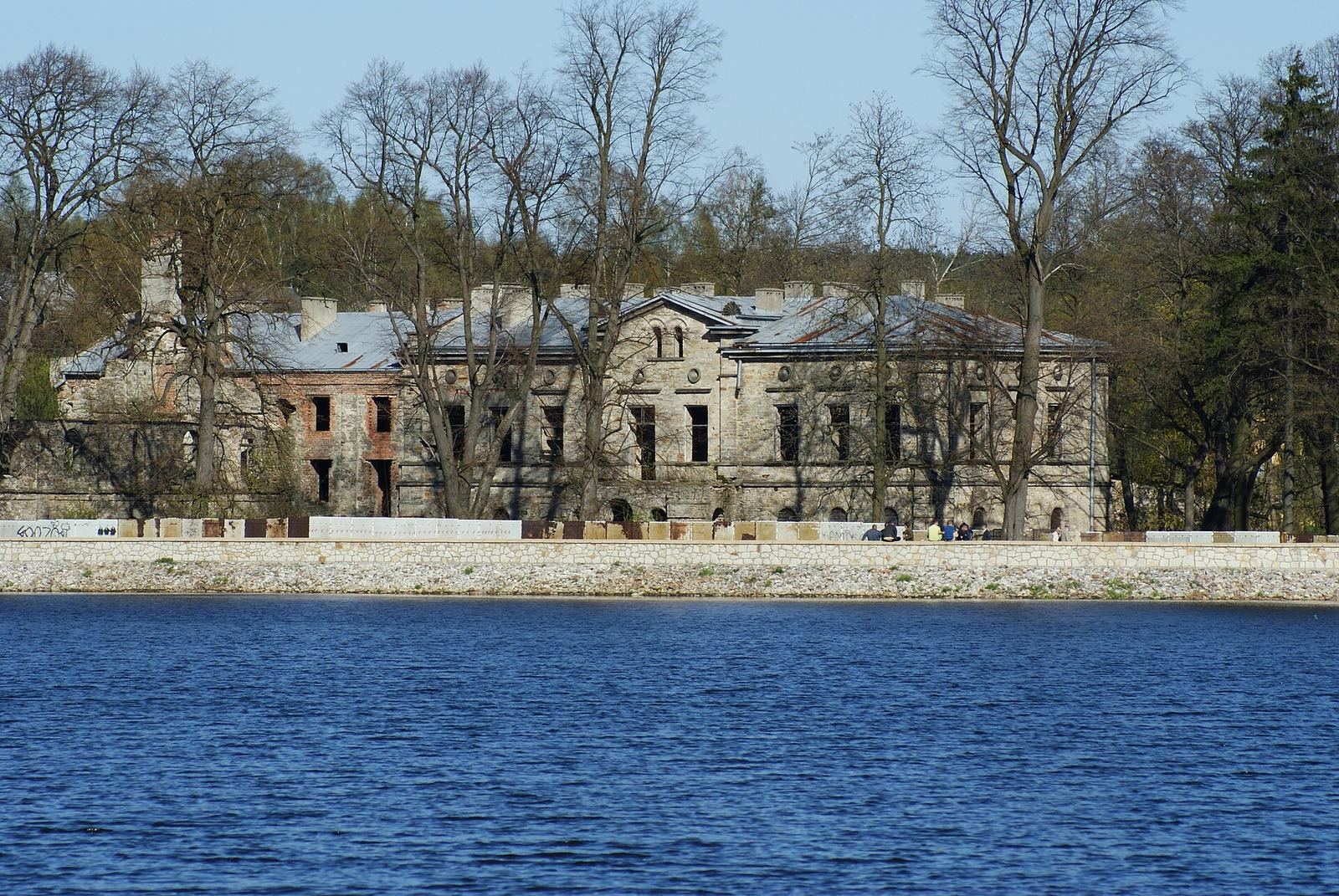
The management building is a two-storey brick residence. Its decoration includes rosettes and medallions, with metal palmettes, stylized palm-leaf motifs, forming part of the roof’s crowning decoration.
One hall in the metalworks’ workshops was fitted as a mill.