Brösarp Church: A Romanesque Lutheran Church in Sweden
Site at a Glance
- Rating
- 4.3
- Popularity
- Very Low
- Country
- Sweden
- Primary era
- Medieval
- External website
- Open
- Eras represented
- Medieval, Early Modern, Modern
- Civilizations
- Danish, Swedish
- Site type
- Religious
- Remains
- Church
On this page8 sections
History
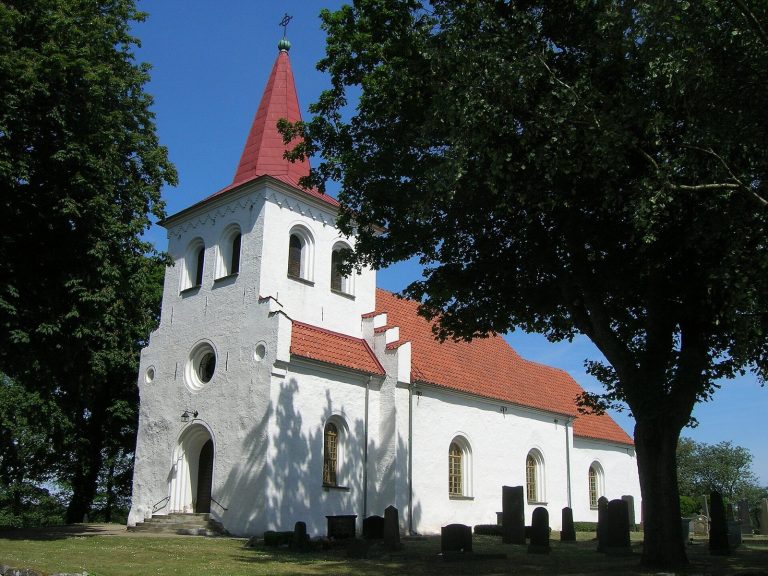
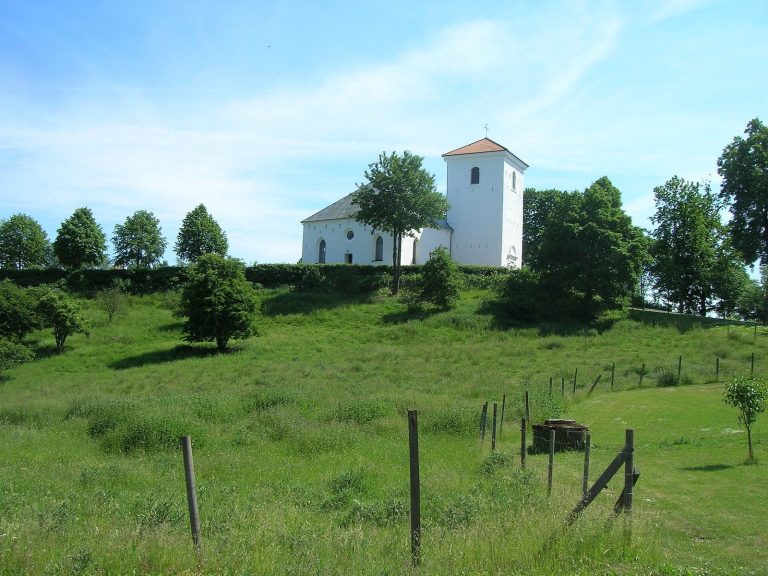
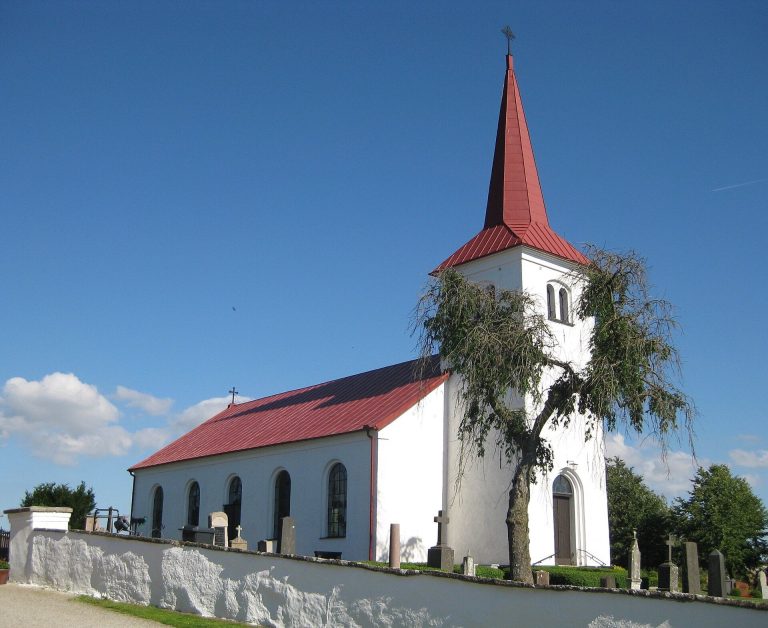
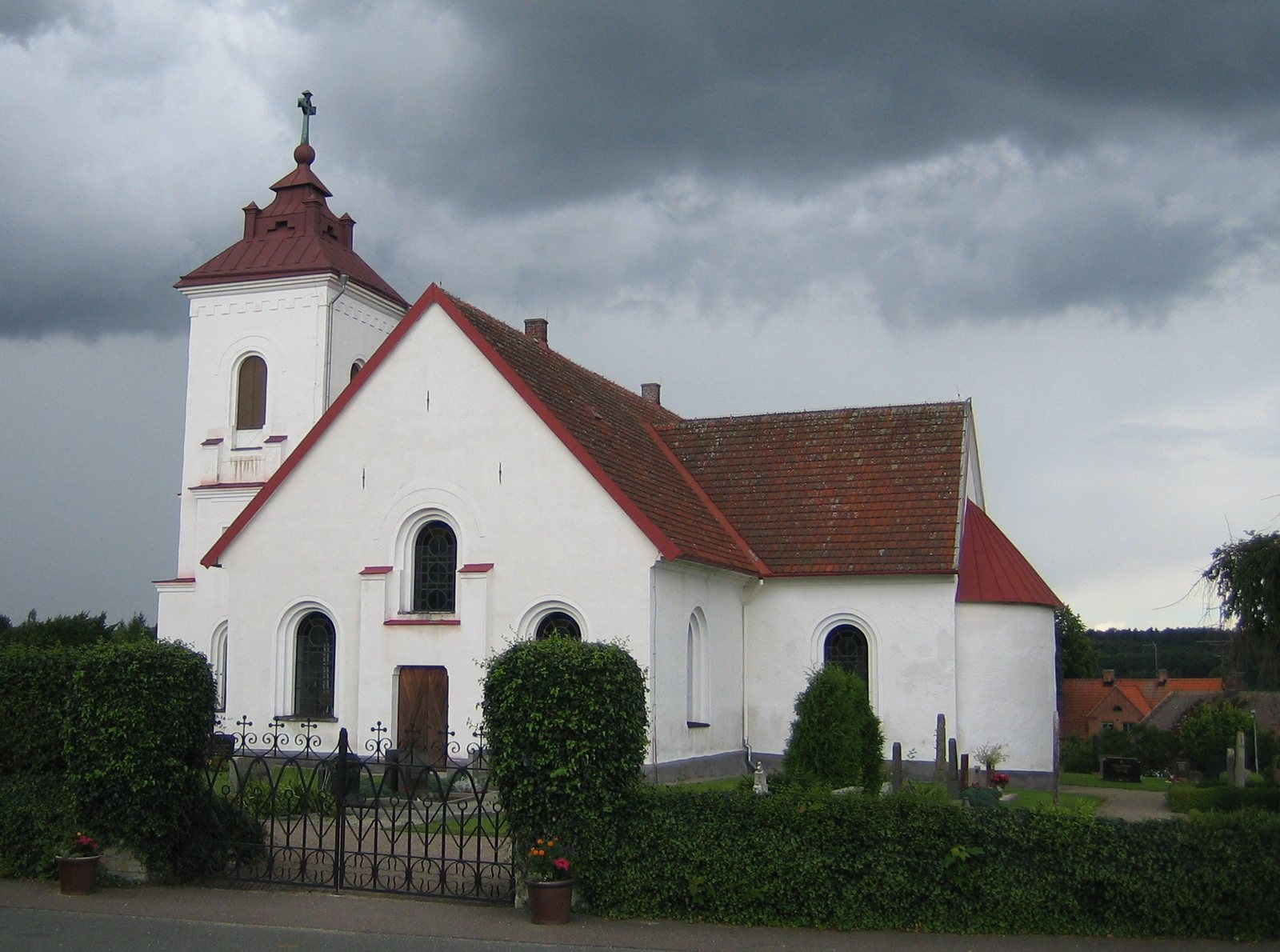
Brösarp Church is a Lutheran church in Brösarp, Sweden, founded in the twelfth century and built in the Romanesque style, a medieval form known for massive masonry and rounded arches. It belongs to the Brösarp–Tranås parish of the Church of Sweden, Sweden’s Lutheran national church, and the Diocese of Lund, an ecclesiastical jurisdiction of that church.
Medieval church
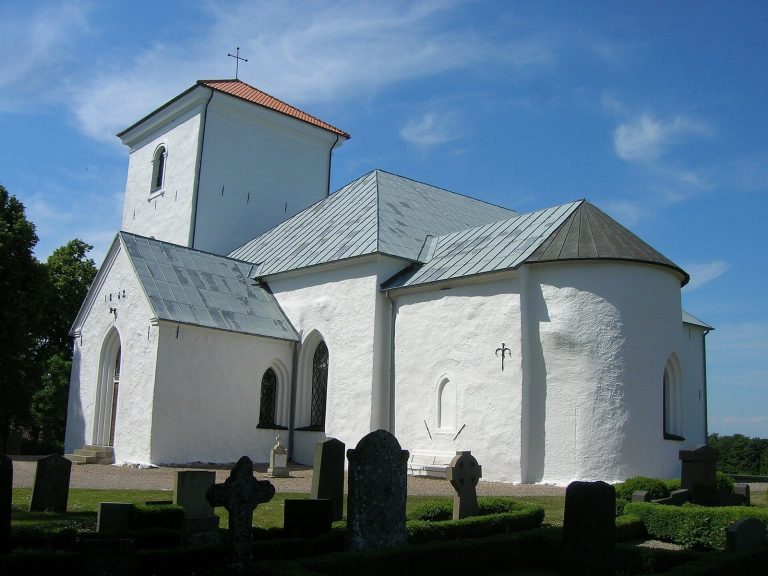
The church developed through later extensions and rebuilding, but its oldest parts are associated with the altar and rounded apse, the termination of the church behind the altar. Medieval masonry also survives in the lower storey of the bell tower and in the west gable of the nave. In the fifteenth century, the nave and altar were covered with brick vaults. These vaults were dismantled during nineteenth-century alterations, and much of the medieval wall decoration was lost.
Nineteenth-century rebuilding
A broad north nave was added in 1806. In 1860, a south transept, a crosswise section intersecting the nave, and a new bell tower were built on the site of the former tower. The same rebuilding removed the nave’s south wall and porch and introduced a high ceiling. The first organ was installed in 1870, made by Sven Vogelberg.
Twentieth-century restoration
Repairs in the 1930s and 1950s raised the altar and added steps, restored the surviving frescoes in the chancel and apse, and returned the altar area toward its earlier appearance. The altar was moved westward to create a sacristy in the apse. A brick base was placed beneath the pulpit, the organ gallery was enlarged, and light fixtures were installed. In 1972, restoration directed by the architect Torsten Leon-Nilsson gave greater emphasis to the church’s medieval character. The apse doorway was walled up, leaving a small window, and the eighteenth-century Baroque altarpiece was moved to the north nave. Further restoration followed in 1998. Hanna Johansdotter, a victim of the Yngsjö murder, is buried in the parish cemetery.
Remains
Medieval fabric and paintings
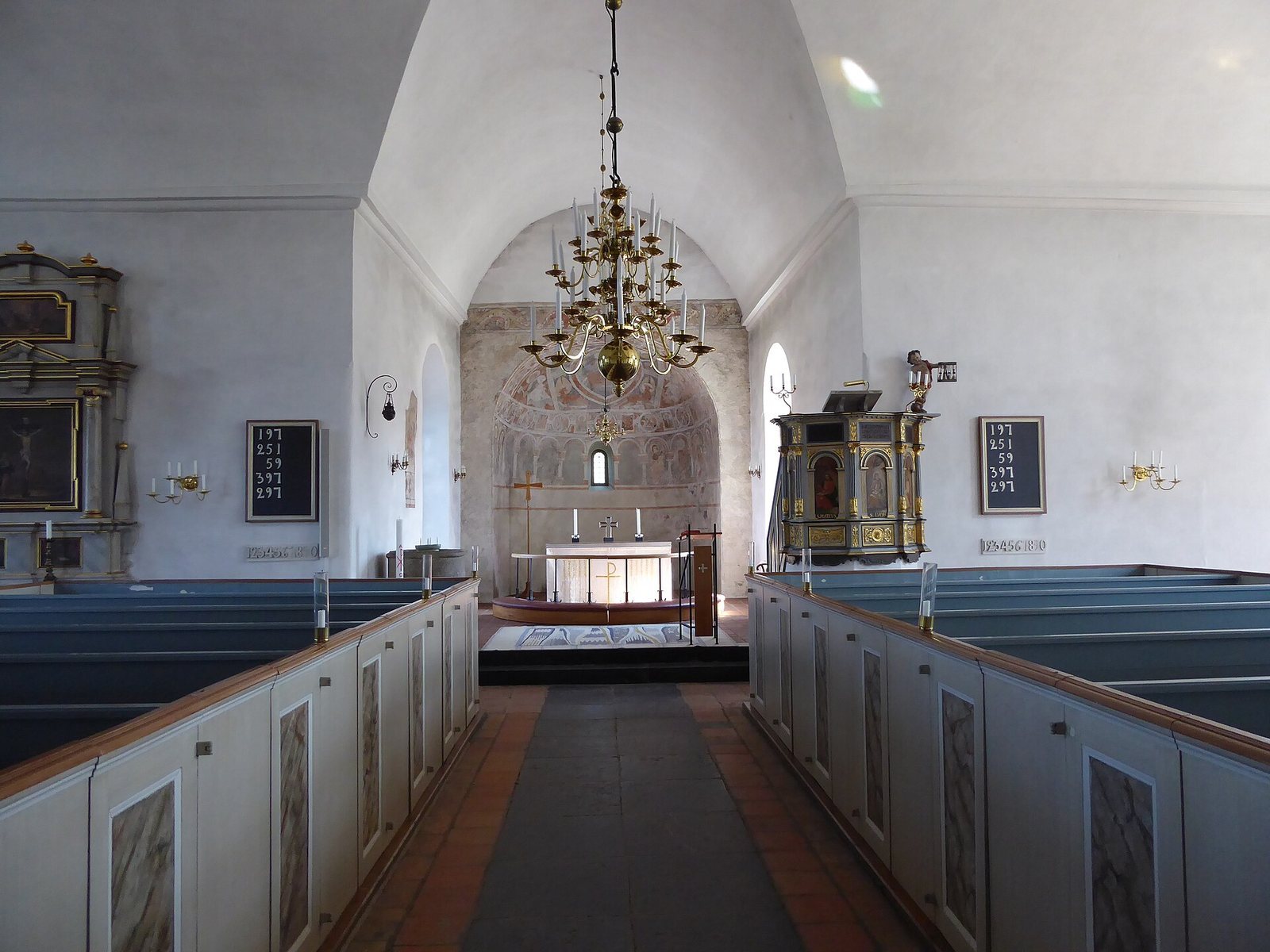
Brösarp Church retains a Romanesque core in the altar and apse, together with medieval masonry in the lower part of the bell tower and the nave’s west gable. The late-thirteenth-century frescoes in the altar and apse use dark burgundy and blue-grey tones. These wall paintings, made on plaster, show Christ as Judge of the World surrounded by the symbols of the four Evangelists: a bull, lion, eagle, and angel. Saints Peter and Paul appear with the other apostles in an arcaded gallery. The surviving paintings in the chancel and apse were restored during the twentieth century.
Historic furnishings
A monumental granite baptismal font from the twelfth or thirteenth century is among the oldest objects in the interior. In the seventeenth century, it was covered with brass bearing a representation of the Annunciation. A bronze thurible, a vessel for burning incense during religious services, is also among the church’s oldest furnishings.
The pulpit was made around 1600 during the Reformation era in the Early Renaissance style. Its long, narrow body has arched panels decorated with intarsia, an inlaid design formed from contrasting pieces of wood. The plant ornament was later concealed beneath images of the Evangelists, and a cherub holding an hourglass was added in the seventeenth century. Four medieval wooden sculptures formerly belonging to the church are now held in the collections of the Historical Museum of Lund University.
Later architectural additions
The broad north nave belongs to the 1806 rebuilding, while the south transept and present bell tower date from 1860. The altar’s westward relocation made space for a sacristy in the apse, and the former apse doorway was subsequently blocked, leaving a small window. The eighteenth-century Baroque altarpiece stands in the north nave. The present mechanical organ, made by A. Mårtensson’s organ works, was installed in 1961 beneath the nineteenth-century organ case, while the enlarged organ gallery reflects the earlier twentieth-century repairs.