Brightwell Manor: A Country House in Oxfordshire
Site at a Glance
- Popularity
- Very High
- Country
- United Kingdom
- Primary era
- Early Modern
- Eras represented
- Early Modern, Modern
- Civilizations
- British, English
- Site type
- Domestic
On this page5 sections
History
Brightwell Manor is a country house in Brightwell-cum-Sotwell, Oxfordshire, England, generally dated to the mid-seventeenth century, although it may be older.
The Inge family
William Ralph Inge, a theologian and dean of St Paul’s Cathedral from 1911 to 1934, bought the manor in 1933. A cathedral dean is a senior cleric responsible for religious and administrative life at the cathedral. Inge died at the house in 1954, and his family kept it until his sons sold it in 1971.
Inge’s wife regarded the house as attractive but small and approached architects about enlarging it. Their proposed fee was £2,000, which she hoped to negotiate down. Inge added an extension in the 1950s.
Remains
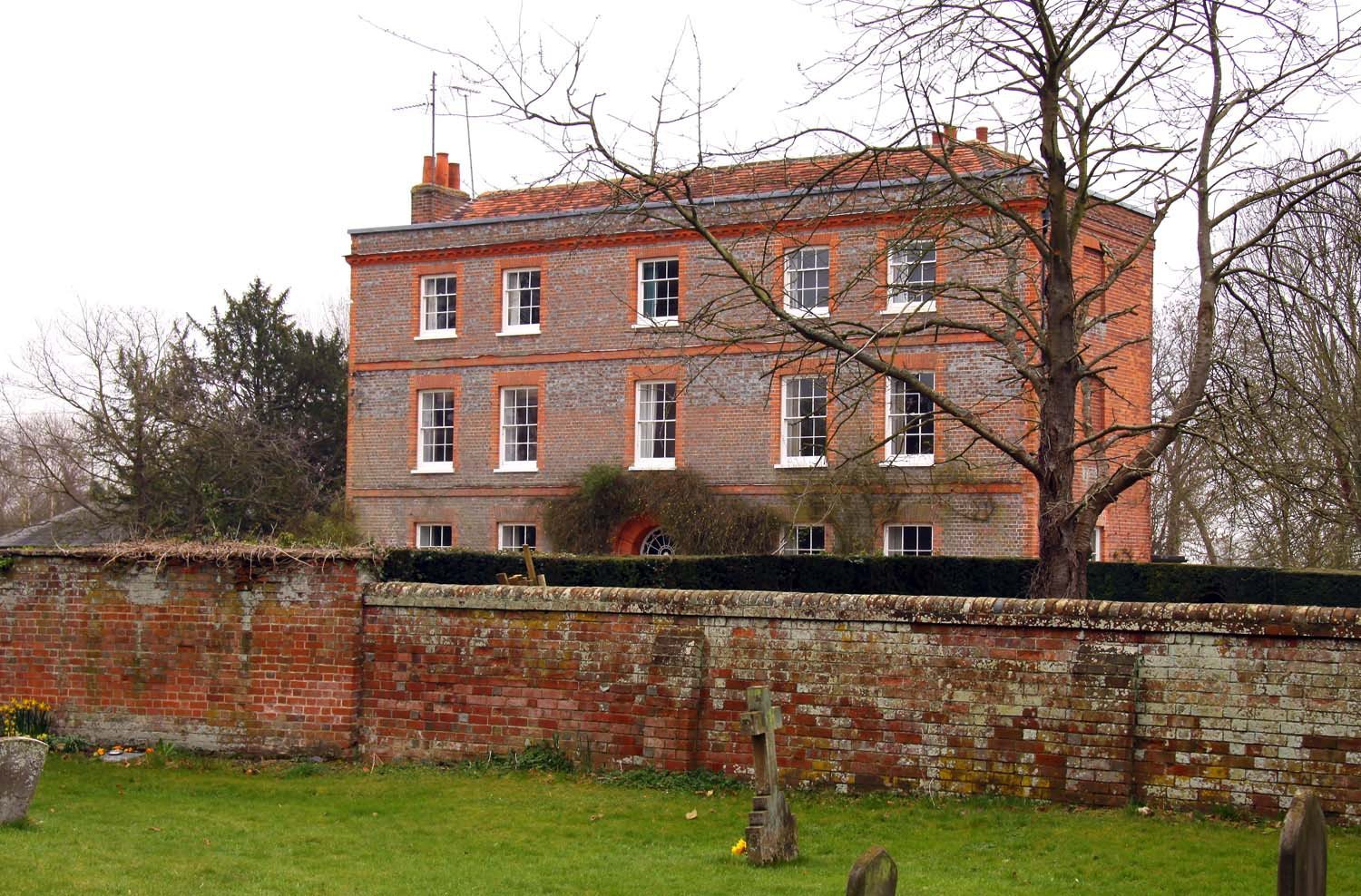
The manor stands within five acres of grounds, with a natural-spring-fed moat around three sides of the house. The brick country house has nine bedrooms and a total floor area of 8,128 square feet (755 square metres).
The house
A date of 1605 appears on the rear part of the building. The front was constructed in the mid-eighteenth century. The Pevsner Architectural Guides describe the manor as a plain late-eighteenth-century brick box.
Grounds and interior
The moat’s water comes from a natural spring, and it extends around three sides of the house. Inside, the study contains a mural by George Warner Allen, a painter associated with neo-Romanticism, a modern artistic movement that often drew on landscape and place.