Bridgnorth Castle: A Norman Fortress and Royalist Stronghold


Site at a Glance
- Rating
- 4.6
- Popularity
- Medium
- Country
- United Kingdom
- Primary era
- Medieval
- Eras represented
- Medieval, Modern
- Civilizations
- English, Norman
- Site type
- Military
- Remains
- Castle
On this page13 sections
History
Bridgnorth Castle is a ruined Norman fortress in the United Kingdom, founded in 1101 by Robert de Bellême, son of Roger de Montgomery, the Norman magnate and former Earl of Shrewsbury. Its foundation may have occupied the site of a Saxon burh, a fortified settlement for defence and administration, traditionally associated with Æthelflæd, the early tenth-century ruler of Mercia, who was said to have built one there in 912.
Norman foundation and royal development
In 1102, King Henry I took control of the castle from Robert de Bellême and built another temporary castle on Panpudding Hill. Much of Bridgnorth Castle’s outer building belongs to construction carried out between 1105 and 1113. Around 1120, Henry I replastered the walls and replaced them with better-quality stone. Building continued into the early thirteenth century as the fortress expanded and its defensive arrangements developed.
The castle’s military importance began to decline by 1267, and it was in disrepair by 1281. Its outer bailey, an enclosed area within a castle, was legally incorporated into the town in 1242. In 1261, the sheriff of Bridgnorth was ordered to roof and repair the houses within it, showing how parts of the castle complex had acquired a more settled and domestic role.
Baronial rebellion and decline
In 1321, barons rebelling against King Edward II took control of Bridgnorth Castle during the Despenser War. This was a revolt against the influence and policies of the Despenser family. By the middle of the fourteenth century, the castle had again lost much of its strategic importance, partly in the wider circumstances of the Black Death. By the fifteenth century, it had been largely forgotten.
The castle was in disrepair at the beginning of Henry VIII’s reign and was partially repaired around 1530. John Leland, an English antiquary and topographer, visited in 1540. He described two or three strong wards in total ruin, a blocked northern gate, and newly built timber houses in the base court, the enclosed courtyard or lower part of the castle.
Royalist stronghold and Civil War destruction
During the English Civil War, the conflict between supporters of King Charles I and forces fighting under Parliament, Bridgnorth and its castle became one of the Midlands’ main Royalist strongholds. Many Royalist troops were garrisoned there in 1642, and Charles I described Bridgnorth and its castle that year as “the finest in my domain.”
The castle was partly slighted in 1645, meaning that it was damaged or partly demolished so it could no longer function effectively as a fortification. On 31 March 1646, Parliamentarian forces under Oliver Cromwell began a three-week siege against the garrison commanded by Sir Robert Howard. They captured Bridgnorth and ordered the castle’s demolition.
During the siege, Colonel Lavington, a military engineer, directed the excavation of a 21-metre tunnel into Castle Hill. The aim was to blow up gunpowder stored inside the Church of St Mary Magdalene. The tunnel was abandoned when the Royalists surrendered. By 1647, little of the castle remained. Parliamentarian forces left the ruins largely in their present state, while stone from the castle was reused to repair damaged buildings in Bridgnorth. The royal palace known as the King’s House continued to be maintained as a royal residence until later in the seventeenth century.
Rediscovery and preservation
In 1821, demolition of The Hole in The Wall public house exposed the castle’s northern postern, or small secondary gate, also described as the bailey gate. Although the gate was initially intended for preservation, it was demolished later that year with gunpowder because it obstructed traffic.
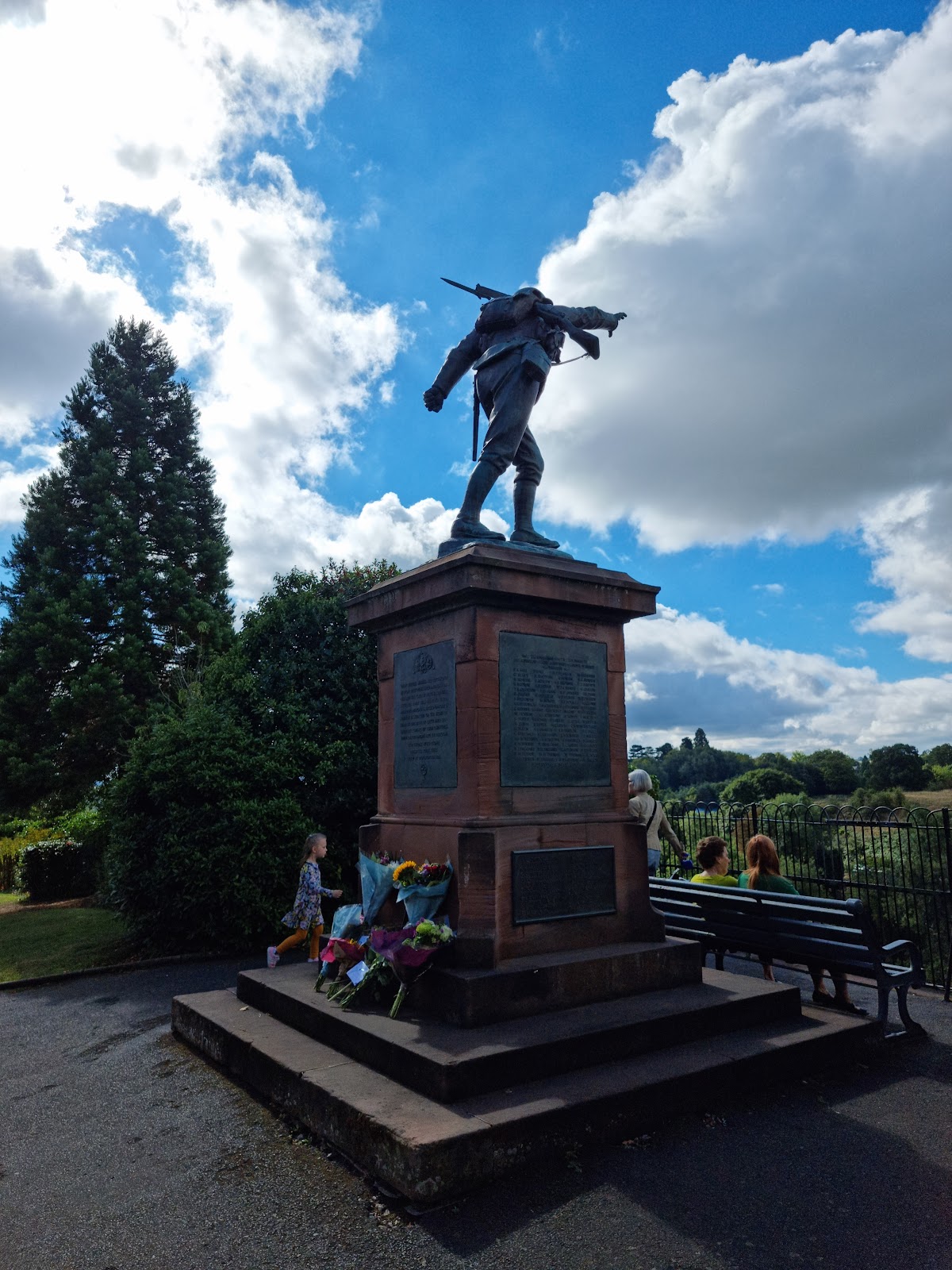
The ruined barbican, a fortified outwork protecting an entrance, was discovered in 1945. In 1956, the castle was donated to the town council, which removed vegetation and moss that had begun to conceal and damage the ruins. Excavation by the television archaeology programme Time Team in 2001 clarified the castle’s layout and construction history. The grounds also contain a town war memorial erected after the First World War. It is topped by a statue of an infantryman by Adrian Jones, an English sculptor and medalist. Bridgnorth Castle has been a scheduled monument, a legally protected archaeological or historic site in England, since its first listing in 1928.
Remains
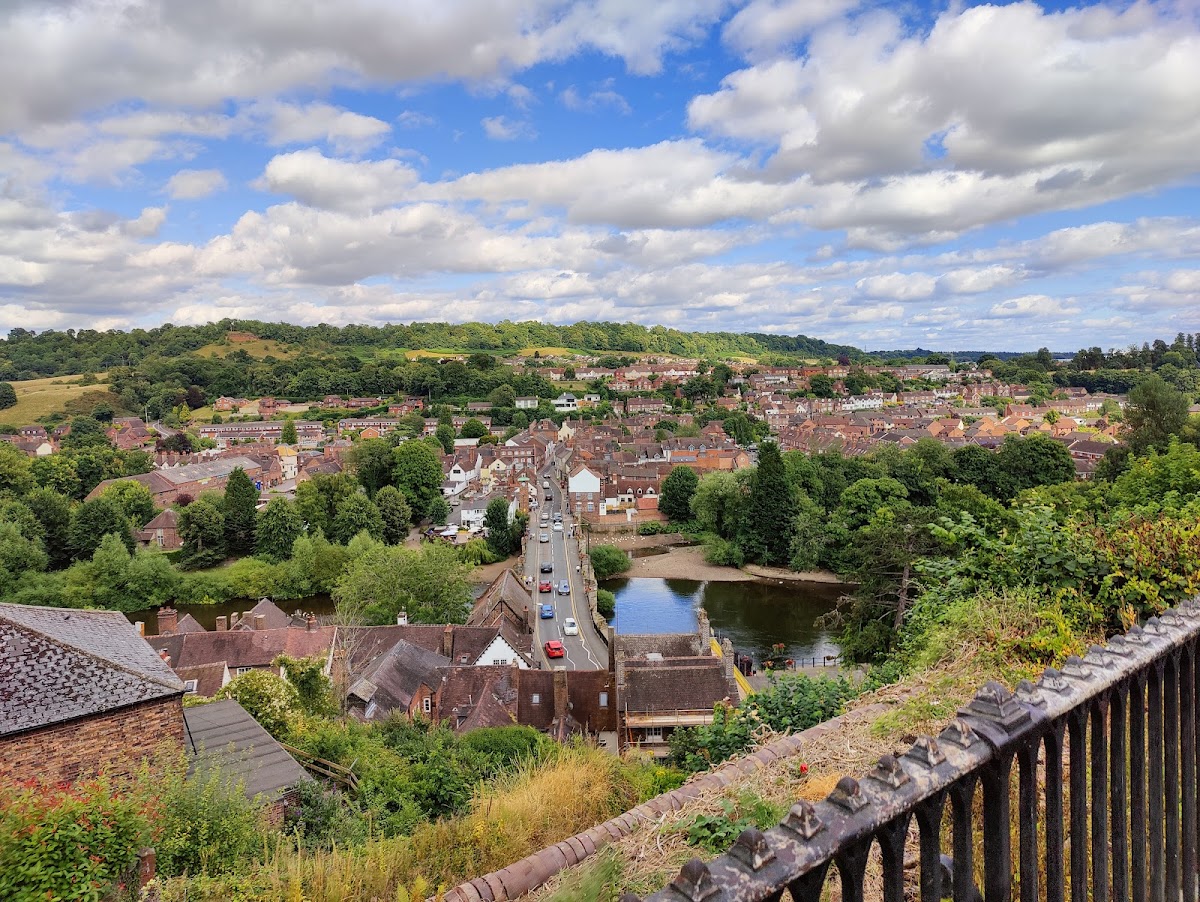
Bridgnorth Castle stands in a valley surrounded by predominantly level terrain. The complex occupied an area that Leland considered larger than one-third of the town. Its surviving fabric consists chiefly of shattered walls and the remains of major defensive and residential buildings, giving the ruined site a broad physical relationship to the town that developed around it.
Walls, tower, and entrance defenses
Great tower
The principal surviving feature is the square great tower, built during the reign of Henry II in 1160. Parts of its masonry remain, although damage sustained during the Civil War caused the tower to lean at an angle of 15 degrees. A turret, or mural tower built into or projecting from a castle wall, was present by 1160 and was extended in 1226, adding to the fortress’s defensive structure.
Barbican and gates
A barbican with a drawbridge was built in 1212 and first mentioned in 1221. Its ruined remains were discovered in 1945. The castle also had a northern gate described by Leland as powerful. That entrance was later blocked, while a smaller postern was constructed through the adjoining wall. The northern bailey gate was exposed in 1821 before being demolished later that year.
Courts and royal residence
The castle included an outer bailey and a base court. In 1540, Leland described the base court as containing many newly erected timber dwelling houses. The King’s House formed a royal palace and residence within the complex, and its continued maintenance into the later seventeenth century reflects the survival of a residential function after the castle’s military role had weakened.
Siege tunnel and castle grounds
Lavington’s Hole
Lavington’s Hole is a 21-metre-long tunnel excavated into Castle Hill during the 1646 siege. Colonel Lavington’s engineers intended it to provide a route for the destruction of gunpowder stored in the Church of St Mary Magdalene, but the work was abandoned after the Royalist surrender. The tunnel became one of several passages in Castle Hill collectively known as the Hermitage Caves. Many of the other caves are traditionally attributed to Æthelweard, a tenth-century Anglo-Saxon historian. The tunnels are closed to public access because of safety concerns.
War memorial
The castle grounds contain Bridgnorth’s town war memorial, erected after the First World War. Its summit carries a statue of an infantryman made by Adrian Jones. The memorial forms part of the later commemorative use of the castle grounds alongside the medieval remains.