Bolaman Castle: A Historic Coastal Fortress in Türkiye


Site at a Glance
- Rating
- 4.2
- Popularity
- Low
- Country
- Turkey
- Primary era
- Medieval
- Eras represented
- Medieval, Early Modern
- Civilizations
- Byzantine, Ottoman
- Site type
- Military
- Remains
- Castle
On this page8 sections
History
Origins and Early Development
Bolaman Castle is a historic coastal fortress in Bolaman, Türkiye, about 4 kilometres east of Fatsa on the Black Sea coast. Its construction date is unknown, but it may be connected with the Kingdom of Pontus, a Hellenistic kingdom based in the southern Black Sea region from the third to the first century BC. The fortress may have served as a watchtower or defensive stronghold protecting a coastal settlement from attack by sea.
The inner castle contains a chapel or church whose form suggests that part of the site may predate the fortress. Its pentagonal apse, the projecting polygonal end of a religious building, indicates a possible date in the thirteenth or fourteenth century. Earlier structures may also survive beneath the accumulated ground fill inside the castle.
Ottoman Period
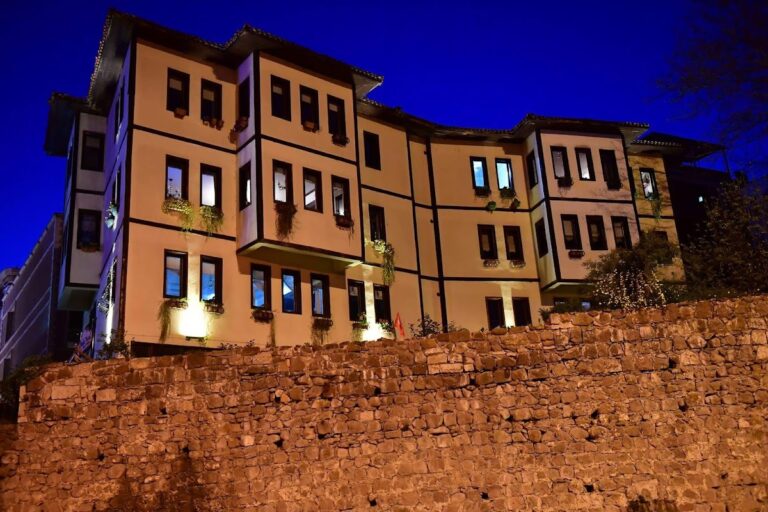
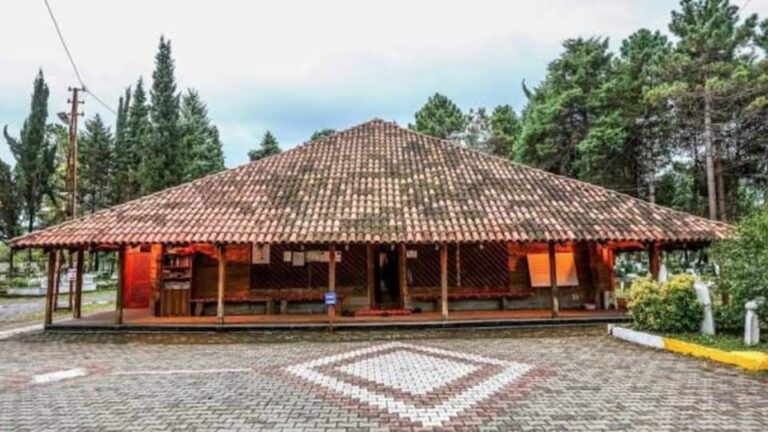
For a long period, Bolaman Castle belonged to the local Haznedaroğlu family. Its later appearance reflects Ottoman architectural traditions, including the wooden mansion built within the inner castle. A local family constructed the residence to accommodate guests, and it became known as Kademoğlu Mansion or Haznedaroğlu Mansion.
Restoration and Later Use
By the late twentieth century, the mansion had deteriorated. Municipal authorities considered demolishing it to build a school, but the Ministry of Culture and Tourism later supported its restoration, which was completed in 2009. The restored building was subsequently used for a period as a regional-cuisine restaurant called Haznedaroğlu Mansion before closing.
In 2020, plans were announced to convert the castle into a municipal museum displaying works and objects illustrating life in the region. The building was transferred to Fatsa municipality. The castle is restored and in good condition, while the mansion has also been restored.
Remains
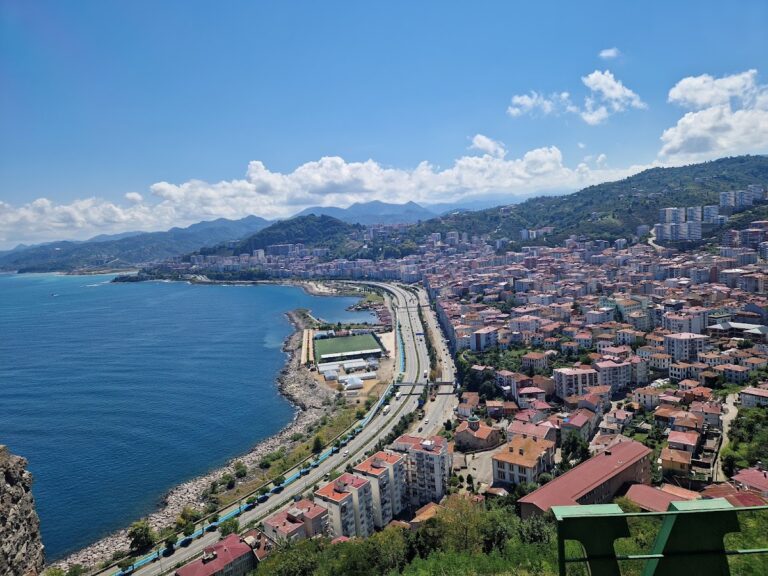
Bolaman Castle occupies a rocky, pointed peninsula overlooking the sea and a bay formed by the curved coastline. The site was formerly an island. Its defensive layout consists of inner and outer walls surrounding the castle, with the surviving land-facing walls on the southern side rising about 6 metres.
Walls and Courtyard
The fortress walls are built from dressed ashlar, masonry made from carefully cut stone blocks with regular faces. Watchtowers project from the outer walls around the courtyard, reinforcing the enclosure and its position above the coast. The surviving walls define the relationship between the outer defenses, the courtyard, and the inner castle.
Chapel or Church
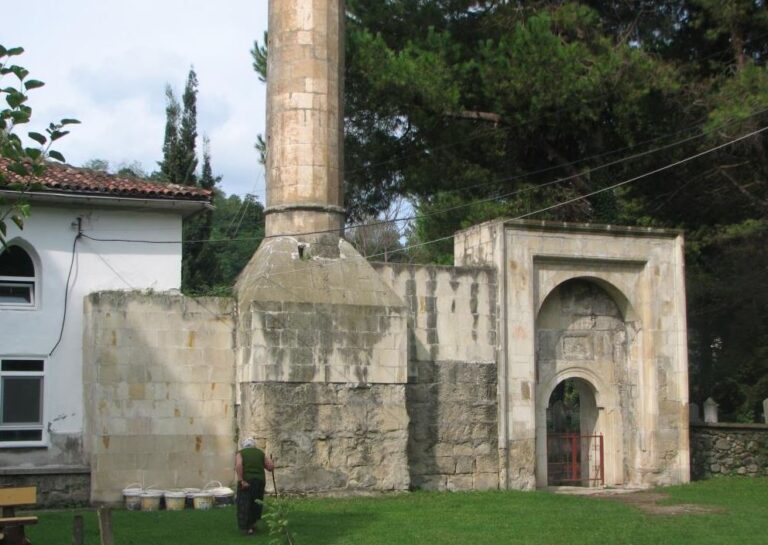
Inside the inner castle stands a basilica-shaped chapel or church, popularly known as Aya Castle because of this religious building. It has a cross-shaped plan and is built from yellow limestone characteristic of the Halibya region. Its pentagonal apse suggests a thirteenth- or fourteenth-century date, and its form has not been matched by another cross-plan example identified in the surrounding region.
From outside the fortress, the church is seen mainly through the apse projecting from the eastern castle wall, the north wall, and a doorway opening onto a small courtyard. A blocked doorway and window in the inner west wall indicate that this side once opened onto an open area, while the absence of an opening in the south wall suggests that it adjoined another building. The interior walls were later covered with whitewash. The church was used as a mosque during the 1930s, and no traces of frescoes were detected beneath the whitewash.
Ottoman Mansion
The wooden mansion stands within the inner castle. It has two large bay windows, one at each end, and represents the characteristic form of an Ottoman-period house. Known as Kademoğlu Mansion or Haznedaroğlu Mansion, it was restored after its deterioration and remains an important architectural feature of the castle and of Fatsa.