Blair Castle: A Residence of the Earls and Dukes of Atholl
Site at a Glance
- Popularity
- Very High
- Country
- United Kingdom
- Primary era
- Modern
- Eras represented
- Medieval, Early Modern, Modern
- Civilizations
- British, Kingdom of Scotland
- Site type
- Domestic
- Remains
- Castle
On this page22 sections
History
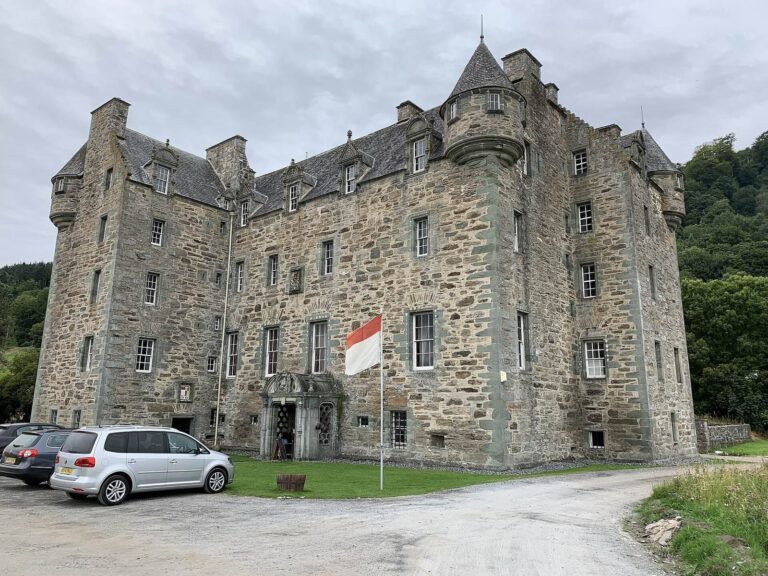
Blair Castle, near Blair Atholl in Scotland, United Kingdom, is a castle traditionally said to have been begun in 1269; later remodelling gave it a Scots Baronial character, a nineteenth-century style drawing on Scottish castle and baronial forms. The castle became a residence of the Earls and later Dukes of Atholl, successive ranks of British nobility, beside a strategically important route through the central Highlands.
Medieval origins and noble ownership
Construction is traditionally linked to John I Comyn, Lord of Badenoch, who began building on land belonging to the Earl of Atholl while the earl was away on crusade. When the earl returned, he appealed to Alexander III of Scotland and recovered the land. He then incorporated Comyn’s tower into his own castle.
The castle served the Earls of Atholl and later the Dukes, who were chiefs of Clan Murray, a historically kin-based group. It was also a residence of the Stewart family. In 1308, David II Strathbogie rebelled against Robert the Bruce and forfeited his earldom and estates. Robert granted them to Niall mac Cailein. After the earldom passed through several hands, James II granted it to his half-brother John Stewart in 1457. John Murray, son of the second Earl of Tullibardine, became Earl of Atholl in 1629, and the title remained with the Murray family thereafter. Charles II later made the second Earl a Marquess, a higher rank of nobility; the second Marquess became Duke of Atholl in 1703.
Mary, Queen of Scots, visited Blair in 1564 while returning from Inverness. A deer hunt was held in her honour, with 360 deer killed.
Seventeenth-century conflicts
The Marquess of Montrose besieged the castle in 1644. During the Wars of the Three Kingdoms, a series of conflicts across England, Scotland, and Ireland, the Murrays supported the Royalists, who backed the monarchy. Oliver Cromwell’s army captured Blair Castle in 1650, after invading Scotland.
The Jacobite risings
In the 1689 Jacobite rising, supporters of restoring the Stuart dynasty, the Duke of Atholl remained loyal to the government, although two of his sons joined the Jacobites. His estate manager, Patrick Stewart of Ballechin, held the castle for King James, and the Jacobite leader Viscount Dundee visited in May. In July, Ballechin refused entry to Lord John Murray, the duke’s son and heir. Murray besieged the castle as government forces supporting William of Orange approached under General Mackay.
Dundee relieved the castle. The Battle of Killiecrankie followed because he did not want to withdraw and leave it to his opponents. On 26 July, Dundee and other Jacobite leaders held a council of war at Blair. The Jacobites won the battle the next day, but Dundee was killed. The castle remained in Jacobite hands for a time, and Highland chiefs swore there in August to continue the rising.
During the rising of 1745, Charles Edward Stuart and his Jacobite army occupied Blair for several days in early September, then returned in early February 1746. In March, government forces, including the Lowland Clan Agnew, held the castle against a Jacobite siege. The defenders were close to starvation when the Jacobites withdrew to fight at Culloden, the decisive defeat of the rising in 1746. Blair Castle is described as the last castle in Britain to be besieged, in 1746.
Georgian and Victorian changes
In 1740, architect James Winter transformed what had largely been a medieval fortress into a Georgian residence. The work removed some defensive features and introduced stucco decoration. In the 1870s, the seventh Duke of Atholl commissioned David Bryce to remodel the building. The castle’s later expansion included a ballroom, completed in 1876, and a ballroom wing added in 1885.
Queen Victoria and Prince Albert stayed at Blair in 1844, and Victoria’s visit lasted three weeks. She later authorized the Duke to form his battalion as the Atholl Highlanders, a private force that remains associated with the castle and is described as Europe’s only legal private army.
Modern history
Extensive restoration and modernization took place in the second half of the nineteenth century, including the installation of gas and telephone services. During the First World War, part of the castle served as a hospital. After 1922, the family found it more convenient to live in the private apartments.
Before his death in February 1996, the tenth Duke of Atholl placed the castle and most of his estates in a charitable trust to avoid inheritance tax and keep them under Scottish control. His heir, the eleventh Duke, did not wish to leave South Africa, where the current chief, the twelfth Duke, also lives. Blair Castle is a Category A listed building, a Scottish designation applied in 1971; its grounds entered Scotland’s Inventory of Gardens and Designed Landscapes in 1987.
A fire broke out at the clock tower on 10 March 2011. The tower was not part of the medieval fabric, and its roof and second floor collapsed into the first. Restoration in 2012 included work on the clock mechanisms.
Remains
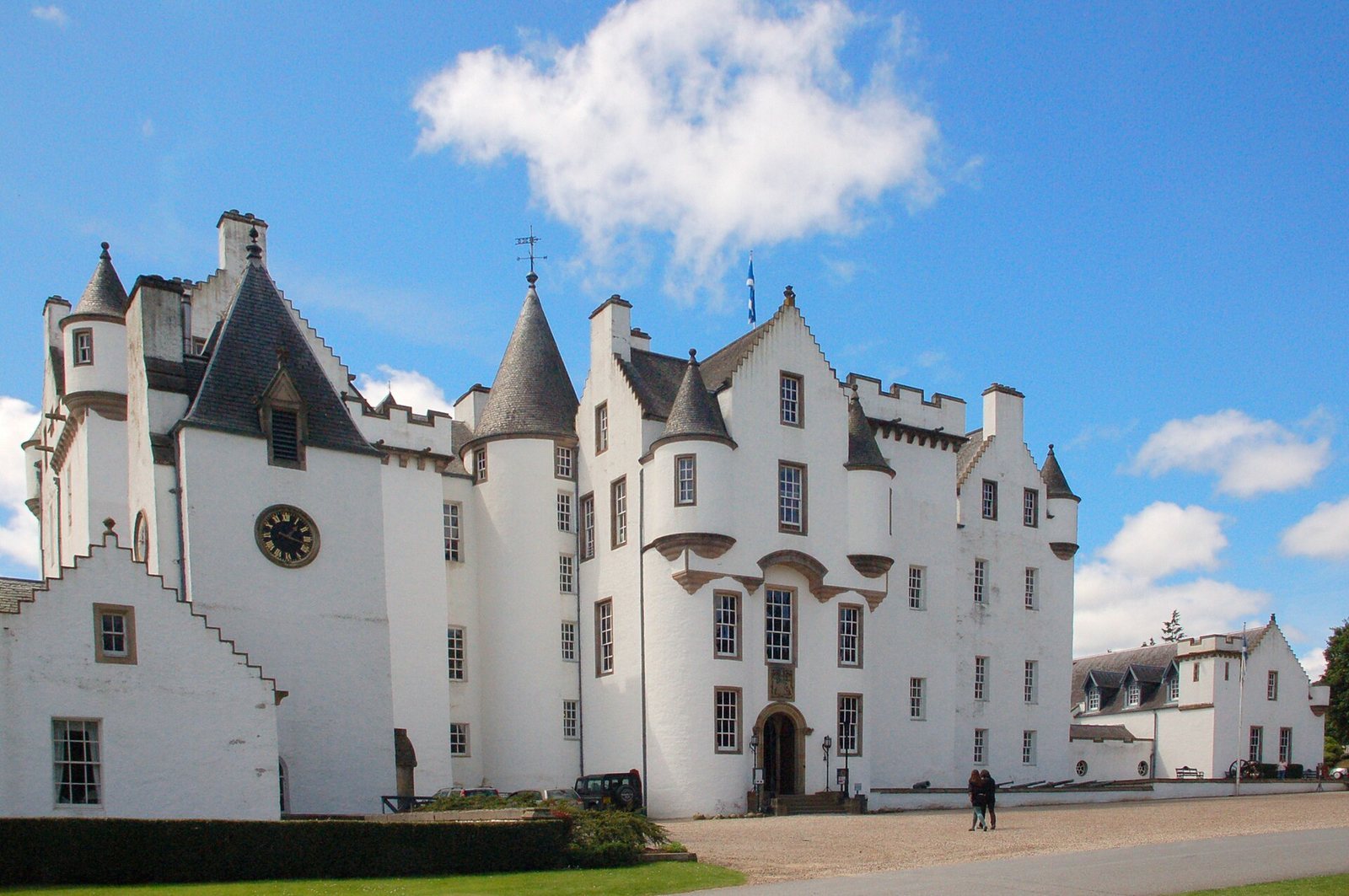
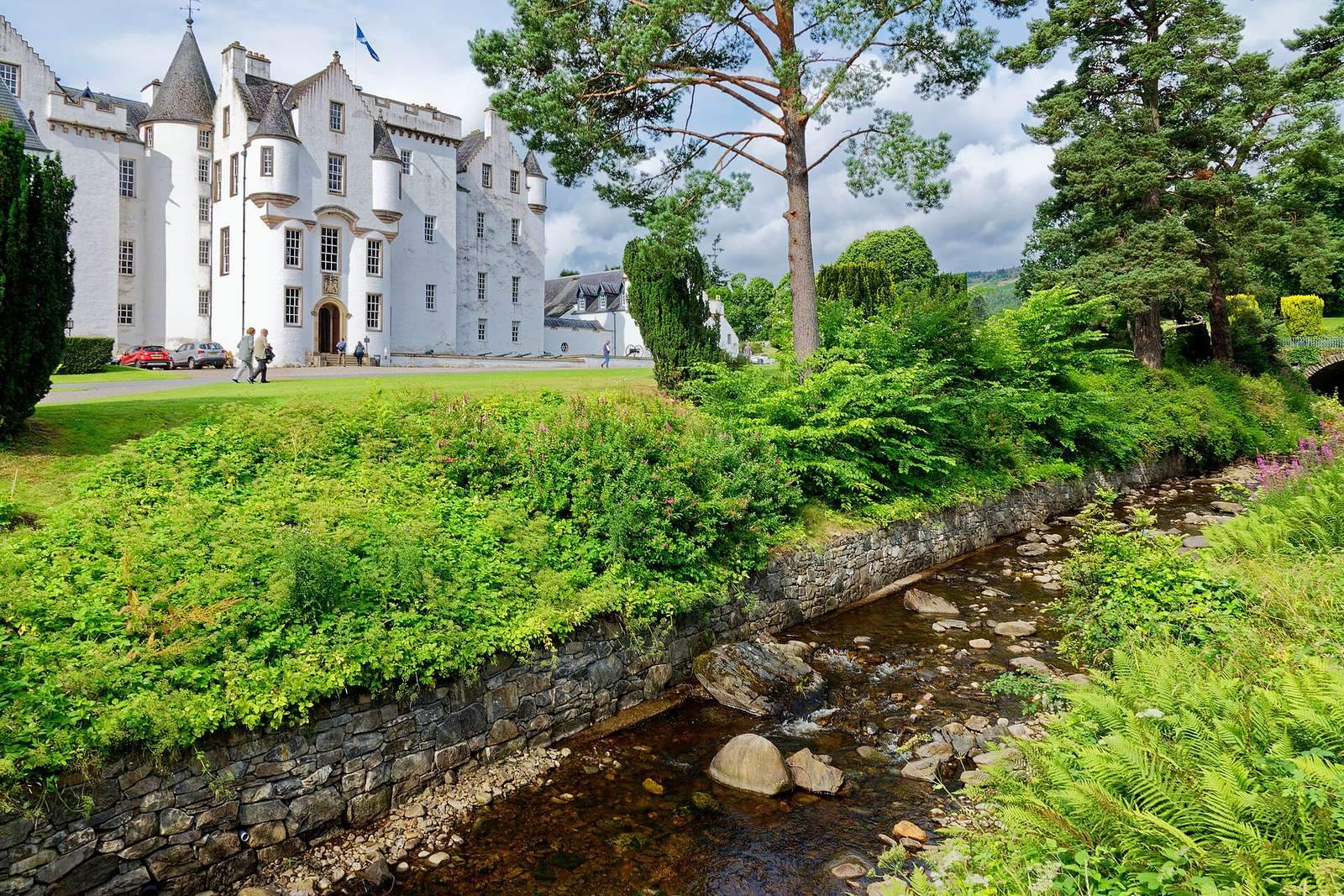
The white-fronted castle contains 30 rooms and combines the six-storey Comyn’s Tower with central ranges and later additions. An entrance avenue and gatehouse form part of its exterior setting. Its present appearance reflects successive building campaigns, including the later Scots Baronial remodelling.
Castle ranges and additions
Comyn’s Tower
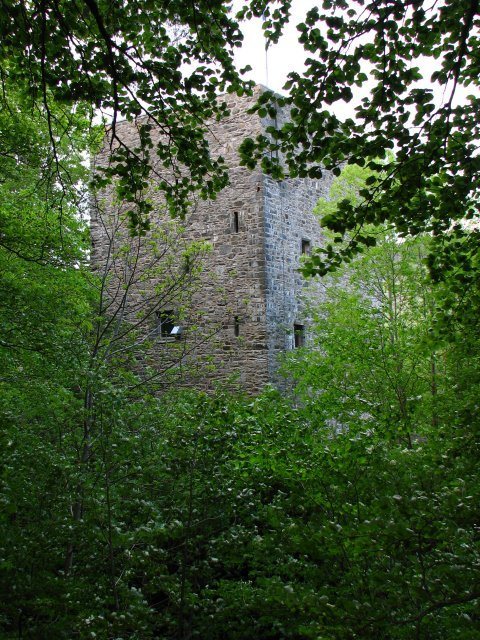
Comyn’s Tower, also called Cummings Tower, is the oldest part of the castle and remains visible. It may retain some thirteenth-century fabric, although most of the six-storey structure dates to the fifteenth century. Rooms were added when the tower was enlarged in 1530.
Central and south ranges
The central ranges were first added in the sixteenth century. A dining room was also built in 1530. The south apartments date to the mid-eighteenth century and were designed by John Douglas and James Winter. The south-east range, including the clock tower, was rebuilt by Archibald Elliot after a fire in 1814.
Entrance and ballroom ranges
David Bryce and William Hall added the Entrance Hall during the nineteenth-century remodelling. The ballroom was commissioned for the Atholl Highlanders’ annual gathering and completed in 1876; James Campbell Walker added a ballroom wing in 1885.
Bavie Hall
Bavie Hall, a newer exhibition hall, was designed by Jamie Troughton and Hugh Broughton and added in the early twenty-first century.
Interior rooms and collections
Dining Room
The eighteenth-century Dining Room was formed by remodelling the earlier Great Hall, which dates to the sixteenth century. Edinburgh craftsman Thomas Clayton made its stucco decoration. The room also contains a statue of Tilt, the deer that gave the castle’s clock tower its name.
Picture Staircase
The Picture Staircase displays a gallery of portraits of the Atholl family. The gallery was completed in 1756 during the castle’s conversion to a Georgian residence.
Blue Bedroom and Drawing Room
The Blue Bedroom is furnished mainly with nineteenth-century pieces and contains a portrait of Louisa Moncreiffe, wife of the seventh Duke, painted by Richard Bruchner. The Drawing Room has gilded chairs and sofas by Chipchase, with covers embroidered by the third Duchess of Atholl and her family.
Amelia Stanley’s Room and the Tapestry Room
A room named for Amelia Stanley, who married the first Marquess of Atholl in 1659, was used by Queen Victoria during her 1844 stay. The Tapestry Room occupies the second floor of Comyn’s Tower. Its Mortlake tapestries were made for Charles I and sold by Oliver Cromwell after the king’s execution.
Arms, portraits, and other collections
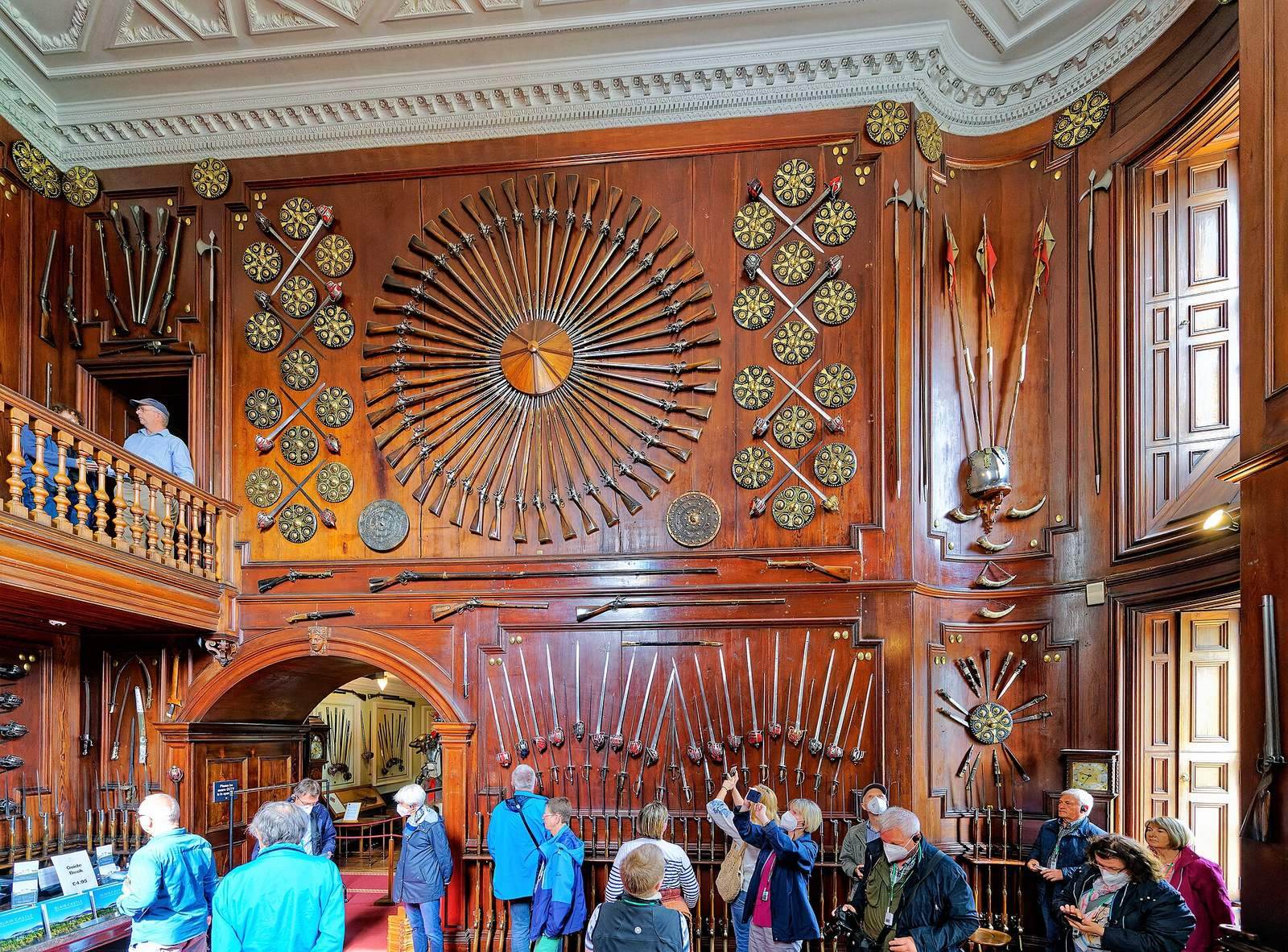
The Entrance Hall contains weapons used at Culloden, and the Great Hall is associated with weapons, targes (traditional Scottish shields), and muskets from the battle. The castle’s collections also include Atholl family portraits, hunting trophies, weapons, Murray family mementos, ethnographic objects, paintings, furniture, and needlework gathered over generations. Works by Edwin Landseer, Peter Lely, and Johann Zoffany are among the paintings; Landseer’s Death of a Stag in Glen Tilt dates to 1850. The porcelain collection consists mainly of pieces from Meissen and Sèvres.
The Entrance Hall also holds the embalmed remains of Tilt, the owners’ favourite deer. Tilt lived in the castle park for 13 years and died in 1850.
Gardens and grounds
Hercules Garden
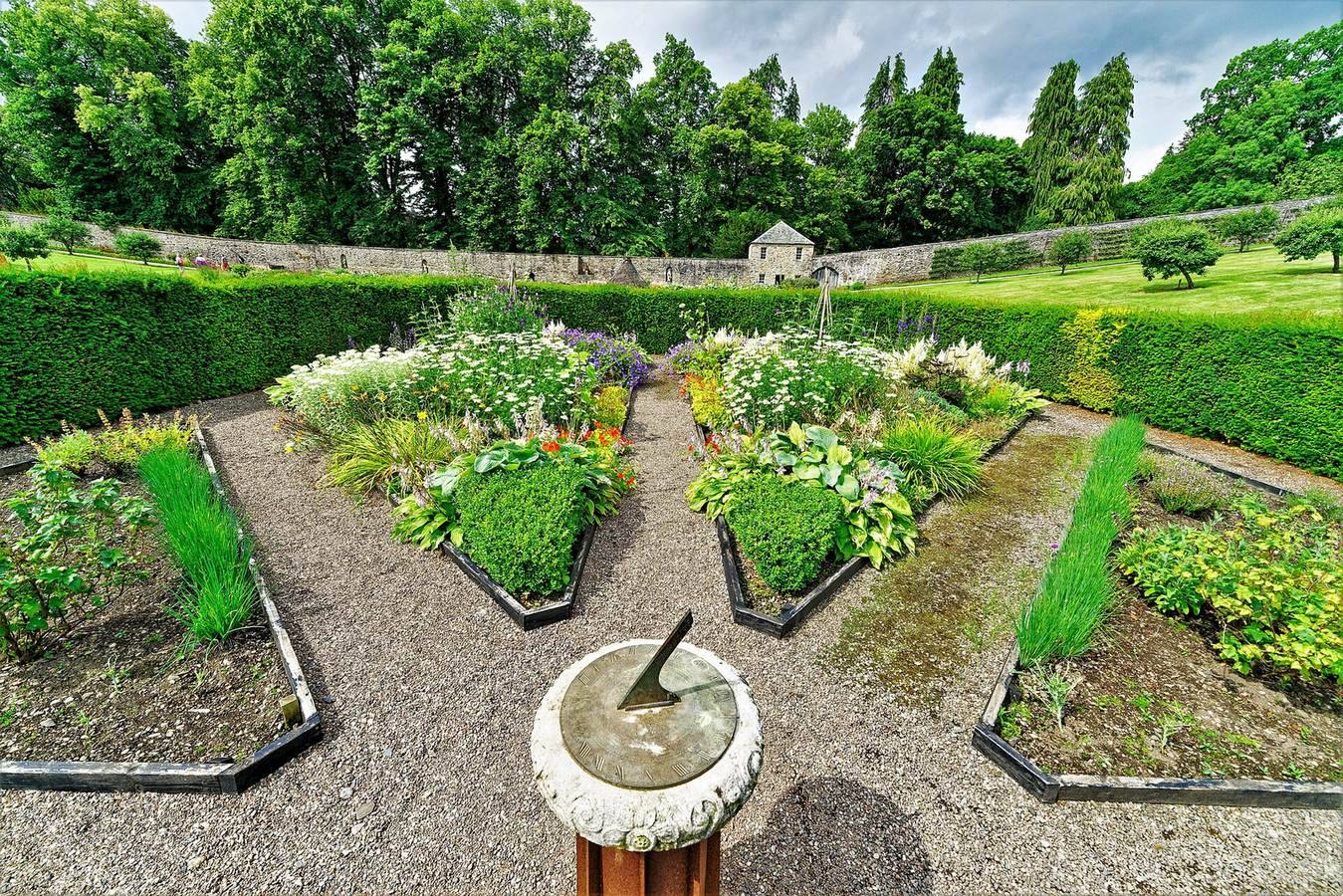
Designed by John Murray in the mid-eighteenth century, Hercules Garden covers nine acres and takes its name from a statue of Hercules. Its features include more than 100 fruit plants and a Chinese bridge.
Diana’s Grove
Diana’s Grove is a wooded area of conifers and rhododendrons. In 2009, a Grand Fir (Abies grandis) there measured 62.7 metres and was identified as Britain’s second-tallest tree.
St Bride’s Kirk and the family burial ground
The family burial ground lies beside the ruins of St Bride’s Kirk, a church that served the village of Old Blair. It fell out of use after the estate village moved to its present location in 1823. Most of the Dukes of Atholl are buried in the grounds. The Atholl Estate surrounding the castle covers approximately 60,000 hectares.