Bithia: An Ancient Coastal Settlement in Sardinia
Site at a Glance
- Popularity
- Medium
- Country
- Italy
- Primary era
- Iron Age
- Eras represented
- Iron Age, Classical, Early Modern
- Civilizations
- Carthaginian, Crown of Aragon, Kingdom of Sardinia, Nuragic, Phoenician, Roman, Spanish
- Site type
- City
On this page14 sections
History
Bithia was an ancient coastal settlement near Domus de Maria in southern Sardinia, Italy, founded in the last quarter of the eighth century BC during its Phoenician phase. It became a trading place between Phoenician merchants and Sardinia’s Nuragic communities, and later retained a Punic civic character under Roman rule.
Nuragic and Phoenician Settlement
The surrounding area was inhabited during the Nuragic period, the prehistoric culture of Sardinia known in part for its stone towers. A Nuragic complex about 1.8 kilometres inland points to this earlier activity. Bithia itself may also have been a Nuragic centre before the Phoenician settlement began.
Phoenician merchants began visiting Sardinia around 1000 BC, and local leaders permitted settlements to develop. Bithia’s first settlement occupied the hill at Torre di Chia. Its position, surrounded by the sea and set at a river mouth, offered a defensible site, a possible landing place and access inland. A harbor during this earliest phase is probable, but not established. Pliny the Elder called the settlement Bitia, while Claudius Ptolemy listed Bithia as a city and harbor.
Burials at Bithia indicate contact between Phoenician settlers and the local Nuragic population. A larger influx of settlers followed in the second half of the seventh century BC. Weapons found in some graves point to the presence of warriors, but do not establish that fighting took place between the communities.
Punic and Roman Rule
An open-air sanctuary was established on Su Cardolinu in the last quarter of the seventh century BC. Its burial practices ended with the Punic conquest in the second half of the sixth century BC. Punic refers to the Phoenician-derived civilization centred on Carthage. Carthage sought control of Sardinia between 540 and 510 BC; Bithia’s conquest was followed by a temporary occupation of its territory. Punic settlement remained limited through the second quarter of the fifth century BC. The scarcity of remains from around the middle of that century may mean that few people remained or that the settlement was abandoned.
People from North Africa gradually resettled Bithia. Rome took control of Sardinia in 238 BC, bringing the settlement under Roman rule. Bithia appears not to have become a major city in the province, unlike Caralis, Nora and Sulci. Punic culture nevertheless continued. A statue of the deity Bes from the late-Punic period and an inscription in a later form of the Punic language and script point to an enduring Punic presence. The community also seems to have kept some autonomy and to have been governed by sufetes, civic magistrates in Punic communities.
Late Antiquity and Abandonment
Bithia’s economy began to weaken from the end of the fourth or beginning of the fifth century AD, at first gradually and then more rapidly. The Vandals, a Germanic people whose kingdom was based in North Africa, sacked Rome in 455 and occupied Caralis and other Sardinian coastal towns in 456. It is uncertain whether Bithia still existed at that time.
The settlement was abandoned in the early seventh century. Its inhabitants moved inland to escape raids by Arab or Muslim forces, often called Saracens in medieval Europe. In the sixteenth century, limestone from Bithia’s elevated central stronghold, or acropolis, was reused to build Torre di Chia as a coastal defense against corsair raids from North African states.
Rediscovery and Excavation
A storm exposed part of the Phoenician-Punic cemetery at Sa Colonia in 1926, after which local farmers found ancient objects in the area. The landowner, Count Piercy di Alliata, began excavating and then notified the antiquities authority headed by Antonio Taramelli. Investigations of the western cemetery followed from 1928 to 1932. Taramelli identified the ancient settlement in 1933 through an inscription at the temple of Bes. Excavations during the 1930s also examined the northern hill and its northwest slopes.
Further work took place under Gennaro Pesce in the early 1950s, and a survey examined remains on Su Cardolinu in 1964. A rescue excavation at Sa Colonia followed in 1974 in response to a housing development. Antonio Zara led further work on the cemetery from 1976 to 1983. From 2010 to 2019, investigations of successive archaeological layers on the northern hill added information about the settlement’s layout.
Remains
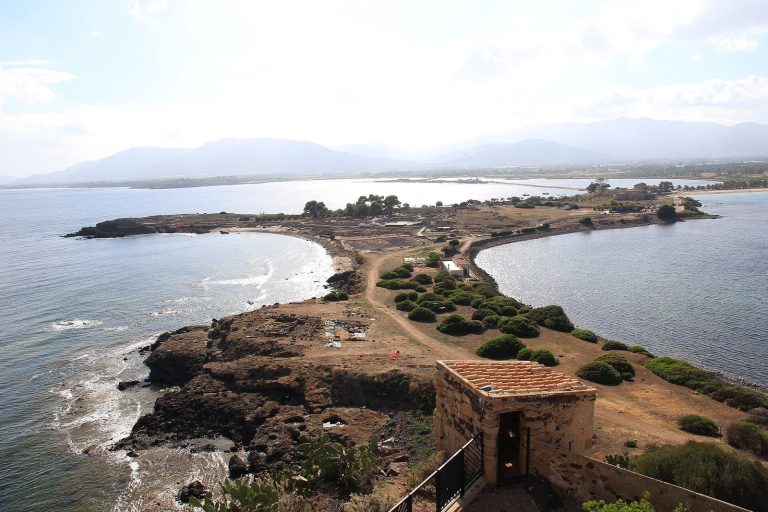
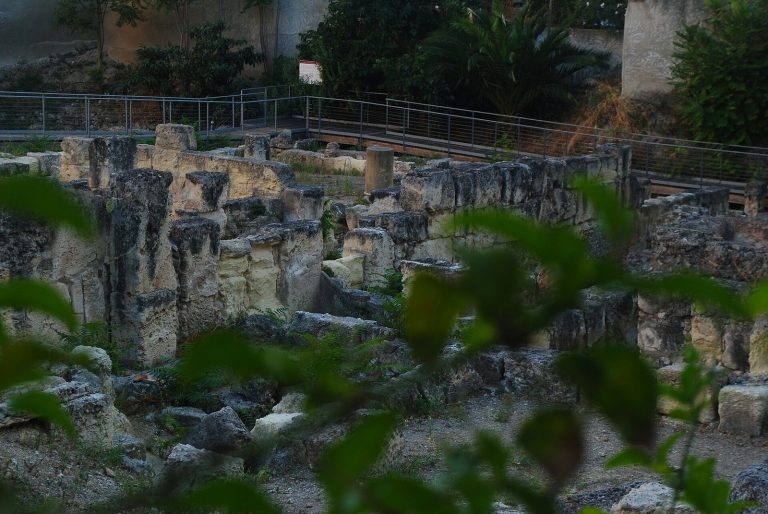
Bithia’s remains extend across the hill and slopes around Torre di Chia, west of the tower between Spiaggia della Colonia and the Stagno di Chia lagoon, and on Su Cardolinu, a small island just offshore to the east. Most of the ruins are submerged. The surviving features include the acropolis, settlement remains on the northern hill, cemetery areas and sanctuary structures.
Acropolis and Coastal Road
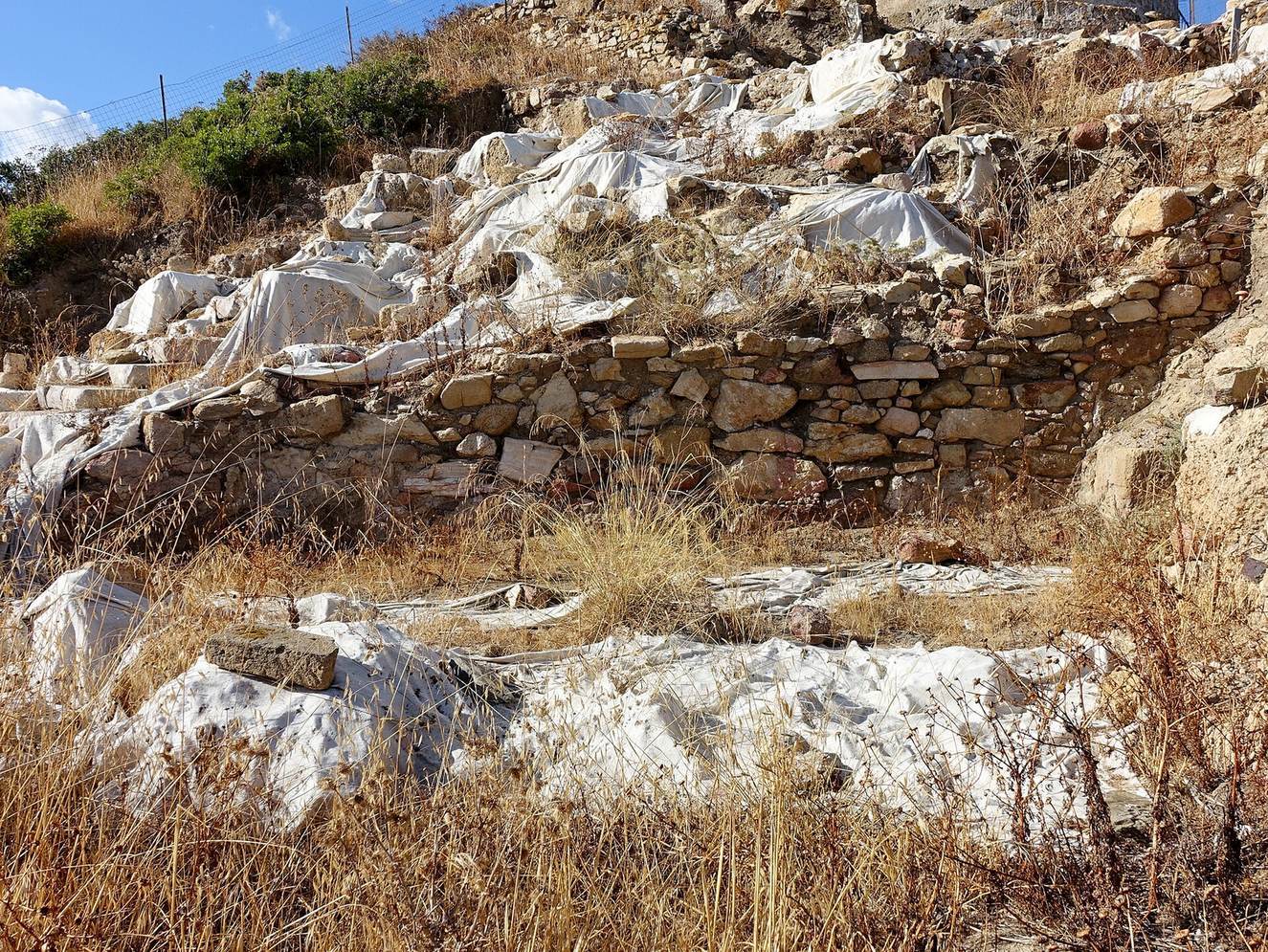
The acropolis occupied the hill now topped by Torre di Chia. Its surviving remains include walls and a staircase, while limestone blocks from the ancient stronghold were reused in the sixteenth-century defense tower built above it. A coastal road passed north of Su Cardolinu, running from Karalis and Nora through Bithia toward Tegula and Sulki. It was improved in Roman times, and a stretch between Pinus Village and Chia survives under the name Roman road.
Northern Hill
Settlement Remains
Part of the ancient settlement has been identified in the hill’s northern sector. Remains from the Roman period, dated to the third and fourth centuries AD, were found on the northwest slopes. Among fragments analyzed from this area, 58 percent were classified as Phoenician-Punic, 8 percent as Roman, 24 percent as unidentified and 10 percent as mixed.
Temple of Bes
The temple of Bes stood north of Torre di Chia on the promontory’s northwest slopes. A large sandstone statue of Bes, dated to the late-Punic period, was found there and is now held at the National Archaeological Museum in Cagliari. The temple also yielded an inscription from the reign of Caracalla, Roman emperor from AD 211 to 217. Its place-name has been read as Bitan.
Cemetery
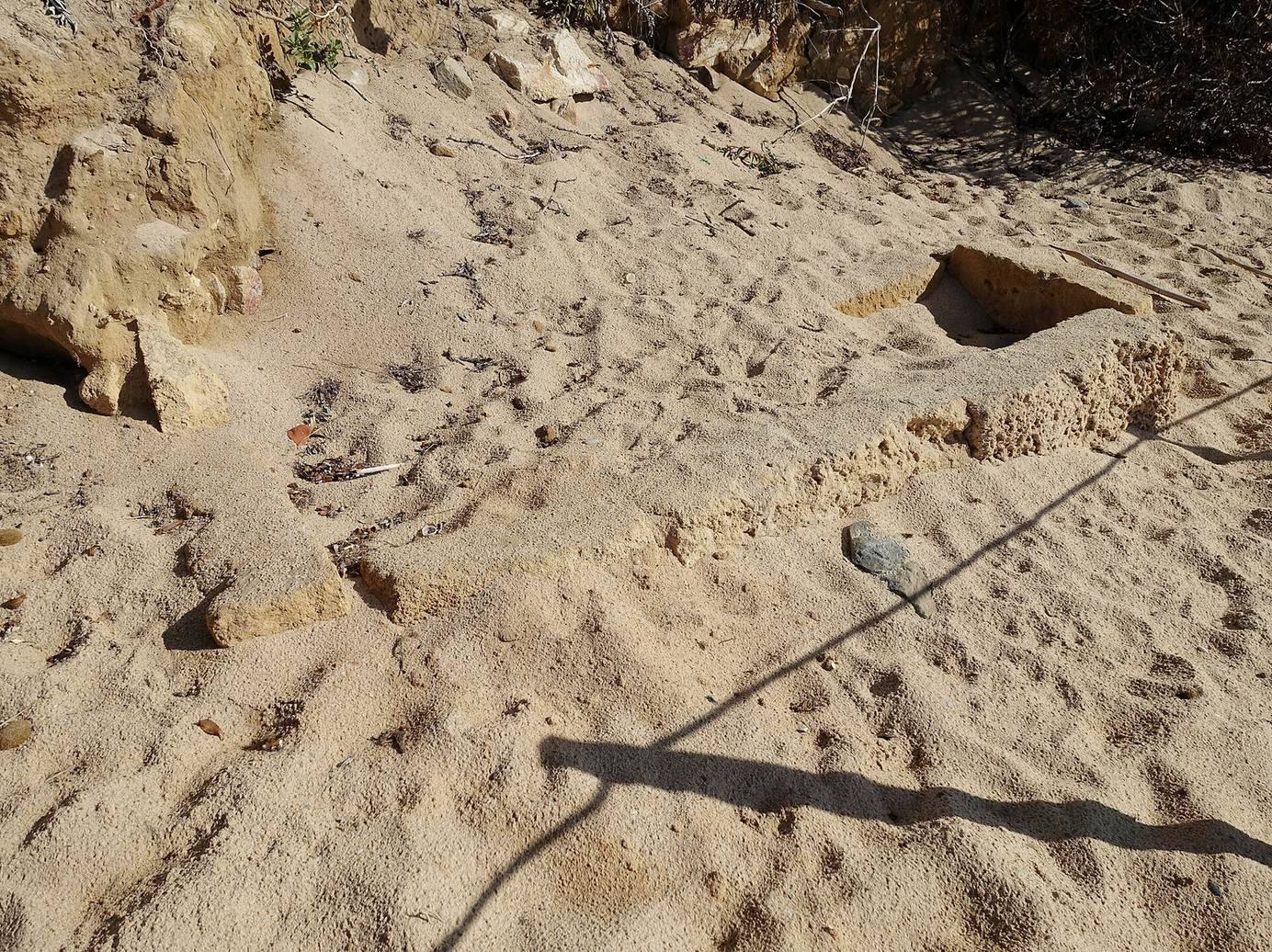
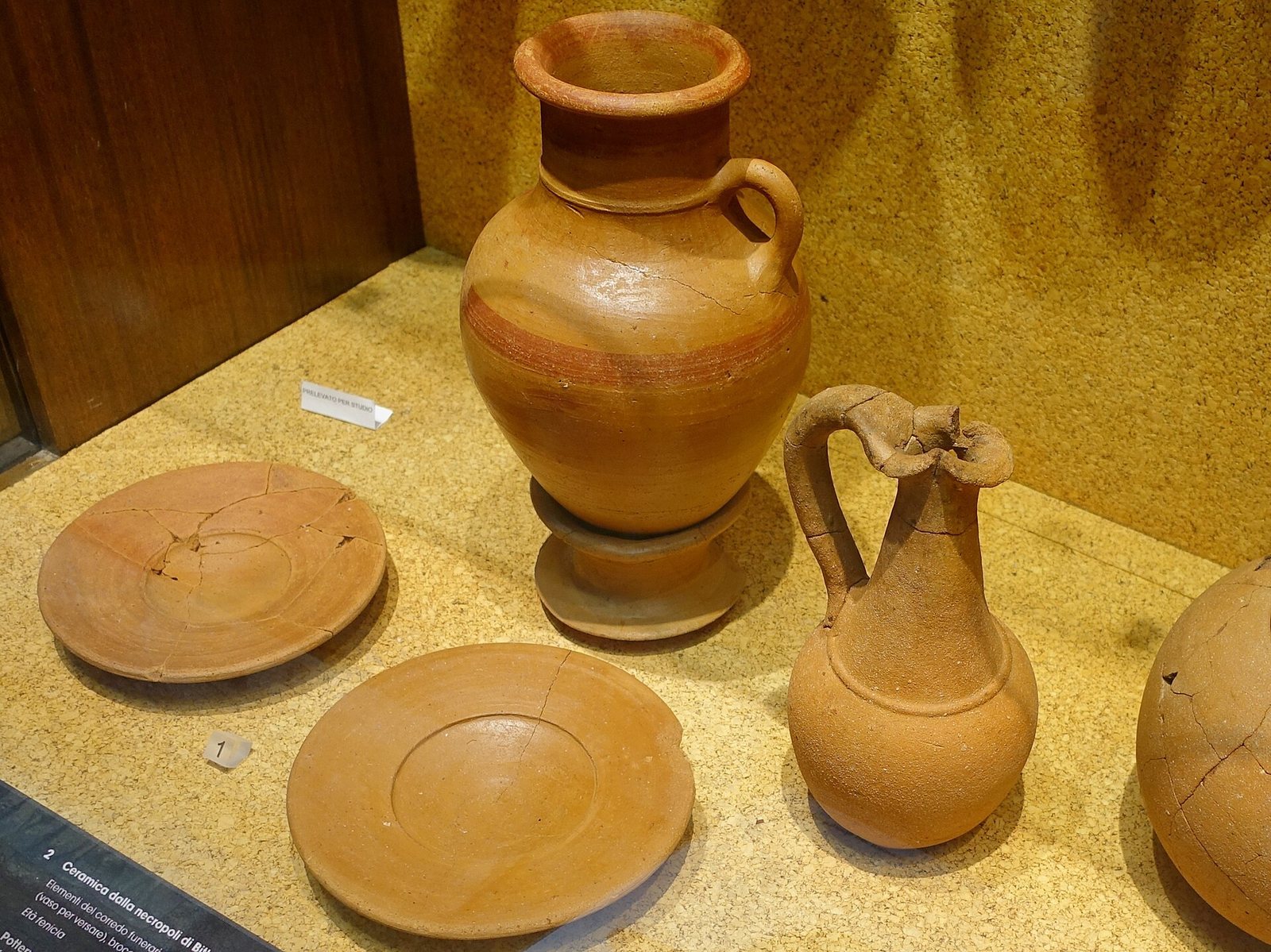
The Phoenician-Punic cemetery lies west of the tower, including an area behind Sa Colonia beach where excavations identified more than 200 burials. One grave dated to the seventh century BC contained an imported Etruscan bucchero jug, a type of dark, lustrous pottery. The graves include examples of Nuragic burial practice and North African types built from large stone blocks. Some also contained weapons.
Su Cardolinu Sanctuary and Burials
Sanctuary Structures
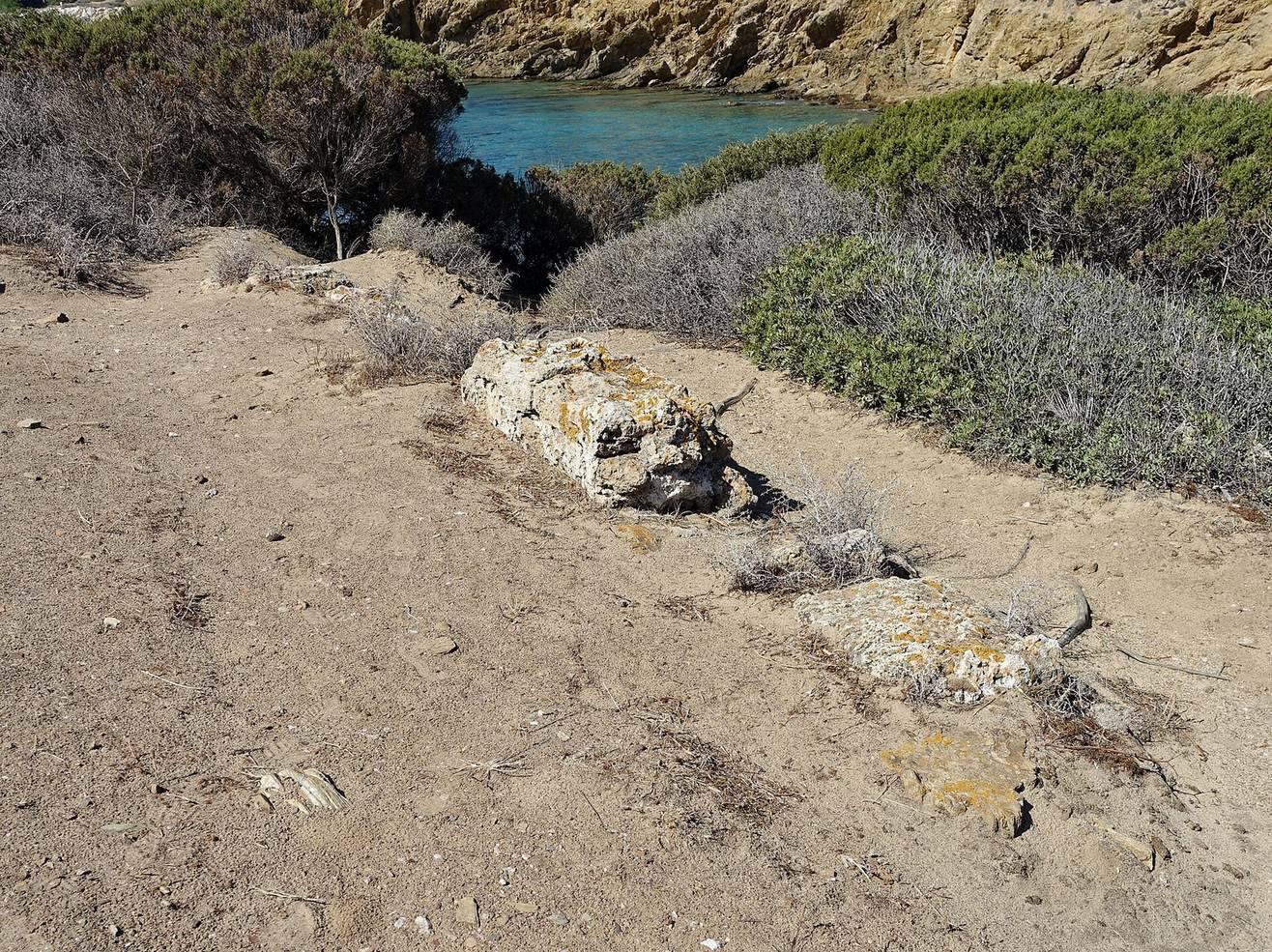
The island preserves remains of a Punic sanctuary, an altar and a small shrine. A later sanctuary, built in the first half of the fourth century BC over the earlier open-air sanctuary, had an enclosing wall. Its remains can be seen on the island’s northwest side and at its northern end. A structure nearer the centre has been so heavily eroded that little of its built form can be made out. A burial chapel is also among the island’s remains.
Burial Features
At the earlier sanctuary, cremated remains of stillborn children and children who died in their first years were placed in clay urns set in cracks in the rock. A plate or bowl covered each urn, and stone slabs protected it. Other urns holding cremated remains were placed in stone cists. This burial evidence supports the possibility that Su Cardolinu also had a tophet, an open-air Punic sacred place associated with the burial of cremated remains.