Ghent Episcopal Palace: Residence of the Bishop of Ghent
Site at a Glance
- Popularity
- Low
- Country
- Belgium
- Primary era
- Modern
- Eras represented
- Modern
- Civilizations
- Belgian
- Site type
- Religious
- Remains
- Palace
On this page6 sections
History
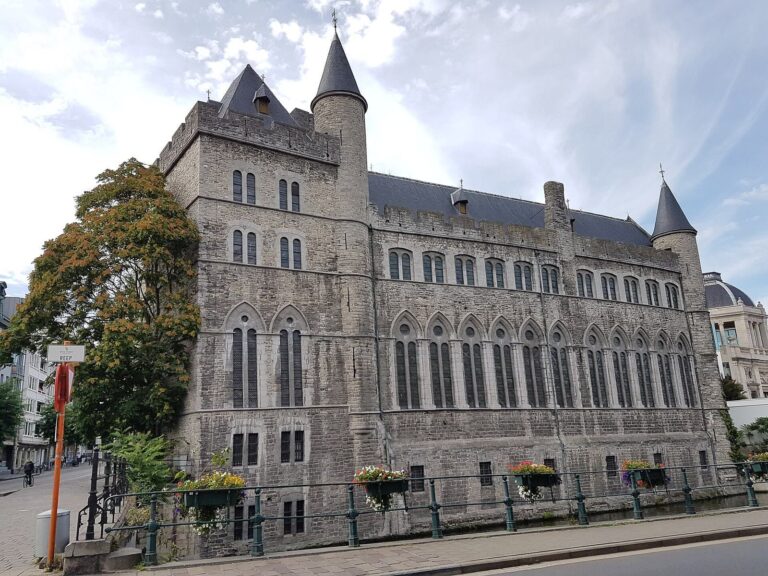
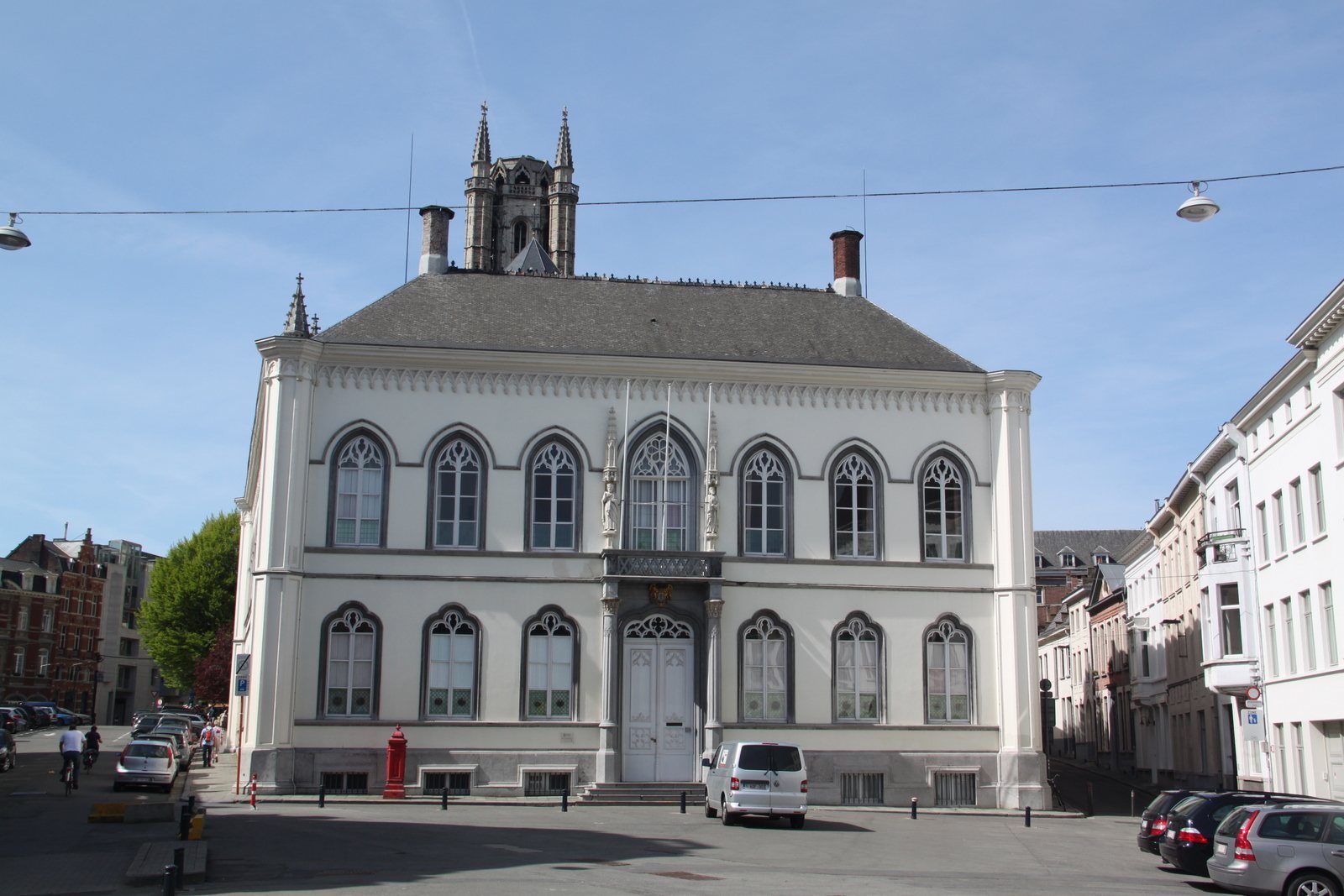
The Ghent Episcopal Palace is the bishop’s residence and administrative seat of the Diocese of Ghent in Belgium. Construction was decided on in 1840, and Bishop Lodewijk Jozef Delebecque consecrated the Neo-Gothic building in 1845. Neo-Gothic describes the nineteenth-century revival of medieval Gothic forms.
Early diocesan residences
The Diocese of Ghent, an ecclesiastical district administered by a bishop, was established in 1559. Its first bishop lived in the Koraalhuis at Nederpolder, a house belonging to the chapter of Saint Bavo’s Cathedral. A cathedral chapter is a body of clergy serving a cathedral. Later bishops lived in several houses near the cathedral. Those associated with these residences included Cornelius Jansen, Willem Damasz. van der Linden, Pieter Damant, Carolus Maes, Frans van der Burch, Jacob Boonen and Antonius Triest.
Saint Bavo’s Court
In 1623, Infante Ferdinand of Austria, a prince of the Spanish royal family, granted Saint Bavo’s Court to Bishop Antonius Triest for use as an episcopal residence. After extensive renovation, Triest moved there in 1633. His successors, including Karel van den Bosch, Eugeen Albert d’Allamont, Frans van Horenbeke, Ignaas August Schetz van Grobbendonck, Albrecht van Horne, Philips Erard van der Noot, Jan Baptist de Smet, Maximiliaan Antoon van der Noot, Govaart Geeraard van Eersel and Ferdinand Marie de Lobkowicz, occupied the residence until 1794.
That year, French authorities confiscated the residence as national property and made it the seat of the Scheldt Department, a French administrative division. The complex was enlarged several times before it disappeared. East Flanders’ provincial government now occupies its former site.
Residences after 1794
After his appointment in 1802, Bishop Étienne Fallot de Beaumont first lived for several months in a house on Zandberg, later occupied by the Flemish writer and linguist Jan Frans Willems. At the end of the year, Fallot de Beaumont moved to Hotel Snoeck on Sint-Jacobsnieuwstraat. In 1806, the bishop took up residence in the former official home of the abbot of Boudelo Abbey on Steendam. Maurice de Broglie, Jan Frans Van De Velde and Lodewijk Jozef Delebecque also lived there.
The present palace
The palace’s episcopal residents have included Lodewijk Jozef Delebecque, Hendrik Frans Bracq, Hendrik Karel Lambrecht, Antoon Stillemans, Emiel Jan Seghers, Honoré Jozef Coppieters, Karel Justinus Calewaert, Leonce Albert Van Peteghem, Arthur Luysterman and Lucas Van Looy. Lode Van Hecke is its current occupant. The palace has been a protected monument since 1996.
Remains
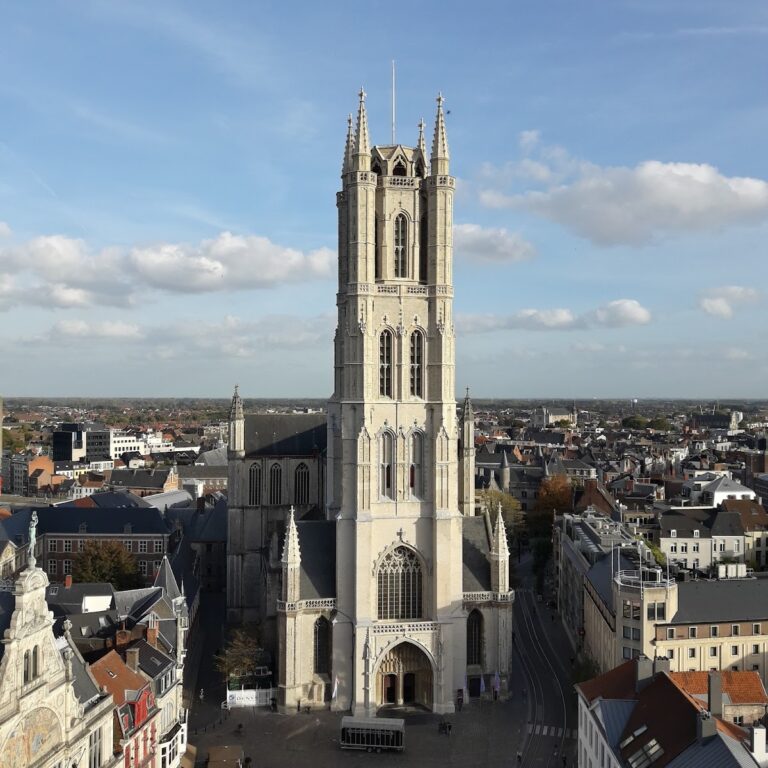
The present palace stands on Bisdomplein, east of Saint Bavo’s Cathedral. Engineer Matthias Jozef Wolters designed the building. Its site had been vacant since the cathedral cemetery was cleared at the end of the eighteenth century.