Biskops-Arnö: A Medieval Archbishop’s Estate in Sweden
Site at a Glance
- Popularity
- Medium
- Country
- Sweden
- Primary era
- Early Modern
- Eras represented
- Medieval, Early Modern
- Civilizations
- Swedish
- Site type
- Domestic
- Remains
- Manor House
On this page8 sections
History
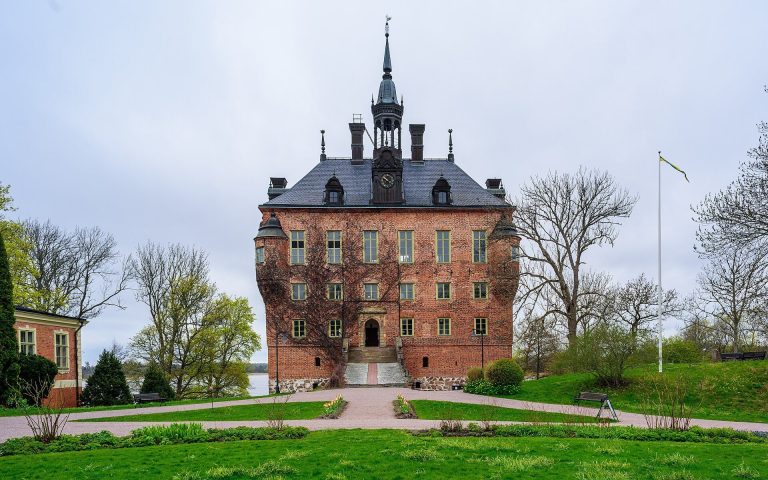
Biskops-Arnö is a historic manor on Arnö, an island in Lake Mälaren near Bålsta, Sweden. The name is also used for the island, distinguishing it from nearby Bond-Arnö. First mentioned as Arnö in the second half of the thirteenth century, the estate passed to the archbishops of Uppsala, Sweden’s senior church leaders, and became a summer residence for them.
Medieval archbishops
Gregers Birgersson, an illegitimate son of the Swedish statesman and magnate Birger Jarl, was the earliest known holder of the estate. After Gregers died in 1276, his sons Karl, Knut, and Magnus sold it to the Church. By the end of the century, Arnö had come under the authority of the archbishop of Uppsala. In the 1290s, Archbishop Nils Allesson had the purchase formally entered at the court in Hjälsta.
Archbishop Magnus Bosson signed an indulgence letter at Arnö in 1288. An indulgence was a grant in medieval Catholic practice associated with reducing the temporal penalty for sin. The letter offered indulgences to people who donated to the Dominican monastery in Sigtuna, a house belonging to a Catholic religious order.
Archbishop Olov Björnsson had a castle built at Arnö. It was not used as a fortification, although it may initially have been intended to protect the waterway leading toward Uppsala. The Church also secured other waterways. A defensive castle was probably built in the thirteenth century near the mouth of Långhundraleden at Åkersberga. In the 1440s, Archbishop Nils Ragvaldsson acquired Almare-Stäket for the Church and had its castle rebuilt.
During the Middle Ages, the archbishops used Arnö as a summer residence. Hemming Nilsson appears to have been the first to live there through the winter. He served as archbishop from 1341 until his death at Arnö in May 1351. While plague ravaged Uppsala, Hemming remained on the island and received an embassy from the pope.
Jakob Ulvsson was the last archbishop associated with Arnö. Leading political figures often visited during his long tenure, and after retiring in 1515 he chose to live at the estate. In late winter 1520, the castle was burned and Jakob was captured. He later ended his life at the Carthusian monastery in Mariefred, belonging to a Catholic order known for its secluded way of life.
Royal and noble ownership
During the Reformation, the religious and political transformation that changed church authority and property in Sweden, the Crown took possession of the island. King Gustav Vasa often stayed at Arnö during the 1530s. His son Johan III and Johan’s sister, Princess Sofia, were also associated with the estate. Charles IX later granted Arnö and Ekolsund to Sofia as a land grant.
After Sofia, Arnö passed first to Joachim Berndes and then to Councillor Philip von Scheiding. In 1642, von Scheiding exchanged the estate with Field Marshal Jakob De la Gardie, a Swedish military commander and statesman. De la Gardie’s wife, Ebba Brahe, furnished a suite at Arnö with great splendor. Their son Axel Julius inherited the estate and planned a palace complex modeled on nearby Stenbockska Sjöö. The court architect may have entrusted the commission to his stepson, an architect who was later ennobled as Svanskiöld.
Military residence and later use
In 1684, the Crown reclaimed the estate during the Reduction, its recovery of land previously granted to others. From 1686, Arnö housed colonels of the Life Regiment of Horse, a Swedish military regiment. A wooden manor house was designed for General Spens. A severe storm in 1727 made demolition of the castle necessary, although parts that could serve as storage were retained. In 1729, the War College designated Arnö as a colonel’s residence.
After the regiment was reorganized in 1781, Arnö gradually became the residence of the deputy commander of the Life Regiment of Dragoons, another Swedish military regiment. It ceased to serve as a military residence in 1876, after which the state leased the estate.
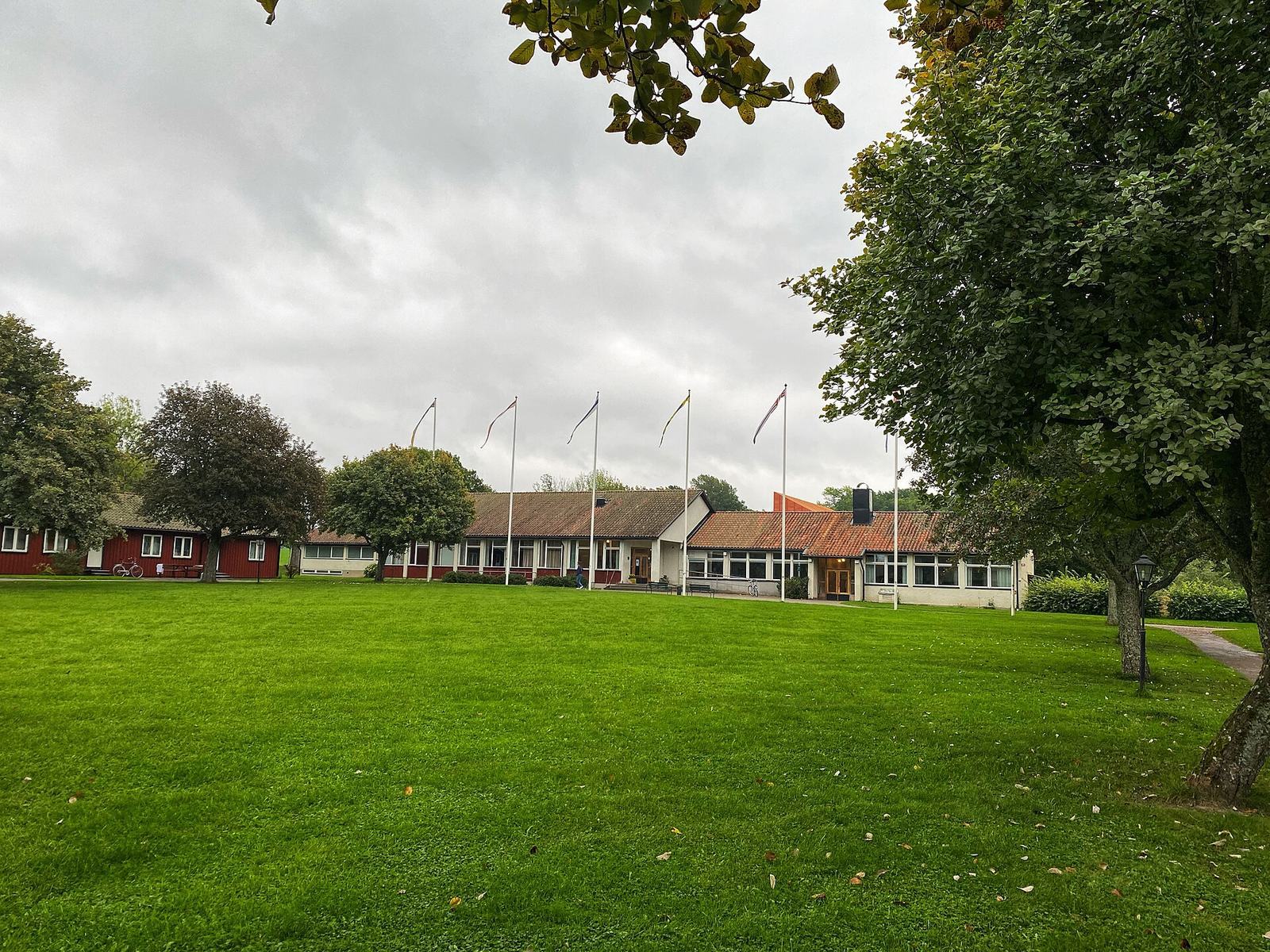
Föreningen Norden, an organization promoting cooperation among Nordic countries, has used Biskops-Arnö since 1956. In 1958, it established Nordens Folkhögskola Biskops-Arnö as a foundation-run folk high school, an adult-education institution. Its short and long courses include documentary film, photojournalism, history, natural medicine, ecology, and aid work; it also offers writing courses in poetry, prose, and drama for aspiring authors. The school has a branch in Chile. The Swedish state owns Biskops-Arnö through the National Property Board, and the manor is protected as a historic building.
Remains
Castle and manor buildings
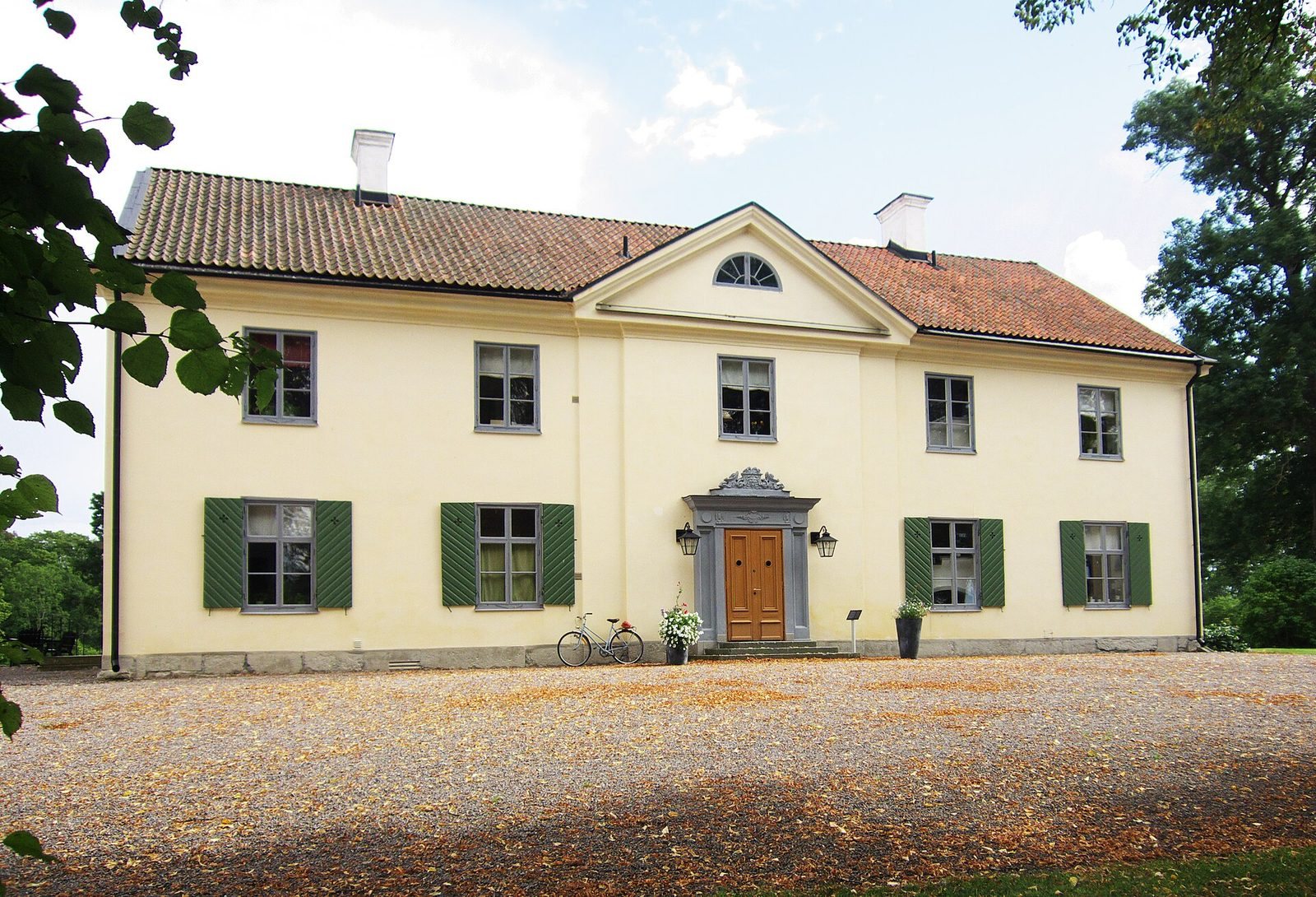
The surviving architecture includes remains of the medieval castle and a later wooden main manor house, representing successive building phases.
Medieval castle
Parts of the medieval castle remain. Its architectural details appear to reflect contemporary work at Uppsala Cathedral. The castle included an unusually large sacristy, a room for storing objects used in worship, with a cellar. Its best-known room was the Gothic Hall. Medieval cellars with vaulted ceilings also survive as part of the castle remains.
Wooden manor house
The wooden main manor house was completed in 1731 on the site of the earlier castle.