Bertinoro Cathedral: A Catholic Church and Co-Cathedral in Italy
Site at a Glance
- Popularity
- Very Low
- Country
- Italy
- Primary era
- Early Modern
- Eras represented
- Early Modern, Modern
- Civilizations
- Italian, Papal States
- Site type
- Religious
- Remains
- Cathedral
On this page10 sections
History
The oratory and episcopal seat
Bertinoro Cathedral, also known as Santa Maria degli Angeli, is a Catholic church in Italy dedicated to Catherine of Alexandria, a Christian martyr. It served as the seat of Bertinoro’s bishops and became a co-cathedral in 1986, sharing cathedral status within the Diocese of Forlì-Bertinoro after the dioceses of Forlì and Bertinoro were united.
A small place of prayer dedicated to Catherine existed by 1342. In the mid-fourteenth century, after Cardinal Albornoz ordered the destruction of Forlimpopoli, the bishops’ seat moved from that town to Bertinoro, and the oratory became a cathedral. Its dedication was also associated with Saint Laurence, an early Christian deacon and martyr. On 19 December 1365, Bishop Roberto di Bretteville held the church’s first ordination.
In 1489, Bishop Giuliano Maffei asked Antonio Monaldi, bishop of Sarsina, to reconsecrate the church. Catherine was honored at the main altar; other altars were dedicated to the Trinity, the hermit Saint Onuphrius, and Saint John the Baptist.
The sixteenth-century rebuilding
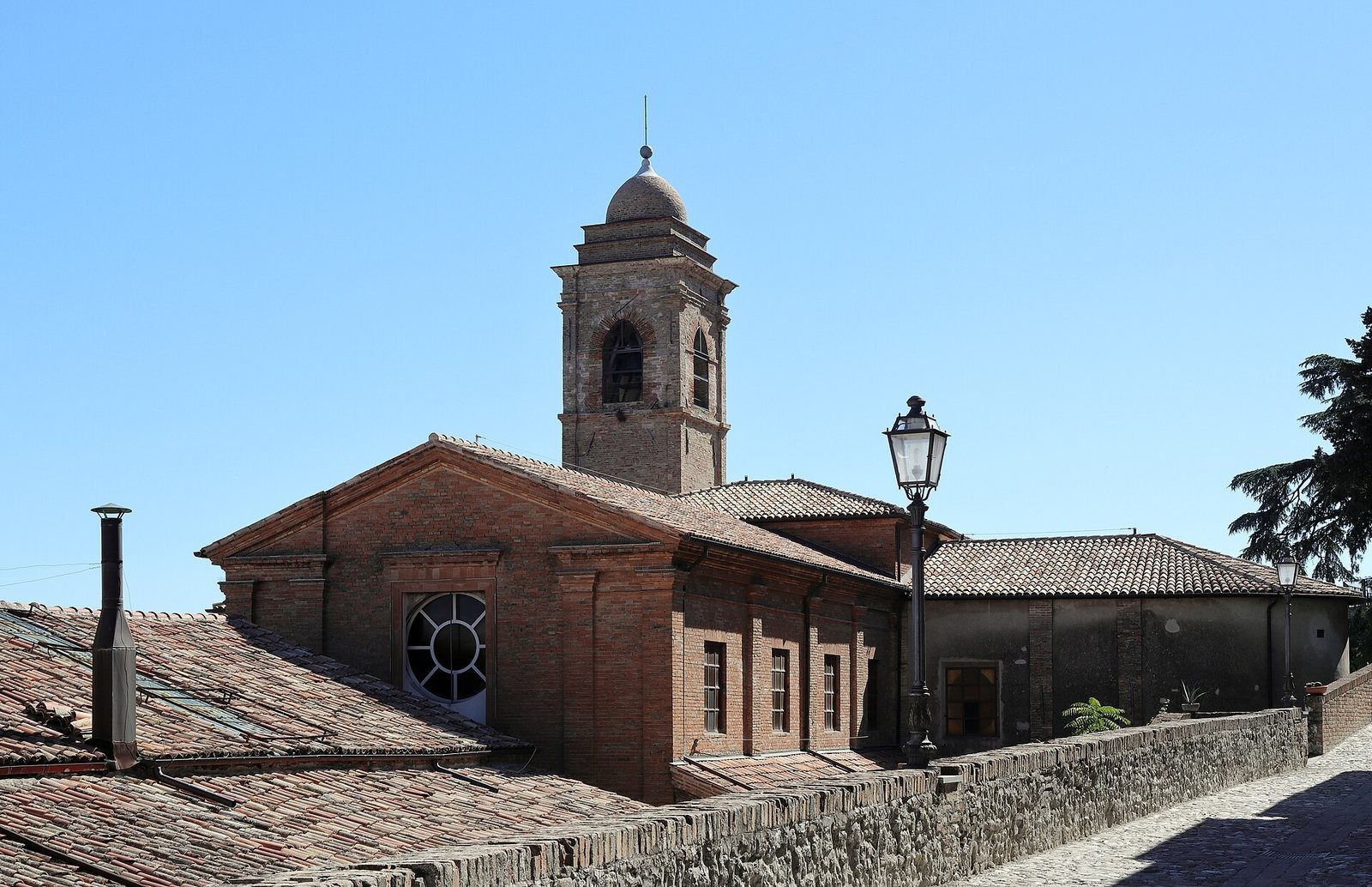
In 1580, Bishop Giovanni Andrea Caligari ordered the small oratory demolished and commissioned a new cathedral in a style inspired by Renaissance architect Donato Bramante. Construction continued until 1601, and the bell tower was completed in 1604.
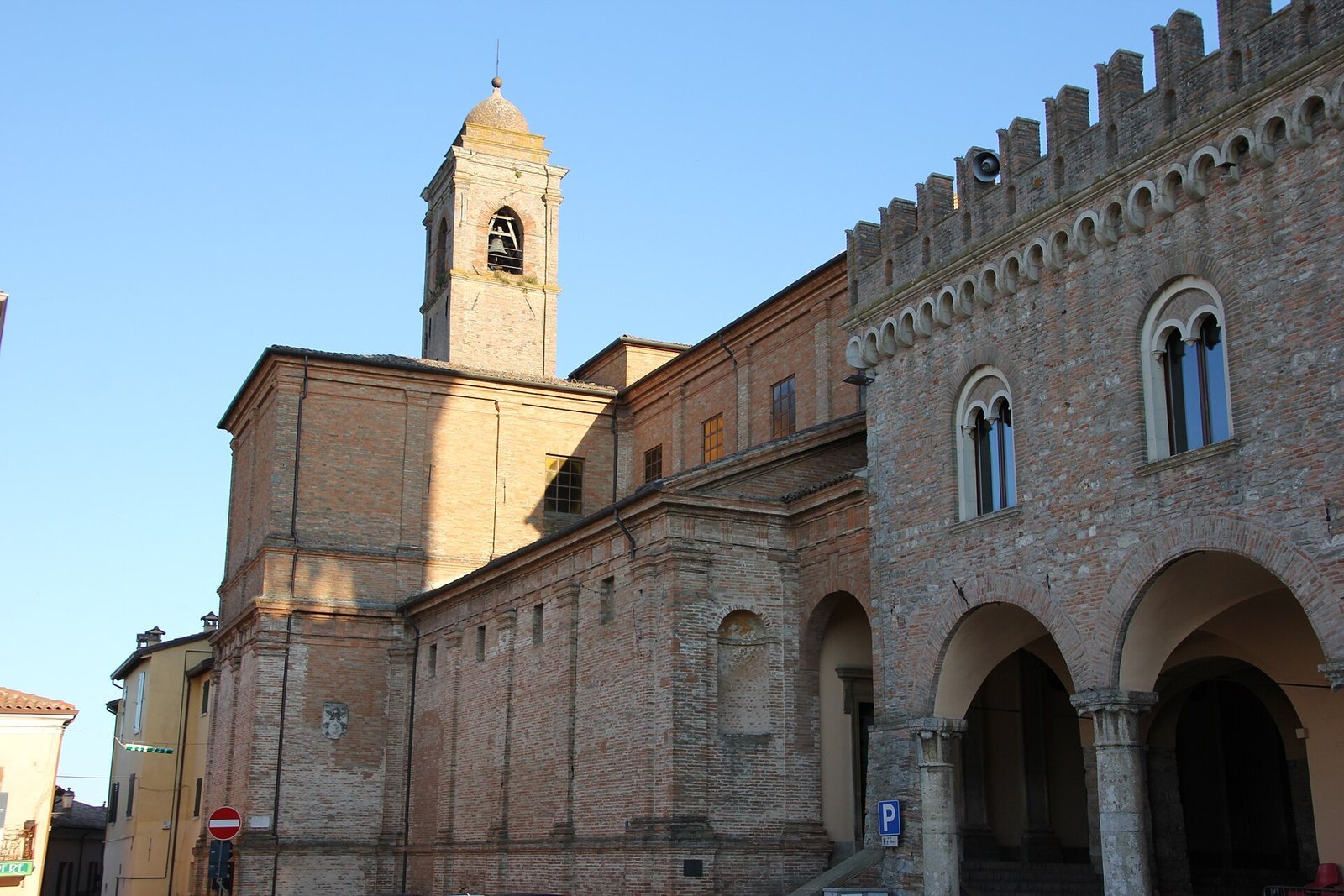
The new church occupied the oratory’s site beside the town hall. The town hall was at first expected to be demolished because it was unstable, which would have exposed the cathedral to the square. Instead, it was retained and strengthened, leaving the church positioned beside it. The cathedral was reconsecrated and furnished in 1619.
Later changes and status
Earthquakes weakened the bell tower’s spire, which was removed in 1870. Restoration in 1890 added wall decorations, and the tower’s roof was renewed in 1902. Damage from the Second World War was repaired in 1947.
Further restoration work took place in 1993, 2014, and 2017. In 1986, the union of the dioceses of Forlì and Bertinoro made the church a co-cathedral of the Diocese of Forlì-Bertinoro.
Remains
Exterior and overall plan
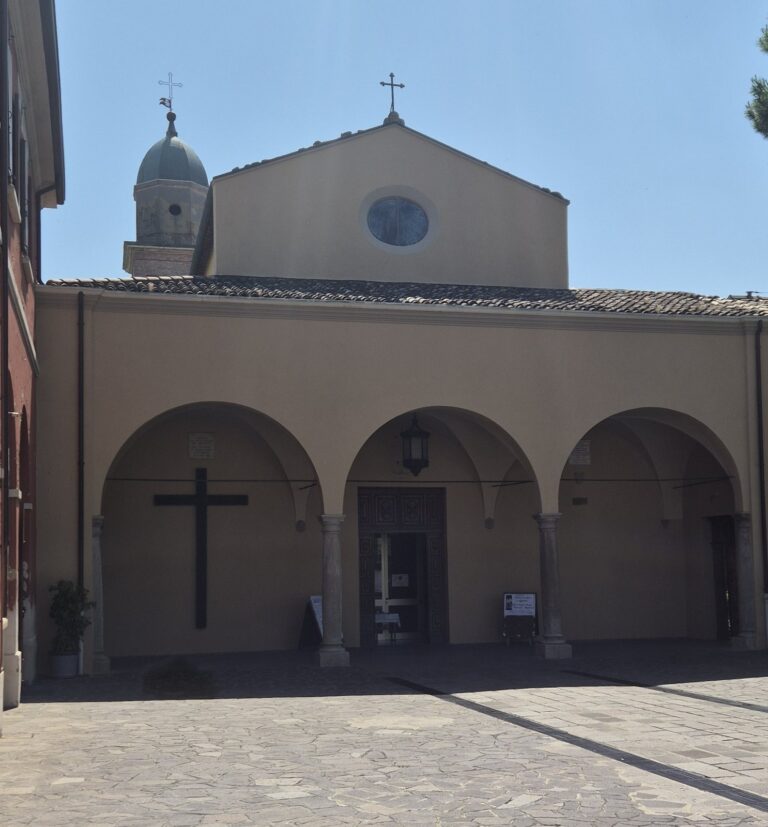
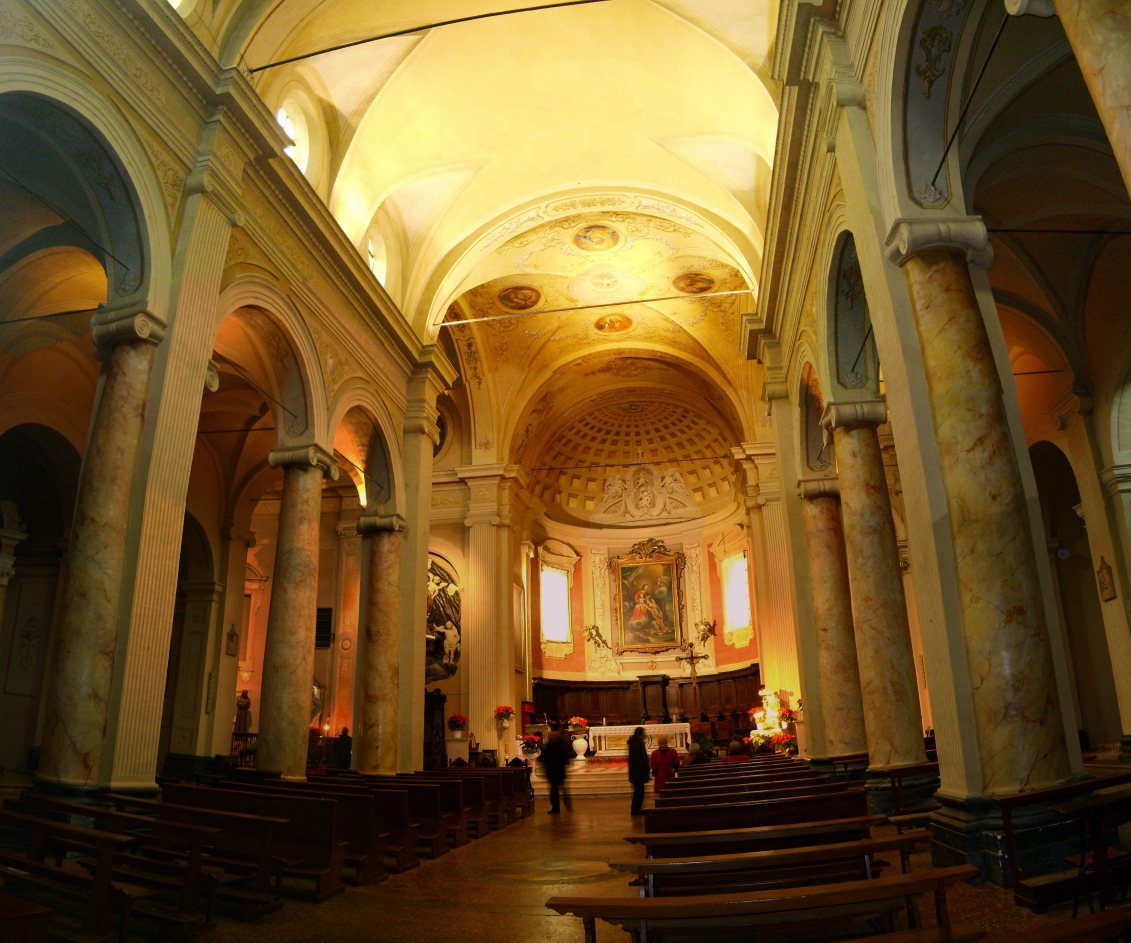
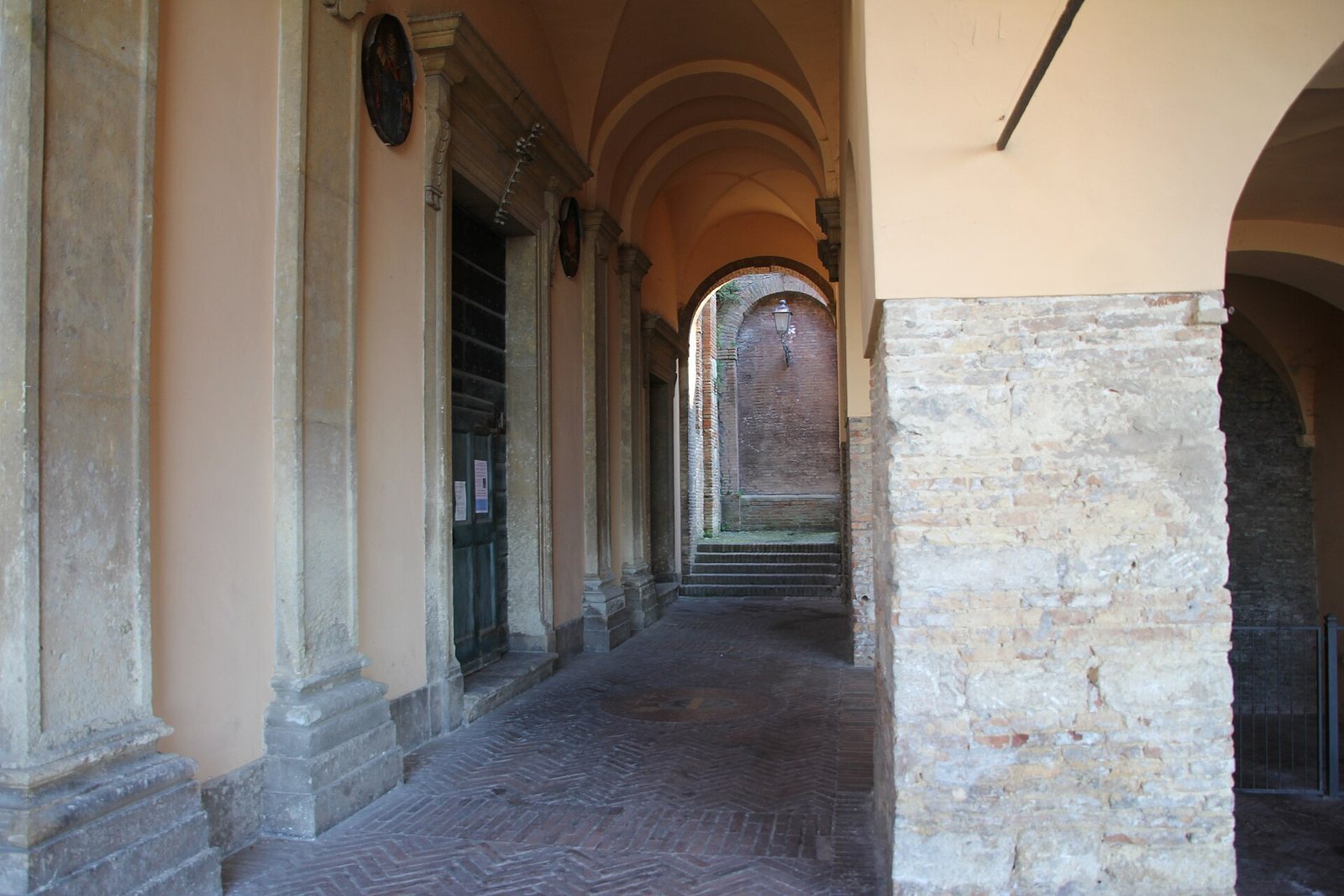
Built of exposed brick, the church has three aisles divided by large pillars and a transept, the crosswise section that intersects the main body. Its façade is largely concealed from the square, though part can be seen from a staircase on the left. Beneath the portico, the lower wall is plastered. Three entrances have wooden doors set in stone frames, and steps lead up to them. The side wall stands above a high step and has flat, column-like projections in the Doric style. A crypt beneath the church is accessible from outside, while the bell chamber is enclosed by a gabled structure.
Interior
Nave and sanctuary
The central nave measures 14 metres high and 32 metres long. At the far end, the sanctuary has a semicircular apse, a rounded recess, and a raised presbytery, the area around the main altar. A wooden choir stands there with Giuseppe Marchetti’s 1765 canvas of the Mystical Marriage of Saint Catherine. Two eighteenth-century paintings by unidentified artists flank it: The Resurrection of Lazarus on the right and The Pool of Bethesda on the left.
Transept
Paintings by Lucio Rossi, dated 1891, decorate the transept ceiling and depict the Evangelists. The left arm contains a wooden crucifix, part of which appears to date from the sixteenth century. A legend says that a pilgrim left it after spending three days in retreat at a monastery; it was made from a fig tree in the church’s garden. The right arm contains an altar dedicated to the Immaculate Conception, the Catholic belief that Mary was conceived free from original sin.
Chapel and furnishings
The third chapel on the left contains Francesco Longhi’s 1601 painting of the Virgin and Child with Saints Peter and Paul. The floor dates from nineteenth-century restoration work. An eighteenth-century organ from Senigallia Cathedral is mounted on the inner wall opposite the entrance.