Bavikonda: A Buddhist Monastic Complex in India
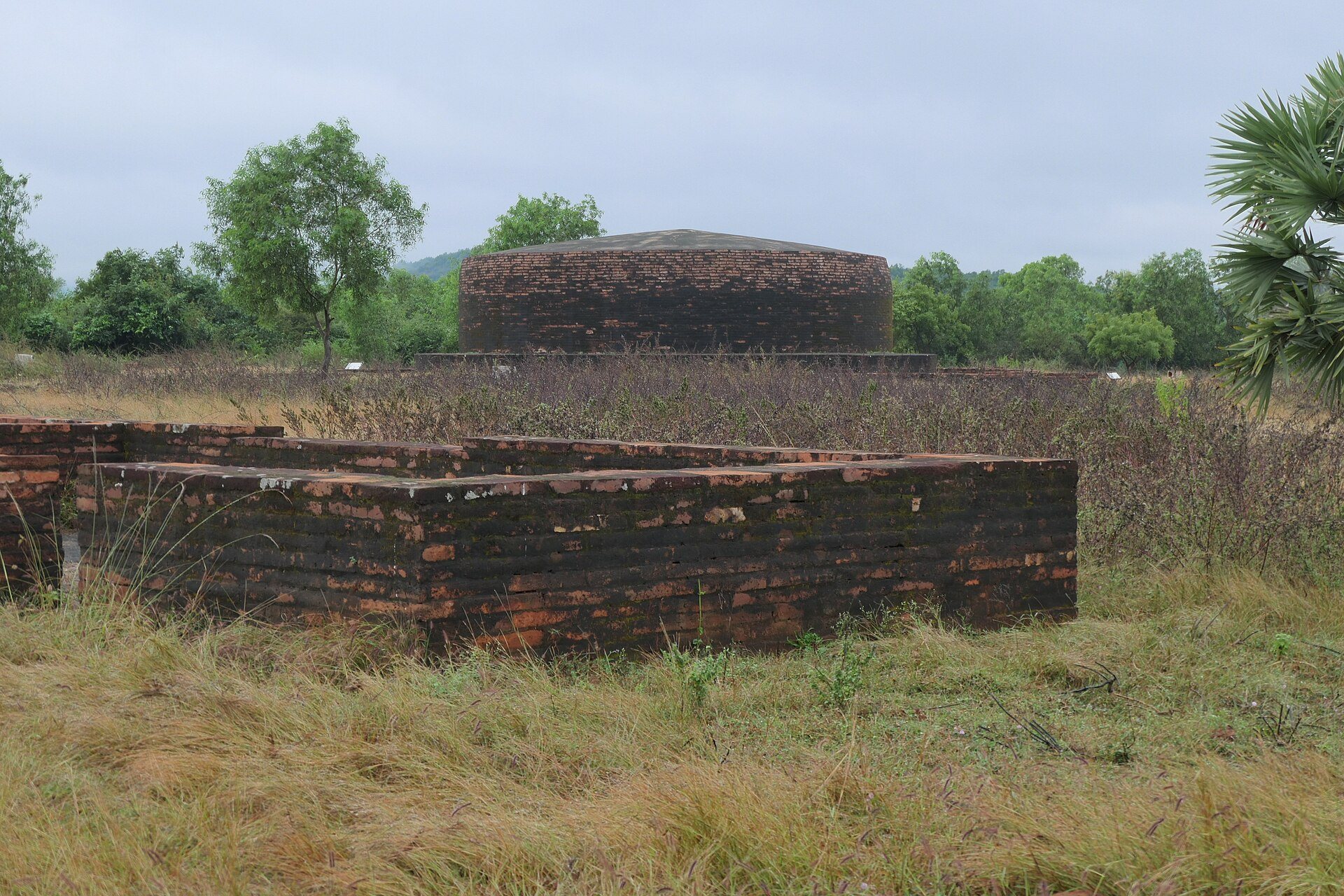
Site at a Glance
- Rating
- 4.2
- Popularity
- Low
- Country
- India
- Primary era
- Classical
- Eras represented
- Classical
- Civilizations
- Mauryan
- Site type
- Religious
- Remains
- Monastery
On this page10 sections
History
Bavikonda is a Buddhist monastic complex on a hill near Visakhapatnam in Andhra Pradesh, India. Its ruins date to the third century BCE, placing the site among the early Buddhist establishments of the region. Bavikonda forms part of a group of Buddhist archaeological sites near Visakhapatnam that also includes Thotlakonda and Pavurallakonda.
The Andhra Pradesh State archaeological department excavated a large complex at Bavikonda, uncovering structural remains and a range of archaeological materials. Among the finds was an urn containing a bone fragment. This fragment is considered by some to be a relic of the Buddha, Siddhartha Gautama, whose teachings formed the basis of Buddhism, although the identification remains uncertain.
Bavikonda is protected as a Buddhist monument complex. The Indian National Trust for Arts and Cultural Heritage, commonly known as INTACH, has appealed for Bavikonda, Thotlakonda, Pavurallakonda, and Bojjannakonda to receive UNESCO heritage-site designation. The appeal argued that stronger protection could support sustained funding and create employment for local people.
Remains
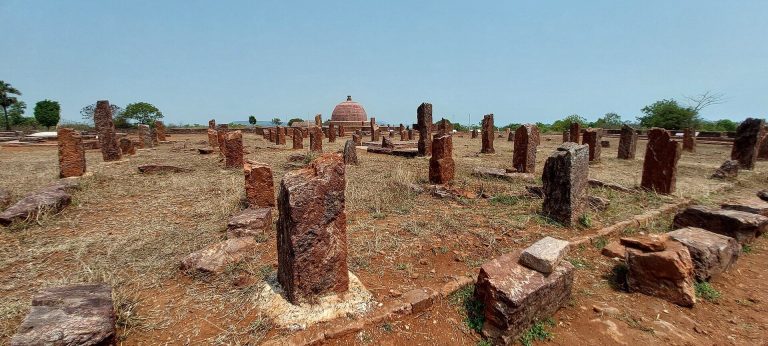
Bavikonda occupies a hill about 130 metres above mean sea level, approximately 16 kilometres from Visakhapatnam. Its Telugu name means “hill of wells,” referring to wells excavated into the hill for collecting and storing rainwater. The surviving complex includes water-management features, stupas, monastic remains, and a chaitya hall, a Buddhist prayer or worship hall often organized around a stupa.
Water Management and Monastic Layout
The wells are cut into the hill and were used to gather and store rainwater. They form part of the physical setting of the monastic complex and help explain the meaning of Bavikonda’s name.
Stupas and Worship Areas
Apsidal Stupa
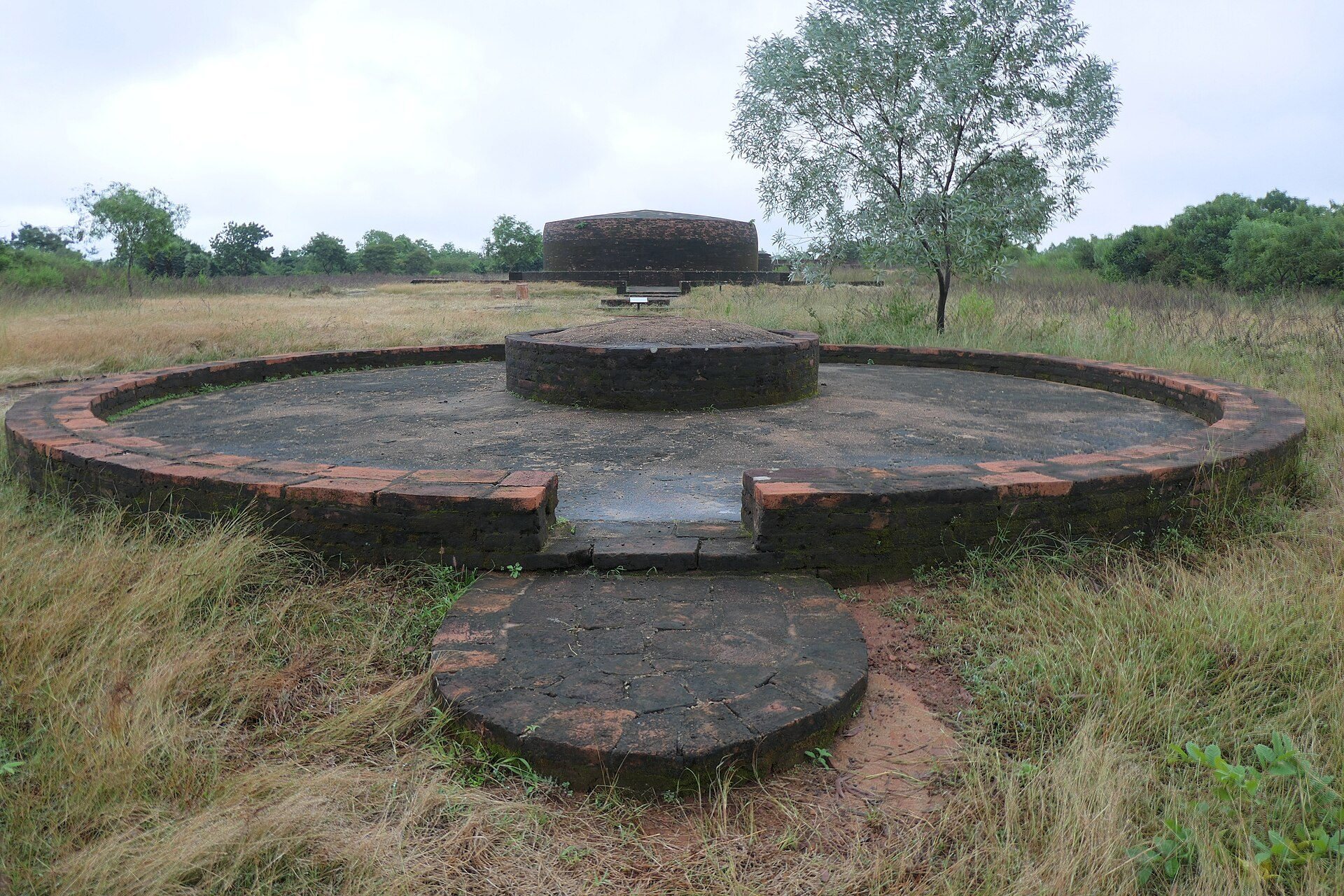
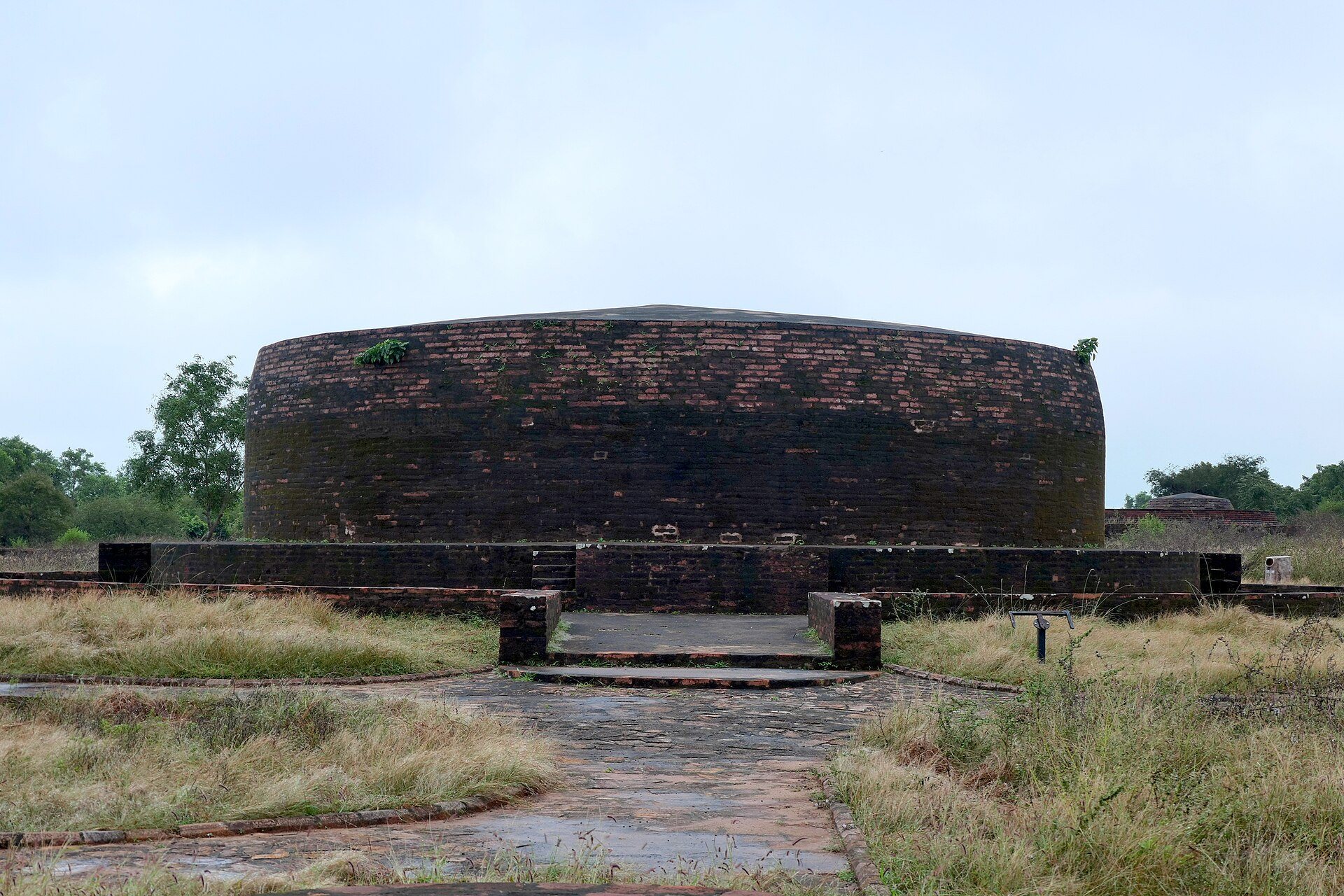
An apsidal stupa survives among the Buddhist monuments at Bavikonda. Its ground plan has a curved, semicircular end, a form reflected in the term “apsidal.” Stupas are Buddhist monuments associated with relics, commemoration, and ritual worship.
Ayaka and Stone Stupas
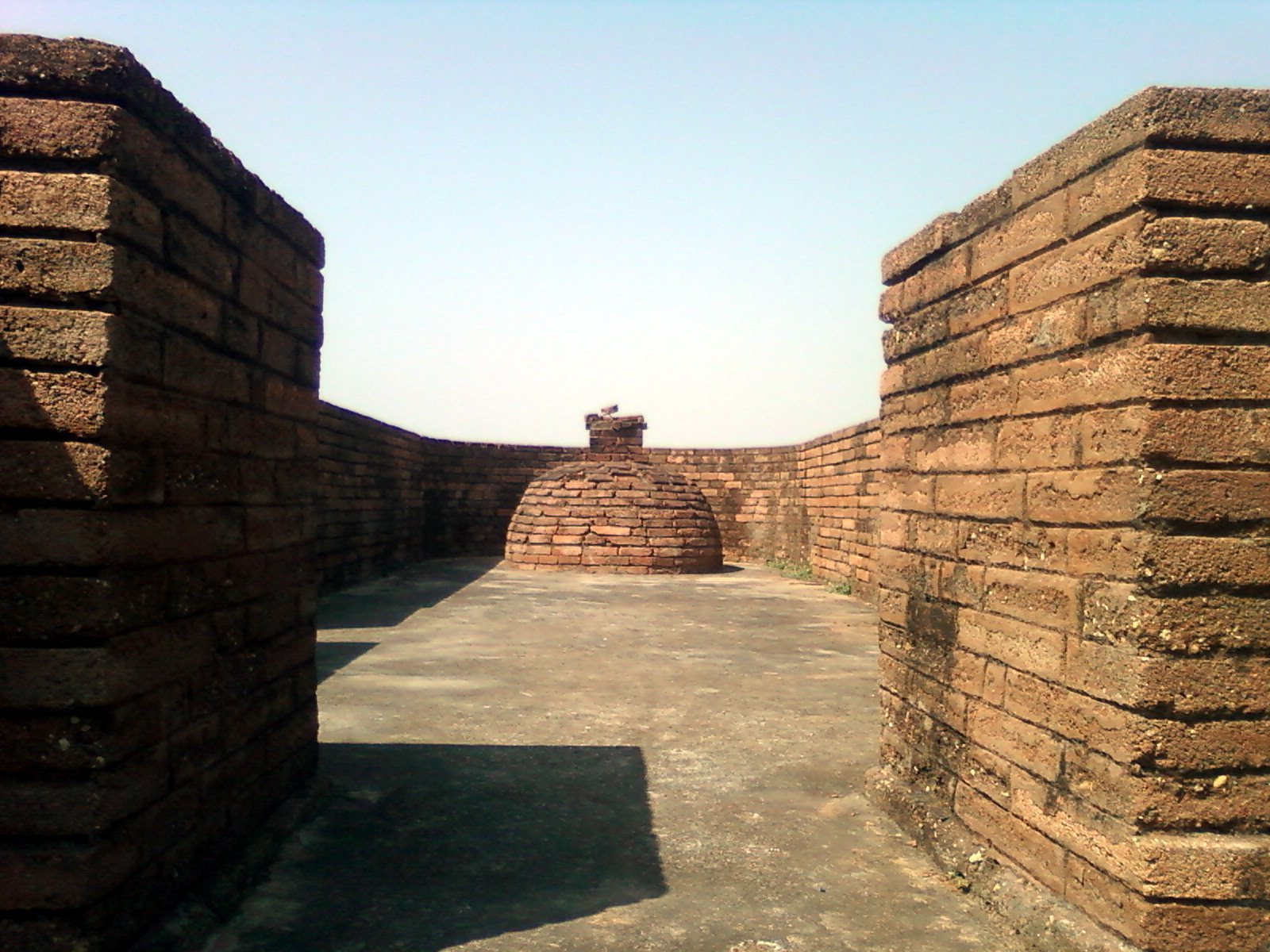
The complex also contains an ayaka stupa and a stone stupa. An ayaka stupa is associated with ayaka platforms or pillars in Buddhist architectural tradition. Together with the apsidal monument, these structures represent the range of stupa forms identified at the site.
Chaitya Hall
The ruins include a chaitya hall containing the remains of a stupa. Its association with a worship hall places this monument within the ritual areas of the complex.
Monastic Residence and Excavated Materials
Buddhist Vihara
A Buddhist vihara, or monastic residence, forms part of the surviving complex. The monastery is associated with the wider residential and religious functions of Bavikonda.
Archaeological Finds
Excavations recovered an urn with a bone fragment, along with inscriptions, pottery, relic caskets, tiles, bricks, and coins. These materials were found in association with the excavated complex and provide evidence for its religious activity, construction, and material use.