Thotlakonda: A Buddhist Monastic and Academic Complex in India
Site at a Glance
- Rating
- 4.3
- Popularity
- Medium
- Country
- India
- Primary era
- Classical
- Eras represented
- Classical
- Civilizations
- Unclassified
- Site type
- Religious
- Remains
- Monastery
On this page13 sections
History
Thotlakonda is a Buddhist complex on a hill at Kapuluppada in Andhra Pradesh, India, whose main period of activity ran from the 2nd century BCE to the 2nd century CE. It developed within the historical sphere of Kalinga, an ancient eastern Indian region whose maritime connections helped carry Buddhism beyond the subcontinent.
Foundation and Buddhist activity
The hill may earlier have been called Senagiri, an identification supported by linguistic evidence. The Pali word sena has been explained as meaning “elder” or “superior.” During its active period, Thotlakonda functioned as both a religious institution and an academic center. It belonged to the early Buddhist traditions known as Nikaya Buddhism, which were organized around monastic lineages and textual communities.
The community maintained arrangements for storing food, clothing, and medicines and may have housed more than 100 monks at its height. Its support appears to have come from merchants and local Buddhists rather than royal patronage. The complex developed alongside the nearby Buddhist sites of Bavikonda and Pavurallakonda.
Maritime connections and decline
Thotlakonda’s coastal position is thought to have made it a transit point for pilgrims. Ships could anchor in sheltered coastal waters before continuing north toward other important Buddhist sites. The complex therefore belonged to a period when Buddhist missions and maritime trade connected eastern India with Sri Lanka and parts of Southeast Asia. Roman trade was also active during the centuries in which Thotlakonda flourished.
The community practiced aniconic Buddhism, a form that represented the Buddha through symbols rather than a human image. These symbols included padukas, or symbolic footprints, the ashtamangala, a group of eight auspicious Buddhist symbols, and other non-human representations. Activity at the complex had declined by the end of the 3rd century CE.
Rediscovery and protection
Thotlakonda came to light during an aerial survey carried out by the Indian Navy while plans for a naval base were being considered. Major excavations by the Andhra Pradesh State Archaeology Department between 1988 and 1993 established that a Buddhist complex had flourished at the site approximately 2,000 years earlier. The monument is protected as a Buddhist heritage site. Monsoon damage partly affected the stupa in 2019, and restoration was completed by 2021.
Remains
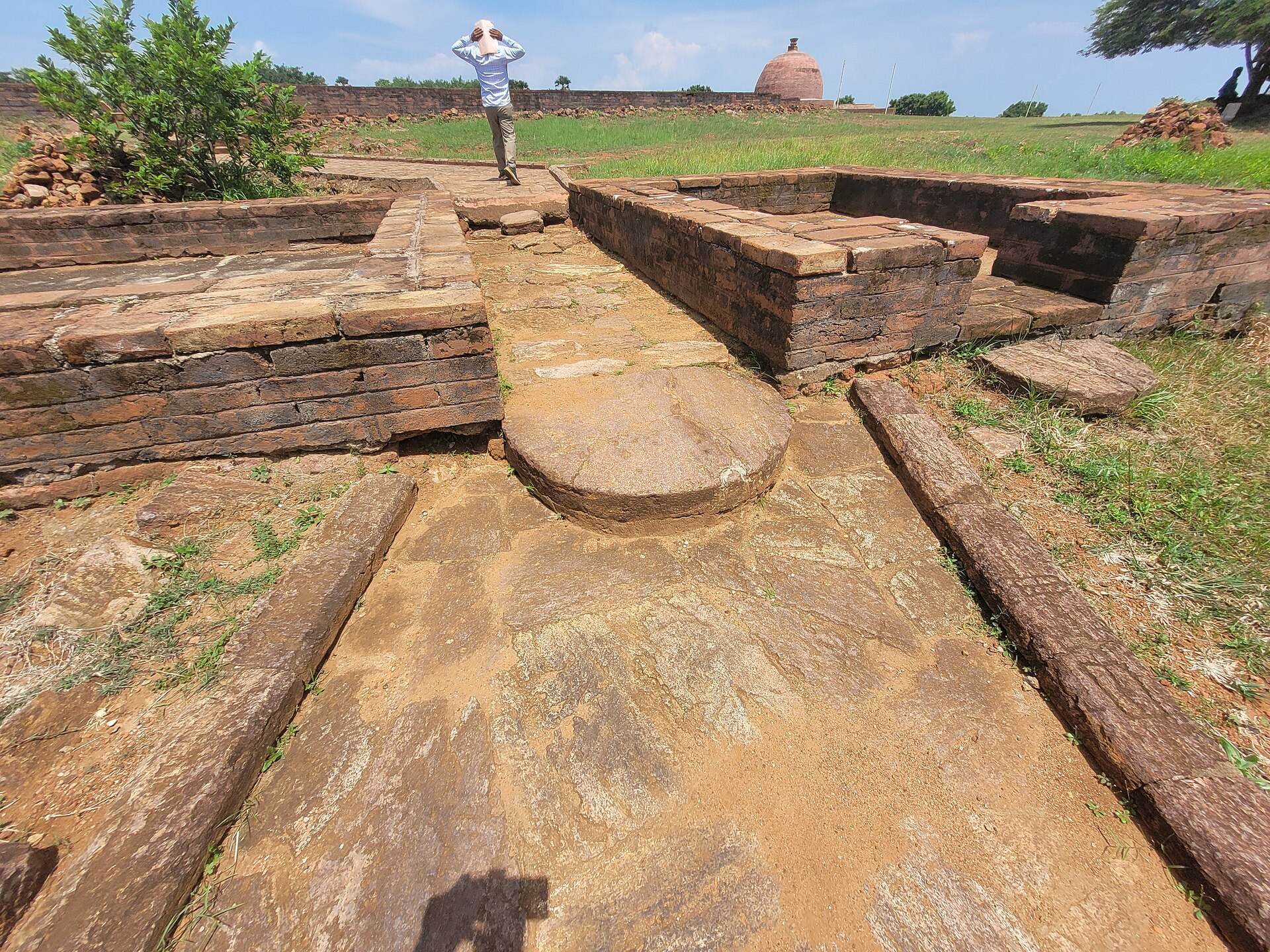
The complex occupies a hill about 128 metres above sea level near Bheemunipatnam, facing the sea. Its Telugu name can be translated as “hill of cisterns,” referring to the numerous water reservoirs cut into the rock. The excavated settlement contains monastic buildings, stupas, a dining hall, a stone gateway, and water installations distributed across the hill.
Water installations and monastic grounds
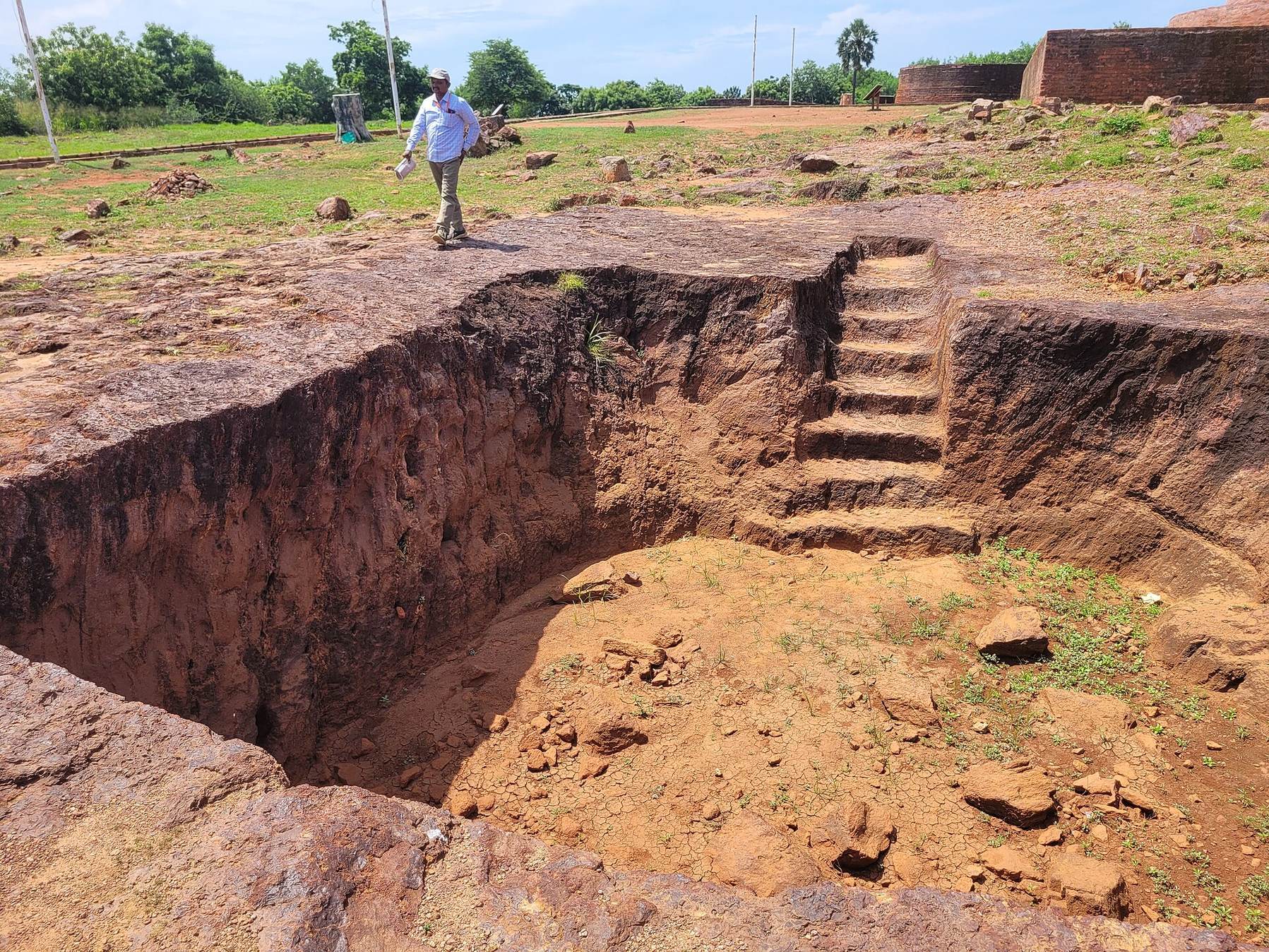
Rainwater was collected in many cisterns hewn directly into the bedrock. A tank south of the complex also supplied water to its inhabitants, while the rock-cut reservoirs served the monks. These installations formed part of the practical infrastructure of the religious community and remain among the features that explain the site’s name.
Religious and communal buildings
Monastery and dining hall
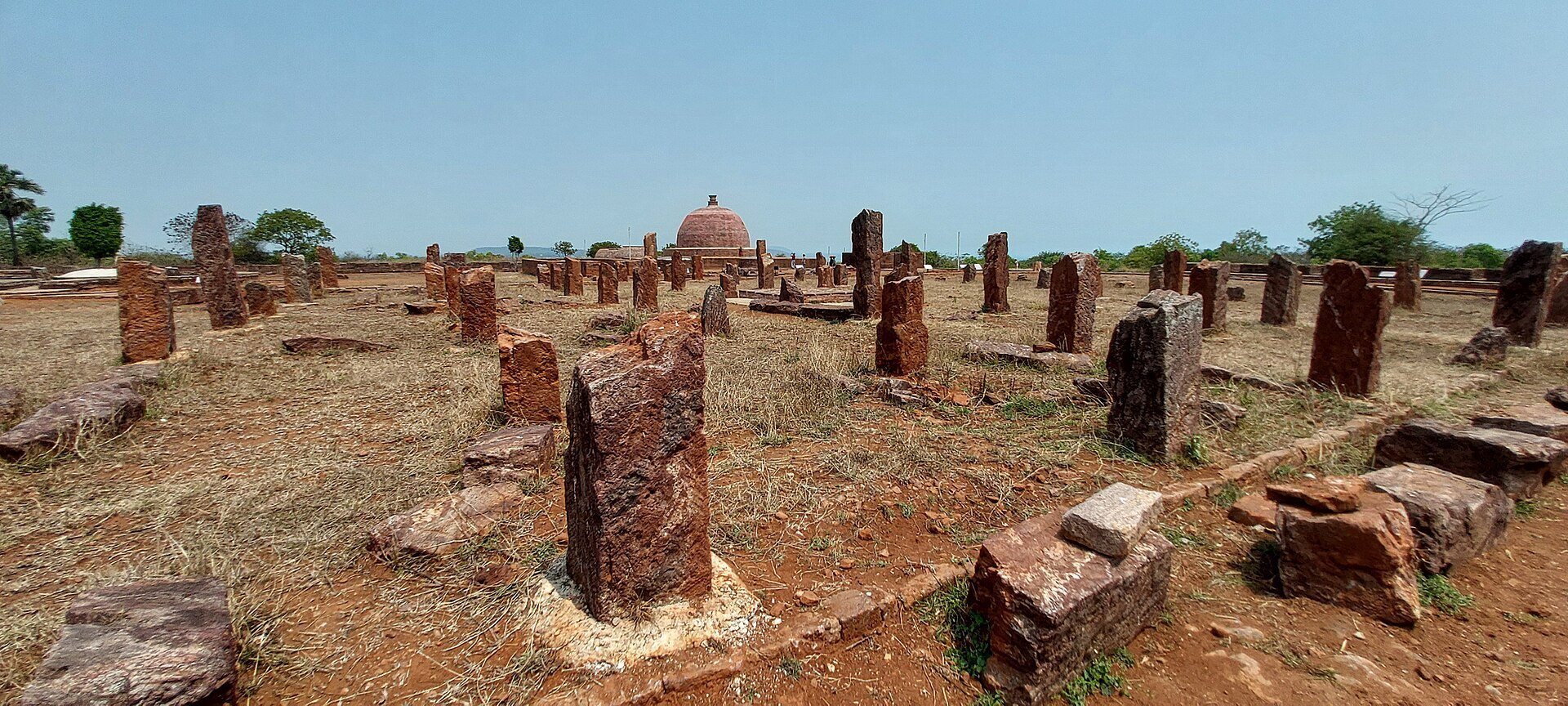
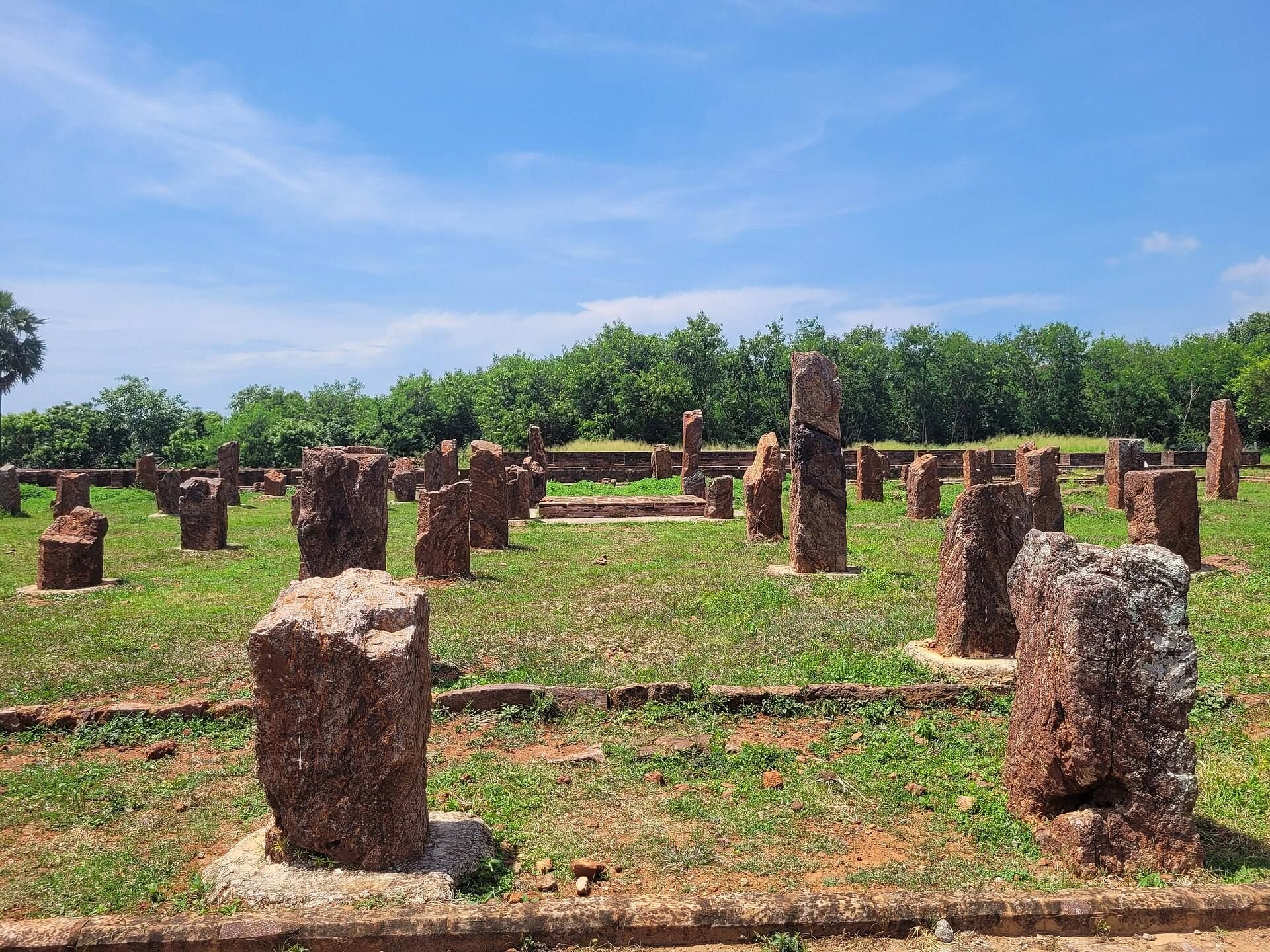
The excavated monastery, or vihara, was a Buddhist residential complex associated with the community’s religious and academic life. A dining hall formed part of the settlement, alongside arrangements for the storage of food, clothing, and medicines. A stone gateway marked one of the complex’s built entrances.
Principal stupa
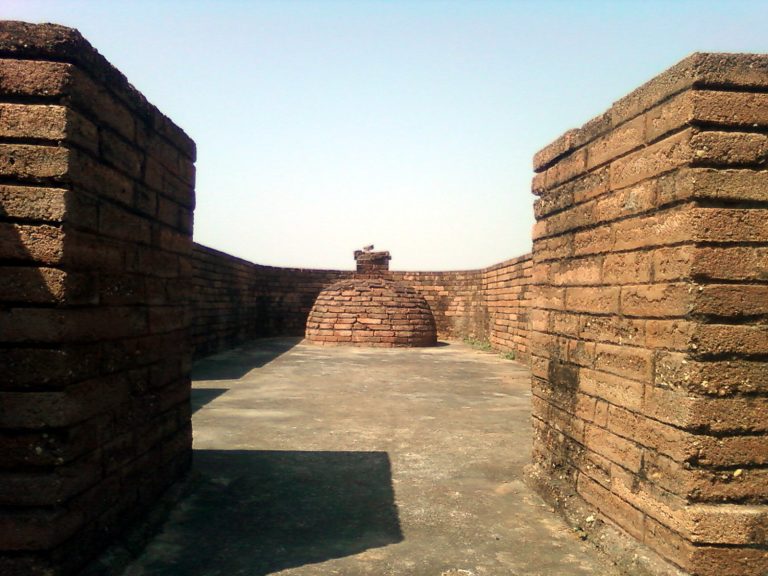
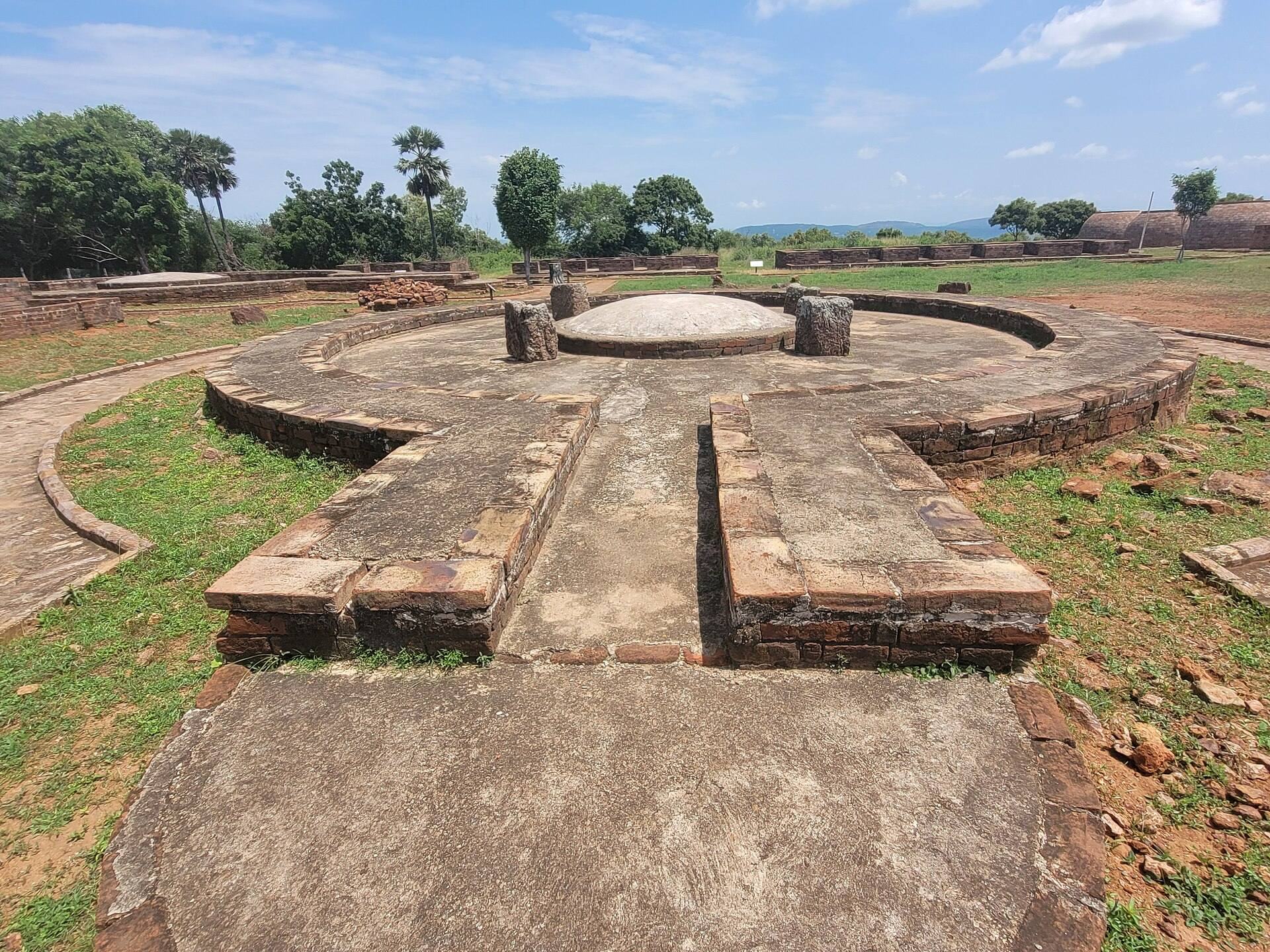
The ruins of a large stupa survive within the complex. A stupa is a Buddhist commemorative or reliquary monument. The structure was partly damaged by monsoon conditions in 2019 and restored by 2021.
Votive stupas
Groups of smaller votive or dedicatory stupas were also excavated. These were religious offerings rather than necessarily the principal monument of the complex. One stupa is described as having an elephant-back-shaped form.
Objects and inscriptions
Coins and architectural finds
Excavations produced lead coins of the Satavahana dynasty, a major Deccan ruling house of the period, together with Roman silver coins. The finds indicate foreign trade associated with the site. Other recovered materials include terracotta tiles, stucco decorative pieces, sculptured panels, and miniature stone models of stupas.
Symbols and inscriptions
Buddha footprints were found at Thotlakonda, reflecting the complex’s use of aniconic Buddhist symbolism. Twelve inscriptions in Brahmi, an ancient Indian writing system, were also recovered. The stupas had light lime-plastered surfaces and rows of wick lamps, features that may have allowed them to serve as navigational landmarks for maritime travelers.