Basilica of Gößweinstein: A Baroque Pilgrimage Church in Germany
Site at a Glance
- Popularity
- High
- Country
- Germany
- Primary era
- Early Modern
- Eras represented
- Medieval, Early Modern
- Civilizations
- Holy Roman Empire
- Site type
- Religious
- Remains
- Basilica
On this page13 sections
History
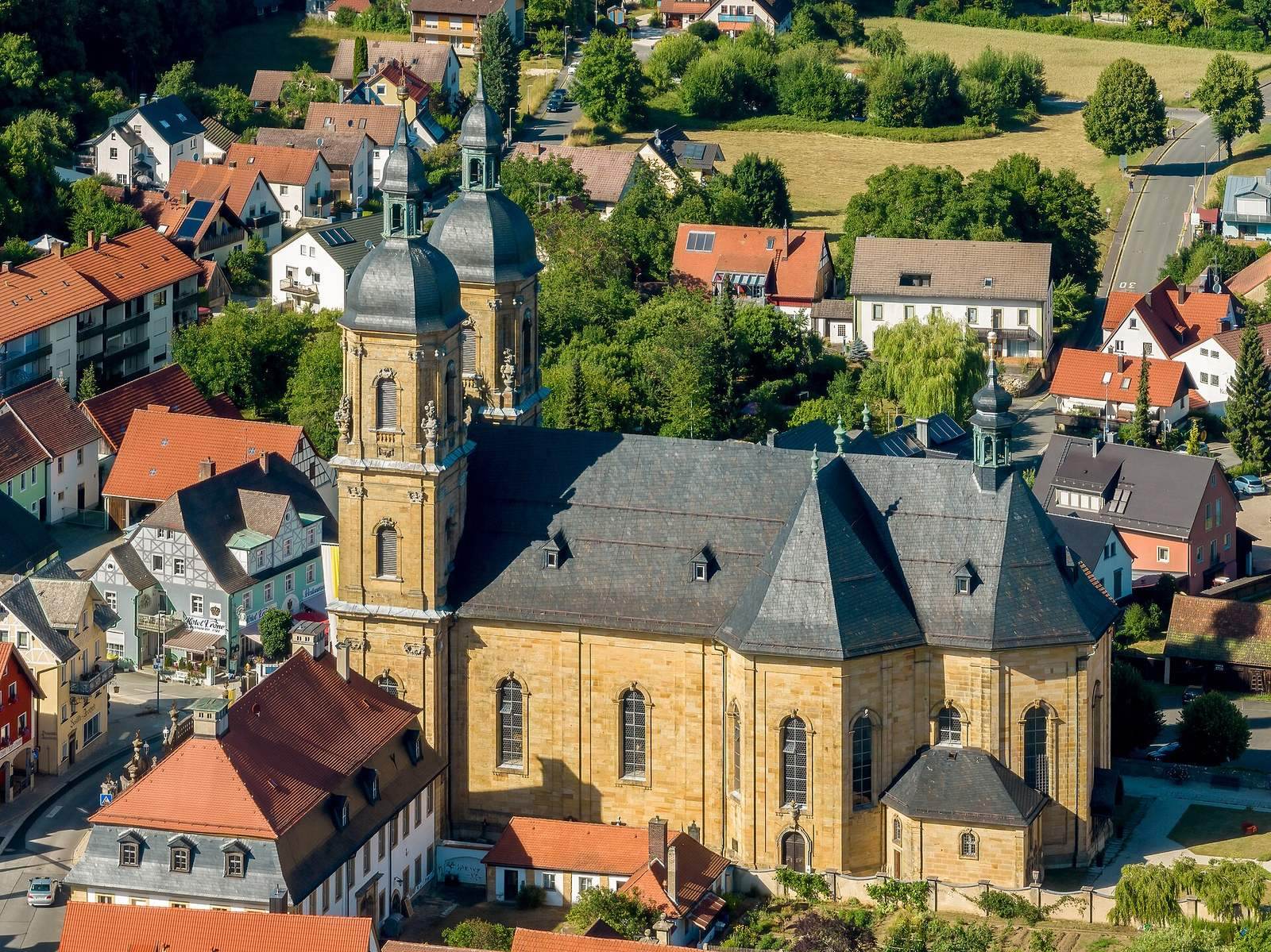
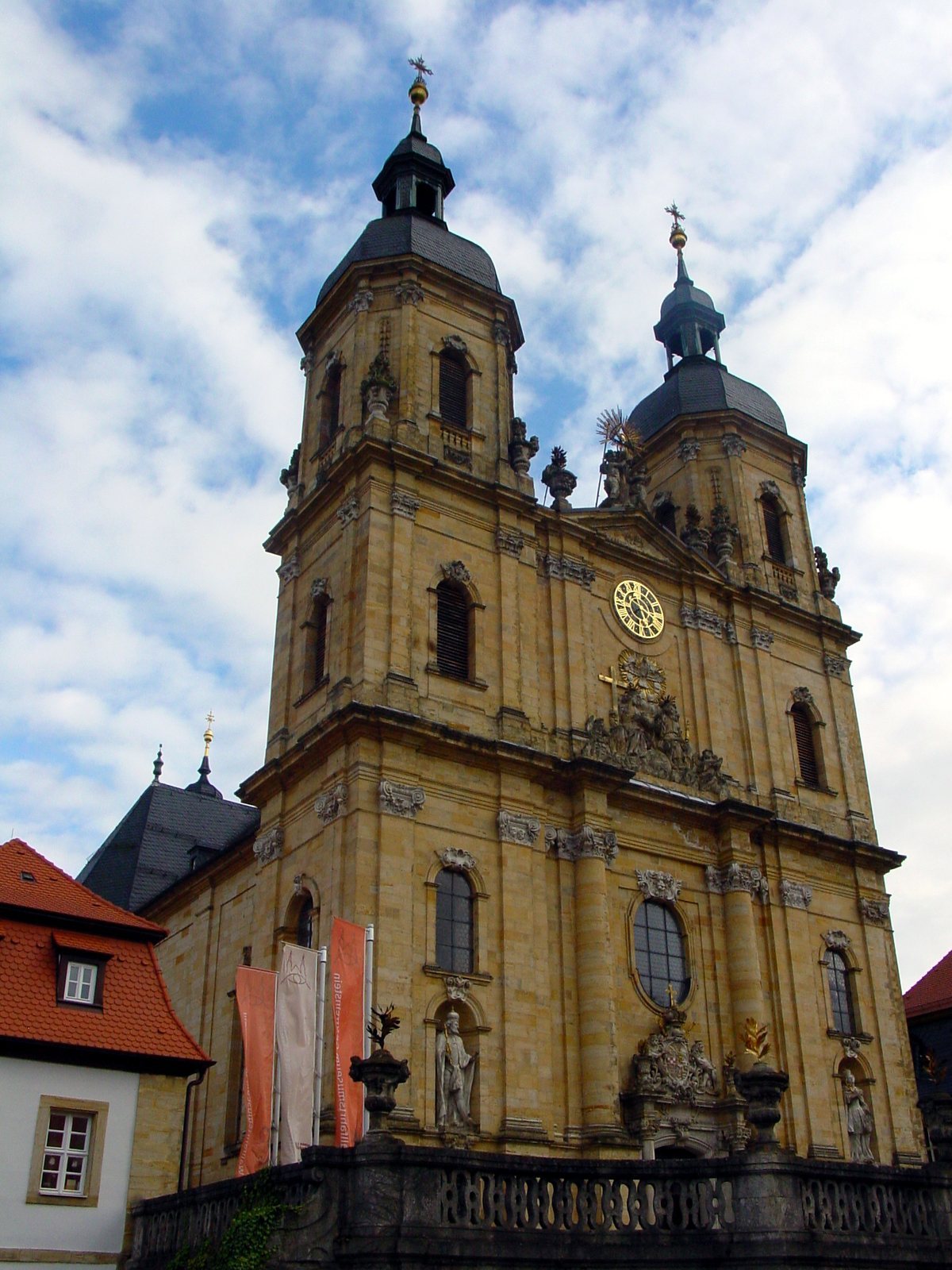
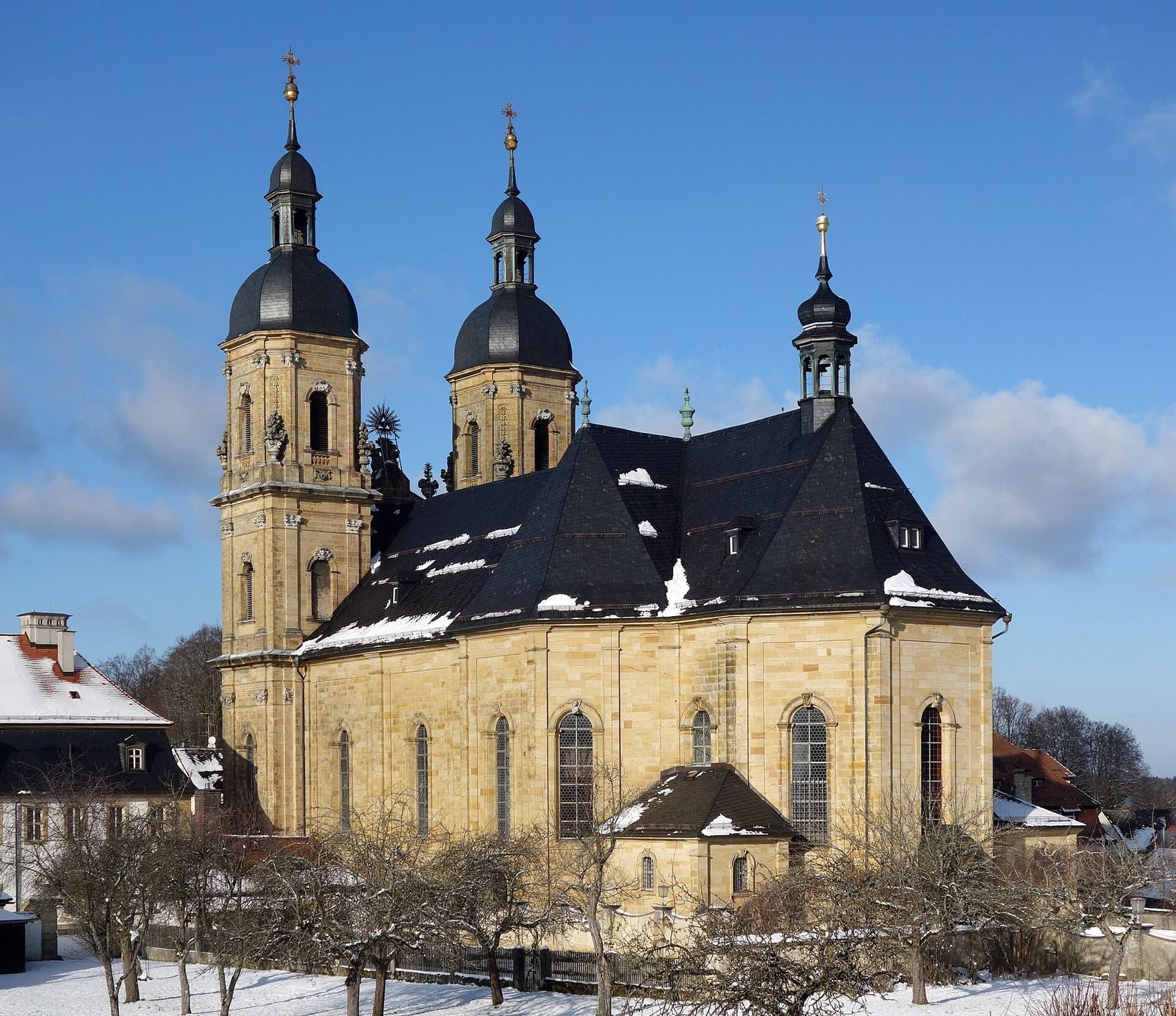
The Basilica of Gößweinstein is a Baroque pilgrimage church in Germany, designed by Balthasar Neumann and begun in 1730. Baroque was an ornate European style prominent in the seventeenth and eighteenth centuries. The church became a major center of devotion to the Holy Trinity, the Christian doctrine that one God exists as Father, Son, and Holy Spirit.
The medieval church and early pilgrimage
Tradition places a chapel at Gößweinstein in 1071. In 1240, Konrad I von Schlüsselberg and his wife, Kunigunde, rebuilt it as a larger church dedicated to the Holy Trinity. The earliest recorded mention of a church there appears in Gottfried von Schlüsselberg’s will of 1308. The Schlüsselberg family is regarded as the founder of the first church; it also established a Cistercian convent at Schlüsselau, a community of nuns belonging to that Catholic monastic order.
Gößweinstein became independent in 1461. Before then, it belonged to the archdeaconry of Hollfeld, an ecclesiastical district supervised by an archdeacon. Noble families, including the von Groß zu Trockau, supported the church. Its first indulgences, remissions in Catholic teaching of temporal punishment for sins already forgiven, were granted in 1511, though Trinity Sunday was not among the designated days.
The beginnings of pilgrimage to Gößweinstein are uncertain. Records were lost during the Thirty Years’ War, a major European conflict fought from 1618 to 1648, and no dated event is known to have started the practice. In 1684, Pastor Ludovici cited records he described as four centuries old. Helldorfer argued that the date had been misread and that the endowment in question was made in 1505, not 1305. The earliest surviving evidence of offerings and organized pilgrimage groups dates to the late sixteenth century.
Pilgrimage growth and pressure on the church
As pilgrim numbers rose, the medieval church was lengthened by about three metres in 1593 and 1594, but crowding continued. Pilgrims reportedly toppled the baptismal font around 1624. In 1630, a chapel dedicated to Mary and a separate open-sided wooden chapel were built to provide more space. Confessionals and a pulpit also had to be set up outdoors. In 1719, priests distributing Communion near the altars had to withdraw from the crush.
The number of pilgrimage groups grew from 27 in 1662 to 42 in 1765. Beginning in the 1740s, the Franconian Procession brought together communities from Lower Franconia and attracted as many as 4,000 pilgrims. Gößweinstein’s main catchment included the dioceses of Bamberg and Würzburg, the Upper Main region, and the Upper Palatinate. Pilgrims also travelled from Bohemia, Vienna, and Prussia.
Trinity Sunday, the Sunday after Pentecost, and the church’s dedication festival in late September were the principal pilgrimage days. From 1699, each drew several thousand people receiving Communion; on Trinity Sunday, communicants could amount to 30 percent of the annual total. Donations of money and animals increased around the turn of the eighteenth century and were most numerous in the 1740s, probably in response to the 1746 fire and the need for repairs. Memorial endowments also increased from the late seventeenth century.
Two religious associations, or confraternities, formed at Gößweinstein. Pastor Johann Georg Ringer founded the Corpus Christi Confraternity in 1653. Corpus Christi is a Catholic feast celebrating the Eucharist; this small association consisted mostly of parishioners. Pastor Adam Peter Vogl established the Trinity Confraternity in 1744 as a pilgrimage association. It attracted nearly 39,000 members within 25 years from across the pilgrimage region. Members could obtain indulgences on designated feast days by praying, confessing, and receiving Communion at Gößweinstein.
Construction of the Baroque basilica
Parish priests repeatedly sought permission to build a new church, and the bishop of Bamberg gave encouraging signals in 1683. That year, Margaretha Gerstackerin of Allersdorf contributed 20 florins toward construction. Pastor Dippold continued to press for a grand church dedicated to the Trinity, appealing to Lothar Franz von Schönborn, a prince-bishop who held both religious office and territorial power in Bamberg. A 1715 design by court architect Leonhard Dientzenhofer, with a central dome, three towers, and nine chapels, was rejected as too costly.
After Lothar Franz died in 1729 and his nephew Friedrich Carl von Schönborn became prince-bishop, the commission went to Neumann. Construction began when the foundation stone was laid on 3 June 1730. Neumann initially directed the work; Johann Jakob Michael Küchel, who joined Neumann’s staff at the Bamberg building office in 1735, later took over. The church was consecrated in 1739 in the prince-bishop’s presence, although its main altar and pulpit were unfinished and work on the other altars had not begun. Furnishing continued beyond 1769, the final year covered by the surviving parish building records.
A major fire in 1746 badly damaged the church, the rectory, the sacristan’s house, the school, and about 60 private homes. Repair work delayed the completion of the church furnishings. The parish, despite having previously been wealthy, struggled to meet the costs of rebuilding.
Changing fortunes and modern status
Pilgrimage reached its height in the eighteenth century. Its growth was later checked by the Enlightenment, an intellectual movement that emphasized reason and criticism of inherited authority, and especially by the transfer of the Prince-Bishopric of Bamberg to the Kingdom of Bavaria. In 1948, Pope Pius XII granted the church the title of minor basilica, an honorific papal designation that does not make a church a cathedral. The Baroque interior underwent renovation from 1999 to 2005. Today, about 140 pilgrimage groups come to Gößweinstein annually; it is Germany’s largest Trinity pilgrimage site and the second-largest pilgrimage site in the Archdiocese of Bamberg.
Remains
The basilica’s Baroque interior is focused on the high altar, with eight side altars among its principal devotional furnishings. The organ and bells are also major surviving features of the church.
Altars and the venerated image
High altar
The high altar, completed between 1740 and 1743 under Küchel’s supervision, is the church’s main devotional focus. Its image depicts the Coronation of Mary. Figures and ornament rise in three tiers, forming three interlocking triangles that refer to the Trinity.
Side altars
The church has eight side altars dedicated to Mary, the Cross, Joseph, Anne, Kunigunde, John of Nepomuk, the Virgins, and Sebastian. The front side altars were completed between 1740 and 1743 under Küchel’s supervision.
Carved Coronation group
The venerated limewood group probably dates to around 1510 and represents Mary’s coronation by the Trinity. Mary, God the Father, and the Son form a seamlessly joined group; a renovation in 1960 revealed how the figures were constructed. The dove representing the Holy Spirit was added around 1600. The sculpture came from the pilgrimage church at Hüll, near Betzenstein, and now stands on Gößweinstein’s high altar. A legend says it was hidden from those who opposed religious images during the Reformation and carried by a circuitous route from Hüll, about 15 kilometres away. Later, when an attempt was made to take it to Bamberg, a cart could not be moved even with four oxen. This was interpreted as a sign that the image should remain at Gößweinstein, expressing the belief that the pilgrimage place had been chosen by God and reflecting Catholic-Protestant tensions.
Organ
The organ’s Baroque case dates to 1754. In 1988, the Swiss firm Mathis of Näfels installed a new instrument in it, with 43 stops, which control sets of pipes, and 3,248 pipes. These are arranged across three hand keyboards and a foot keyboard. The main section occupies the front of the left case, with a section of Romantic-era pipes behind it; the foot-keyboard section is in the right case, and the Baroque upper section lies between two large pipe towers. The playing and stop mechanisms operate mechanically. The earlier organ, built by Albert Moser in 1938 with 42 stops, was rescued and remains playable at the organ museum in Valley Castle.
Bells
The basilica’s seven bells are divided between its towers. The two largest hang in the north tower, and the other five are in the south tower.
Wax offerings
Gößweinstein has a collection of more than 100 life-size wax figures depicting swaddled infants, children, and adults. These offerings, made in fulfillment of vows or as expressions of thanks, represent a Franconian devotional custom that flourished from the second half of the nineteenth century until it died out in the mid-twentieth century.