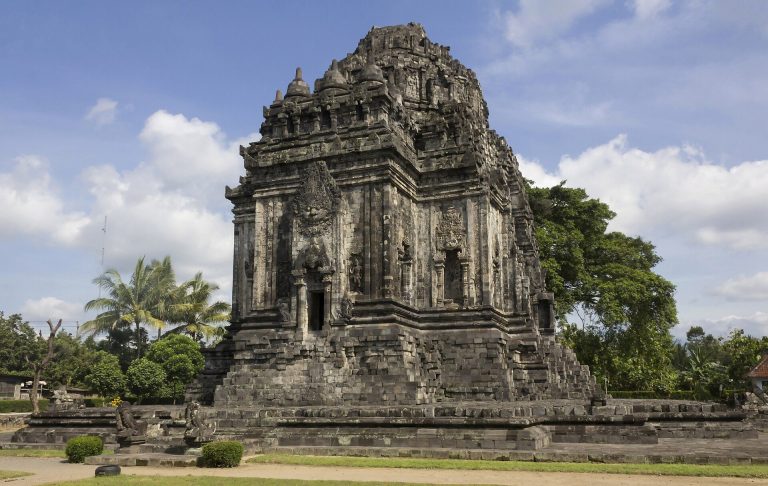
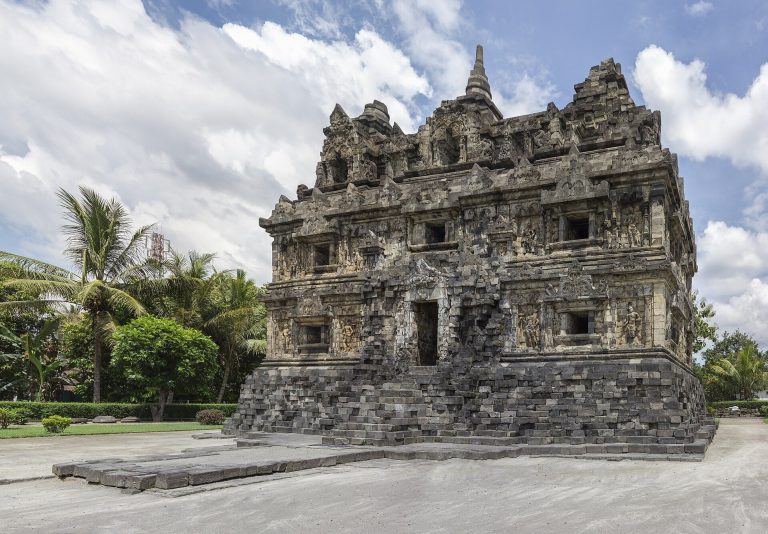
Barong Temple: A Hindu Sanctuary of the Medang Period
Site at a Glance
- Rating
- 4.6
- Popularity
- High
- Country
- Indonesia
- Primary era
- Medieval
- Eras represented
- Medieval
- Civilizations
- Sailendra
- Site type
- Religious
- Remains
- Temple
On this page8 sections
History
Barong Temple is a Hindu sanctuary in Indonesia, associated with the Medang kingdom’s Mataram period and dated to around the ninth or tenth century. Its patronage has been attributed either to the Sailendra ruling house or to the Mataram kingdom.
Inscriptions and religious character
The Ratu Baka inscription gives the temple the alternative name Candi Sari Suragedug. It recounts that Sri Kumbaja, also known as Mpu Kumbhayoni, established three lingas, sacred emblems of Shiva, named Krttiwasalingga, Triyarbakalingga, and Haralingga. They were associated with Dewi Sri, a Javanese goddess of rice and fertility, and the goddesses Dewi Suralaksmi and Dewi Mahalaksmi. The three lingas may represent Barong Temple.
The Pereng inscription, dated 863, records that Rakai Walaing Mpu Kumbhayoni granted rice fields and two hills at Tamwahurang in 860 to maintain a Shiva shrine called Bhadraloka. Rakai was a title used by high-ranking officials or rulers in early Javanese states. The shrine is thought to have been Barong Temple.
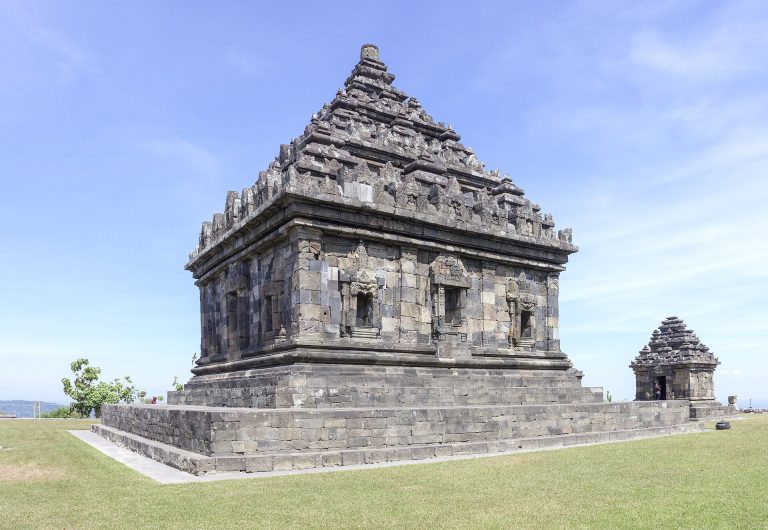
Worship associated with Vishnu and Dewi Sri distinguishes Barong from the predominantly Shiva-focused temples of Central Java. Its main worship focus lay at the eastern end rather than the center, as was usual in Medang-period temple arrangements; Candi Ijo provides a comparison. The stepped plan has been interpreted as an indigenous Indonesian architectural expression, while Dewi Sri’s place in the temple has been understood as a blending of religious traditions.
Rediscovery and restoration
The temple was rediscovered in ruins in the early twentieth century, during a Dutchman’s expansion of a sugarcane plantation for a sugar factory.
Restoration began in 1987, with the two principal shrines reassembled. The work was completed in 1992, followed by work on the retaining structures and fence.
Remains
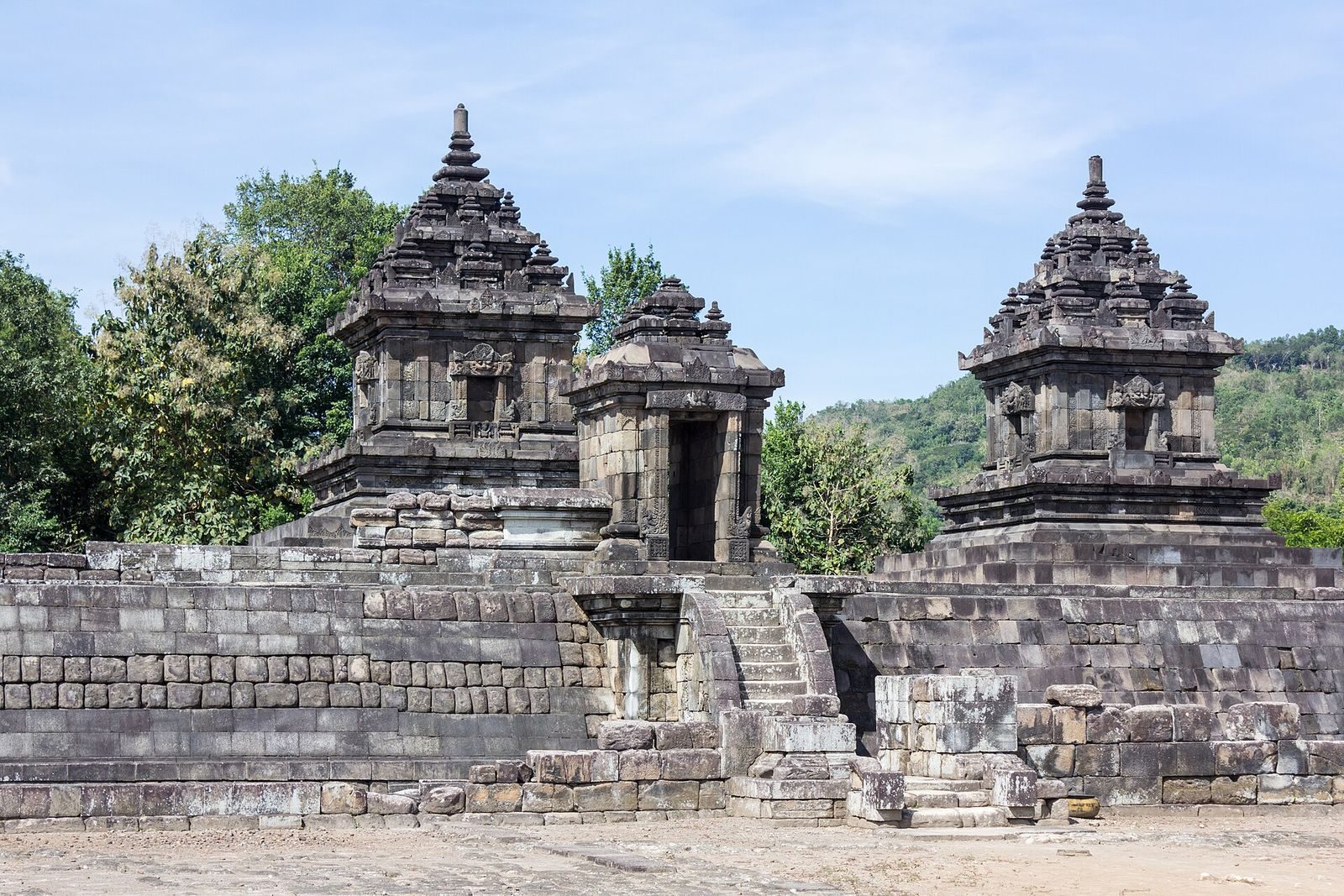
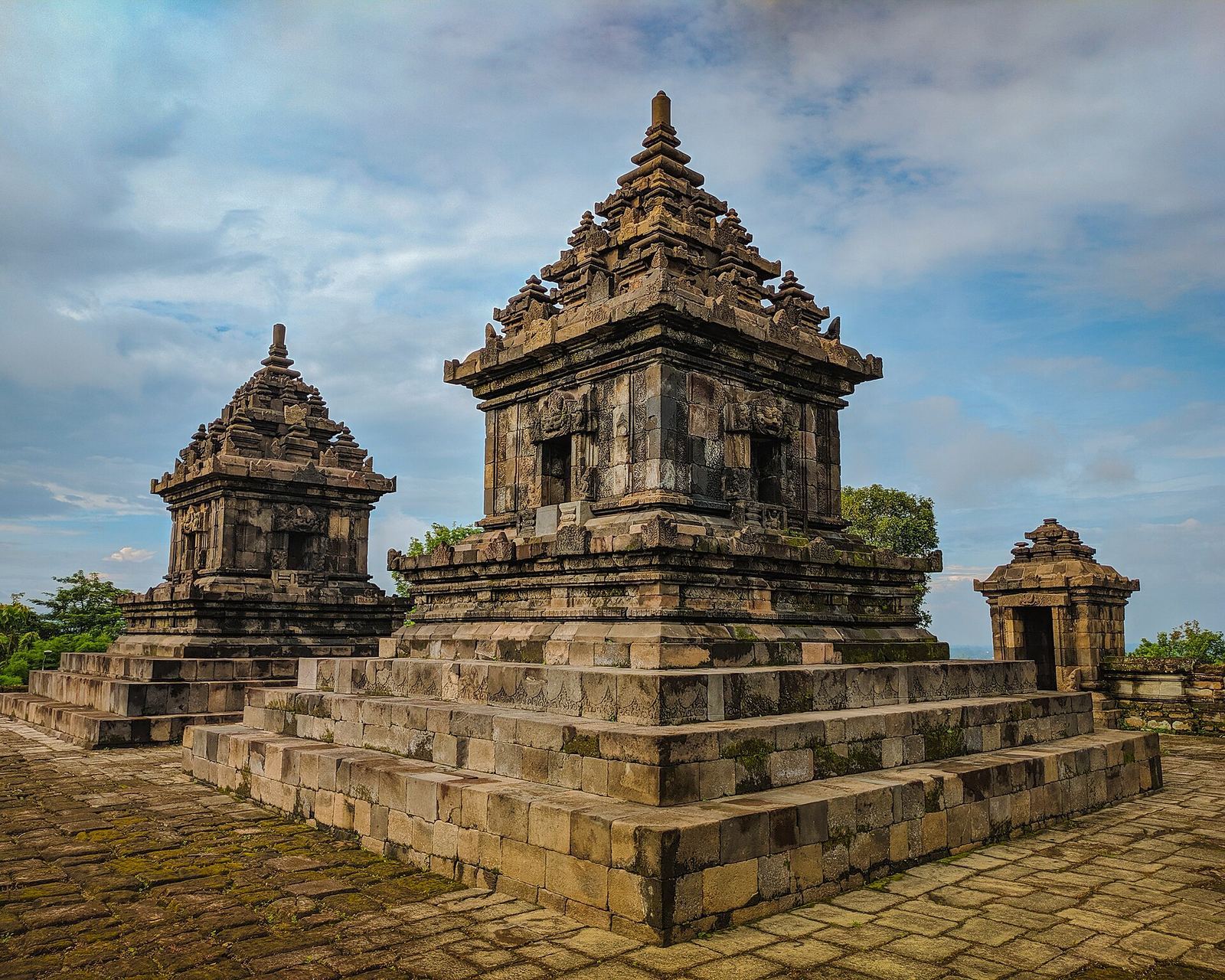
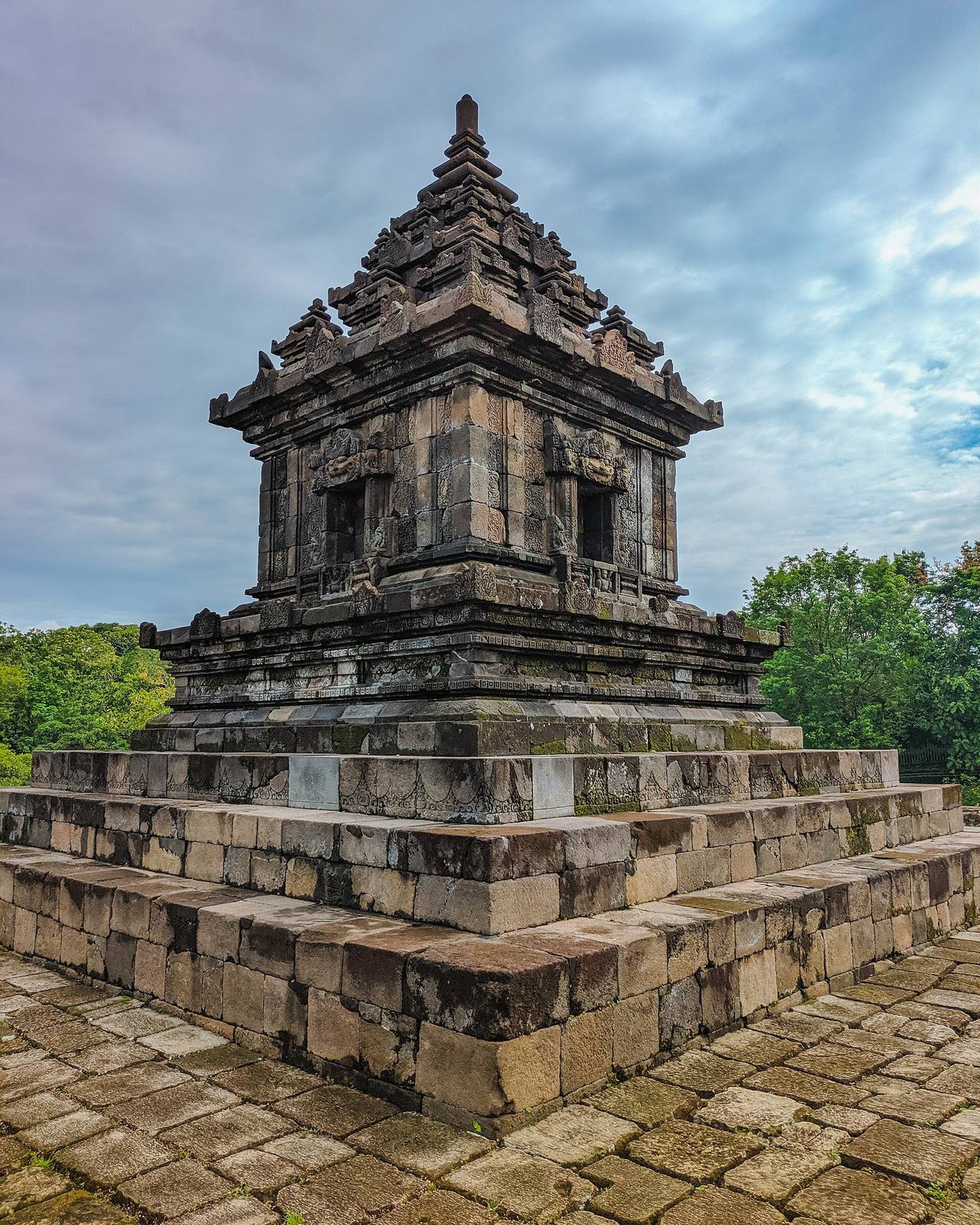
The west-facing temple is arranged across three rising terraces. Its masonry is made from interlocking blocks of andesite, and the two principal shrines stand on the uppermost terrace.
Hilltop setting
Barong Temple stands on Batur Agung hill, about 199 m above sea level and approximately 800 m east-southeast of the Ratu Boko complex. Candi Banyunibo lies below the hill to the southwest, while Candi Ijo is about 2 km to the southeast. Other nearby sites include a Ganesha statue site and Candi Miri, Candi Dawangsari, and Candi Sumberwatu.
Terraces and entrance
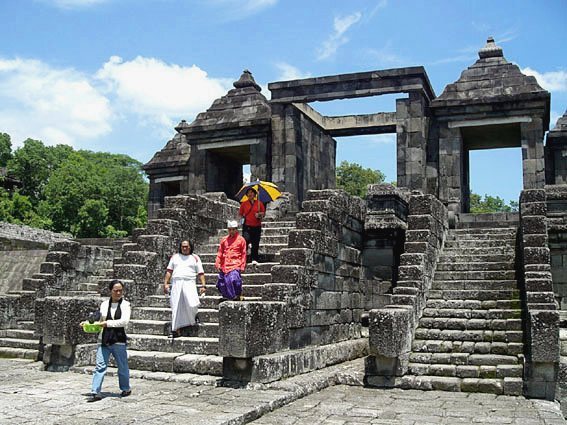
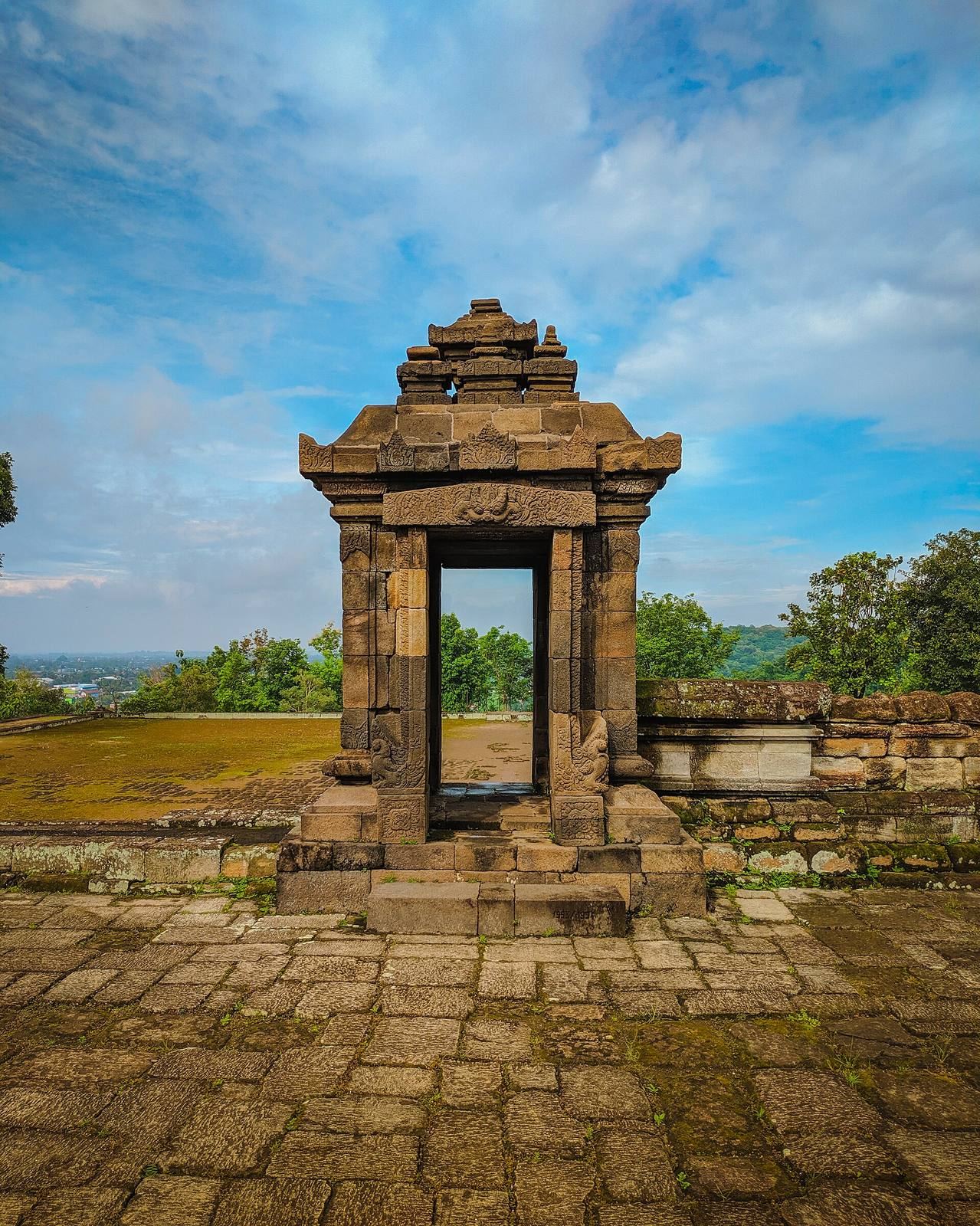
The westernmost terrace follows the slope of the hill. The second terrace is an open area measuring about 90 by 63 m, and the upper terrace measures about 50 by 50 m. Floor remains and stone post bases survive on the first and second terraces. The entrance is on the west, where a central staircase, about 3 m wide, climbs roughly 4 m from the first terrace to the second. A small roofed gateway stands beside the stairs leading to the upper terrace.
Principal shrines and decoration
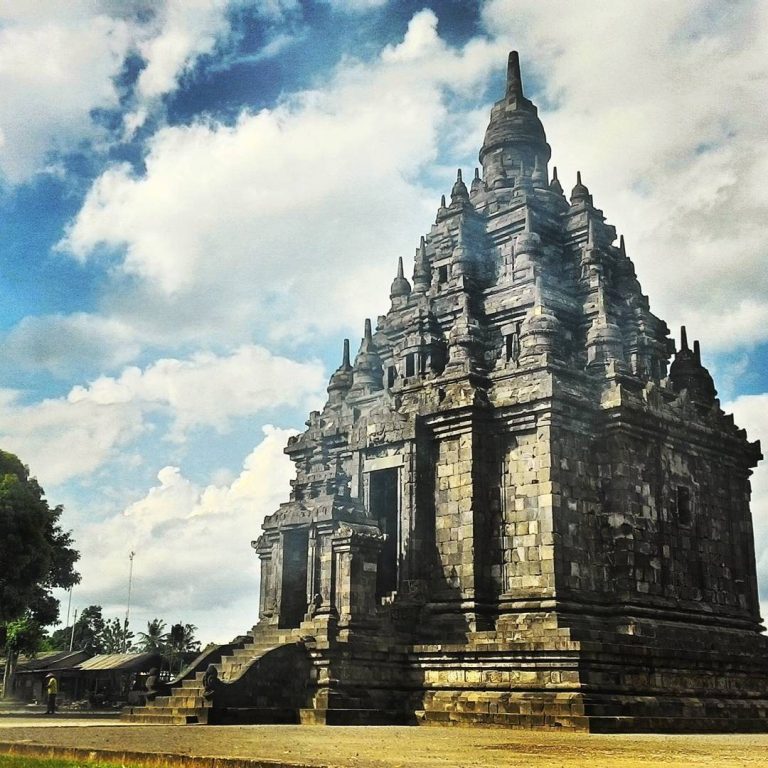
The two upper shrines each measure about 8.18 by 8.18 m and stand 9.05 m high. They are identified respectively as the Vishnu Temple and the Sri Lakshmi Temple. Carved kala faces, mythological decorative motifs, sit above the niches, which also carry kala and makara ornament. The kala carvings resemble a barong, a creature in Javanese mythology from which the temple takes its name.
Objects recovered during restoration
Finds from the restoration included statues of Vishnu and Sri, a statue of Ganesha, and small square temple-deposit boxes made of andesite and white stone. One box held inscribed sheets of silver and gold whose writing is now illegible. Other finds included ceramic bowls, arrowheads, jars, and spoons.