Bala Hissar: The Fortified Citadel of Kabul
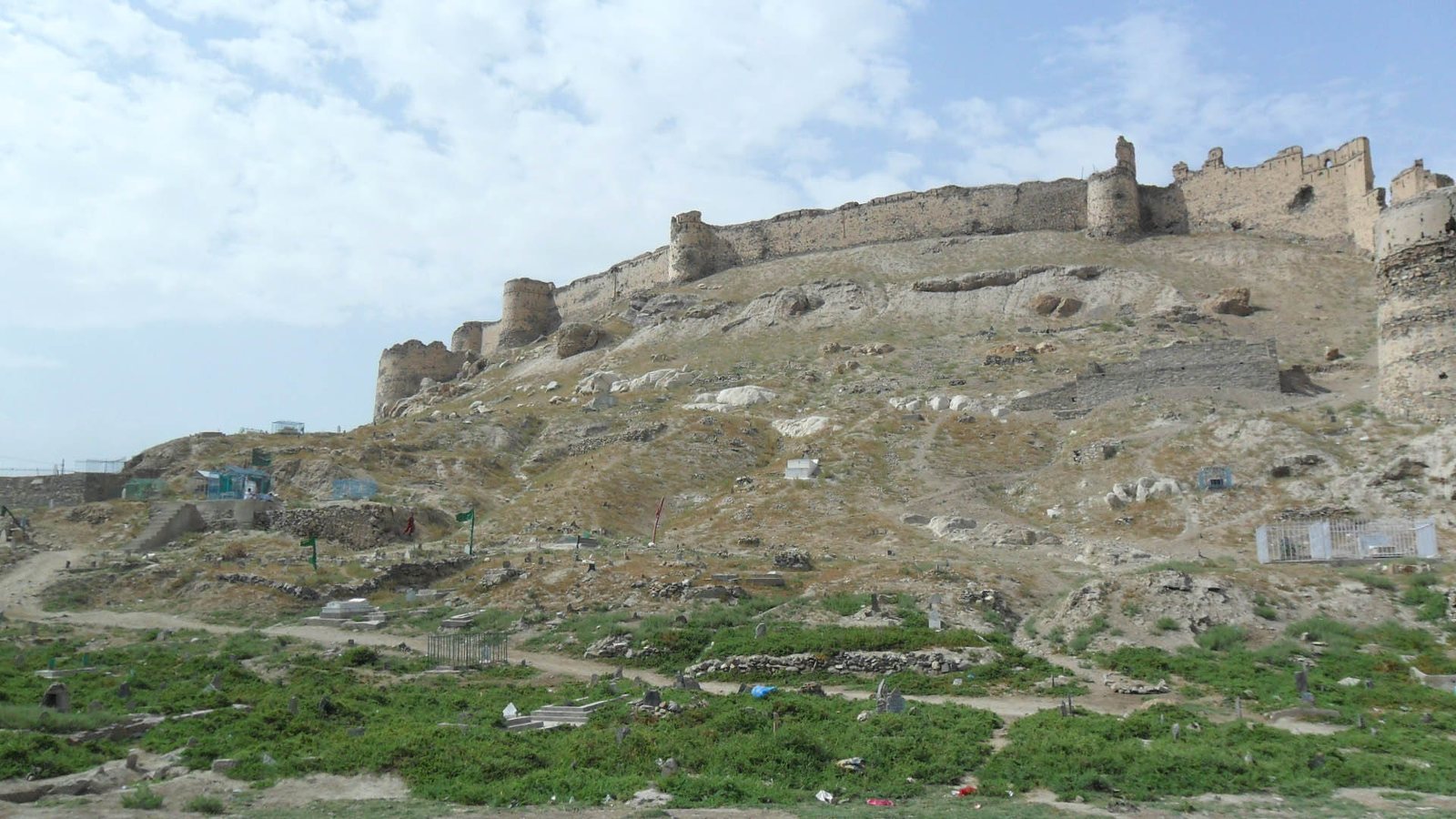
Site at a Glance
- Rating
- 4.4
- Popularity
- Very Low
- Country
- Afghanistan
- Primary era
- Early Modern
- Eras represented
- Classical, Medieval, Early Modern
- Civilizations
- Durrani, Mughal
- Site type
- Military
- Remains
- Citadel
On this page12 sections
History
Bala Hissar is an ancient fortified citadel in Kabul, Afghanistan, whose earliest fortified activity dates to at least the second century BC and whose surviving citadel developed by the fifth or sixth century. Built and repeatedly altered by successive rulers, it occupied a strategic position between Central Asia, India, and Persia and became a major centre of political, military, and royal power.
Early fortification and medieval Kabul
The origins of Bala Hissar remain uncertain, although archaeological evidence places fortified activity on the western end of the rocky summit now called Sheer-i Darwaze by the second century BC at the latest. Pottery from before the Kushan period, together with Indo-Greek and Achaemenid coins found near the site, indicates settlement in the surrounding area during antiquity. The citadel itself dates archaeologically to the fifth century or, at the latest, the sixth century, when the Hephthalites, a powerful Central Asian people also known as the White Huns, ruled parts of Afghanistan and neighbouring regions.
Between the ninth and eleventh centuries, the Hindu Shahis, a dynasty that controlled Kabul and parts of the northwestern Indian subcontinent, expanded the citadel. Arab, Samanid, Turkic Shahi, and Hindu Shahi authorities all used the fortress, although the early history of these changes is sparsely documented. Kabul’s position on routes linking Central Asia, India, and Persia gave the stronghold both strategic and commercial importance. By the late tenth century the city was under Ghaznavid rule, followed by Ghurid rule in 1148 and Khwarazmian rule in the early thirteenth century.
In 1221, Genghis Khan pursued the Khwarazmian army toward the Indus and spent the winter near Kabul. After the Mongol Empire declined, Kabul passed to the Timurid Empire. Timur appointed one of his grandsons as governor of the city and passed through the region in 1398 on his way to India.
Babur and the Mughal transformation
Babur besieged and captured Bala Hissar in 1504, after political disorder followed the death of Ulugh Beg, the Timurid ruler of Kabul and a renowned astronomer and mathematician. Babur’s memoirs describe an attack at the Lahore Gate, followed by the surrender of the citadel and city. Kabul became his base for 22 years before he departed for India. Although he became the first Mughal emperor in 1526, Babur generally lived in tents in gardens around Kabul rather than inside the citadel.
Babur maintained a close connection with Kabul after establishing himself in Delhi. In 1529, he sent instructions from Bengal about a fired-brick building under construction inside Bala Hissar, although its completion is unknown. After his death in 1530, his son Humayun arranged for his body to be transferred to Kabul and buried in Babur’s garden, now Bagh-e Babur, west of Bala Hissar near the Kabul River.
During the succession struggles of the 1540s, Humayun twice recovered and lost Kabul before taking it from his half-brother Kamran in 1545. He then made Bala Hissar his centre of power for approximately the following decade. After Akbar consolidated Mughal control over Kabul, the citadel became the principal residence of the subahdar, or provincial governor. Under Mughal rule it developed into a major palace-fortress, with fortifications comparable in scale to those at Agra and Lahore.
Jahangir replaced several earlier buildings with new palaces, audience halls, and a charbagh, a formal four-part garden divided by intersecting channels or paths. Before becoming emperor, his son Shah Jahan built private quarters inside the fortress that won Jahangir’s admiration. As emperor, Shah Jahan lived at Bala Hissar during the Mughal-Safavid war of 1649 to 1653, a conflict between the Mughal and Persian Safavid dynasties over territories including Kabul. Aurangzeb later added the fortress mosque.
Durrani rule and imperial residence
After the Mughals lost Kabul, Bala Hissar passed first to Persian and then to Durrani control while suffering neglect. In 1773, Timur Shah Durrani, successor to Ahmad Shah Durrani and ruler of the Afghan dynasty founded by him, moved the Durrani capital permanently from Kandahar to Kabul. Timur Shah occupied Bala Hissar, made it the dynasty’s principal royal residence, rebuilt one of its palaces, and used the upper fortress as a state prison and arsenal.
His successor, Shah Shuja Durrani, further developed the complex and replaced many Mughal buildings with larger contemporary structures. This period reinforced the citadel’s role as both a royal residence and a military centre.
Anglo-Afghan wars and destruction
Bala Hissar was a principal military stronghold during the First Anglo-Afghan War of 1838 to 1842 and the Second Anglo-Afghan War of 1878 to 1880. In September 1879, Pierre Louis Napoleon Cavagnari, the British envoy and military administrator in Kabul, was killed inside the fortress. His death helped trigger a popular uprising and the second phase of the later war.
During the Second Anglo-Afghan War, the British compound inside Bala Hissar was burned and the arsenal later exploded, causing major damage. Frederick Roberts, the senior British commander, considered demolishing the fortress completely. Instead, he ordered temporary fortifications and reinforcement in spring 1880, shortly before the British withdrawal. He also ordered the destruction of much of the remaining Mughal and Durrani construction, leaving the citadel largely ruined. Bala Hissar was finally abandoned during the 1890s, when it ceased to serve residential, defensive, and official functions.
Conflict and conservation in modern Afghanistan
On 5 August 1979, anti-government insurgents and rebellious Afghan army officers organized the Bala Hissar uprising. The People’s Democratic Party of Afghanistan, the communist ruling party established after the 1978 Saur Revolution, suppressed the revolt. MiG aircraft, tanks, and artillery bombarded the citadel; dozens of insurgents were arrested, and some were executed after summary trials.
In 1994, Bala Hissar again became a focus of fighting during the Afghan civil war between forces loyal to Ahmad Shah Massoud and those of Gulbuddin Hekmatyar. Much of the remaining fortress fabric was damaged. Before the Taliban took control of Kabul and Afghanistan in 2021, the citadel served as the headquarters of the 55th Division of the Afghan National Army. During Operation Enduring Freedom, the area below the fortress was occupied by United States troops and Afghan civilians.
In 2018, Ashraf Ghani ordered restoration of the fortification. On 2 February 2021, Afghanistan’s acting minister of information and culture, Mohammad Tahir Zuhair, signed a memorandum with the Aga Khan Trust for Culture, a cultural-development institution involved in conservation and restoration, concerning the reconstruction and consolidation of the walls and the creation of an archaeological park. Political and public-health conditions, including the COVID-19 pandemic and the Taliban takeover in 2021, prevented implementation. The proposed work included stabilizing the walls, rebuilding parts of the complex, and creating an open-air archaeological park and museum.
Remains
Summit, terraces, and city defenses
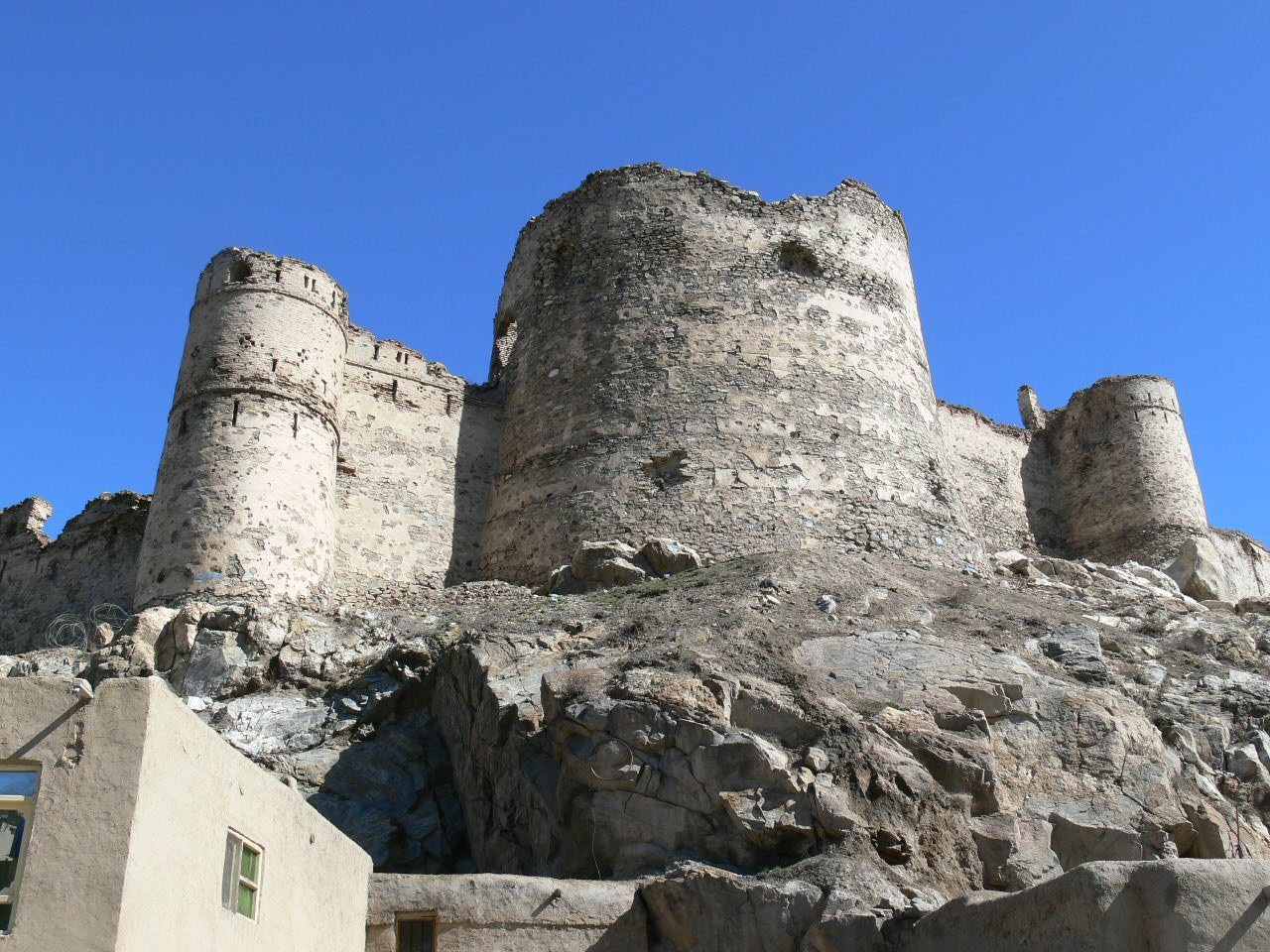
Bala Hissar occupies the southern end of old Kabul on the summit and southern extremity of the Sheer-i Darwaze mountain ridge, north of Hashmat Khan Lake. The name Sheer-i Darwaze means “Lion Gate” or “mountain of the lion gate.” Defensive works were arranged around terraces covering the summit. Marshes on the northern and western sides protected the fortress’s flanks and provided hunting areas for its inhabitants. A mausoleum may have stood at the highest point, although its presence remains uncertain.
Kabul’s historic walls began at Bala Hissar and followed the mountain ridge in a broad curve toward the river. They were approximately 6 metres high and 3.7 metres thick, protecting both the fortress and the city from external attack. Several gates served the complex, including entrances leading toward the Sheer-i Darwaze mountain. The Lahore Gate stood at the foot of the fortress on its northern side, where Babur’s attack took place in 1504.
Lower and upper fortresses
Lower fortress
The original complex was divided into lower and upper sections. The lower fortress contained stables, barracks, three royal palaces, and a mosque. Its buildings and defenses were constructed and repeatedly altered in brick and stone, while the Mughal period brought reinforced outer walls and an expanded site area.
Upper fortress
The upper fortress, which carried the specific name Bala Hissar, contained the arsenal, granaries, and Kabul’s notorious prison, Siyah Chal, or the “Black Pit.” The complex could protect and accommodate nobles, personnel, and their families, with space for approximately 1,000 people during a siege. Later Durrani structures replaced many earlier Mughal buildings, further changing the arrangement of the hilltop.
Archaeological fortifications and surviving fabric
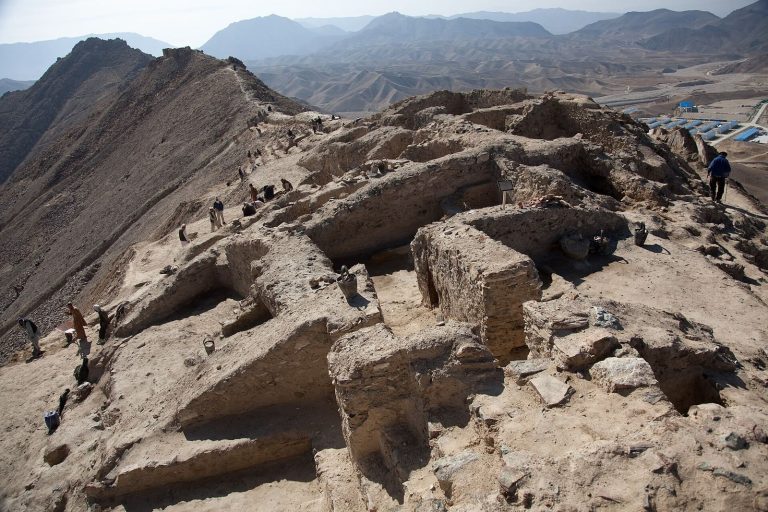
In 2007, archaeological work at the western end of the rocky summit identified rows of fortification walls. These walls covered the southern edge of the city and connected on one side with the Kouh-i Aseman summit and on the other with fortified Buddhist monasteries in the Kabul River basin, including Tepe Naranj and Tepe Marandjan. The remains place Bala Hissar within a wider fortified and religious landscape around ancient Kabul.
The outer walls display layers of construction material associated with successive destruction and refortification. Much of the hill is covered by tunnels and underground storerooms, while trenches survive on exposed upper areas. Remains of tanks, artillery, weapons, military vehicles, and other heavy-war equipment are scattered across the slopes and summit. Debris and construction material from repeated destruction and rebuilding are incorporated into the present landscape, while mine hazards from the Soviet occupation period have been reported around the ascent routes.
The summit is associated with trenches from earlier trench warfare and has included a military compound. Surviving hilltop fabric therefore combines earlier fortification remains with later military installations and war debris. The fortress is largely ruined as a result of the Anglo-Afghan wars, the 1979 uprising, and the fighting of 1994, with visible architectural work from the Mughal and Durrani periods surviving among the damaged walls, terraces, tunnels, and later military features.