Aya Dimitri Kilisesi: A Greek Orthodox Church in Istanbul
Site at a Glance
- Rating
- 4.4
- Popularity
- Very Low
- Country
- Turkey
- Primary era
- Medieval
- Eras represented
- Medieval
- Civilizations
- Byzantine
- Site type
- Religious
- Remains
- Church
On this page7 sections
History
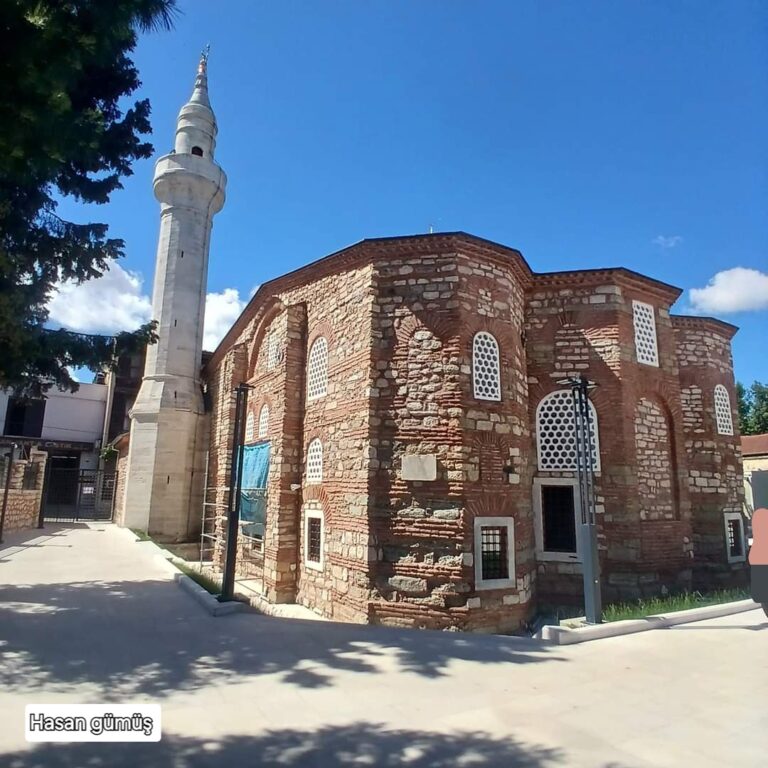
Aya Dimitri Kilisesi is a Greek Orthodox church in Istanbul, Türkiye, traditionally associated with construction in 1204 during the Byzantine period. Dedicated to Saint Demetrius of Thessalonica, a Christian saint especially venerated in Eastern Orthodoxy and associated with military protection, it remains historically important as a surviving place of worship in Ayvansaray.
Byzantine origins
The church stood in the Byzantine district of Kynigoi, whose name is commonly translated as “the Hunters.” Its foundation has been attributed to the family of Nicholas Canabo, who became emperor for only a few days in April 1204. This connection remains hypothetical rather than established.
The church is first mentioned in November 1334, when Patriarch Isaiah approved its donation to Georgios Papagomenos. Papagomenos embellished the building and arranged for religious services to continue there. The church later appeared in a 1583 catalogue compiled by Trifon Korobejnikov and in a 1593 version prepared for the Russian tsar.
Patriarchal connections and damage
In 1597, Meletius I Pegas, Patriarch of Alexandria, purchased the church and its adjoining convent, which were burdened by debt. He arranged repairs to the building. From 1597 to 1601, the church may have served as the seat of the Ecumenical Patriarchate, the senior-ranking patriarchal institution of the Eastern Orthodox communion, before the patriarchate moved to Saint George at Fener.
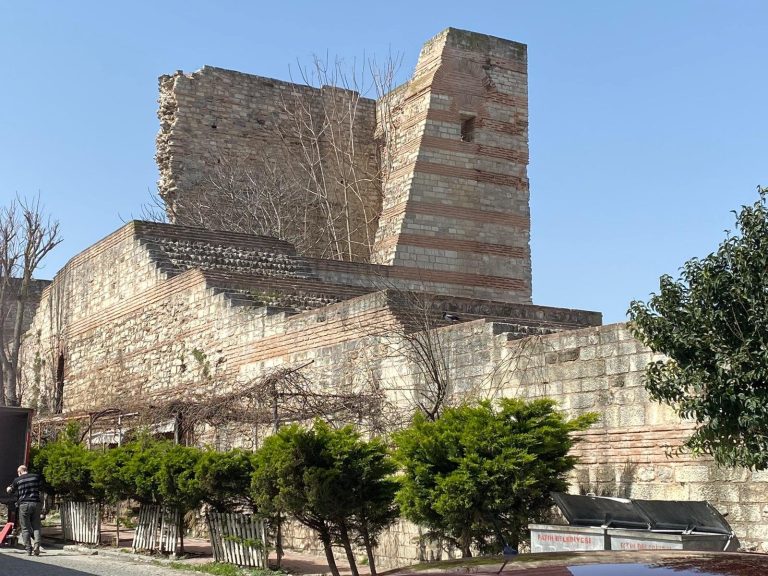
A neighborhood fire damaged the church in 1640. Its dome and mosaics later collapsed, probably through the combined effects of an earthquake around 1719 and the great Balat fire of 1729. The designation Xyloporta refers to the northernmost gate of the land-wall defensive system, known as the wooden gate because it was made of wood.
Rebuilding and restoration
The church was rebuilt in its present form in 1730, during the patriarchate of Paisios II, with money collected from the faithful. It was restored in 1933 and again in 1960 after improper uses during the two world wars. The building continues to serve Orthodox worship and is valued chiefly for its historical importance.
Remains
Building and setting
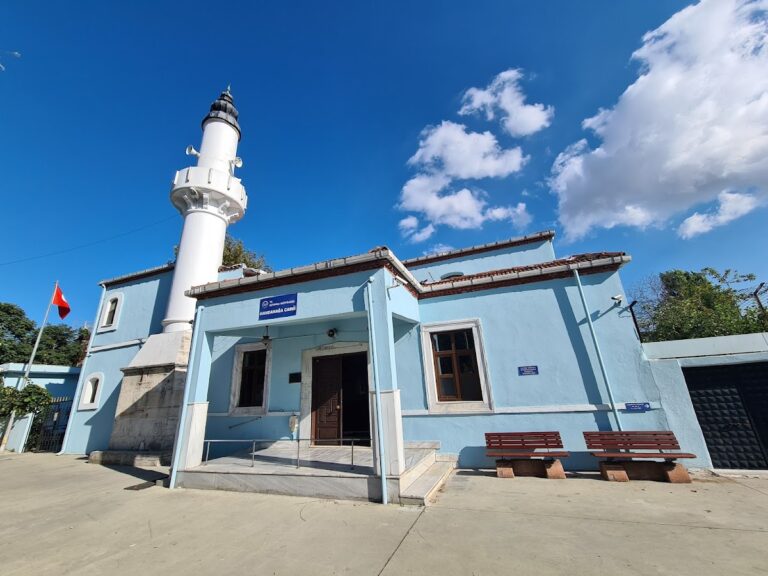
Aya Dimitri Kilisesi stands in Ayvansaray, about 200 metres from the Prodomos Gate, a named historic entrance in the local fortification system. A stretch of the sea walls lies between the church and the Golden Horn. The present structure has a rectangular plan divided into three aisles, or long interior sections. Wooden columns separate the aisles, while a wooden barrel vault forms the curved ceiling above them.
Earlier church and convent
The present building replaced the earlier church after its dome and mosaics had collapsed. The complex was formerly associated with an adjacent convent, which was part of the property purchased by Meletius I Pegas in 1597. The surviving form therefore reflects the rebuilding of 1730, while the earlier features remain part of the church’s architectural history.