Auchinleck House: An 18th-Century Mansion in Scotland
Site at a Glance
- Popularity
- Medium
- Country
- United Kingdom
- Primary era
- Early Modern
- Eras represented
- Medieval, Early Modern
- Civilizations
- British, Kingdom of Scotland
- Site type
- Domestic
- Remains
- Elite Residence
On this page9 sections
History
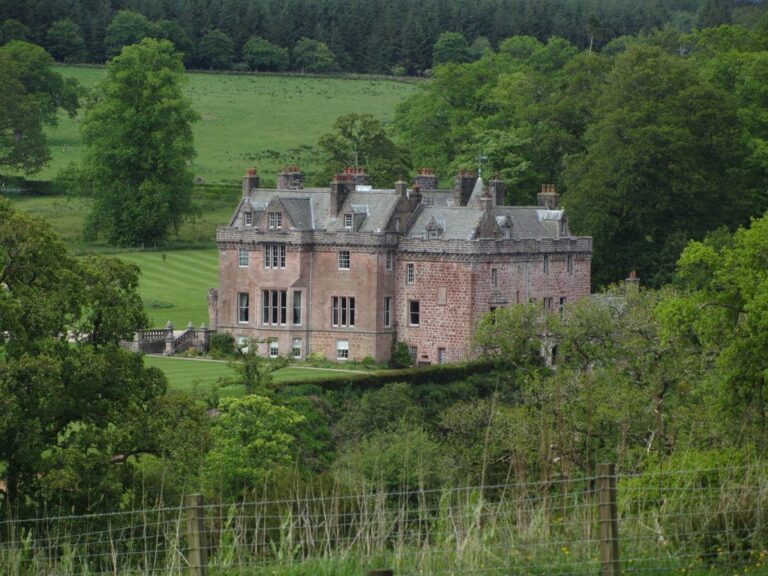
Auchinleck House is an 18th-century mansion in East Ayrshire, Scotland, United Kingdom. Commissioned around 1760 by Alexander Boswell, the estate’s eighth laird, it replaced an earlier tower house on land that had served as a landed seat since the 13th century.
The Auchinlecks and Boswells
Auchinleck Castle is recorded as standing in 1241. It was the seat of the Auchinlecks of that Ilk, a family whose name matched that of their lands. The family held the barony, a territorial landholding with an associated title or jurisdiction, from at least the 13th century. The castle and barony remained in their hands until 1504, when James IV granted the estate and title to Thomas Boswell. Thomas had married Sir John Auchinleck’s daughter as the male line of the Auchinlecks was failing, and became the estate’s laird, a Scottish landowner.
The castle continued in use into the early 17th century, although the date when it ceased to be inhabited is unknown. In 1591, John Boswell faced accusations before the Scottish Privy Council, the king’s advisory and administrative body, of witchcraft, sorcery, enchantments, and consulting witches. Richie Graham, described as a prominent wizard, admitted to raising the Devil at Auchinleck. John Boswell fled the country following the accusations.
The Boswell mansion
Auchinleck Old House, a Boswell family home, was built in 1612. Around 1760, Alexander Boswell commissioned the present house in its place. The design is attributed to Scottish architect Robert Adam, although Alexander may have designed the house himself. Correspondence indicates that it was habitable but still unfinished in 1767.
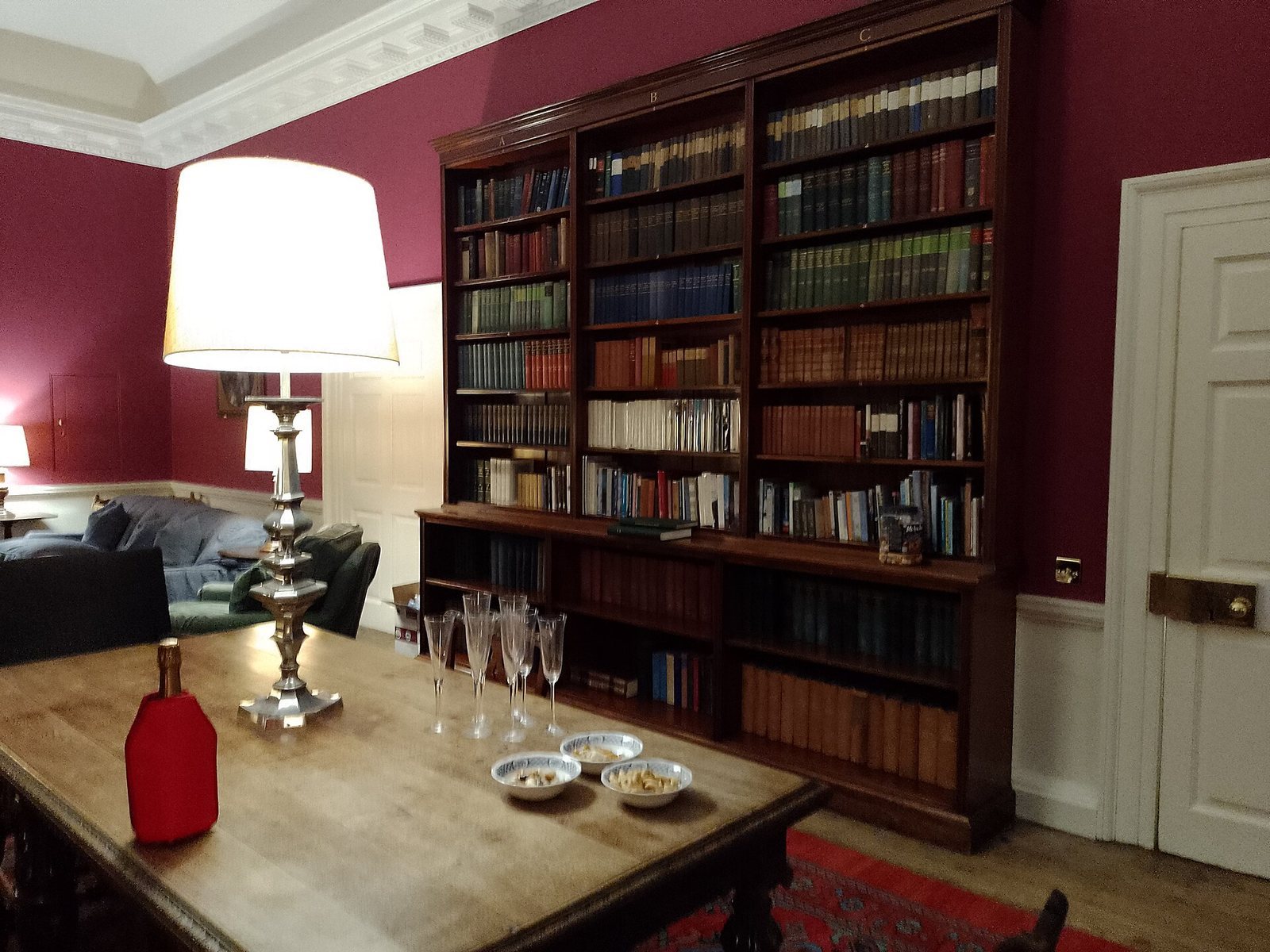
After Alexander’s death, the estate passed to his son James Boswell, a writer and lawyer who became the ninth laird in 1782. James, best known for his biography of Samuel Johnson, and Johnson visited the house in 1773 while returning from a journey to the Hebrides, the islands off Scotland’s west coast. In 1783, James’s wife, Margaret Boswell, catalogued the house’s valuable library.
Wartime use and preservation
During the Second World War, the laird allowed officers from the Polish, Canadian, and French armies to live in the house. Auchinleck House became a Category A listed building in 1971, the highest category in Scotland’s listed-building system. In 1986, a descendant of the 18th-century Boswell family transferred the remains of the buildings to the Scottish Historic Buildings Trust, which repaired the house’s roof. The Landmark Trust acquired the house in 1999 and restored it. Auchinleck Castle and Auchinleck Old House are protected as scheduled monuments; the castle received that designation in 1992.
Remains
The estate contains the present mansion and the remains of two tower houses, Auchinleck Castle and Auchinleck Old House. The mansion’s east-facing front and the scattered surviving remains of the earlier buildings reflect the estate’s development across several centuries.
The mansion
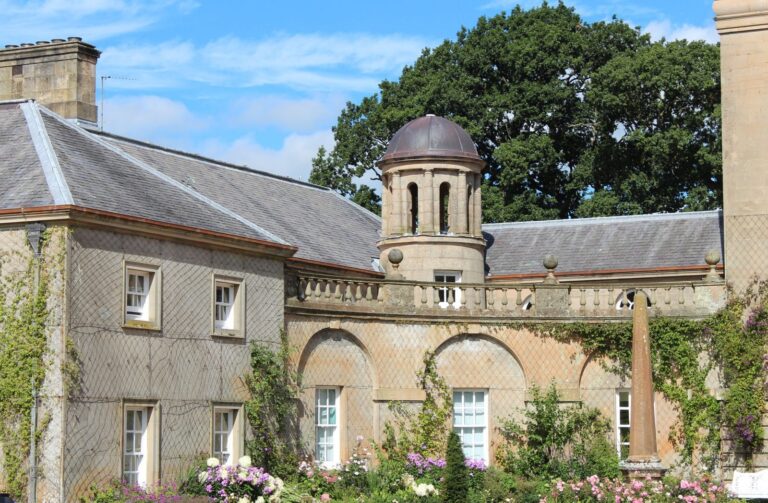
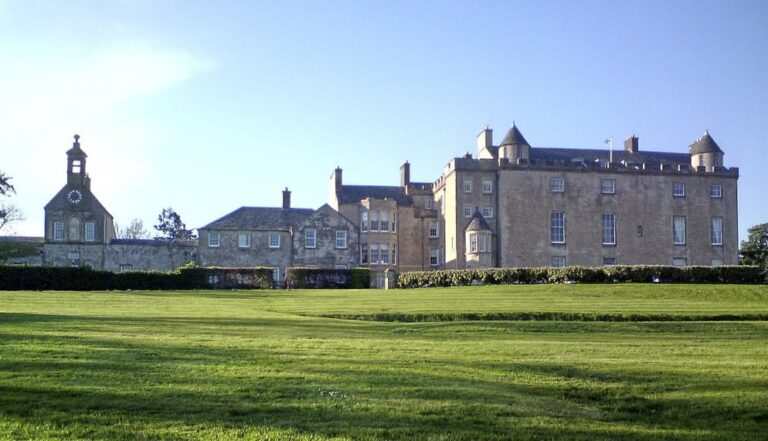
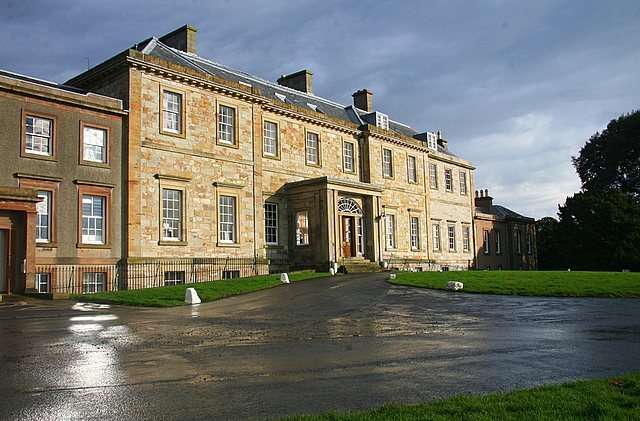
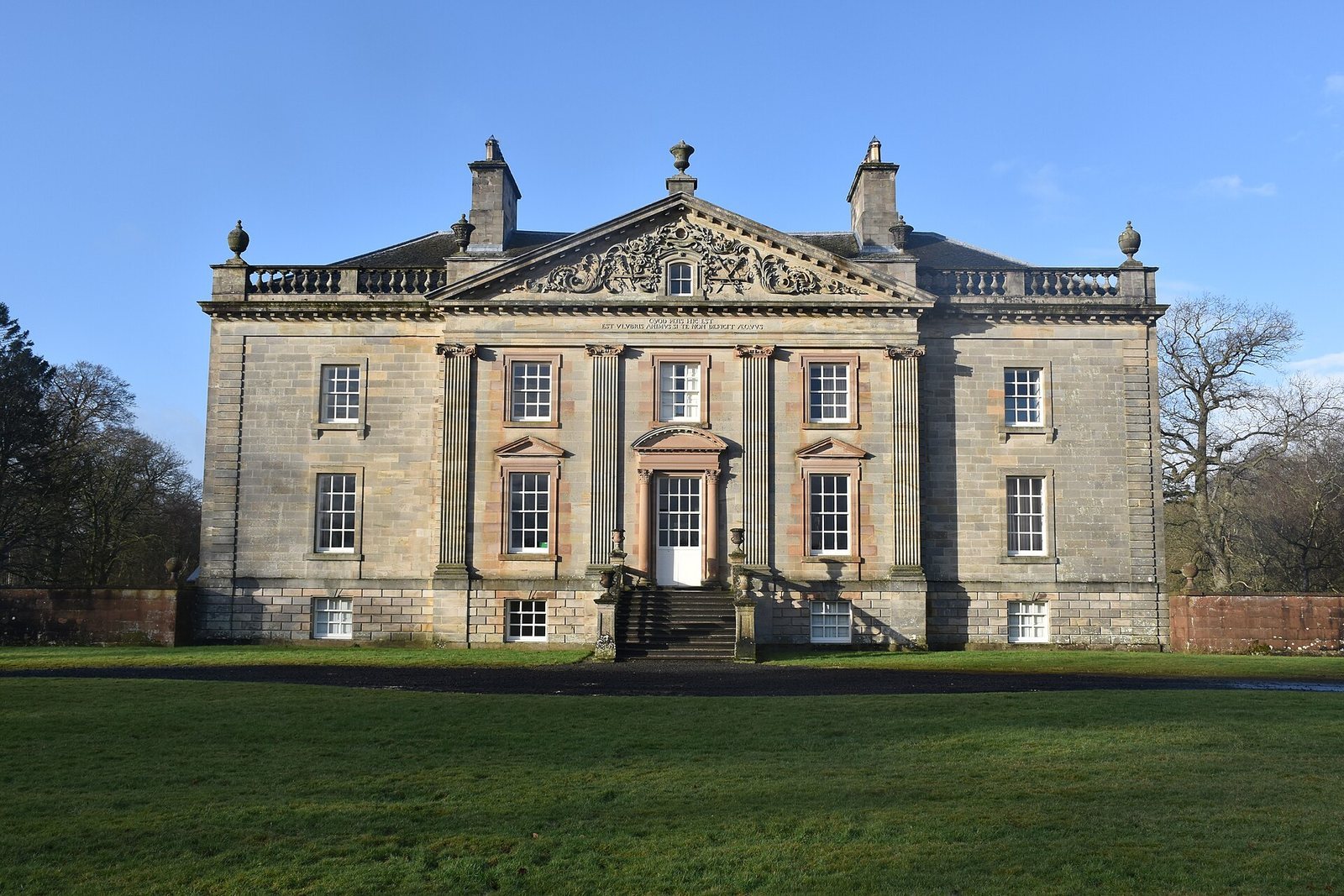
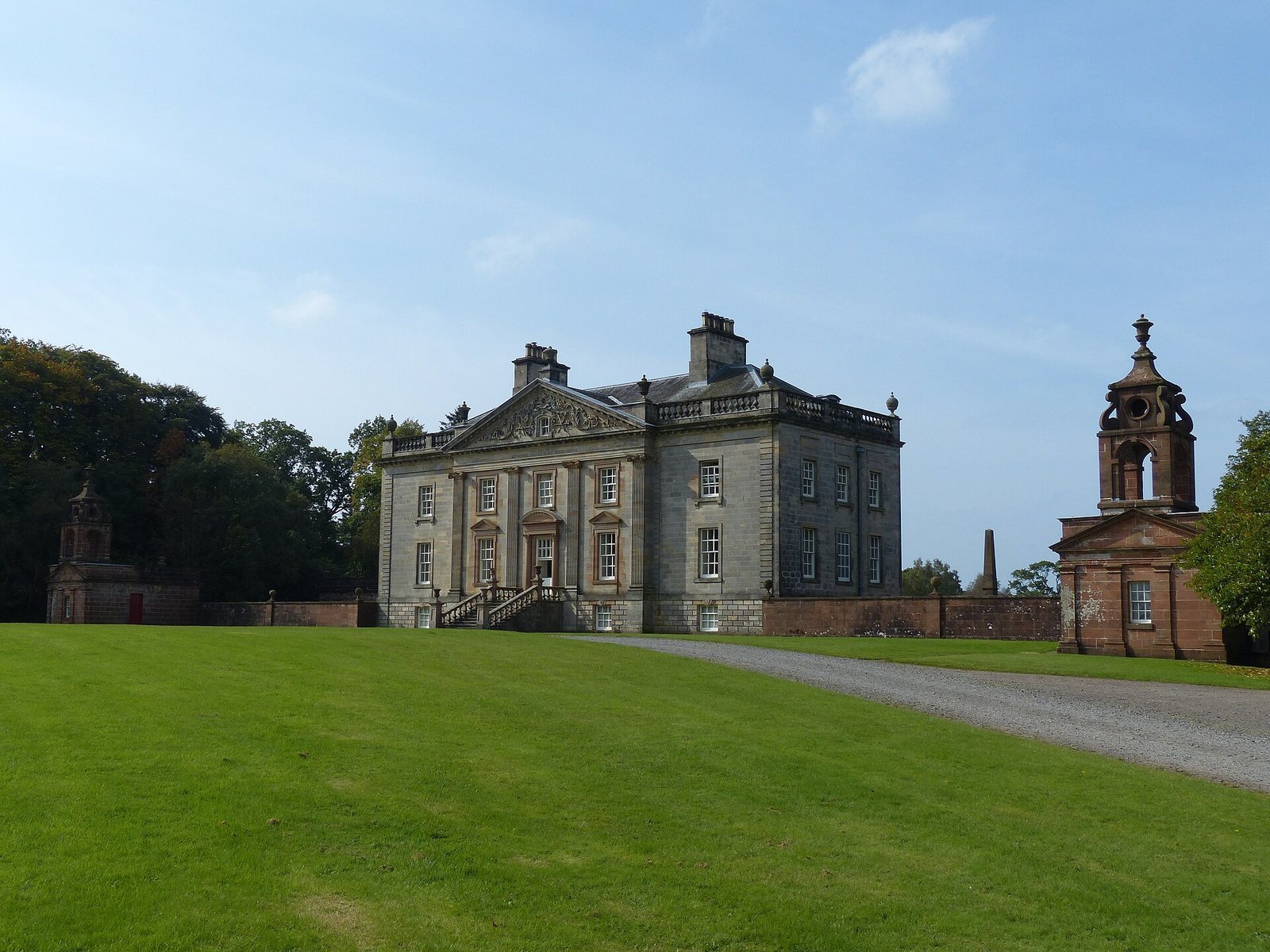
The house has an east-facing main front with four shallow Ionic pilasters, flat pillar-like projections in a classical style. They support a richly ornamented triangular pediment, the shaped feature above the facade. A stone entrance stair with a balustrade leads to the central doorway. Projecting pavilions, distinct sections of the building, flank the main block and connect to it by a plain wall. Each has its own triangular pediment and an open turret, a small tower-like structure, above it.
Earlier tower houses
Auchinleck Castle
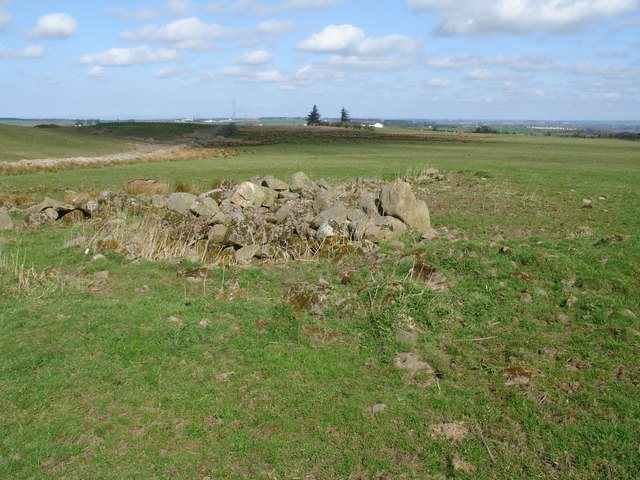
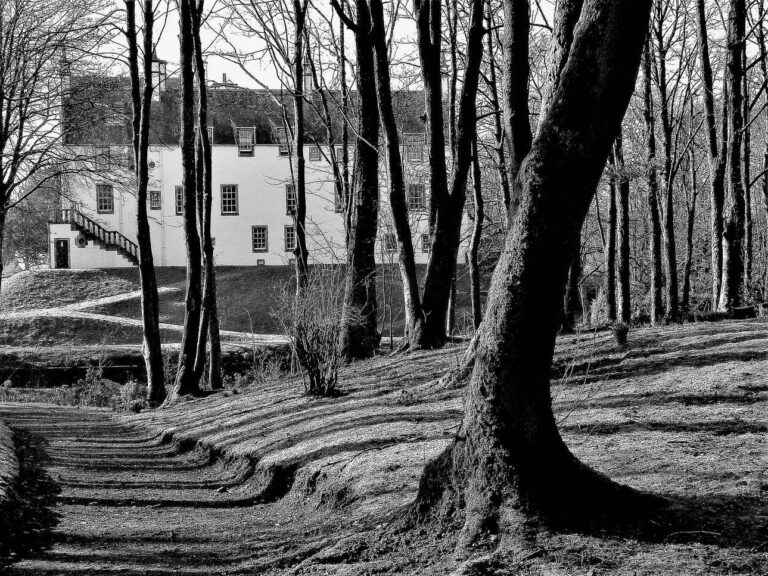
The medieval castle was a tower house, a fortified residence arranged around a tower. Its few surviving remains stand on a low sandstone cliff overlooking the meeting of the River Lugar and the Dippol Burn.
Auchinleck Old House
Built in 1612 as a Boswell family home, Auchinleck Old House was also a tower house. Its ruins survive within the estate.