Attar Mausoleum: The Timurid Tomb of Farid al-Din Attar in Iran
Site at a Glance
- Rating
- 4.5
- Popularity
- Low
- Country
- Iran
- Primary era
- Medieval
- External website
- Open
- Eras represented
- Medieval
- Civilizations
- Timurid
- Site type
- Religious
- Remains
- Tomb
On this page6 sections
History
The Attar Mausoleum in Iran is an Islamic tomb in Nishapur, built in the fifteenth century during the Timurid period, an era of extensive architectural and artistic patronage. It commemorates Farid al-Din Attar of Nishapur, a major Persian poet and Sufi mystic known especially for The Conference of the Birds.
Attar and the Timurid Mausoleum
Attar died around 618 in the Islamic calendar during the Mongol attack on Nishapur. The present mausoleum was erected over his gravestone in the ninth Islamic century and the fifteenth century CE, on the order of Ali-Shir Nava’i, a Timurid statesman, patron, and literary figure. The building thus connects Attar’s memory with the cultural and architectural patronage of the Timurid dynasty.
Restoration and Heritage Status
The mausoleum underwent complete restoration during the second Pahlavi period, the reign of Mohammad Reza Shah Pahlavi from 1941 to 1979, followed by minor restoration in a later decade. It was inscribed on Iran’s National Heritage List on 9 December 1975 under registration number 1173. Iran’s Cultural Heritage, Handicrafts and Tourism Organization administers the complex.
Remains
The mausoleum stands in the Shadiah area of Nishapur, approximately 6 kilometres west of the city and near the Mausoleum of Omar Khayyam. The complex is enclosed by a garden covering about 119 square metres, with the tomb of the painter Kamal-ol-Molk located within part of the garden. A statue of Attar also stands near the mausoleum.
Mausoleum Structure
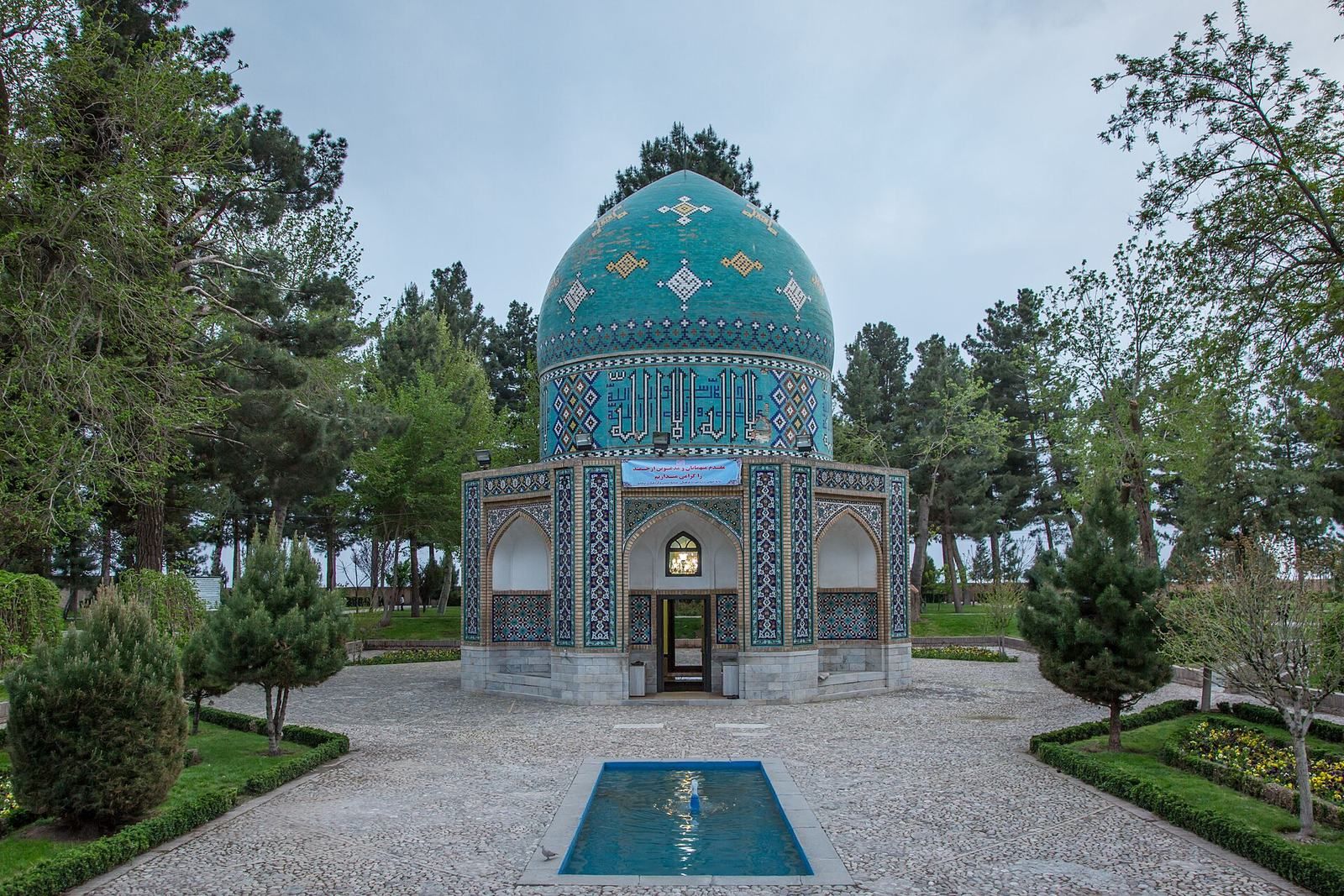
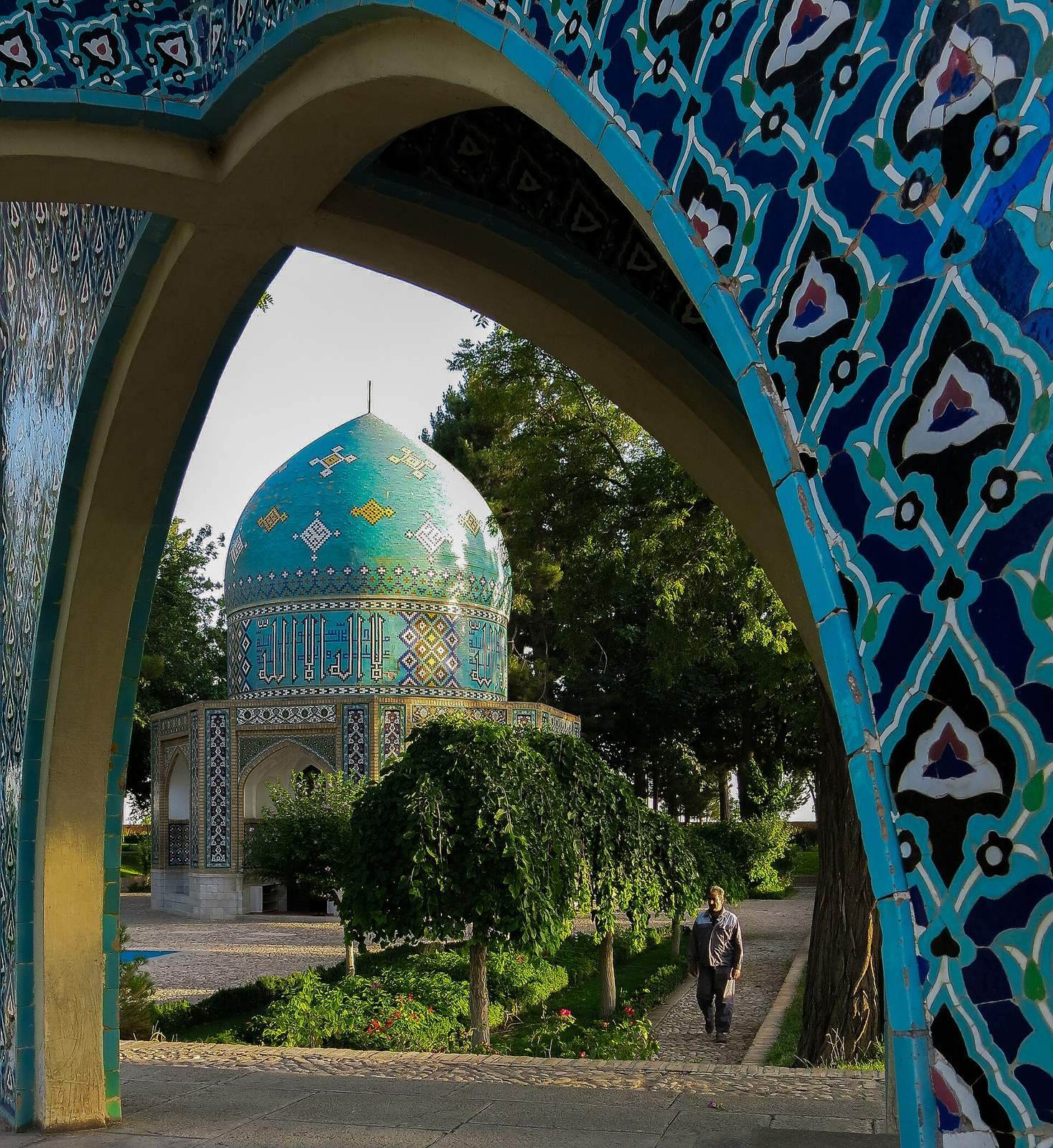
The building has an octagonal plan and a single onion-shaped dome covered in tilework. Four entrances open through the structure, with the northern entrance serving as the principal approach. The outer elevations include four tiled bays and are decorated with green, yellow, and blue tiles alongside carved details. Brick, mortar, plaster, and tiles form the main materials of the building.
Interior Shrine
Inside, the surfaces are plastered. Attar’s gravestone occupies the centre of the shrine beside an eight-sided column approximately 3 metres high. Together, the gravestone and column form the central physical focus of the mausoleum.