House at the Minute (U Minuty): A Renaissance House in Prague
Site at a Glance
- Rating
- 4.5
- Popularity
- Medium
- Country
- Czechia
- Primary era
- Early Modern
- Eras represented
- Medieval, Early Modern, Modern
- Civilizations
- Habsburg, Holy Roman Empire, Kingdom of Bohemia
- Site type
- Domestic
- Remains
- House
On this page8 sections
History
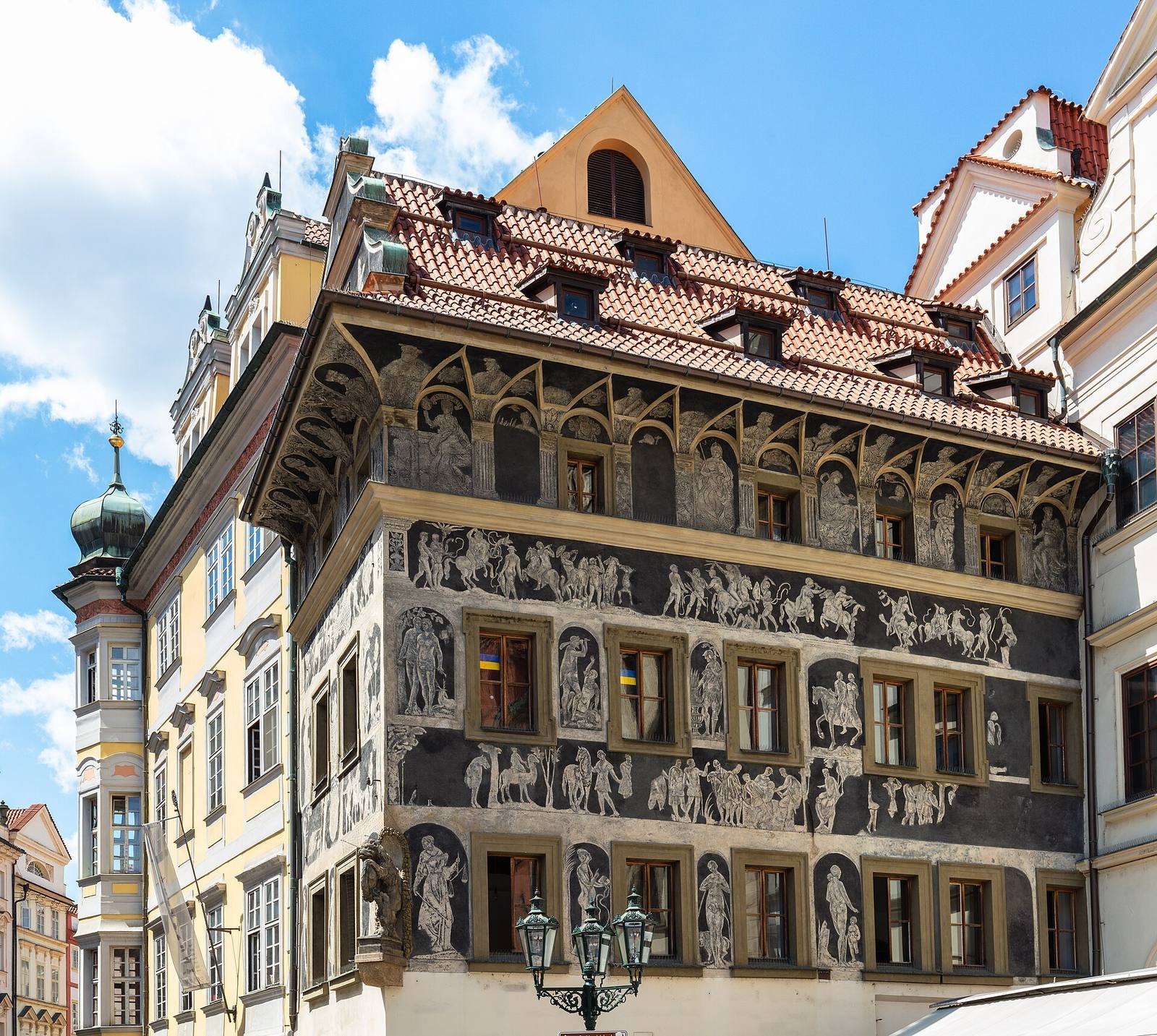
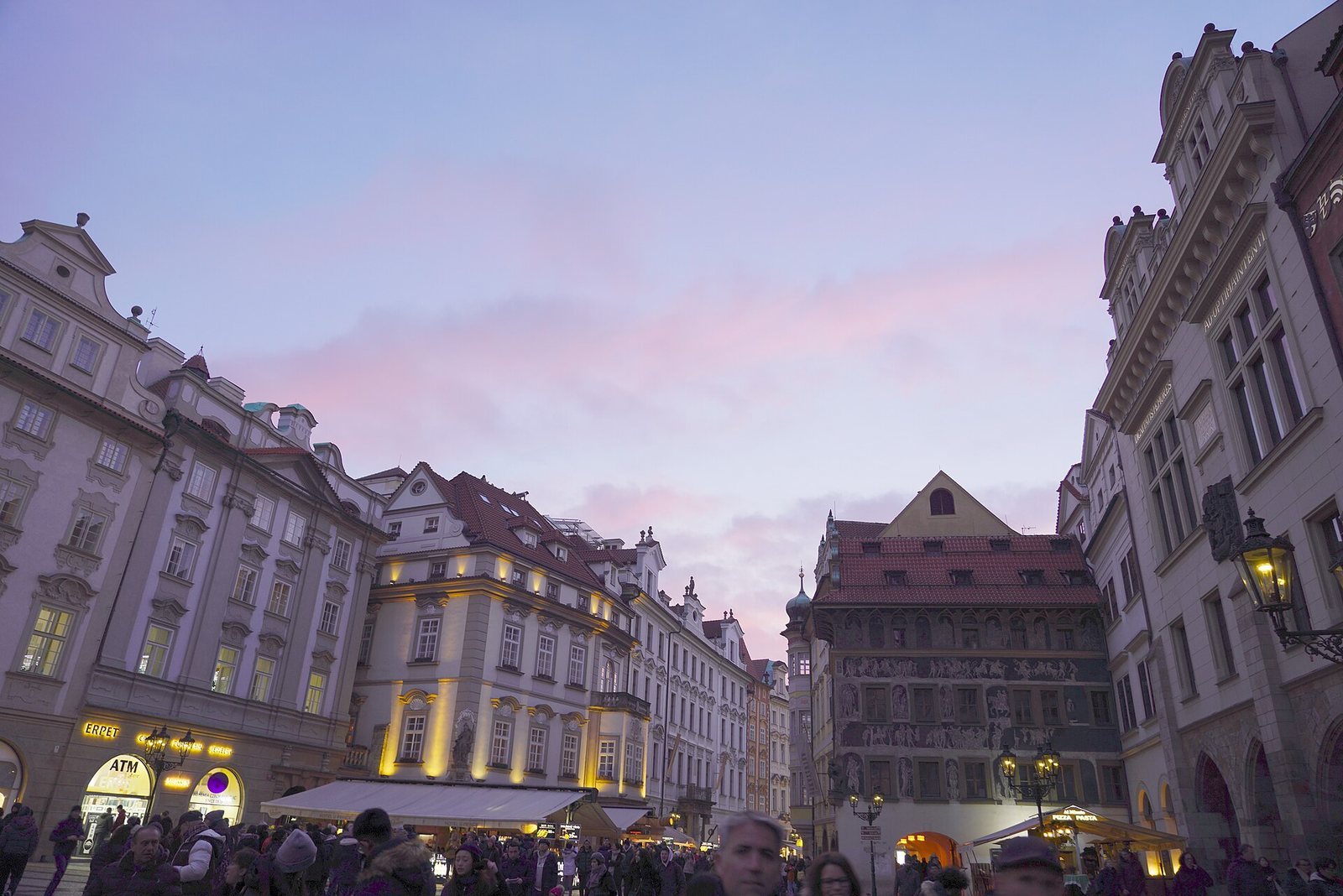
The House at the Minute, or U Minuty, is a historic house on Old Town Square in Prague, Czechia. Built in the early fifteenth century, it began in the late Gothic style and was later remodelled in the succeeding Renaissance style. It probably occupied the site of a disused alley. Part of a neighbouring house was incorporated in 1430, and further alterations took place before 1564. A low third storey was added late in the sixteenth century.
Pharmacy and Kafka’s childhood
A pharmacy owned by the pharmacist M. Bart operated in the house for 138 years and was known as At the White Lion. The premises later became a tobacconist’s shop, during which period the name House at the Minute first appeared.
Franz Kafka, a Czech-Jewish writer whose work influenced twentieth-century literature, lived there with his parents from 1889 to 1896. He was not born in the house, although all his sisters were.
Preservation and later use
In the early twentieth century, Prague’s municipality considered demolishing the house and nearby buildings to widen the passage between Lesser Town Square and Old Town Square. The monuments-preservation commission objected. In 1905, the discovery of a fragment of sgraffito, a decoration made by cutting through one surface layer to reveal a contrasting layer, on a neighbouring house led to both buildings being selected for preservation. Baroque alterations, from a later European artistic and architectural period, had covered the House at the Minute’s decoration with whitewash. Work in 1919 revealed that it extended over nearly all the walls, and the decoration was restored during the 1920s.
Structural work in 1937–38 strengthened the building from within. The house was later converted into a museum devoted to Kafka’s writing, but that museum moved to Cihelna Street in Mala Strana, Prague’s historic Lesser Town district. A monuments-preservation organization of Prague’s municipal magistrate is also based in the house. The City of Prague is its owner, and the building is protected as a Czech cultural monument and included in the national cultural heritage.
Remains
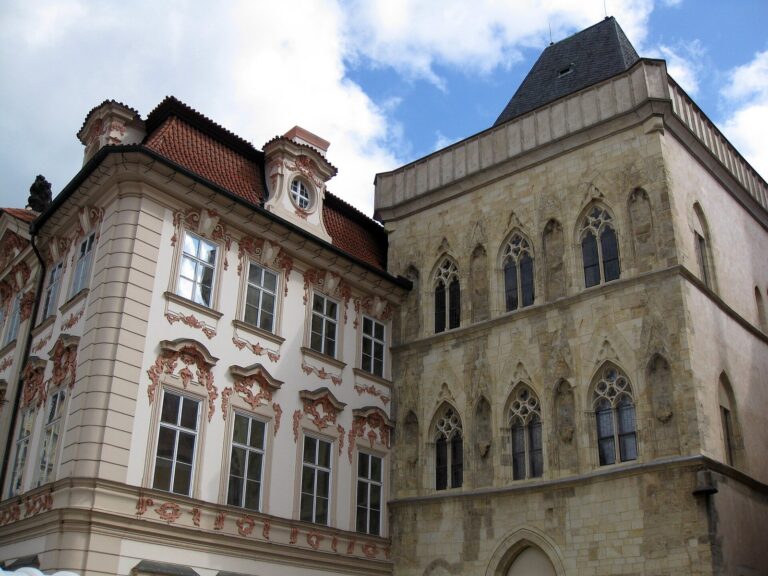
The house stands between the Old Town Hall and the House at the Golden Horn on Old Town Square. Its original form was small, with two storeys and a small courtyard. The building’s late Gothic origins and Renaissance remodelling are reflected in its architectural character, which has strong Italian influences.
Building fabric and decoration
Structure and plan
The low third storey has a lunette cornice, a moulded ledge formed with curved, arch-like sections. A brick support wall was added behind the ground-floor wall, and a passageway formed by arches, or arcade, was opened through the building as part of this work. The house had no arcade before then. Reinforced concrete was also used to strengthen the structure from within.
Sgraffito decoration
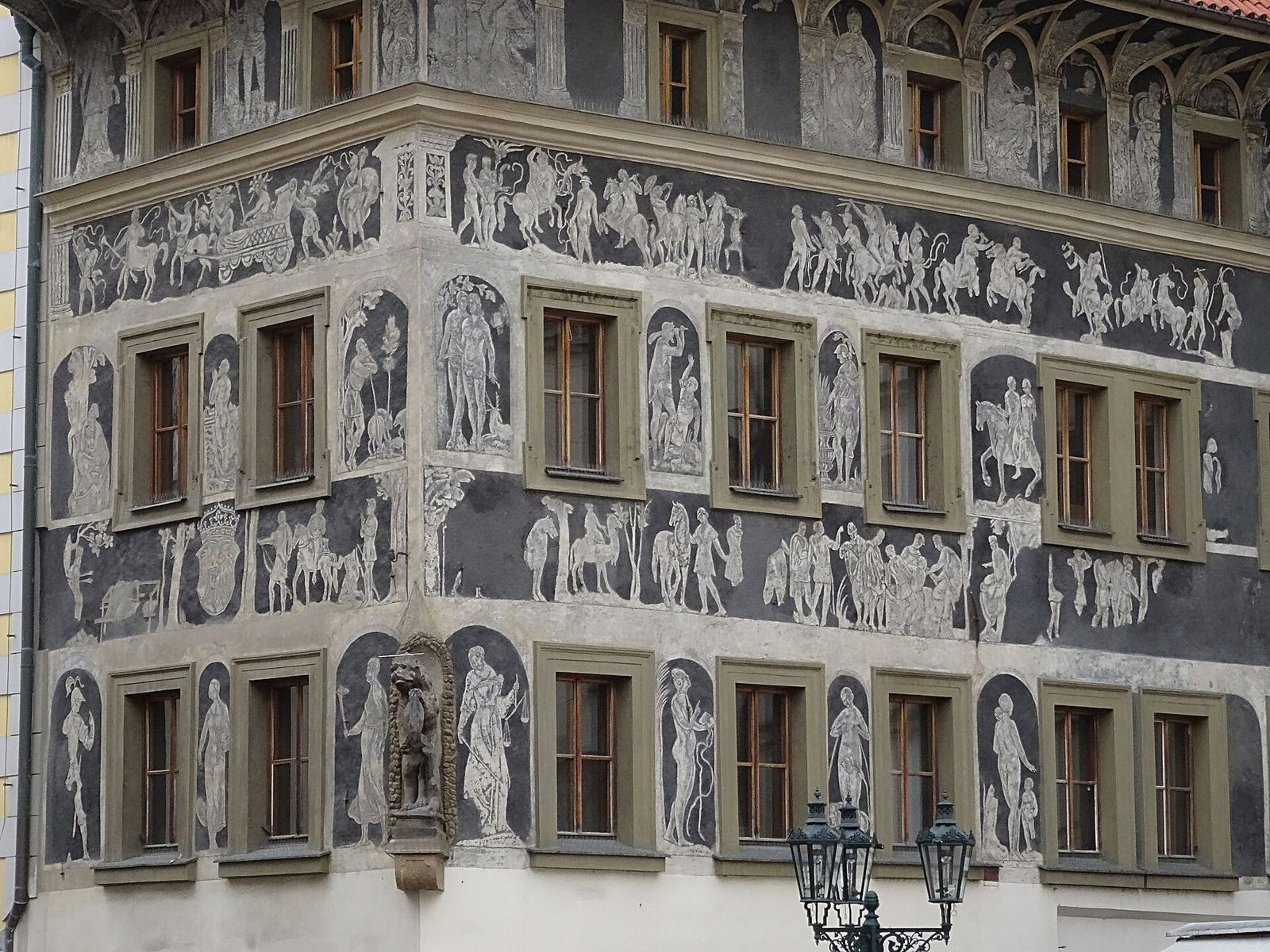
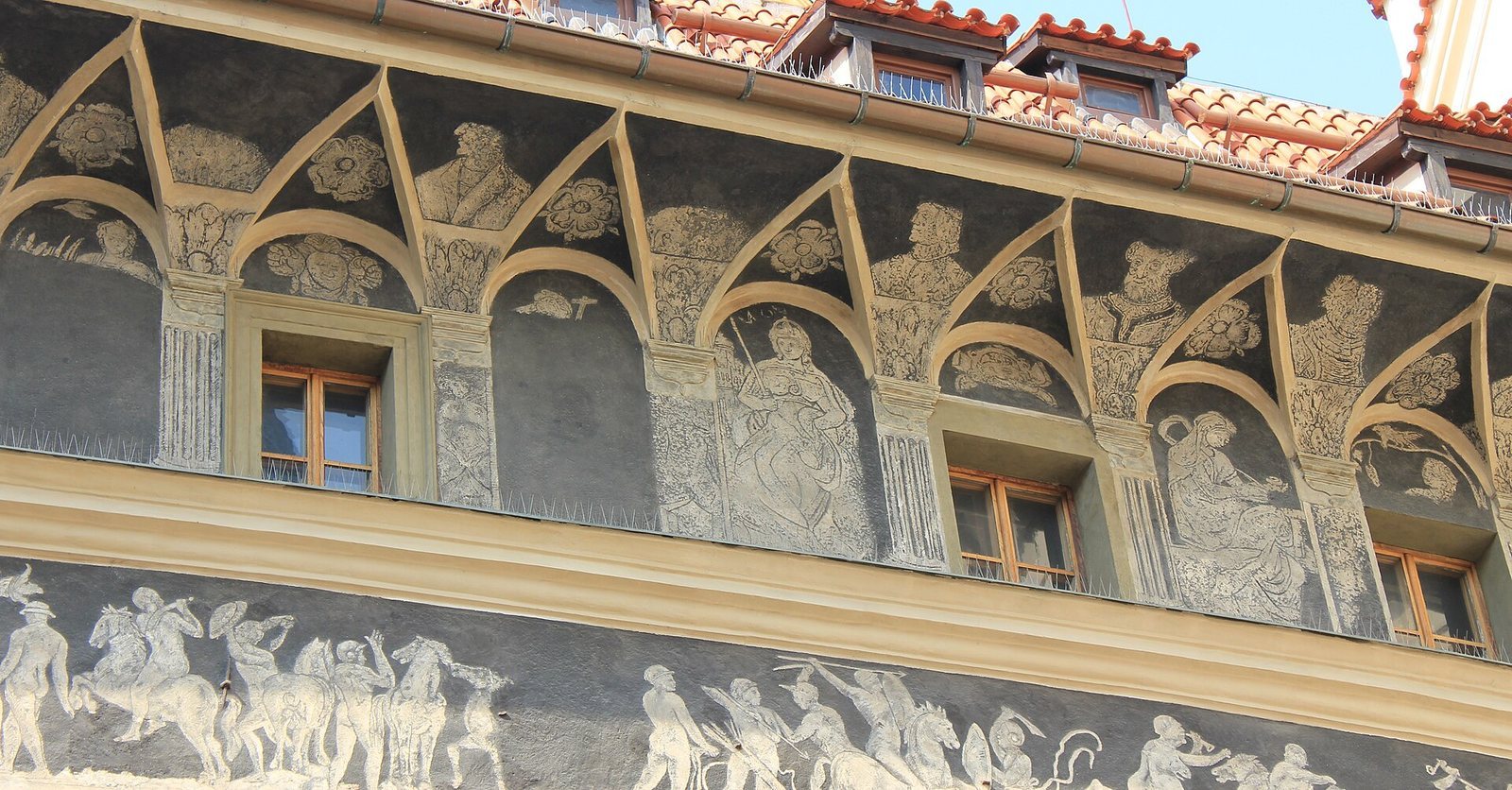
Sgraffito covers nearly all the walls and was created in two phases, one before 1600 and another before 1615. Its subjects include biblical episodes, scenes of ancient Greek life and portraits of Habsburg rulers. These include Philip II of Spain, a Habsburg king, and the Holy Roman emperors Maximilian II and his son Rudolf II. The Holy Roman Empire was a multi-territorial polity in central Europe.
Other images show the retinue of Bacchus, the Roman god of wine and revelry, and Adam and Eve beside the forbidden tree. One scene depicts brothers disputing their father’s estate. Allegorical figures represent Justice, Fortitude, Wisdom, Fertility and Motherhood. The Renaissance character of the building is associated with the Bohemian Renaissance, the regional form of the style linked to Bohemia.
Meteorological column
A meteorological column, a freestanding structure for displaying weather information, stood in front of the eastern façade from 1883, facing the Old Town Hall.