Arikady Fort: A Historic Stronghold in Kasaragod, India
Site at a Glance
- Popularity
- Medium
- Country
- India
- Primary era
- Early Modern
- Eras represented
- Early Modern
- Civilizations
- Unclassified
- Site type
- Military
- Remains
- Fort
On this page5 sections
History
Arikady Fort, also called Kumbla Fort, is a fort in Arikady village, Kumbla, Kasaragod district, India. The Keladi Nayakas built several forts in the Hosdurg-Kasargod region, and Arikady was among them. Historical records date its construction to 1608 and attribute it to Ikeri Hiriya Venkadappa Nayak, a ruler of the Ikkeri, or Keladi, state. In South India, Nayaka was a title used by regional rulers and military leaders.
Accounts of the fort’s origins differ. Some place its construction during the late eighteenth-century rule of Tipu Sultan, the ruler of Mysore, while another tradition describes it as the headquarters of the local Kumbala dynasty. A further tradition holds that a fort stood here under the Kolathiri Rajas, a ruling house of northern Kerala, and that the Ikkeri Nayakas rebuilt forts in the area after the Kolathiri kingdom and Vijayanagara Empire, a major South Indian power, fell.
The region may have been within the jurisdiction of Maypadi Kovilakam, a local ruling establishment whose authority extended from Kumbala to the Chandragiri River. During Vijayanagara’s height, the area was under Maypadi control before passing to the Nayaks of Bednore, with a local king serving as their subordinate ruler. After Vijayanagara’s fall, the area came under Mysore. Following the British defeat of Tipu Sultan in their conflicts with Mysore, the fort passed into British control.
In 2015, archaeologists from the University of Kerala excavated the fort as part of the research project A Survey of Forts.
Remains
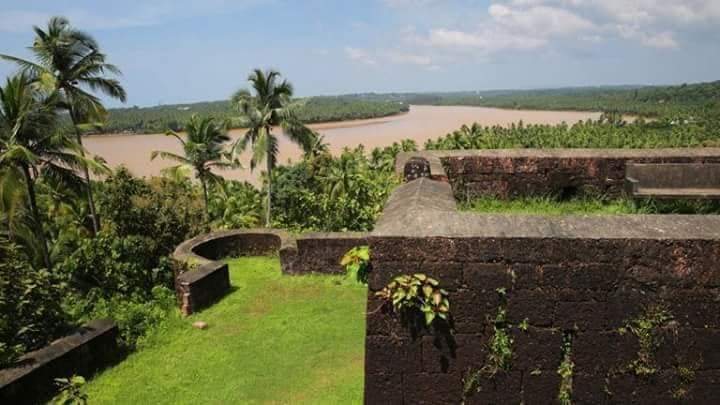
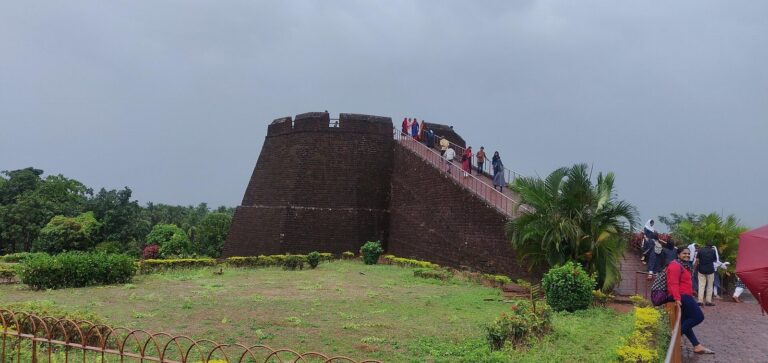
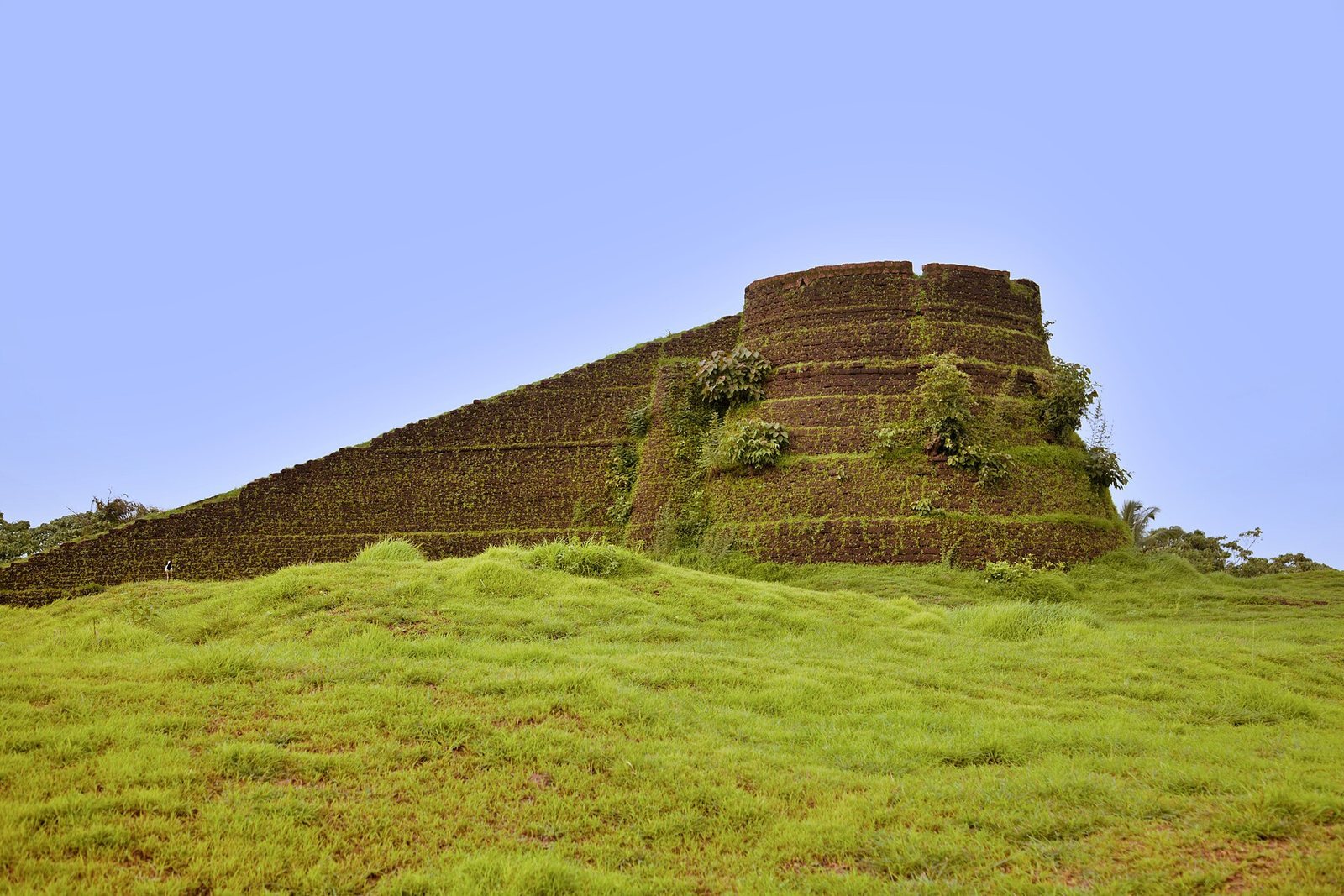
Arikady Fort occupies a lateritic hillock on the right bank of the Arikady River, in the area between the Kumbala and Shiriya rivers. A Hanuman temple stands just below the fort. The physical remains include an entrance and a large hall exposed during excavation.
Entrance and excavated remains
Entrance
A Kannada inscription was situated at the entrance. The excavation also exposed a large hall, possibly intended for congregational use.
Excavated finds
Excavators recovered large quantities of roof tiles and local pottery, as well as Chinese pottery. The finds also included lead bullets and a mold used to make them.