Capo Colonna Archaeological Area: The Sanctuary of Hera Lacinia
Site at a Glance
- Popularity
- Very Low
- Country
- Italy
- Primary era
- Iron Age
- Eras represented
- Iron Age, Classical
- Civilizations
- Ancient Greek
- Site type
- Religious
- Remains
- Sanctuary
On this page13 sections
History
The Capo Colonna archaeological area near Crotone, Italy, preserves the Greek sanctuary of Hera Lacinia, built in the late sixth century BC with a temple in the Doric order (a Greek style with sturdy columns and plain capitals). The area was used in prehistoric times and during Italic occupation, before the founding of the Greek colony of Kroton.
Greek settlement and sanctuary
The sanctuary, which belonged to ancient Crotone, became one of the most important religious centers of Magna Graecia, the Greek settlements of southern Italy. Its importance extended from the Archaic period, an early phase of Greek history before the Classical period, through the fourth century BC. Hera was a major Greek goddess associated with marriage and queenship. The sanctuary was also known as that of Hera Eleytheria, a title for Hera’s worship recorded on the Lacinion stone marker, now in the National Archaeological Museum of Crotone.
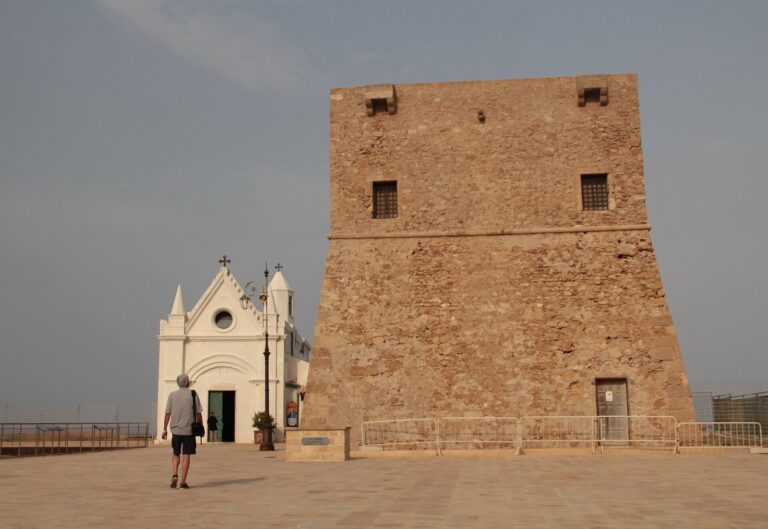
The sanctuary later served as the seat of the Italiote League, an alliance of Greek cities in southern Italy, before the League moved to Taranto. It occupied a strategic position beside coastal routes between Taranto and the Strait of Messina. The promontory was anciently called Lacinion. Capo Nao, an earlier name, came from the Greek word naos, meaning temple; the present name Capo Colonna recalls the temple ruins and their surviving column.
Roman settlement
During the Roman Republic, a phase of Roman government before imperial rule, the first settlement of the Roman colony of Croto was established here about a decade after the Second Punic War, the conflict between Rome and Carthage fought from 218 to 201 BC. An imperial-period station called Lacenium followed.
Later reuse
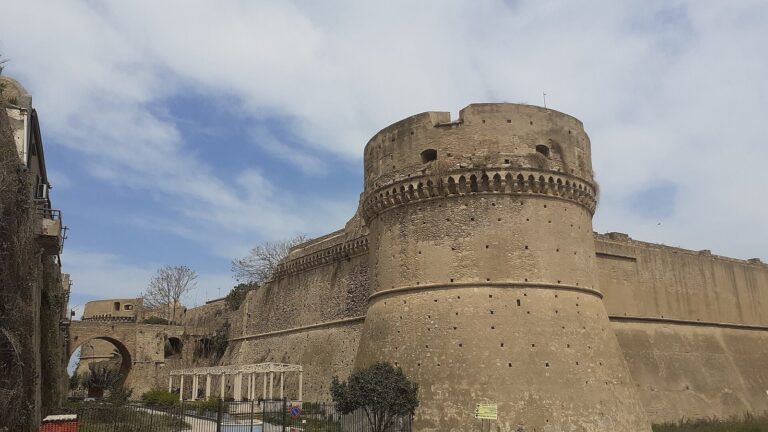
From the sixteenth through the nineteenth centuries, the sanctuary was extensively stripped for building materials. The stone was reused in major works, including the Castle of Charles V, Crotone’s defensive walls, and its port. The archaeological area is included on Italy’s list of national monuments.
Remains
The 77,000-square-metre archaeological area preserves parts of a sanctuary complex made up of several buildings. Its remains include the sea-facing temple, a Sacred Way near the temple complex, and other structures.
Temple and Sacred Way
Doric temple
The temple’s plan had six columns across its front and fourteen along each long side. The columns rose more than eight metres and were assembled from eight fluted drums apiece. One column remains upright on scant remains of the temple’s substantial base. A second fell in an earthquake and lay beside it until 1638. The temple roof used marble slabs and Parian marble tiles, installed after Kroton’s victory over Sybaris.
Sacred Way
The Sacred Way runs near the temple complex. It is about 60 metres long and more than eight metres wide.
Other sanctuary buildings
Building B
Building B has a rectangular plan and may have been an earlier temple. Finds from its excavation, thought to date to the eighth century BC, support this interpretation. The excavations also yielded the so-called Treasury of Hera, a group of votive offerings recovered from the sacred area.
Building H
Building H, also called the Hestiatorion, a dining and refreshment building, has a square plan divided into several rooms. Dining-related furnishings found there suggest that it served travelers and priests. It dates to the fourth century BC, when the sanctuary was already renowned.
Building K
Building K, also known as the Katagogion, or lodging for visitors, dates to the fourth century BC and has an L-shaped plan. Only its foundations remain. It may have been a colonnaded gallery linking rooms and a courtyard, probably used to house important visitors. Their companions may have stayed in simpler buildings made from less durable materials.
Marble decoration and votive offerings
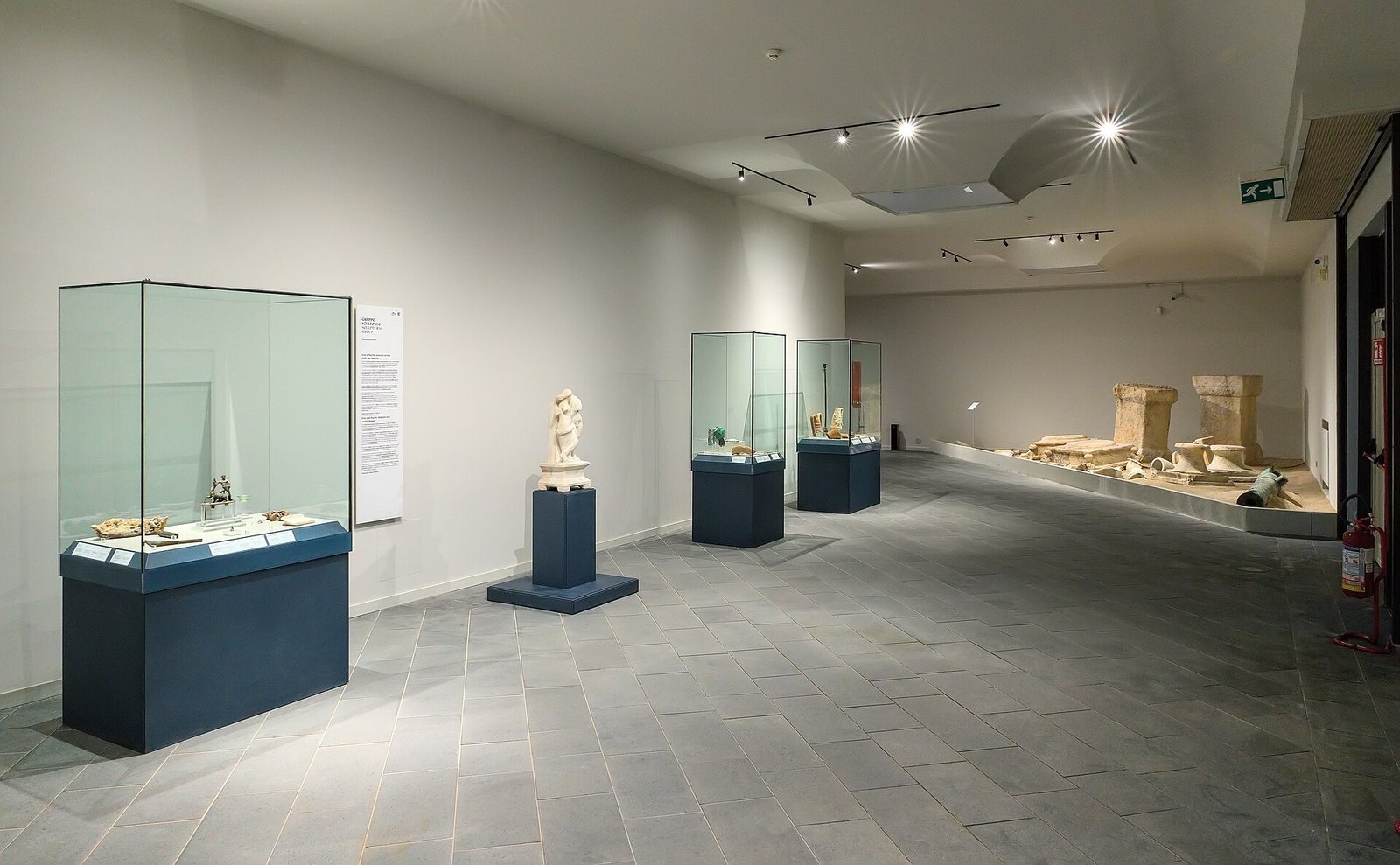
Greek-marble architectural decoration from a fifth-century-BC building phase is now in Crotone. Fragments of the Parian-marble roof and votive offerings, many bearing inscriptions, are also in Crotone. A female head in Greek marble and several other fragments found at the site indicate that the temple had further decoration.