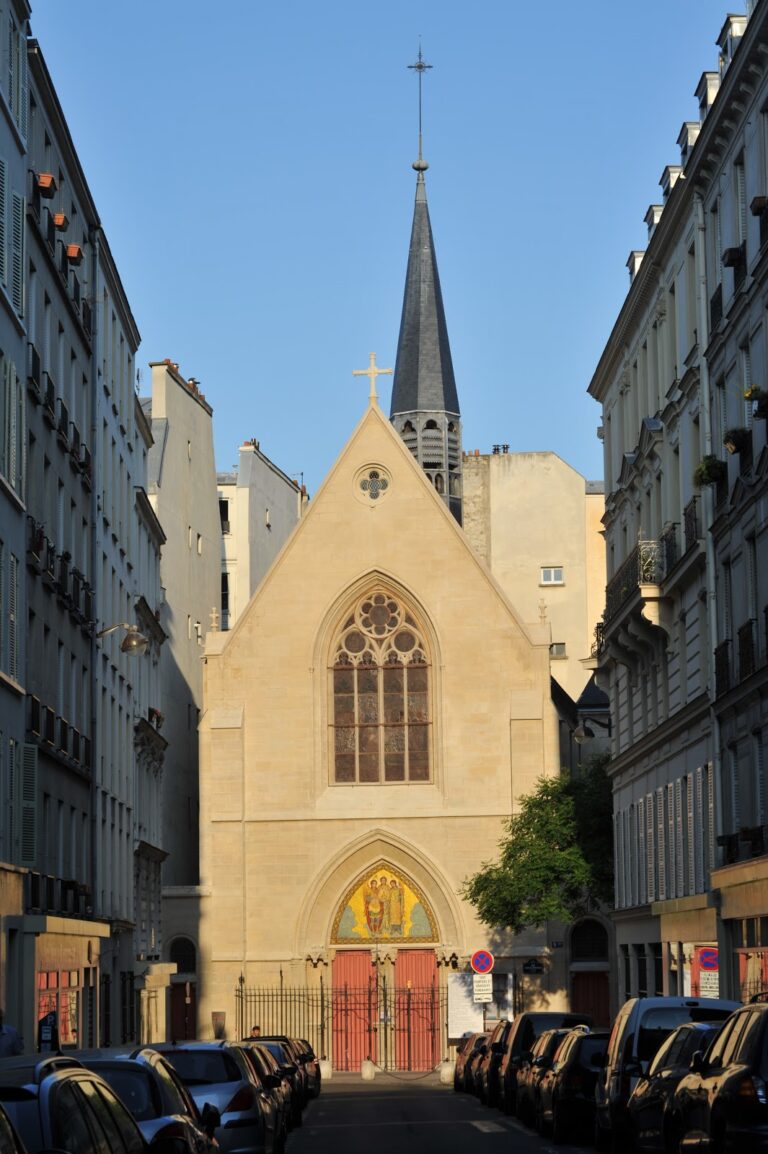
The Archaeological Crypt of the Île de la Cité: Museum of Parisian Archaeology


Site at a Glance
- Rating
- 4.3
- Popularity
- Medium
- Country
- France
- Primary era
- Classical
- External website
- Open
- Eras represented
- Classical, Medieval, Early Modern, Modern
- Civilizations
- French, Roman
- Site type
- Civic
On this page17 sections
History
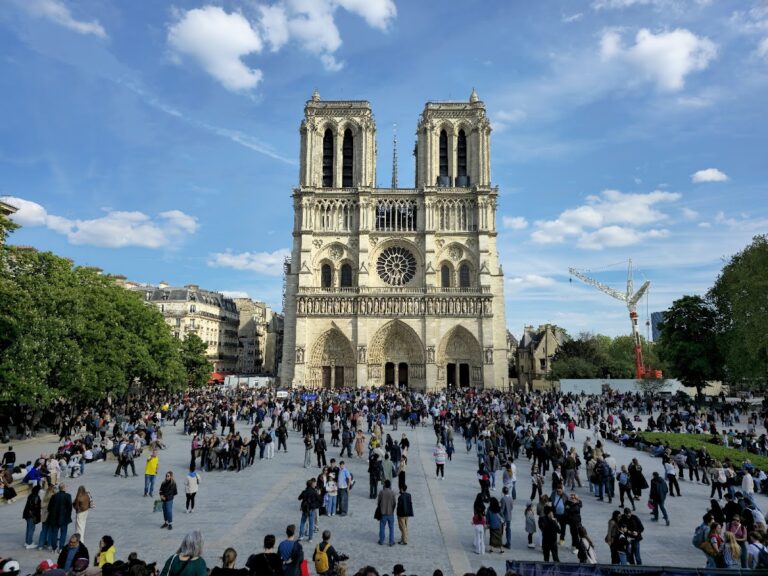
The Archaeological Crypt of the Île de la Cité is a museum beneath the forecourt of Notre-Dame Cathedral in Paris, France, preserving remains from the Roman settlement of Lutetia through the nineteenth century. Its displays trace the changing southern part of the island across successive periods of urban development.
Roman Lutetia
Lutetia, the Roman-period settlement that developed into Paris, grew on the left bank of the Seine during the reign of Augustus. At the beginning of the first century AD, several small river islands were joined to form the present Île de la Cité. The river and its port supported economic activity and trade, while the island gradually became an important urban centre.
By the third century AD, the island had been extensively built over. From the middle of the third century to the fifth century, Germanic incursions made Lutetia an important strategic defensive site. Its enclosure wall and public baths belong to the archaeological evidence for this period of urban and military development.
Medieval Île de la Cité
Construction of Notre-Dame Cathedral began in 1163 under Maurice de Sully, the Bishop of Paris associated with the start of the project. The Rue Neuve-Notre-Dame was laid out on the axis of the cathedral’s central portal. The Hôtel-Dieu hospital was rebuilt south of the square, while churches and houses developed along the surrounding streets.
North of the Rue Neuve-Notre-Dame stood the churches of Saint-Christophe and Sainte-Geneviève des Ardents. Both were demolished in 1748, but their foundations remained below the later urban fabric. The medieval Hôtel-Dieu complex also included the Sainte-Agnès Chapel, whose crypt survived a later fire.
Urban change in the eighteenth century
During the eighteenth century, efforts to improve traffic and sanitation led to the demolition of many medieval buildings. The cathedral square was enlarged and the Rue Neuve-Notre-Dame was widened. In 1750, the architect Boffrand built the Hospice des Enfants-Trouvés on the former site of Sainte-Geneviève des Ardents.
A major fire in 1772 devastated the medieval Hôtel-Dieu hospital and destroyed the Sainte-Agnès Chapel. The chapel’s crypt escaped the fire and remains part of the archaeological complex beneath the present forecourt.
Nineteenth-century transformation
The Île de la Cité was radically reshaped during the modernization of Paris commissioned by Napoleon III, emperor of France from 1852 to 1870, and directed by Georges-Eugène Haussmann, the city prefect responsible for the large-scale works. Seventeen churches and a medieval network of narrow streets were removed. The Hospice des Enfants-Trouvés and the former Hôtel-Dieu disappeared in 1877, while a barracks and a new Hôtel-Dieu were constructed. The square reached its present form toward the end of the century.
Excavation and museum creation
The forecourt had already been partly excavated during the second half of the nineteenth century. After the Paris municipal council decided in 1962 to construct an underground car park, preventive excavations took place during the 1960s and 1970s, principally under the archaeologist Michel Fleury. The work continued until 1975, and its importance led to the decision in 1967 to preserve the remains as a museum crypt.
The position of the car-park entrance was settled in 1970 on the western side of the forecourt, near the future crypt entrance. In 1973, Fleury argued for extending the preserved area farther west to include remains of Saint-Étienne Cathedral buried in the ground. The crypt opened in 1980, although underground excavations continued until 1988. During this later work, the archaeologist Venceslas Kruta uncovered further remains of a quay belonging to the port of Lutetia.
From 2000 until the end of 2012, the site was managed by the Carnavalet Museum. Since 1 January 2013, it has been among the fourteen museums of the City of Paris managed by Paris Musées, the public institution responsible for those museums, and it holds the legal status of a Museum of France, a French category for museums preserving and presenting collections of public cultural value. Three-dimensional reconstructions of Paris in different periods have been presented in the crypt since 2014.
After the 2019 fire at Notre-Dame, the crypt closed. Its reopening was delayed by the Covid-19 pandemic and took place in July 2021. In 2016, architect and urban planner Dominique Perrault proposed replacing the forecourt with a large glass surface that would make the crypt visible to passers-by, but Emmanuel Grégoire, then first deputy to Paris mayor Anne Hidalgo, rejected the proposal. In June 2022, Bas Smets won the competition to redesign the surroundings of Notre-Dame after the fire.
Remains
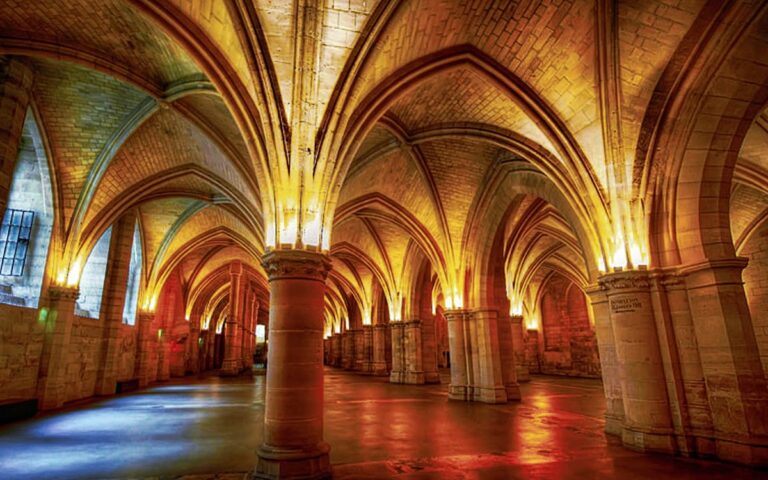
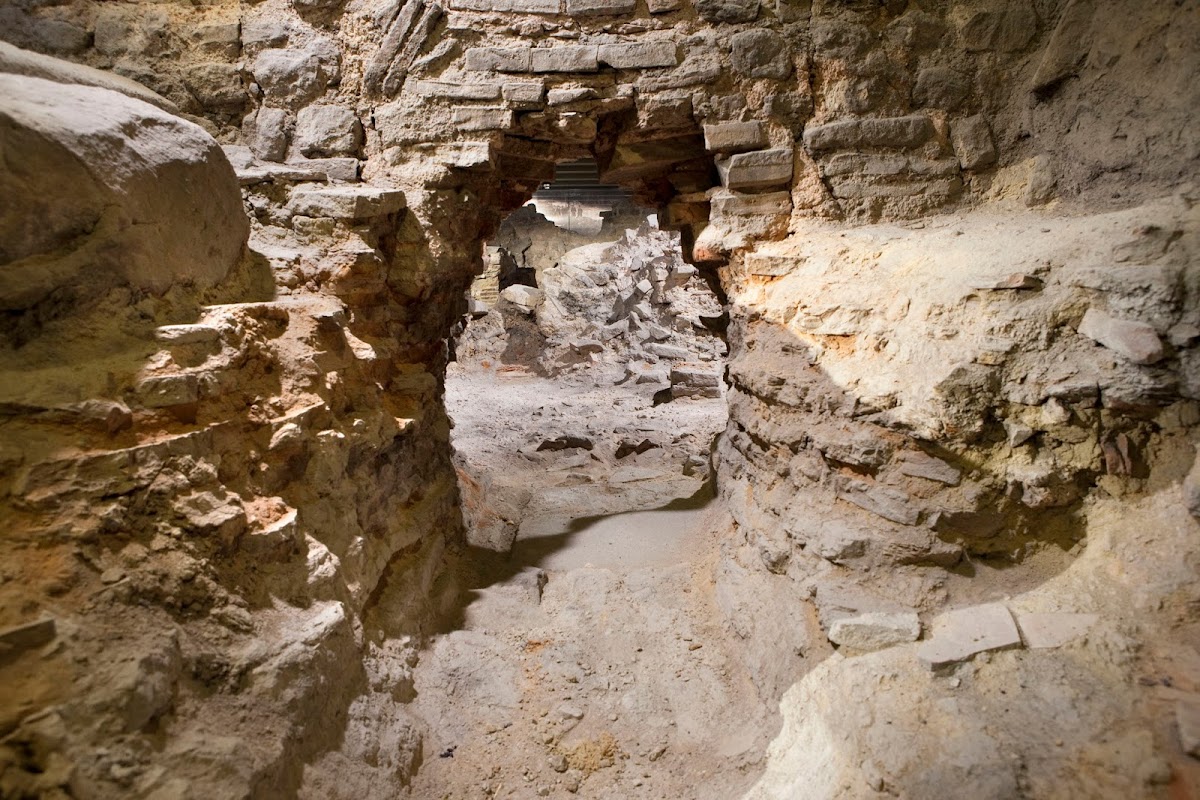
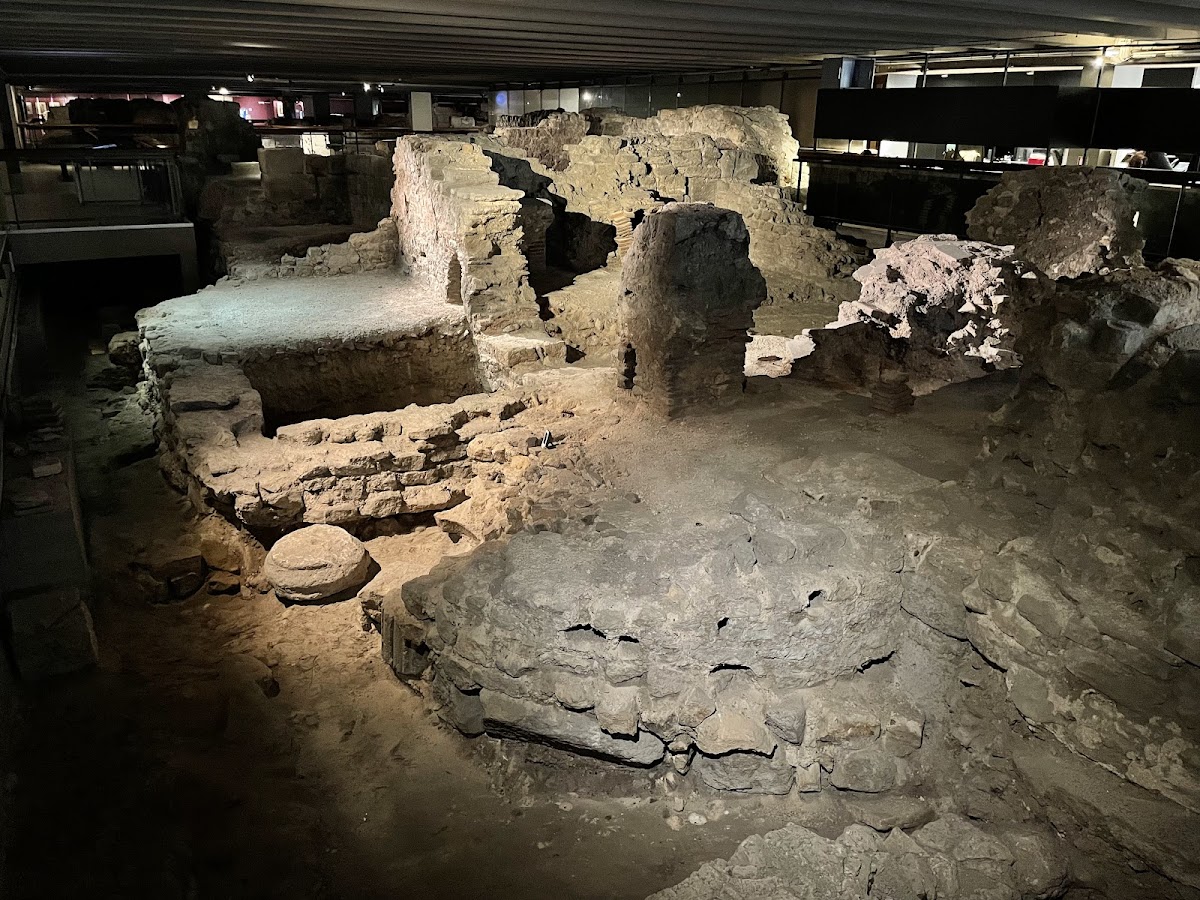
The crypt extends beneath the Notre-Dame forecourt for approximately 2,200 square metres, with about 1,800 square metres devoted to archaeological displays. It is approximately 118 metres long and 29 metres wide. Within this area, remains are arranged according to successive phases in the development of the southern Île de la Cité, from the Gallo-Roman period to the nineteenth century. Most of the archaeological remains and finds were uncovered during excavations carried out before construction of the underground car park.
Roman port and urban structures
Quays of Lutetia
A surviving section of the quay of the ancient port of Lutetia is preserved in the crypt. Further quay remains were uncovered during excavations that continued until 1988, adding physical evidence of the port associated with the river-based economic activity of Roman Paris.
Public baths
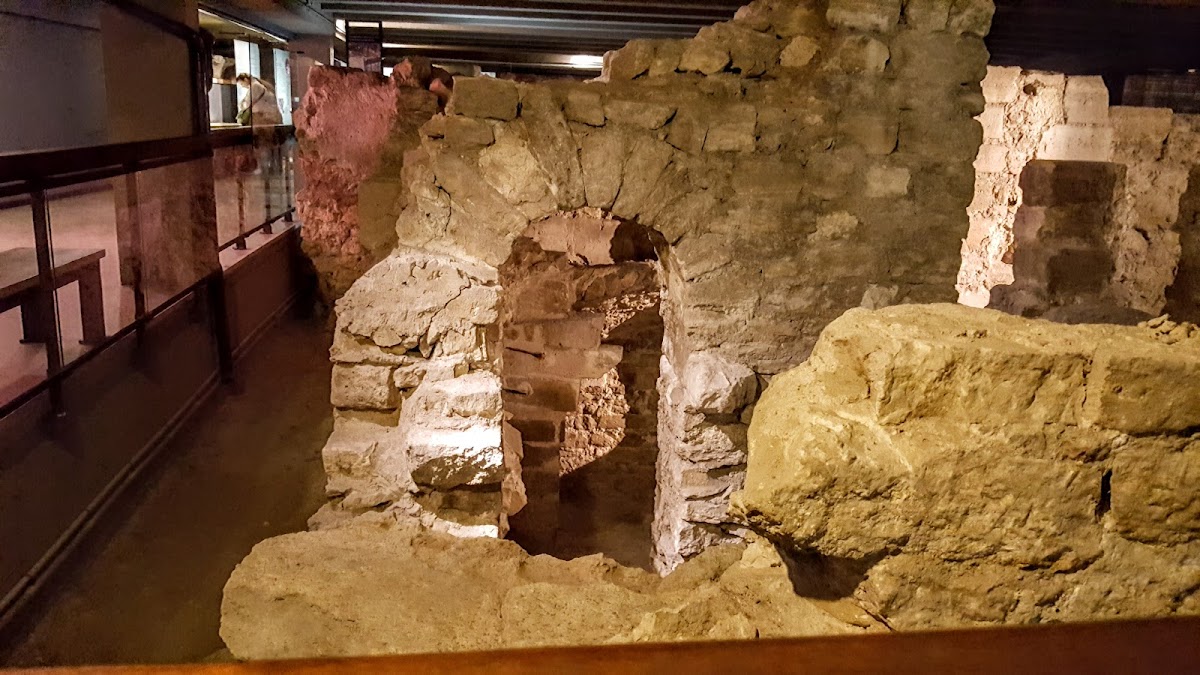
A Gallo-Roman public bath complex occupies the central part of the crypt. Its surviving heating system includes a hypocaust, an ancient underfloor system in which a raised floor allowed heated air to circulate beneath it.
Enclosure wall and dwellings
Part of the island’s early fourth-century enclosure wall survives. Its foundations were made from large stone blocks reused from the necropolis and abandoned monuments on the left bank of the Seine. The crypt also preserves remains of large, luxurious ancient dwellings, including the base of a column.
Medieval and eighteenth-century buildings
Hôtel-Dieu chapel and houses
Medieval remains include the basement, or crypt, of the former Hôtel-Dieu chapel and the foundations of houses that once stood along the Rue Neuve-Notre-Dame. The surviving crypt of the Sainte-Agnès Chapel belonged to the medieval Hôtel-Dieu complex and escaped the fire that destroyed the chapel in 1772.
Saint-Christophe and Sainte-Geneviève des Ardents
The foundations of Saint-Christophe and Sainte-Geneviève des Ardents remain beneath the area north of the Rue Neuve-Notre-Dame. The two churches were demolished in 1748, leaving their foundations within the archaeological layers beneath the later square.
Hospice des Enfants-Trouvés
The eighteenth-century remains include the crypt and foundations of the Hospice des Enfants-Trouvés. Built in 1750 by Boffrand on the former site of Sainte-Geneviève des Ardents, the hospice represents a later phase in the changing use of this part of the island.
Nineteenth-century infrastructure
Haussmann-era sewers
Sections of the sewers constructed during Haussmann’s transformation of Paris survive among the nineteenth-century remains. Together with the earlier structures, they extend the archaeological sequence preserved in the crypt from the first century AD to the nineteenth century.