Aqueduct of Hadrian in Athens: A Roman Water-Supply System
Site at a Glance
- Popularity
- High
- Country
- Greece
- Primary era
- Classical
- Eras represented
- Classical, Modern
- Civilizations
- Greek, Roman
- Site type
- Infrastructure
- Remains
- Aqueduct
On this page7 sections
History
The Aqueduct of Hadrian in Athens was a Roman water-supply system in Greece, begun during Hadrian’s reign and completed and dedicated in AD 140 by his successor, Antoninus Pius.
Roman construction and city supply
Hadrian, Roman emperor from AD 117 to 138, favored Athens, and the aqueduct was one of his building projects there. It carried water across the city, especially to Hadrianopolis, the southeastern Roman district around the Temple of Olympian Zeus. Its users included the baths now called the Roman Baths of the Záppeion and other bath complexes. The water also served the Agora and its nymphaion, a fountain or water monument often associated with nymphs.
Ottoman and later use
The aqueduct continued to operate into the Ottoman period, until Hacı Ali Haseki, an Ottoman governor of Athens, destroyed it. It was later cleaned and returned to service under the mayors Kyriakos and Soutsos.
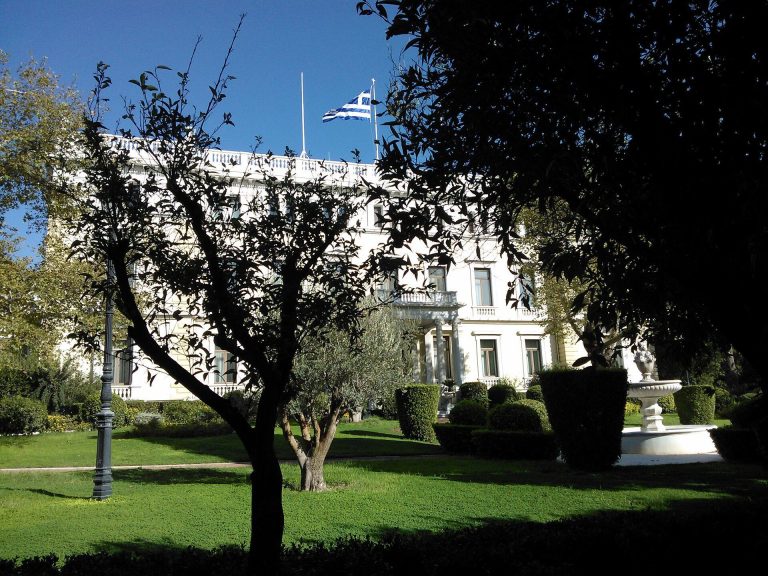
In 1870, a section discovered along the route was used to irrigate the Royal Garden, now the National Garden, and the reservoir was reconstructed. The aqueduct was reused from the late nineteenth century into the early twentieth century. As the system fell out of use, its water was diverted to the sea, although some associated conduits remained active into the twentieth century. Restoration from 2024 to 2025 added pumps, connecting pipes, and cisterns to enable non-potable water reuse.
Remains
The aqueduct ran about 23 kilometres from the Parnes mountain area north of Athens, near present-day Tatoi, to a reservoir at the foot of Lycabettus Hill. Most of its route lay underground, with some open-air sections and bridges. Gravity carried water toward the city.
Underground route and channels
The system drew water from the mountain catchment and sources along its route, including the Kefissos River, now called Kifisós. Descriptions of its supply also include groundwater entering the route and rainwater from the Penteli and Parnes mountains. Its capacity was estimated at about 7,000 cubic metres per day. Workers excavated the tunnel through 465 shafts, each 10 to 42 metres deep, digging between neighboring shafts until the sections joined. The shafts also brought in air and light and allowed access for cleaning. Tunnel sections were about 0.7 to 0.8 metres wide and 1.1 to 1.6 metres high, with vaulted roofs.
Lycabettus reservoir and entrance
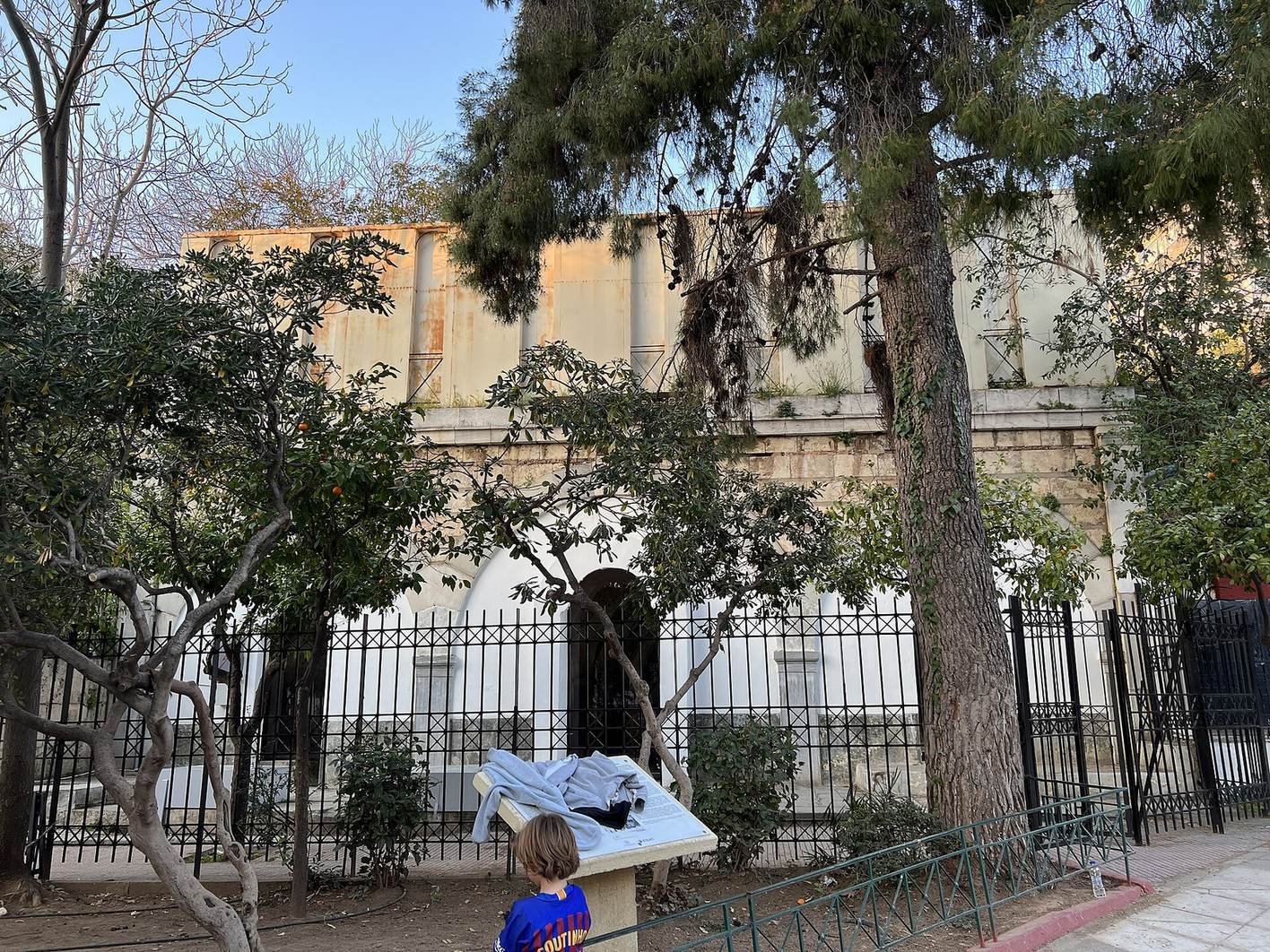
The stone reservoir at the Lycabettus end measured about 26.1 by 9.1 metres, was about two metres deep, and held approximately 500 cubic metres. Its entrance had a propylon, a monumental gateway in the Ionic style, whose scroll-shaped capitals characterized that classical Greek design. The facade now survives in its foundations and the bases of two columns. An inscription on the gateway’s lintel named Antoninus Pius as the emperor who completed and dedicated the work begun by his deified father, Hadrian. The inscription’s left-hand portion is displayed in the National Garden.
Surviving sections and associated remains
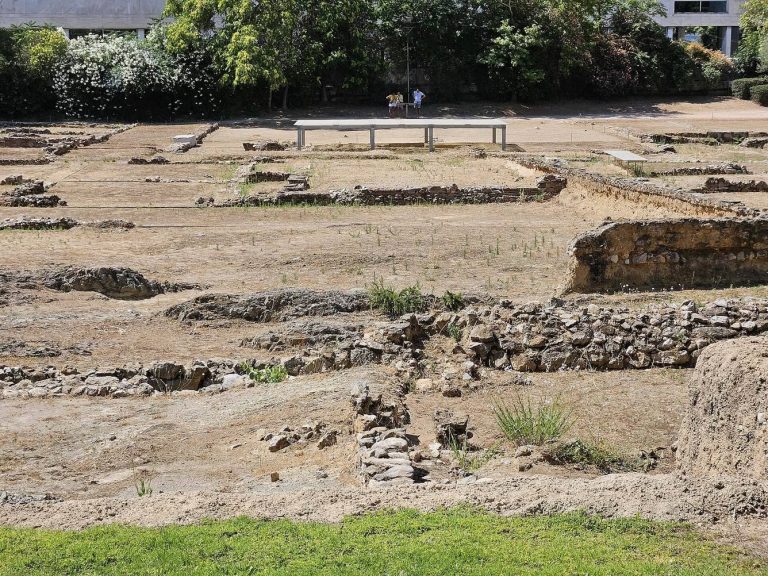
Underground remains occur in the Athens Olympic Village area and at the Agora archaeological site, and a well associated with the aqueduct is located in Herakleio. At Néa Ionía, a surviving bridge section extends on both sides of Kapodistríou Avenue near Plateía Adrianeíou. It is considered the aqueduct’s best-preserved bridge section, although it may instead belong to a later Roman aqueduct of the fourth century. The aqueduct ruins in the Eleftheroupoli area of Néa Ionía belong to a later Roman system.